
A cottage front door should feel like it grew there—not like it was pulled from a theme park catalog. The line between genuine heritage and overdone is narrower than it seems. Here are 10 classic cottage door ideas that make an entry feel settled and quietly considered.
Dutch Door
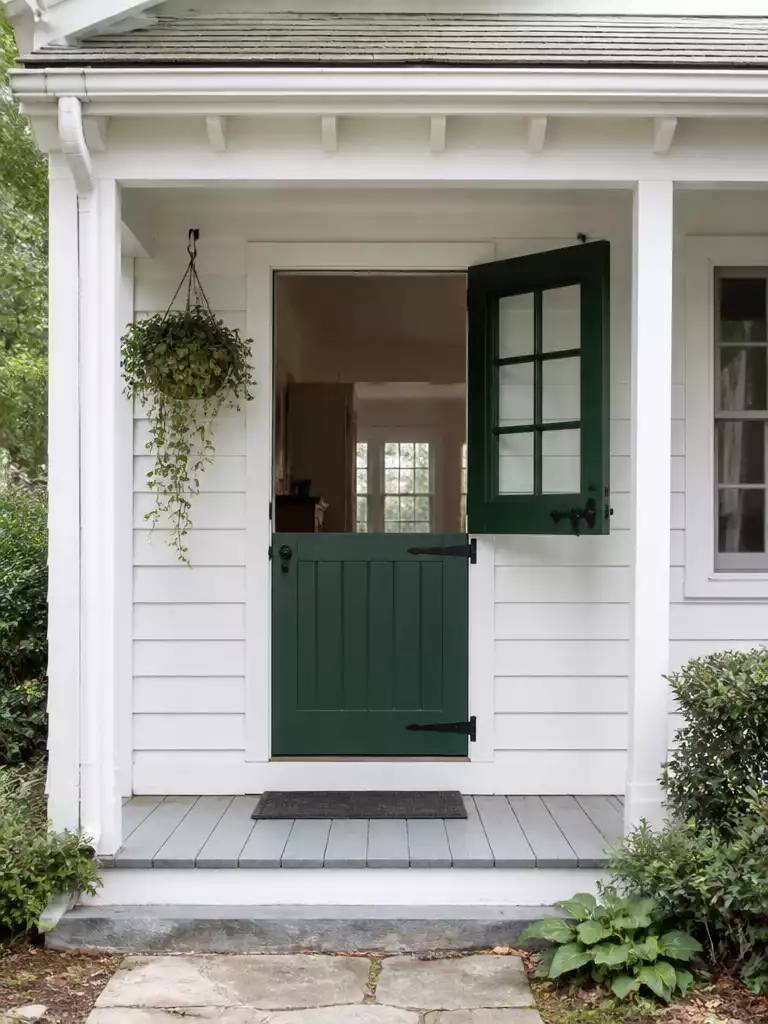
Enjoy fresh air and light while keeping pets and kids safely inside.
As an Amazon Associate I earn from qualifying purchases. Affiliate links may earn me a commission at no extra cost to you.
The Dutch Door’s Horizontal Split is Both Practical and Decorative: This door’s defining feature is its waist-high horizontal division allowing the top half to open independently while the bottom half stays latched. On cottages with covered porches, this split reads as a deliberate design detail, especially when both halves share hardware in the same finish, creating visual unity without gimmicks.
A key detail for Dutch doors is that they work best under a shallow overhang or covered porch to protect the open top half from rain. Otherwise, water inevitably soaks the entry floor. Also, the door’s bold, unified paint color—deep forest green, navy, or warm black—makes the horizontal line feel intentional rather than fragmented. Avoid two-toned halves; that’s a fast track to theme-park territory.
Test the top half’s latch action before committing—it should open and close easily with one hand, or you’ll never use the split feature as intended. This door is perfect for homes with young children or pets thanks to options like the premium Swing Bar Door Lock for Front Doors priced reasonably around typical hardware costs. If you want fresh air with safety and classic style, the Dutch door earns its place. Skip it if you lack a protective porch or dislike the horizontal visual break.
⭐ Top Products for Dutch Doors
Swing Bar Door Lock for Front Doors
Brushed Swing Bar Lock for Front Doors
🛠️ Practical Tips for Dutch Door Success:
- Hardware matching: Choose latches and locks that match in finish to keep the horizontal split visually unified.
- Weatherproofing seam: Install quality weather stripping at the horizontal split to prevent drafts and moisture intrusion.
- Porch coverage: Ensure your porch or overhang is deep enough to shelter the open top half from rain and direct sun exposure.
Arched Top
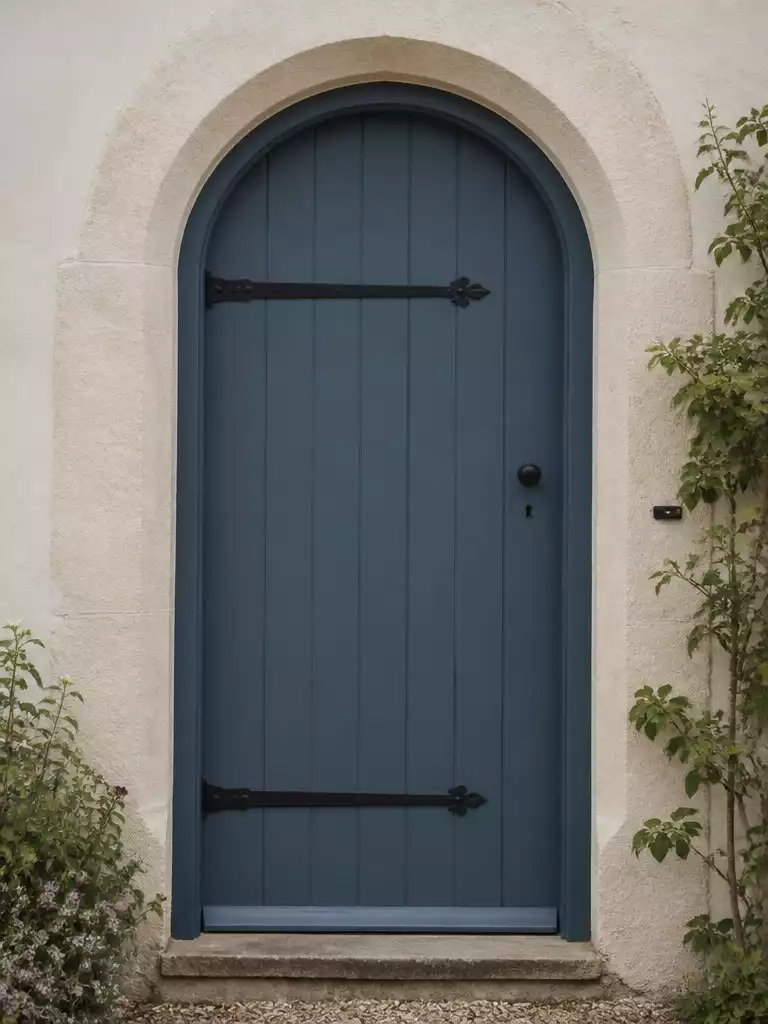
An arched top door brings centuries-old architectural grace at human scale.
Custom Arched Doors Typically Run $800 to $2,500: The arched top borrows from Romanesque and Gothic architecture but only works at cottage scale with a shallow segmental arch, not a steep pointed one. The arch should be carried through the door frame and any sidelights to avoid looking like an afterthought.
The subtle difference between a true half-ellipse arch and a pointed Gothic style can make or break the door’s storybook feel. For example, a gently curved arch set in a limestone surround with wrought-iron hinges reads as settled and natural, while an exaggerated peak looks theatrical and costume-like. This precision in proportion is what anchors the door’s quiet authority.
Arched top doors are not for those on a tight budget or who want a quick DIY install—expect to invest in a custom or semi-custom unit that fits your opening. Skip this door if you prefer standard pre-hung options or need economy. It’s best for homeowners who value architectural authenticity and want their entry to feel taller and more composed without raising ceilings.
Top Products for Dutch Doors
Swing Bar Door Lock for Front Doors
Brushed Swing Bar Lock for Front Doors
📋 What to Check First Before Choosing an Arched Top Door:
- Door Opening Shape: Confirm if your existing frame can accommodate a curved header or requires full custom framing.
- Proportion & Scale: Measure the height and width carefully to maintain a true half-ellipse or segmental arch shape.
- Material & Finish Compatibility: Ensure the door and frame materials suit your climate and match any sidelights or surrounding masonry.
Arched Plank and Batten
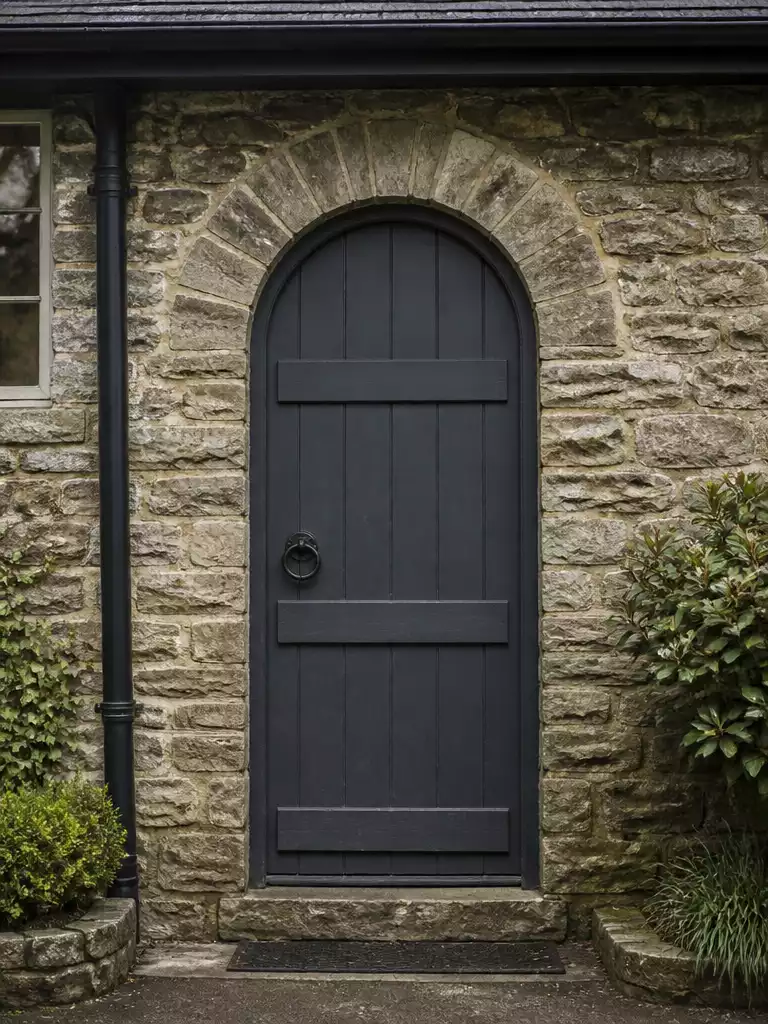
A door that softens structure with a graceful arch and honest plank construction
Arched plank and batten door ages gracefully over 3–5 years: Plank and batten is one of the oldest door constructions still in use — vertical cedar or Douglas fir boards face the street, held together by horizontal battens. The arch top tempers what could feel barn-like, grounding the door in authentic cottage character without decoration or fuss.
This door’s real charm comes from its material honesty. Wide battens spaced evenly across the planks project deliberate craftsmanship; too narrow or crowded battens read as decorative instead of structural. Cedar’s natural weathering from honey gold to soft silver-grey over a few years isn’t a flaw, but the door’s defining feature — a patina earned, not applied.
If you want a door that feels genuinely settled and built to last, this is it. But skip it if you crave a polished or ultra-smooth finish, or if the idea of maintaining natural wood outdoors feels like a chore. Custom arched plank-and-batten doors often start around $800 and up, reflecting their hand-crafted nature. This door isn’t for trend chasers or anyone who expects pristine gloss — it’s for those who appreciate how wood changes and softens with time.
⭐ Top Products for Dutch Doors
Swing Bar Door Lock for Front Doors
Brushed Swing Bar Lock for Front Doors
📋 What to Check First Before Choosing an Arched Plank-and-Batten Door:
- Door Frame Shape: Confirm your existing frame can accommodate a custom arched top without major carpentry changes.
- Wood Species Suitability: Choose cedar or Douglas fir for natural weather resistance and authentic aging over time.
- Batten Width and Spacing: Decide on wider, evenly spaced battens for an architectural look—not crowded or purely decorative.
Stable Style
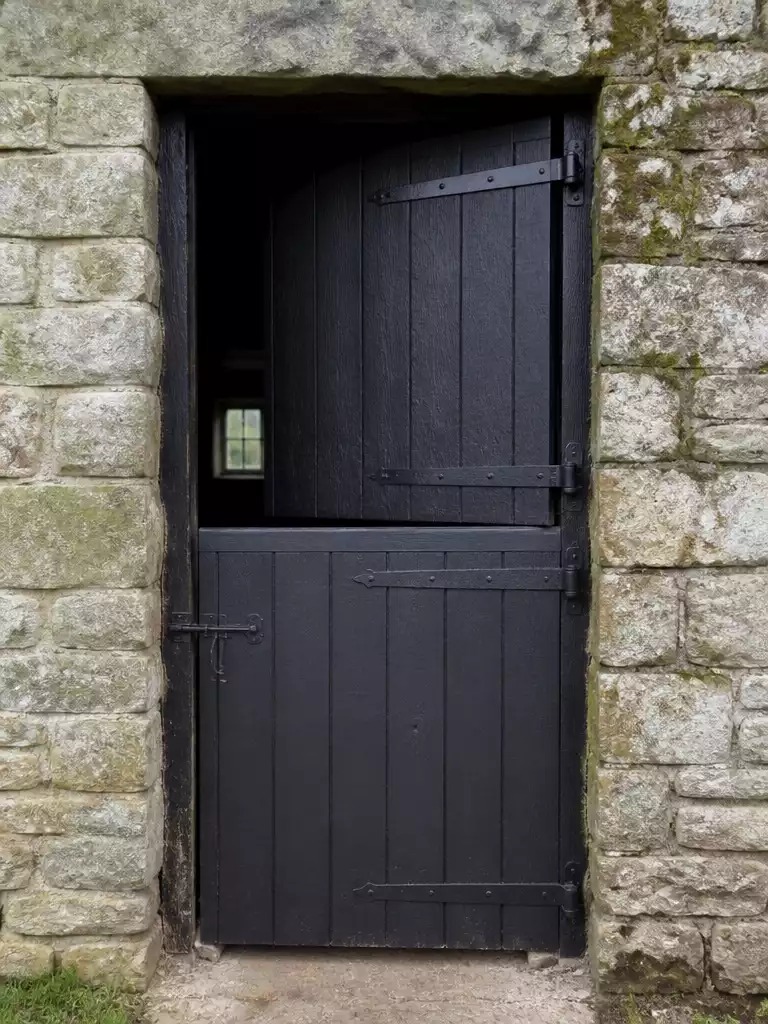
Hearty hardware and honest materials keep the stable door solid and secure
Stable doors are heavier with farm-style hardware: Unlike the refined Dutch door, a stable door is built thick with deep rails and stiles, surface-mounted black iron bolts, strap hinges, and simple thumb latches. This agricultural construction feels genuine when set in rough stone or weathered timber. It rejects glossy finishes for painted or unfinished looks that wear into character.
A self-closing hinge is not a gimmick here but a return to original function—stable doors were meant to close securely behind you when your hands were full, stopping animals or children from wandering off. Installing these hinges restores that practical feature and prevents door slamming.
Stable doors fit homeowners who want authentic, robust construction without the custom price tag. A local joiner can build a stable door for roughly the cost of a mid-range prehung unit, making this style a budget-friendly choice for genuine cottage appeal. Skip this door if you want sleek or modern finishes—its charm depends on material honesty, not polish.
Top Products for Stable Style Doors
Exterior Door Sweep with Dual Air Seal ★★★★½
This door sweep seals drafts effectively under stable doors, using dual air tubes and flexible vinyl fins for a no-screw installation that protects timber integrity.
Huge Gap Door Draft Stopper ★★★★☆
A removable draft stopper designed for large gaps common in stable doors — perfect for renters or seasonal use without permanent installation.
Spring Loaded Self Closing Door Hinges ★★★★☆
Heavy-duty, adjustable self-closing hinges that quietly close stable doors to restore their original function, ideal for busy households.
Top Products for Stable Style Doors
Exterior Door Sweep with Dual Air Seal
Huge Gap Door Draft Stopper
Spring Loaded Self Closing Door Hinges
📋 What to Check First
- Door weight: Confirm your hinges and frame can support the stable door’s heavier, thicker timber construction.
- Hardware scale: Ensure black iron bolts and thumb latches fit your door size without overwhelming the facade.
- Material context: Verify surrounding stone, timber, or brick complements the door’s raw finish for authentic visual harmony.
Getting this far means you’re already seeing how cottage doors balance simplicity with character. Even subtle details add up, and each choice nudges your front door closer to feeling authentic. This is a gentle process—one that values thoughtful layering over rushing toward a perfect reveal.
✨ Keep This in Mind:
- Consider the whole facade rather than isolating your door—try reviewing front door ideas in context.
- Soft heritage colors and classic glass patterns bring depth without fuss—learn more in our glass panel guide.
- Focus on harmony, not contrast—this creates the calm, storybook feel that lasts.
Top Half Glass
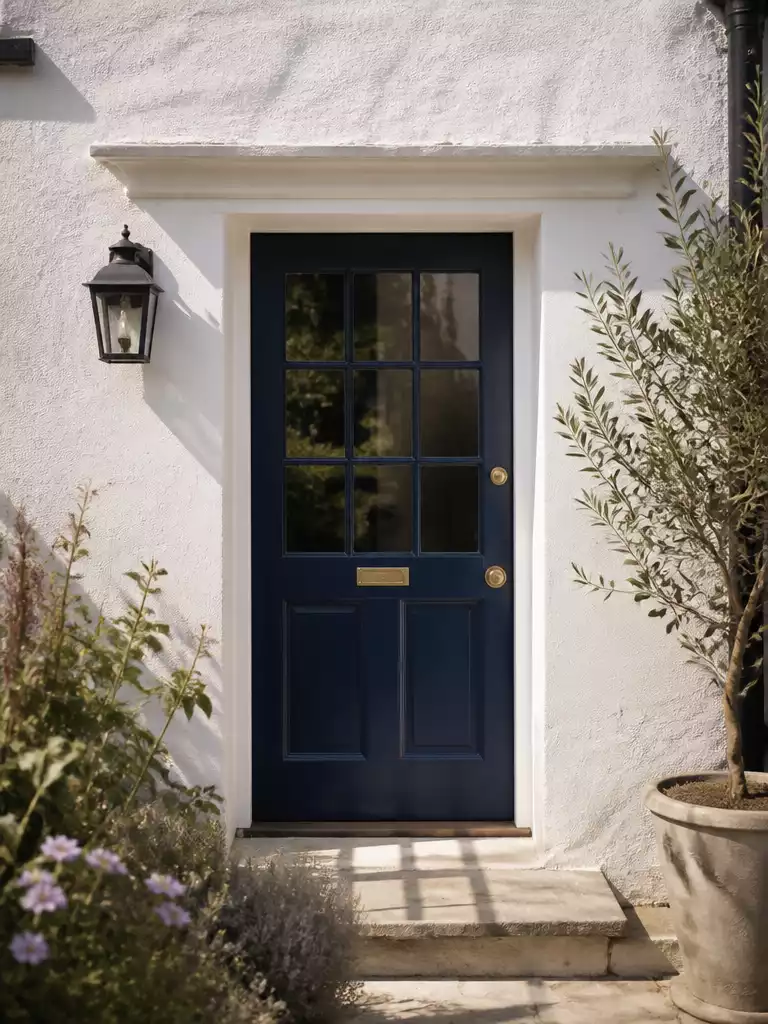
An entry that balances light and solidity without feeling glazed over
Divided-light upper half offers authentic cottage light: A top-half glass door solves the dark entry hall problem by combining a solid raised-panel lower half with a glazed upper section. Choose a divided-light pattern with multiple small panes framed by glazing bars for a deliberately traditional look that feels considered, not contemporary or overly bright.
This door’s design lives in the division between lower solidity and upper light. For example, a flat-panel lower half reads more modern, while a plank lower half introduces a vernacular feel echoing plank-and-batten doors. If the glazed section faces a busy street, obscured or frosted glass in the bottom panes preserves privacy without sacrificing daylight.
Top-half glass doors are right for homeowners craving more natural light without turning their front into a full glass panel. If privacy or street-facing views are concerns, opt for obscured panes strategically. This door isn’t for those wanting maximum security or complete opacity, but it addresses dark, enclosed cottage entries that usually lack light. Installation costs vary with glass type and pane division, but expect a moderate upgrade over fully solid doors for this balance of light and tradition.
Top Products for Dutch Doors
Swing Bar Door Lock for Front Doors
Brushed Swing Bar Lock for Front Doors
40FT Weather Stripping Door Seal
📋 What to Check First:
- Glass height placement: Confirm the top half’s glazing won’t compromise privacy or invite direct street views.
- Lower panel style: Choose raised, flat, or plank lower half based on your cottage’s traditional character.
- Glazing bar profile: Match the door’s glazing bars to window patterns on your home to keep a unified look.
Diamond Pane Glass
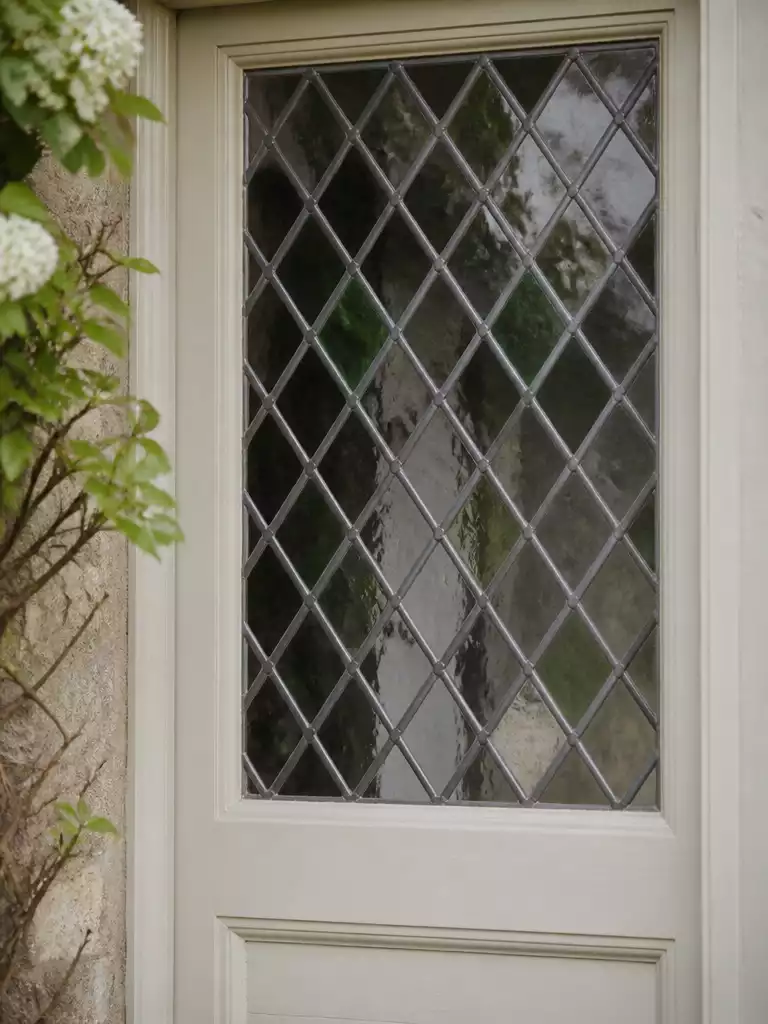
Light dances through small diamond panes, creating natural privacy and timeless charm.
Small 1.5-inch diamonds create authentic light fracturing: Diamond pane glass fractures light beautifully, with each tiny rhombus-shaped pane catching it at a different angle. True leaded panes are hand-set in lead channels, offering optical depth you won’t get from cheaper simulated lead strips on a single pane. This detail is why diamond panes have been a cottage staple for over 400 years.
The diamond panes are typically about the size of a playing card, which keeps their scale intimate and period-appropriate. Doors with large diamond shapes—four inches or more—tend to look like patterns slapped on rather than integrated design elements. The door’s color should be muted, like cream or pale grey, so the diamond pattern stands out without competing with bold paint.
If you want privacy without frosted glass, diamond panes deliver by breaking up the view with their lead lines and small pane sizes. However, this door is not for those wanting a plain, easy-to-clean glass surface or a bold color statement behind the glazing. True leaded diamond pane doors can be costly due to the handcraftsmanship involved, so if you’re after a budget-friendly or low-maintenance option, this isn’t your best pick. For those who appreciate authentic craftsmanship and a door that plays with light in a unique way, diamond pane glass is unmatched.
Top Products for Dutch Doors
Swing Bar Door Lock for Front Doors
Brushed Swing Bar Lock for Front Doors
📋 What to Check First Before Choosing Diamond Pane Glass:
- Door Color: Confirm your door’s paint is pale and muted to let the diamond panes stand out clearly without visual noise.
- Pane Size: Measure or request diamond panes around 1.5 inches across for authentic scale—not too large or decorative.
- Glass Type: Decide if you want true leaded glass for depth or simulated lead for easier maintenance and lower cost.
LEADED GLASS
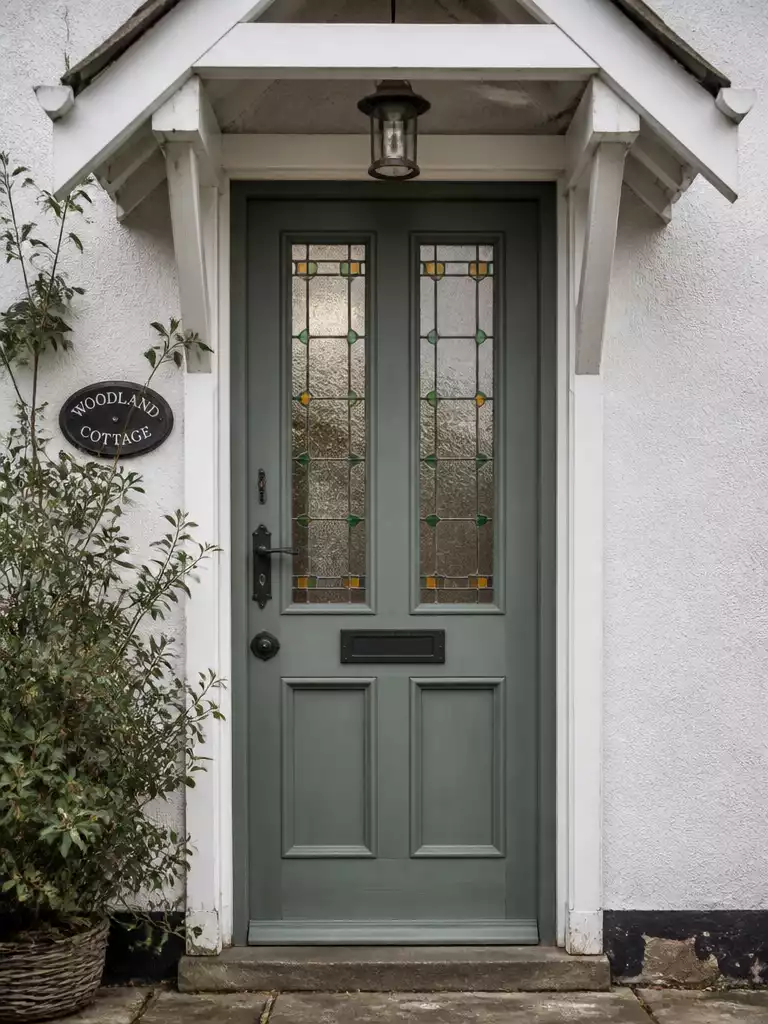
Geometric leaded glass panels subtly filter light with authentic period charm.
Leaded Glass Needs Thoughtful Pattern and Placement: Leaded glass isn’t stained or colorful but a construction of small clear panes set in lead came forming structured yet organic geometric patterns like a rectangular center panel bordered with smaller squares and occasional muted jewel tones. Typically placed as narrow vertical panels in the door’s upper half, this arrangement filters light without blocking it and complements early 20th-century Arts and Crafts cottages.
The slight bowing and expansion of lead came over decades mean leaded glass panels can require specialist maintenance or restoration. Homeowners should specify restoration or antique glass, which has a subtle wave and thickness variation that recreates the optical depth of old glass—unlike modern flat float glass that looks too perfect and artificial.
Leaded glass doors suit homeowners who value authentic craftsmanship and are willing to invest in quality materials and upkeep; they’re not for those wanting low-maintenance or a quick door upgrade. Since leaded glass can be costly to commission or restore, skip it if budget is under $800 or if you have pets or young kids prone to banging glass. For the right project, it gives a door a presence that looks like it has belonged there for eighty years from day one.
Top Products for Dutch Doors
Swing Bar Door Lock for Front Doors
Brushed Swing Bar Lock for Front Doors
40FT Weather Stripping Door Seal
📋 What to Check First Before Choosing Leaded Glass:
- Panel Placement: Confirm the upper door panels or sidelights have space for narrow vertical leaded glass inserts.
- Glass Type: Ask for restoration or antique glass with subtle waves for authentic light quality and texture.
- Maintenance Plans: Understand that lead came may need expert attention over time to prevent bowing or cracking.
Half Round Window
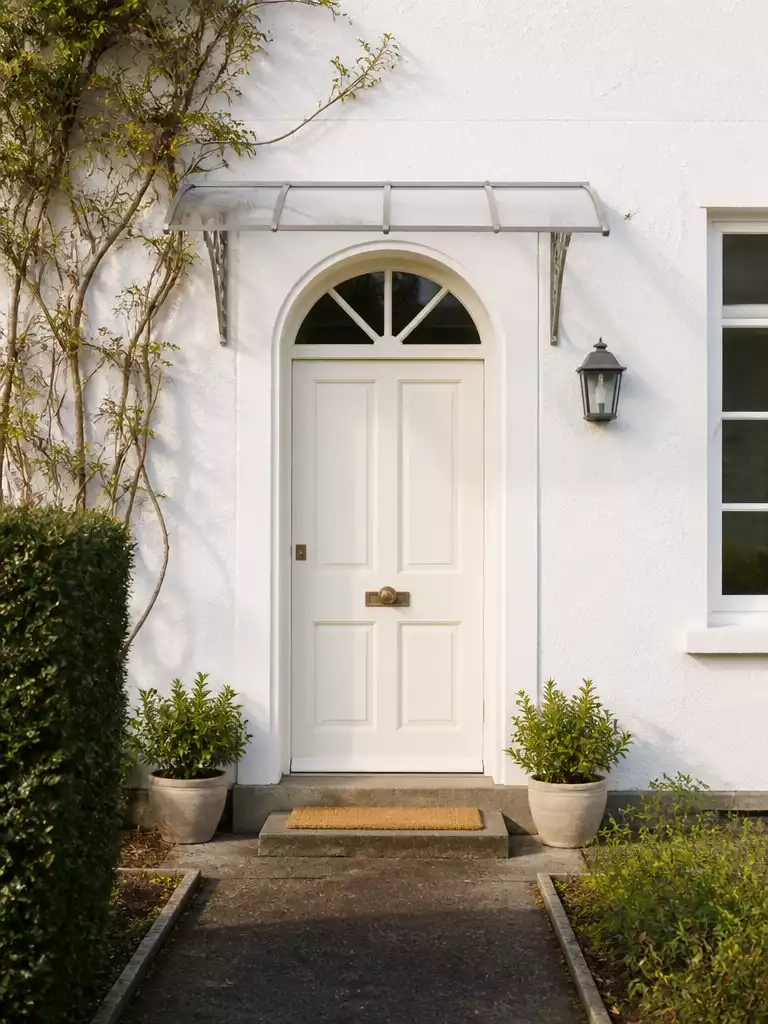
A half-round window adds height and architectural grace without raising ceilings
Half-round fanlight meets door frame perfectly: A half round window above a cottage door draws the eye upward, lending a sense of height unrelated to ceiling height. Authentic versions have six to eight simple radiating glazing bars fanning from the flat base, creating a period detail. This base must align exactly with the top of the door frame for the window and door to read as a unified architectural statement rather than separate parts.
The half-round window typically fits in the gap between the door head and the porch ceiling or soffit, so planning its height and position is crucial. For cottages with canopies, the window must be positioned so it remains fully visible and not blocked by overhangs, which requires resolving before ordering the door and window.
This style suits homeowners who want to elevate their entry’s vertical proportions without remodeling ceilings. Skip it if your porch roof or overhang obscures that upper space or if you want a simpler, single-panel entry. Properly installed, this detail costs a few hundred dollars more for custom glazing bars and alignment but adds architectural layering that reads as genuine heritage rather than staged.
Top Products for Door Canopies
Editor’s Pick: Outdoor Door Canopy for Weather Protection
The highest-rated canopy at 5 stars, its polycarbonate cover shields your door from sun and rain while remaining visually lightweight—crucial for keeping the half-round window visible. Simple installation means it suits existing entries without structural changes.
- Polycarbonate cover
- UV protection
- Easy installation
Alternative: Curved Window Door Canopy
This canopy’s curved profile echoes the arc of the half-round window, creating a unified look. Its expandable design fits various door widths, perfect for non-standard openings where visual harmony is a priority.
- Curved profile
- Expandable design
- Easy installation
⭐ Top Products for Dutch Doors
Swing Bar Door Lock for Front Doors
Brushed Swing Bar Lock for Front Doors
💡 Practical Tips for Installing a Half Round Window:
- Precise Alignment: Confirm the flat base of the half-round window perfectly matches the door frame’s top edge before installation.
- Glazing Bars Style: Choose radiating glazing bars that match your door’s glass pattern for a cohesive, period-appropriate look.
- Overhang Clearance: Measure your porch or canopy height carefully to ensure the window remains fully visible and unblocked from the street.
Soft Sage
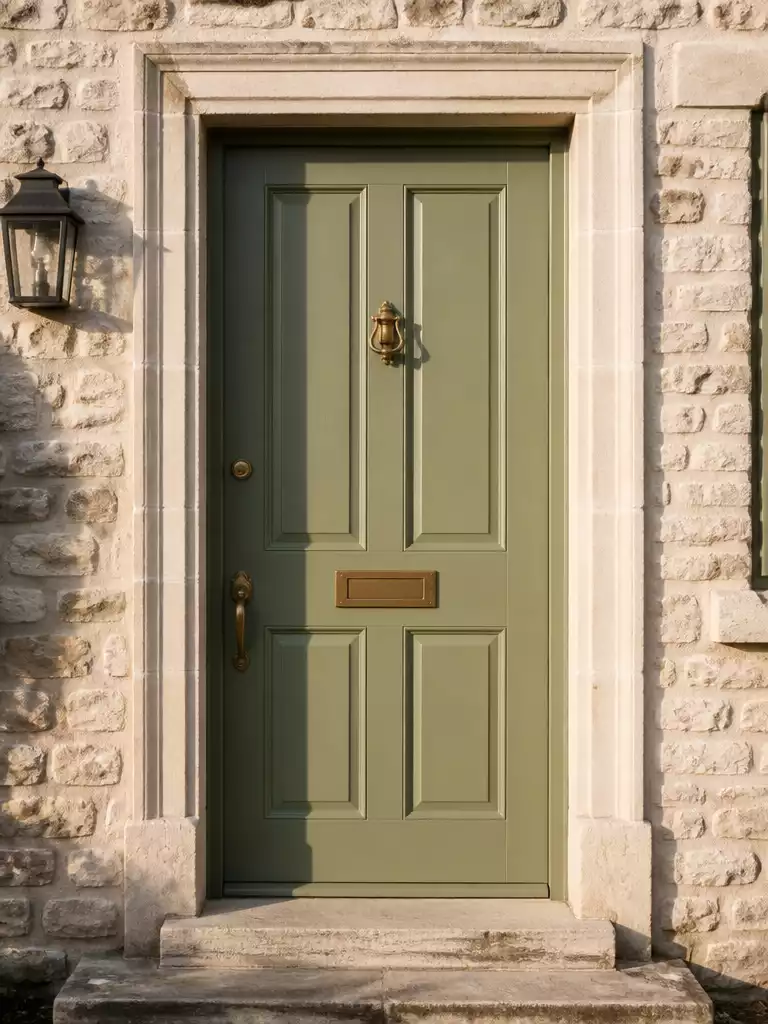
How to choose a heritage sage green door that feels truly settled and natural
Sage with warm grey and brown undertones: Sage green is the most overused cottage door color recently, but heritage sage has a warm grey or earthy brown base like Farrow & Ball’s Mizzle or Cromarty. This subtle warmth lets the door blend into the facade rather than sit on top of it like the cooler, trend-driven versions with blue or pure grey undertones.
Hardware makes all the difference. Unlacquered brass with its uneven patina naturally complements warm sage, creating a patinated look that feels like it’s been there for decades. Polished brass or chrome would clash, making the door feel staged rather than settled.
Soft sage doors work best paired with warm stone, mellow brick, or aged timber—not stark white or cool grey renders, which highlight the door’s modern trendiness. This door is right for homeowners who want a quietly heritage look, and those seeking it should expect to invest in quality paint and hardware. Skip it if you want something bright, crisp, or cheaper—getting the undertones right means deliberate choices, not shortcuts.
Top Products for Sage Green Doors
No Soliciting Sign for Front Door
Weather-resistant acrylic and laser-engraved lettering protect your freshly painted door without damaging its finish. The 2-pack ensures a spare, and the subtle design won’t compete with your carefully chosen color.
Door Protector from Dog Scratching
This transparent protector guards the lower door panel from pet scratches without obscuring the paint color. Easy to install and durable, it’s ideal for dog owners wanting to keep a fresh sage door pristine.
⭐ Top Products for Sage Green Doors
No Soliciting Sign for Front Door
Door Protector from Dog Scratching
💡 Practical Tips That Work for Soft Sage Doors:
- Test Paint Samples: Paint large swatches on your door or a board to observe undertones in different lights before committing.
- Match Hardware Finish: Pair your sage door with unlacquered brass or aged bronze for authentic warmth and patina.
- Complement Surroundings: Choose warm stone or brick facades to let the sage door feel naturally grounded and timeless.
Buttery Cream
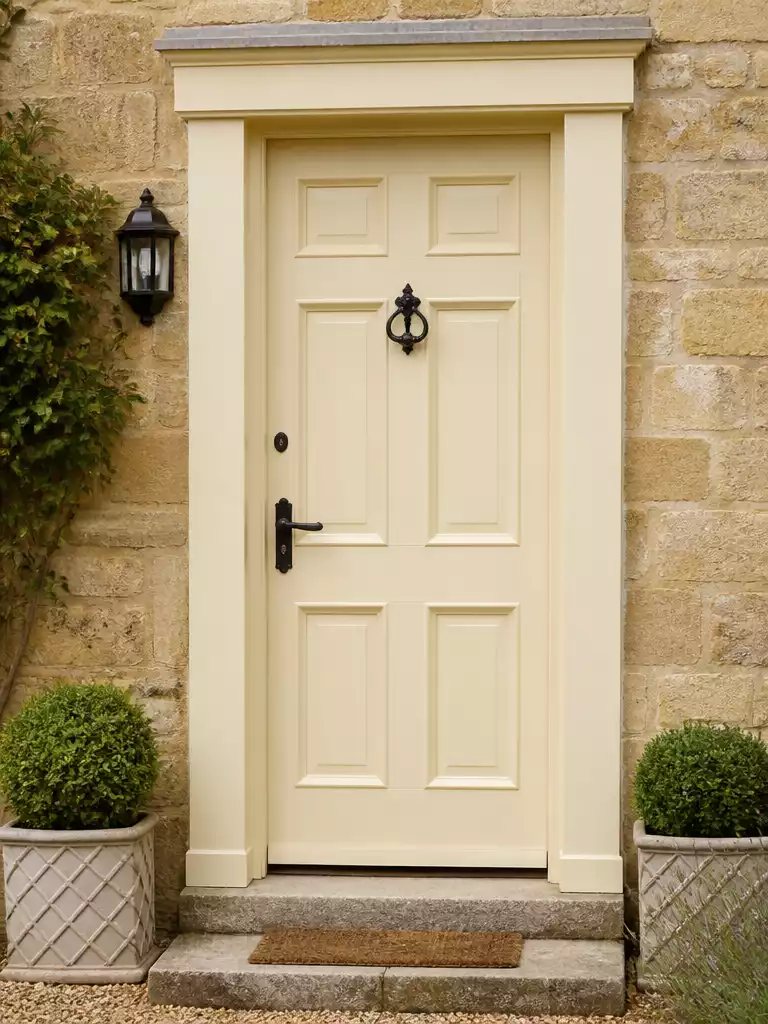
A warm cream door blending seamlessly with natural stone for timeless cottage charm.
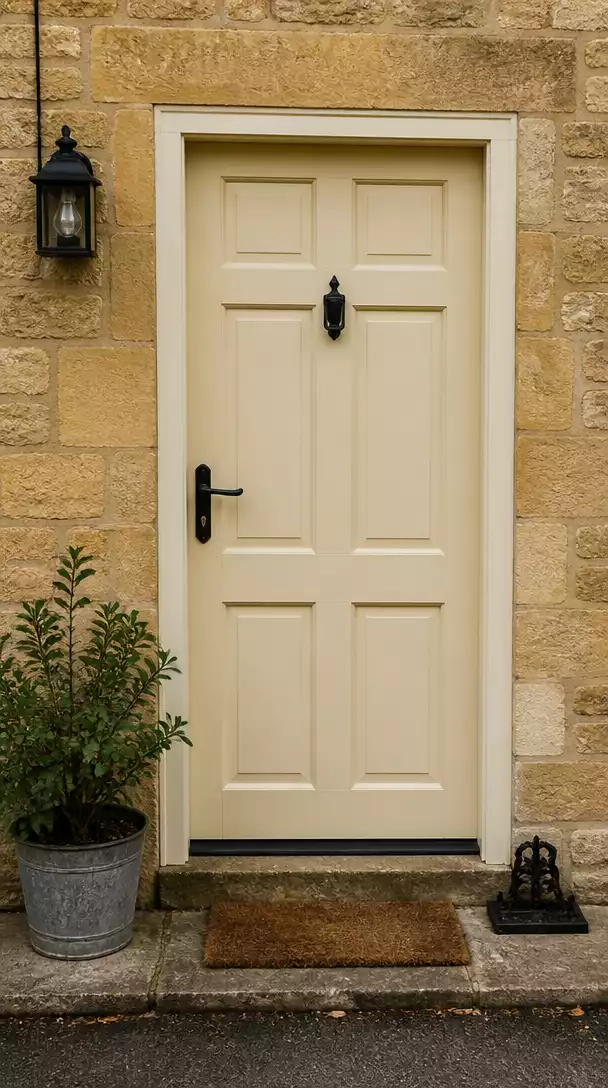
The line between creamy and yellow is razor thin: Buttery cream differs from white by its warm yellow base with subtle red undertones, making it feel soft even in shade. Paint like Farrow & Ball’s Pointing or Dulux Timeless is perfect. This warmth lets the door relate naturally to honey limestone or sandstone, unlike bright white, which can feel cold or out of place.
Unlike the bright, often cool whites that read as modern or stark, a buttery cream front door looks like it has absorbed decades of soft sunlight, settling quietly into a warm stone or mellow brick facade. This subtle warmth is what makes it feel like the door truly belongs, not just stands out.
This door is right for homeowners who want a classic cottage look in a traditional color that works with a variety of door styles without competing with natural materials. If your stone or brick is cool grey or white weatherboard, buttery cream may read as too yellow and unintentional, so skip it there. Testing paint samples outside in sun and shade against your facade is essential before committing.
Top Products for Dutch Doors
Swing Bar Door Lock for Front Doors
Brushed Swing Bar Lock for Front Doors
40FT Weather Stripping Door Seal
✓ Practical Tips for Choosing Buttery Cream:
- Test in Context: Always view paint samples outside in both sun and shade against your actual facade materials before buying.
- Balance Warmth: Avoid overly yellow creams by selecting colors with subtle red undertones rather than pure yellow bases.
- Hardware Harmony: Pair buttery cream doors with simple black iron or aged brass hardware to reinforce timeless, natural charm.
You now have ten practical ways to bring a quietly classic cottage style to your front door, each rooted in thoughtful shapes, heritage colors, and simple craftsmanship. Focus on what feels achievable rather than trying to apply every detail at once—a well-chosen door can set the tone with subtlety.
Your home’s exterior can gain a timeless sense of welcome through these understated choices, making your front door a genuine reflection of place and history. Taking one small step—like selecting a color or measuring your doorway—can begin the journey toward a door that feels like it’s always belonged there.