
Selecting a front door means balancing curb appeal with high-stakes trade-offs in security and long-term durability. This guide narrows the field to 12 critical decision points to ensure your investment pays for itself. Start by weighing the foundational materials that dictate your total project cost.
Material Options: The Foundation of Your Budget
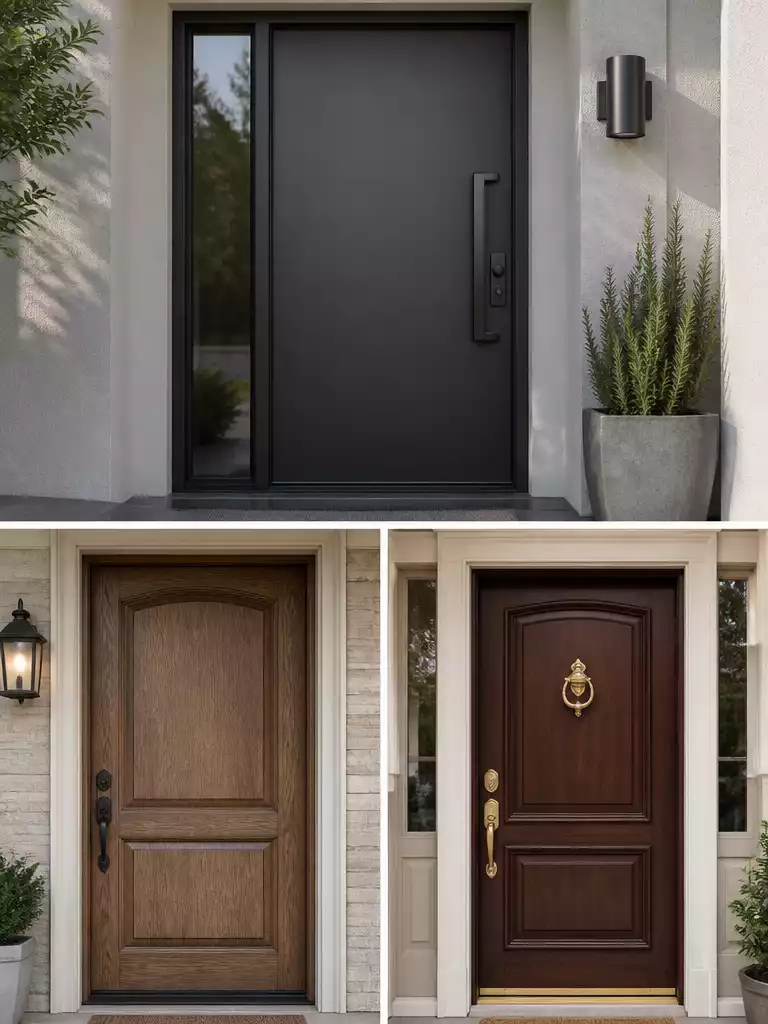
Choose the right material to balance high-end curb appeal with long-term weather resistance and security.
As an Amazon Associate I earn from qualifying purchases. Affiliate links may earn me a commission at no extra cost to you.
There is a common myth in home renovation that a higher price tag automatically equals better performance. When it comes to your front door, the raw reality is that the most expensive option—solid wood—often requires the most pampering, while budget-friendly materials can sometimes outperform it in the rain.
Before you fall in love with a specific stain or panel design, you need to weigh the trade-offs of the three heavy hitters: Steel, Fiberglass, and Wood. Each material dictates not just your upfront check, but how much time you’ll spend with a paintbrush in hand five years from now.
Steel is the undisputed “security-first” champion, offering a tough barrier that is incredibly difficult to kick in. However, it is vulnerable to the “shopping cart ding”—small dents that can breach the factory finish and lead to rust if not treated quickly.
Fiberglass is the ultimate set-it-and-forget-it choice, featuring a polyurethane foam core that provides five times the insulation of standard wood. It won’t warp or rot in humid climates, making it the smartest play for long-term value.
Wood is a classic, but it comes with a “beauty tax” that goes beyond the initial $5,000+ investment. Without at least a 4-foot porch overhang to shield it, the punishing sun can bake the finish off solid oak or mahogany in just three seasons.
The “Zero-Maintenance” Fiberglass Hack
Modern fiberglass can mimic the deep, variegated grain of walnut so perfectly that your neighbors won’t know it’s synthetic. You get the high-end aesthetic of a $6,000 wood door without the nightmare of sanding and resealing every other year.
Expert Insight: Check the Skin Thickness
If you opt for steel, always ask for the gauge. A 24-gauge steel skin is thicker and significantly more dent-resistant than a 26-gauge “contractor grade” door that feels hollow to the touch.
Once you have selected your foundational “armor,” you need to ensure the design doesn’t look like a total stranger to your home’s existing siding and windows.
⭐ Best Material Options for Doors
Adjustable Aluminum and Oak Door Threshold
U-Shaped Door Sweep with Vinyl Seal
Adjustable Double Bubble Door Sweep Seal
📈 The Long-Term Payoff
Selecting the right material isn’t just about the purchase price; it’s about your exit strategy. Steel doors offer a massive 100% to 216% cost recovery, making them the ultimate pick for a quick resale. However, fiberglass holds the “life-of-home” crown with an 80-97% ROI and decades of zero-maintenance durability.
Investment Winner: Choose steel for immediate resale value or fiberglass for 20 years of energy savings.
Style and Architecture Match
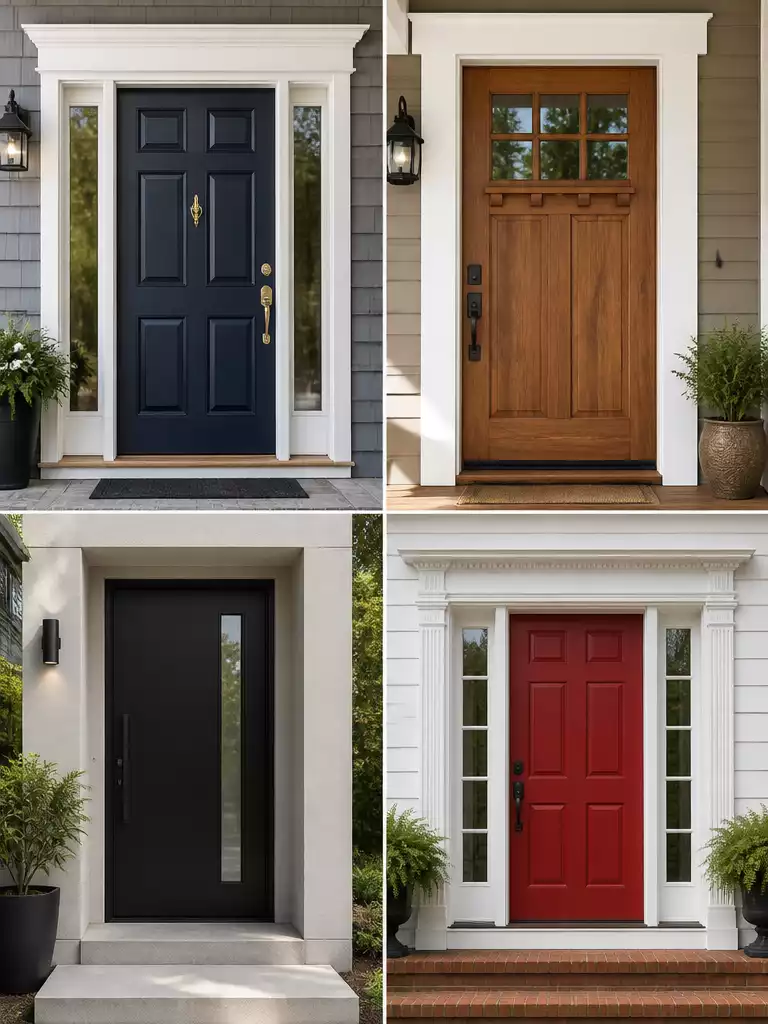
A perfectly matched entryway creates an immediate sense of cohesion that boosts your home’s perceived value.
Is your front door currently fighting your windows for attention? A mismatched door is the fastest way to make a $400,000 house look like an accidental DIY experiment.
To avoid a visual clash, you need to lean into the specific geometry that defines your home’s era. Whether you are looking for vertical weight or symmetrical dignity, these three styles serve as the primary blueprints for most residential entries.
- Craftsman Logic: This style relies on the “upper-third” rule. Vertical grille bars and dentil shelves create the horizontal visual weight essential for bungalow and cottage-style homes.
- Modern Geometry: Contrast the traditional with a clean “slab” look. A single vertical glass lite or an offset handle placement creates the asymmetrical balance needed for mid-century or contemporary builds.
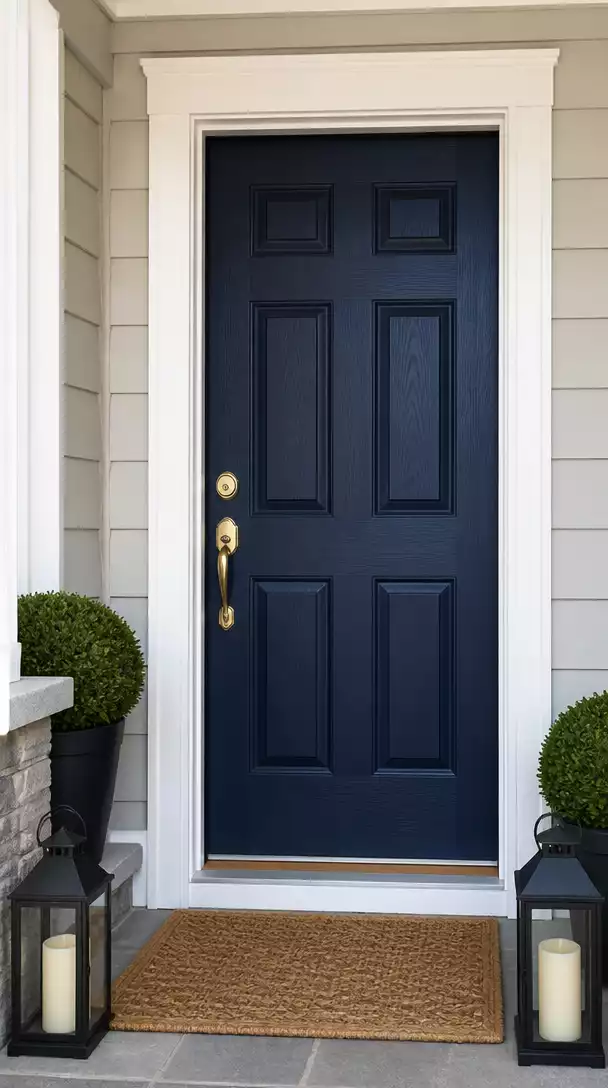
- Colonial Symmetry: Stick to the classic 6-panel grid. Symmetrical layouts finished in navy, black, or heritage red preserve the historical dignity of traditional two-story homes.
Expert Insight: The Trim Rule
Never introduce a brand-new trim color at the door. Match your door’s casing to the existing window trim to create a cohesive envelope rather than a floating rectangle.
When selecting your finish, remember that some colors carry more psychological weight than others. A high-gloss deep crimson or navy can act as a “Curb Appeal Multiplier,” signaling quality to guests before they even reach the porch.
WHAT MAKES THIS DOOR WORTH SAVING
The “Heritage Red” Colonial: A high-gloss deep crimson door paired with a polished brass eagle knocker can add $10,000 in perceived value to a standard white-sided home.
While aesthetics pull the heartstrings, the technical specs of the door ensure you aren’t paying for that beauty in high utility bills. A beautiful door is a liability if it lets $50 of air conditioning leak out of the cracks every month.
⭐ Best Material Options for Doors
Adjustable Aluminum and Oak Door Threshold
U-Shaped Door Sweep with Vinyl Seal
Adjustable Double Bubble Door Sweep Seal
⚠️ Style Pitfalls to Watch For:
- The “Fancy” Trap: Avoid high-end, raised-panel doors on simple cottage or ranch homes; they often look out of place and forced.
- Trend Chasing: Be cautious with ultra-modern hardware on traditional frames, as mismatched geometry can actually hurt your home’s resale recovery.
- Color Isolation: Don’t pick a bold door color that doesn’t appear elsewhere in your landscaping or shutters to ensure visual harmony.
Energy Efficiency: Beyond the R-Value
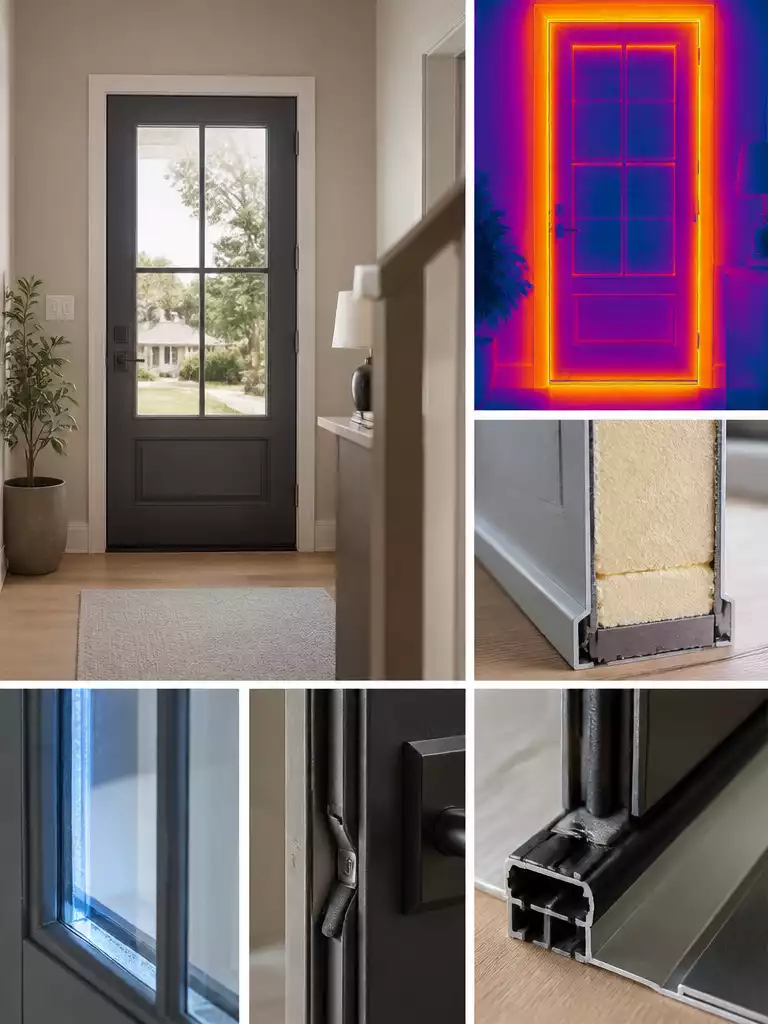
Stop the invisible drafts and slash your monthly utility bills with a high-performance entry system.
If you can feel a distinct temperature drop the moment you stand within 12 inches of your front door, you aren’t looking at an entryway; you’re looking at a giant hole in your wall. A door’s energy performance isn’t just about how thick the material feels, but how it manages heat transfer and air leakage during the peak of summer and the depths of winter.
The Core Secret: The “stuffing” inside your door matters significantly more than the outer shell. A fiberglass door featuring a polyurethane foam core essentially acts like a high-end cooler box, providing up to five times the insulation value of traditional solid wood.
When comparing specs, you need to look at the U-factor and the Solar Heat Gain Coefficient (SHGC). The U-factor measures how much heat escapes your home (aim for ≤ 0.17 for opaque doors), while a lower SHGC is vital for south-facing entries where the sun tends to bake your hallway all afternoon.
Glass is often the biggest compromise in efficiency, as every square inch of decorative lite reduces the overall R-value of the system. If your heart is set on a glass-heavy design, insist on Low-E (low-emissivity) coatings to reflect infrared light and keep the heat where it belongs.
Expert Insight: Always verify the ENERGY STAR label specifically for your Climate Zone. A door built for Florida’s humidity might fail the thermal break test required to survive a Minnesota winter without “sweating” on the interior metal surfaces.
What Makes This Door Worth Saving
The “Thermal Break” Steel Door: This specialized design features a non-conductive strip that prevents outdoor cold from transferring to the indoor metal surface. It effectively stops the door from “sweating” or developing frost on the inside during extreme temperature drops.
Efficiency keeps your climate-controlled air in, but the next section is about keeping the “uninvited” out. Choosing the right armor won’t just save you money—it will provide the security your family needs.
⭐ Recommended for Energy Efficiency
Heavy-Duty Garage Seal with Aluminum Track
D-Shape Self-Adhesive Rubber Weather Stripping
Q-Shaped Foam Weather Stripping Seal
⚠️ Where Efficiency Often Fails:
- The Slab-Only Trap: Replacing just the door slab while keeping an old, warped frame guarantees air leaks regardless of the door’s R-value.
- Ignoring SHGC: Buying a high-insulation door but ignoring solar heat gain on south-facing entries leads to a “greenhouse” hallway effect.
- Pressure Washing: Using high pressure to clean your door can force water past energy seals and permanently damage delicate weatherstripping.
Security Features: The “Kick-In” Defense
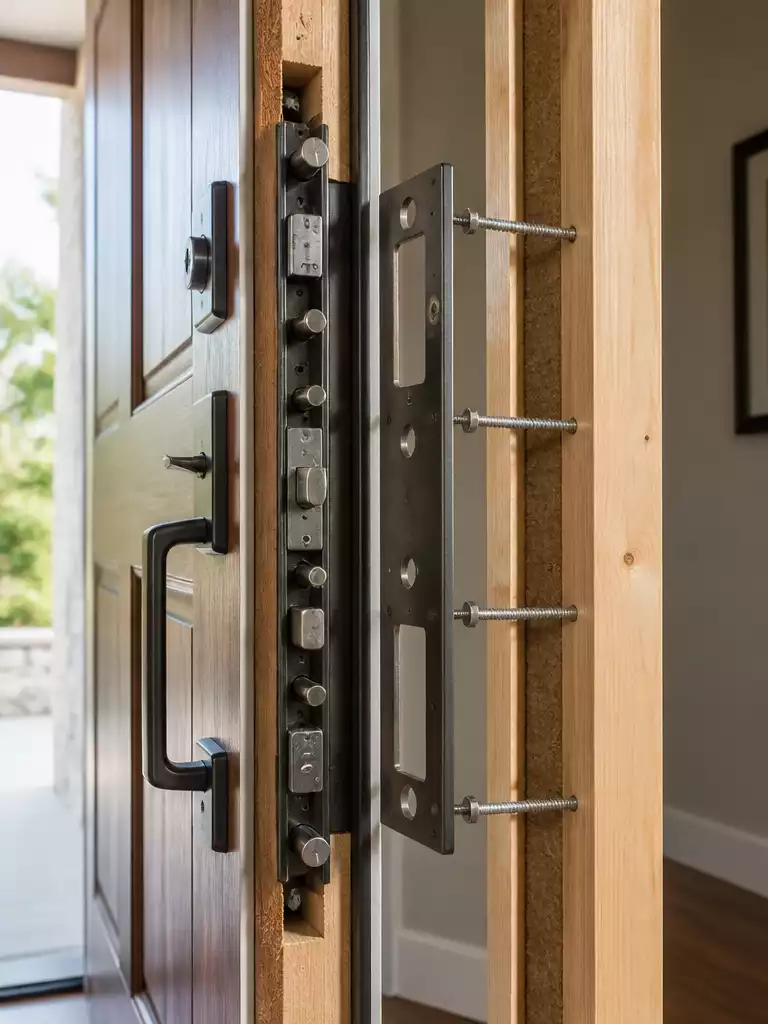
A fortified entry system provides the quiet confidence that your home remains a private sanctuary.
Most burglars aren’t sophisticated lock-pickers from a spy movie; they are looking for the path of least resistance. In reality, the weakest point of your entry isn’t the lock itself, but the wooden door frame that splits easily under pressure.
To prevent a “kick-in,” you need to stop thinking about the door as a single slab and start viewing it as a reinforced system. This begins with the hardware that anchors your home to its very bones.
The Strike Plate Secret
The standard 1-inch screws that come in most lock boxes only grab onto the decorative wood trim. For real security, you must insist on 3-inch screws that bypass the trim and anchor directly into the 2×4 wall studs behind the casing.
Beyond the screws, the construction of the door core dictates how much force it can withstand. You should strictly avoid “hollow” or “honeycomb” cores, which offer almost zero piercing resistance.
A security-focused entry requires a solid-core fiberglass or a 24-gauge steel skin. These materials are dense enough to resist blunt force and won’t buckle or crack when the pressure is on.
If you want that “bank vault” feel every time you turn the key, look into multi-point locking systems. These engagement points at the top, middle, and bottom of the frame make the door virtually impossible to pry or shove open.
Expert Insight: The Steel-Reinforced Jamb
Look for a door system where the frame itself is lined with a metal strike-wrap. This reinforcement prevents the wood jamb from splitting even under extreme impact, turning your entryway into a true fortress.
High-end security does come with a price jump, but when comparing Grade 1 versus Grade 2 hardware, it is the only place where the extra investment offers immediate, tangible protection. If you are adding glass to this setup, you’ll need to be even more strategic to maintain these gains.
⭐ Best Material Options for Doors
Adjustable Aluminum and Oak Door Threshold
U-Shaped Door Sweep with Vinyl Seal
Adjustable Double Bubble Door Sweep Seal
📈 Worth It at Resale
While high-security hardware adds to your upfront cost, it is one of the few upgrades that pays for itself by lowering “buyer friction.” In many regions, a secure steel door recovery can exceed 100%, as new owners prioritize immediate safety and lower insurance risks over purely decorative flourishes.
The ROI Winner: 24-gauge steel offers the highest cost recovery for homeowners planning to sell within 12 months.
The technical specifications of a high-performance entry can feel like a heavy mental load, but the high-stakes decisions are actually quite narrow. A home with lasting value isn’t built on 12 perfect technical scores; it is built on three or four strategic investments that protect your budget and your peace of mind. Narrowing your focus to the structural essentials ensures you aren’t overspending on features that won’t impact your daily experience.
🎯 The Calls Worth Getting Right:
- Prioritize security and sealing by choosing a reliable front door model.
- Consider how natural light shifts before you select glass panels for the entry.
- Ensure the rough opening measurements are verified by a professional.
- Match hardware weight to the door’s actual material density.
Glass and Sidelight Choices
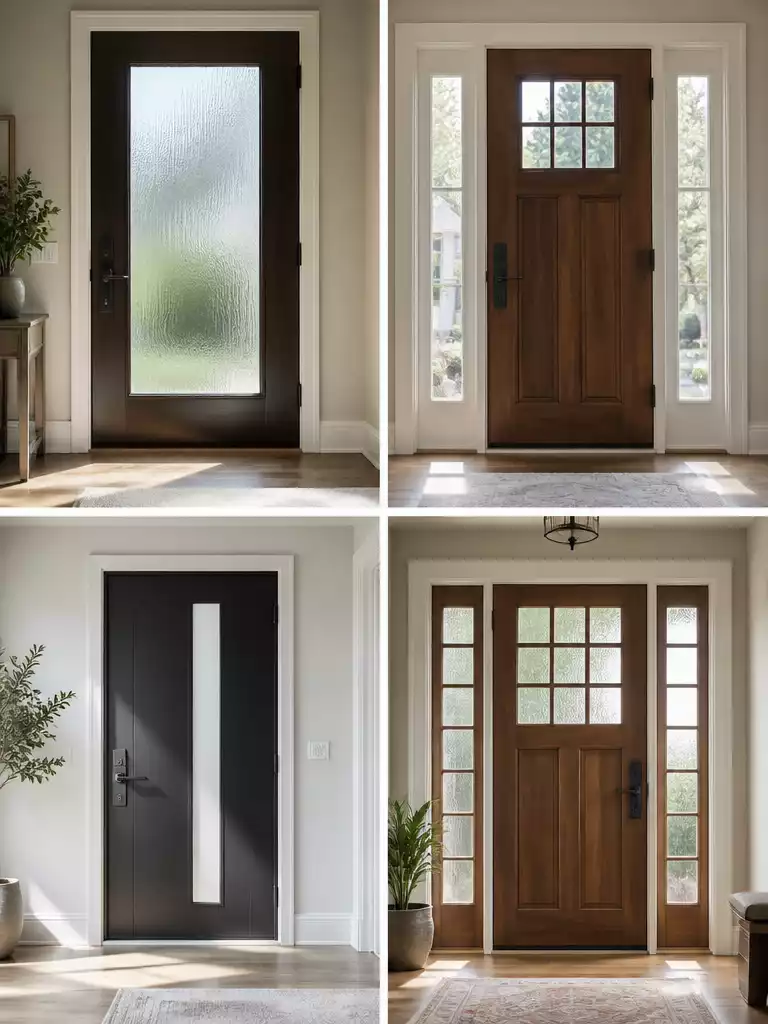
Flood your entryway with natural light while maintaining the perfect level of home privacy.
Choosing glass for your entry is a constant tug-of-war between wanting a sun-drenched foyer and not wanting the delivery driver to see you in your pajamas. While clear glass offers the most light, most homeowners find that textured or obscured glass provides the necessary boundary between the public street and their private living space.
Security is the primary concern when adding glass to a door system. While tempered glass is the standard safety choice because it crumbles rather than sharding, impact-rated laminated glass is the superior pick for break-in resistance, as it stays in the frame even if cracked.
Expert Insight: To maximize security, choose a “half-lite” or “top-third” glass insert. This placement keeps the glass far enough away from the interior thumb-turn lock that a thief cannot simply break a pane and reach inside to unlock the door.
If you are considering sidelights—those vertical glass panels flanking the door—be prepared for a significant budget shift. Adding two sidelights can often triple the price of a standard door and creates additional “weak points” for security and energy loss if they aren’t properly tempered and sealed.
What Makes This Door Worth Saving
The “Satin Etch” Glass hack: It provides a smooth, frosted appearance that mimics a high-end spa aesthetic. It completely eliminates the need for dusty curtains or blinds that often clutter up an otherwise clean entry design.
Even the most beautiful glass won’t fit if you haven’t mastered the math of the “Rough Opening.”
.
⚠️ Common Glass and Sidelight Mistakes:
- The Reach-In Trap: Installing full-length glass near a standard thumb-turn lock makes it easy for intruders to reach the latch.
- Ignoring SHGC Ratings: Forgetting Low-E coatings on south-facing glass can turn your entryway into a greenhouse during the summer months.
- Non-Tempered Sidelights: Using standard glass in sidelights is dangerous; ensure they are tempered to crumble safely if accidentally bumped.
6. Standard vs. Custom Sizing
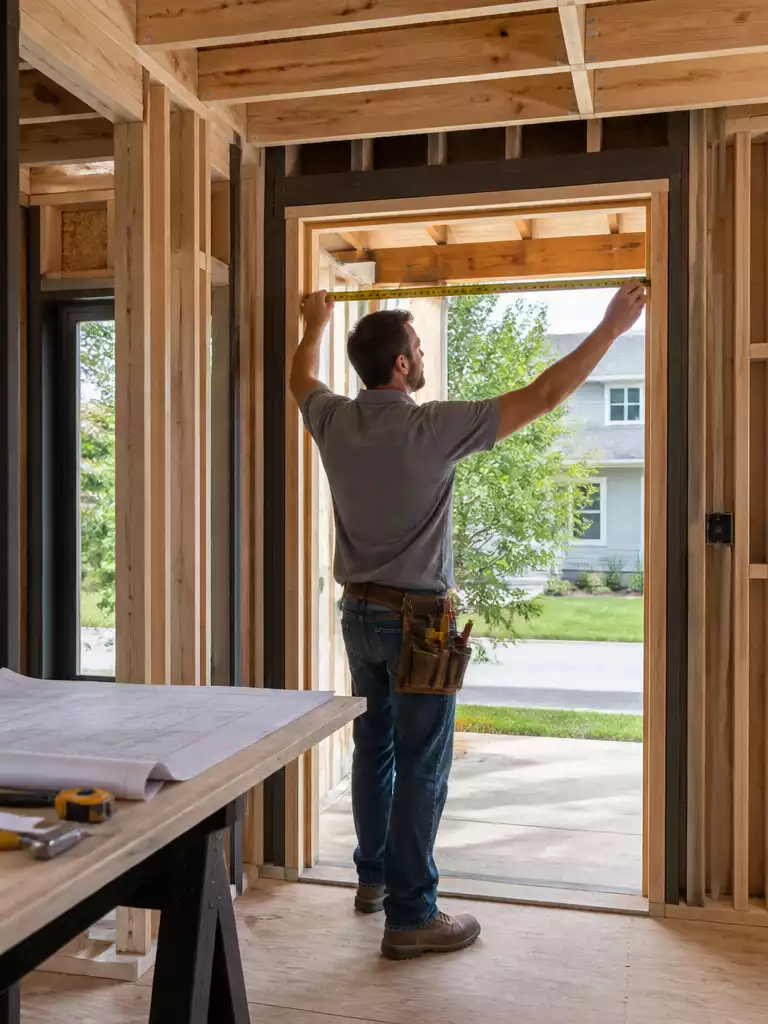
Getting the measurements right ensures a weather-tight fit that saves your energy bill and your sanity.
Custom is easily the most expensive word in home renovation. While most modern U.S. homes are built for a 36″ x 80″ standard door, older homes or unique architectural builds are often a minefield of odd inches that can double your lead time and your bill.
Before you fall in love with a floor model, you need to understand that a door is only as good as the hole it fills. If your house has settled over the decades and the frame is no longer “square,” simply buying a new door slab will lead to gaps that no amount of weatherstripping can fix.
⚠️ The Warning: Never Measure the Old Door
Measure the “Rough Opening”—the actual space between the wall studs—not the existing door slab. The rough opening is typically 2 inches wider and 2.5 inches taller than the door itself to allow for the frame and shimming.
You also need to verify your jamb depth, which is the thickness of your exterior wall. Standard 2×4 construction requires a 4-9/16″ jamb, while 2×6 walls need a 6-9/16″ depth; getting this wrong means your door will sit awkwardly sunken into your siding or stick out past your interior trim.
For most homeowners, the pre-hung advantage is the smartest investment. Because the door comes already attached to its own frame, the hinges are perfectly aligned and the weatherstripping is factory-sealed, eliminating the guesswork of trying to fit a new slab into an old, warped opening.
📋 The Measurement Checklist
- Remove the interior trim (casing) to see the actual wall studs for the most accurate width and height.
- Measure the width in three places: top, middle, and bottom. Use the smallest number.
- Measure the height from the subfloor to the bottom of the header in two places.
- Check the floor for level; an unlevel floor may require a specific sill adjustment during install.
Once you’ve locked in the physical dimensions of the opening, you can move on to the “jewelry”—the hardware and finish that turn a functional barrier into a design statement.
⭐ Best Material Options for Doors
Adjustable Aluminum and Oak Door Threshold
U-Shaped Door Sweep with Vinyl Seal
Adjustable Double Bubble Door Sweep Seal
💰 What This Really Costs
- The real range: Labor for a pre-hung swap typically runs $230–$800, while structural changes to the header exceed $1,300.
- Hidden cost: Budget an extra 10% for “behind the wall” rot discovered after pulling back the old threshold.
- Worth it / not: Investing in a pre-hung system is always worth the premium to avoid the high labor costs of hand-fitting a slab.
Hardware and Finish
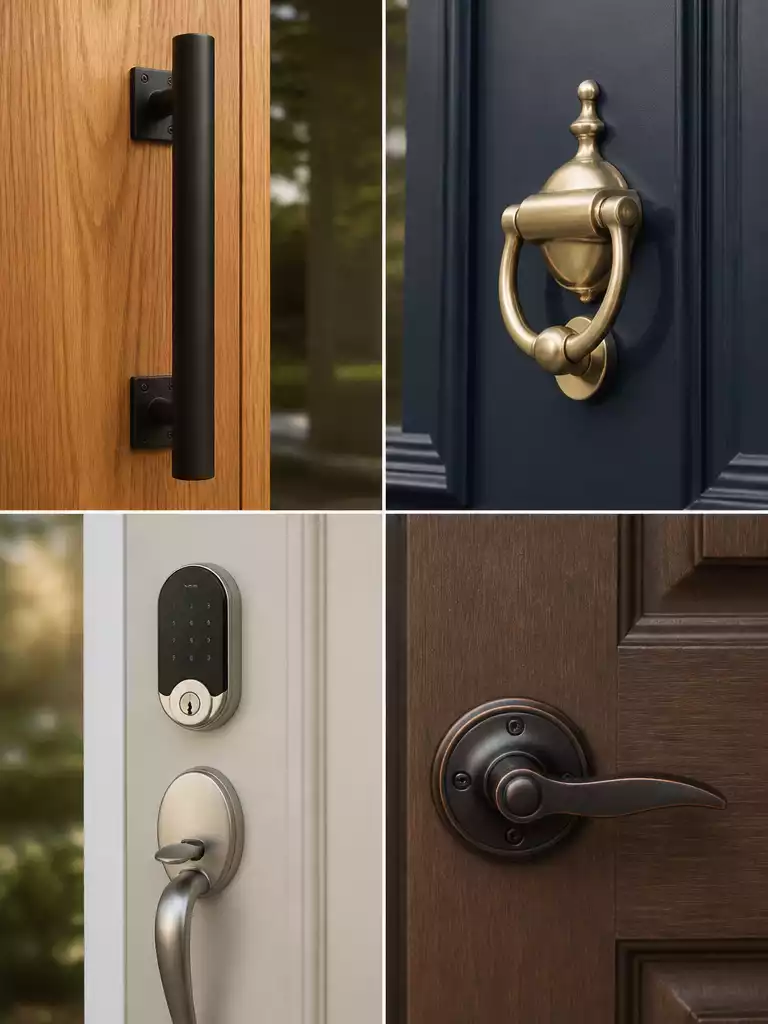
The right hardware acts as the home’s handshake, offering a tactile signal of quality and security.
Hardware is the first thing you touch when you arrive home, and its weight tells a silent story about the quality of your house. Choosing the right “jewelry” for your door isn’t just about matching your interior faucet finish; it’s a decision that impacts your home’s security and the door’s ability to withstand the elements over time.
What Makes This Door Worth Saving: The “Solid Brass” Heft. A heavy, forged brass handle feels cool to the touch and clicks with a satisfying, expensive “thud” rather than a tinny rattle.
If you live within 5 miles of salt water, your material choice is non-negotiable: you need 316 Stainless Steel hardware. Standard plated metals will pit, corrode, and turn a chalky green within 24 months of exposure to coastal air.
For those outside coastal zones, understanding “living finishes” is the key to avoiding buyer’s remorse. Popular options like Oil-Rubbed Bronze are often designed to wear away with use, eventually revealing a brighter copper underneath.
Electronic smart locks are a major convenience, but they require a “Deadbolt-to-Handle” spacing check before you buy. If your door has a standard borehole layout, some larger smart escutcheons may overlap with your handle set, forcing you to patch and redrill the door.
Pro-Tip: Check the “Handing.” Stand outside your door; if the hinges are on the left, you need a “Left-Handed” lever. Buying the wrong one means the curve of the handle will point toward the jamb instead of the center of the door.
Finally, ensure your deadbolt is a distinct lock type from the handle latch to maximize security. For a front entry, always look for hardware that offers a Grade 1 ANSI rating to ensure it can withstand significant force.
⭐ Best Material Options for Doors
Adjustable Aluminum and Oak Door Threshold
U-Shaped Door Sweep with Vinyl Seal
Adjustable Double Bubble Door Sweep Seal
💰 Surprise Costs to Plan For:
- The real range: High-quality forged brass or stainless handlesets typically add $150 to $500+ to your total door project budget.
- Hidden cost: If switching from a standard deadbolt to a smart lock, you may need a separate “touch-up” cover plate.
- Worth it / not: Prioritize the deadbolt’s internal grade over handle aesthetics; a Grade 1 lock is the best security investment.
8. Weatherproofing and Insulation
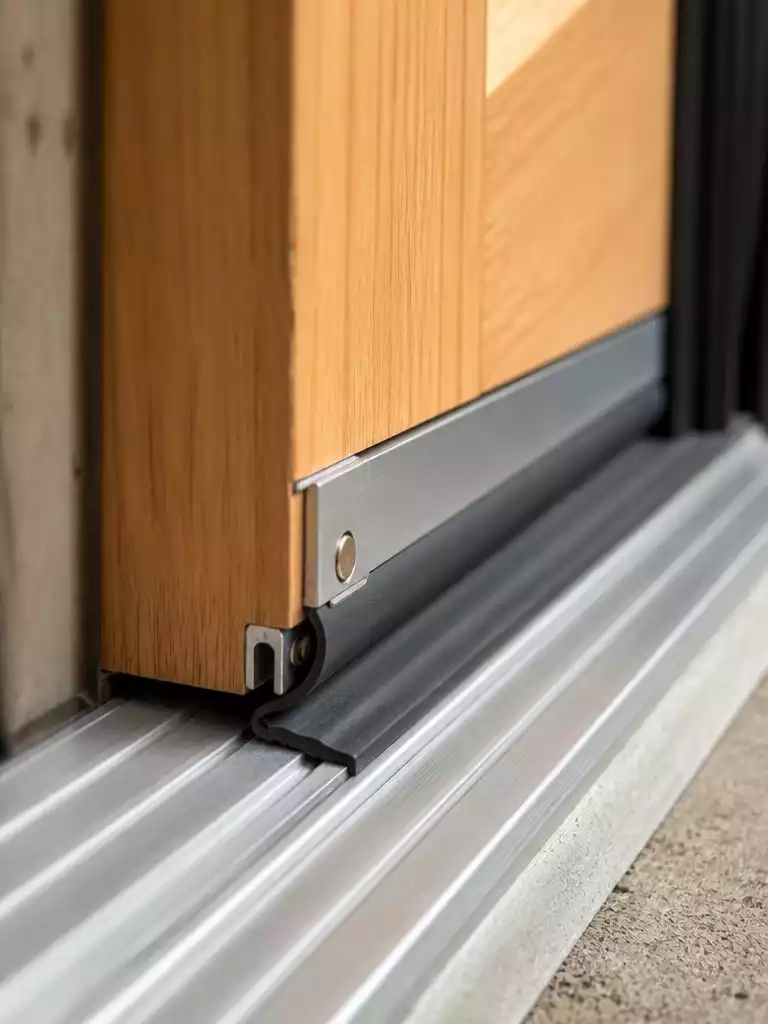
Stop energy leaks and keep your home cozy with a perfectly calibrated entrance seal.
Think of your front door as a moving wall. Every time you turn the handle, you are essentially breaking the thermal envelope of your home, and the goal of high-end weatherproofing is to ensure that seal is perfectly restored the second the latch clicks.
If you can feel a temperature change just twelve inches from the door, your insulation isn’t doing its job. This section is about the “soft goods” that turn a beautiful slab of wood or fiberglass into a functional thermal barrier.
The Pro Tip: The Five-Year Refresh
Plan to replace your weatherstripping every five years. It is a simple $20 fix that can save you upwards of $200 in annual heating costs as the materials naturally compress and lose their elasticity over time.
To get the best performance, you need to look at how the door interacts with the frame on all four sides. Not all seals are created equal, and the material you choose dictates how often you’ll be feeling a draft during a storm.
- Compression Weatherstripping: This “tube” style, often made of PE-covered foam, is far superior to flat felt. It physically “crushes” when the door closes, creating an airtight gasket that fills even slight gaps in the frame.
- Adjustable Thresholds: Most homeowners don’t realize those screws on the floor plate aren’t just for decoration. You can turn them to raise the sill, closing the daylight gap under the door as the house settles.
- Door Sweeps: Look for a “drip cap” sweep rather than a simple staple-on version. A drip cap actually channels rainwater away from the house, preventing moisture from ever touching your interior flooring.
WHAT MAKES THIS DOOR WORTH SAVING
The Triple-Seal Threshold: This specialized sill system uses three independent layers of rubber. Even in “horizontal rain” or heavy wind, the staggered barriers prevent moisture and air from blowing into your foyer.
When selecting your materials, remember that rubber is the most durable choice for high-traffic doors. While foam and felt are common in budget kits, rubber maintains its shape longer and provides a more consistent seal against the elements.
By focusing on these often-overlooked components, you ensure your investment pays for itself in comfort and lower utility bills. Once the seals are tight, you can move on to the person behind the hammer.
⭐ Best Material Options for Doors
Adjustable Aluminum and Oak Door Threshold
U-Shaped Door Sweep with Vinyl Seal
Adjustable Double Bubble Door Sweep Seal
📋 Quick Performance Check:
- The Dollar Bill Test: Close the door on a dollar bill; if it pulls out easily, your weatherstripping has failed.
- The Shadow Check: Stand inside at noon; seeing light around the edges means your frame has likely settled and shifted.
- Material Match: Ensure you use rubber seals for high-traffic entries, as they maintain their shape longer than felt or foam.
9. Installation Costs: The “Sticker Price” vs. Reality
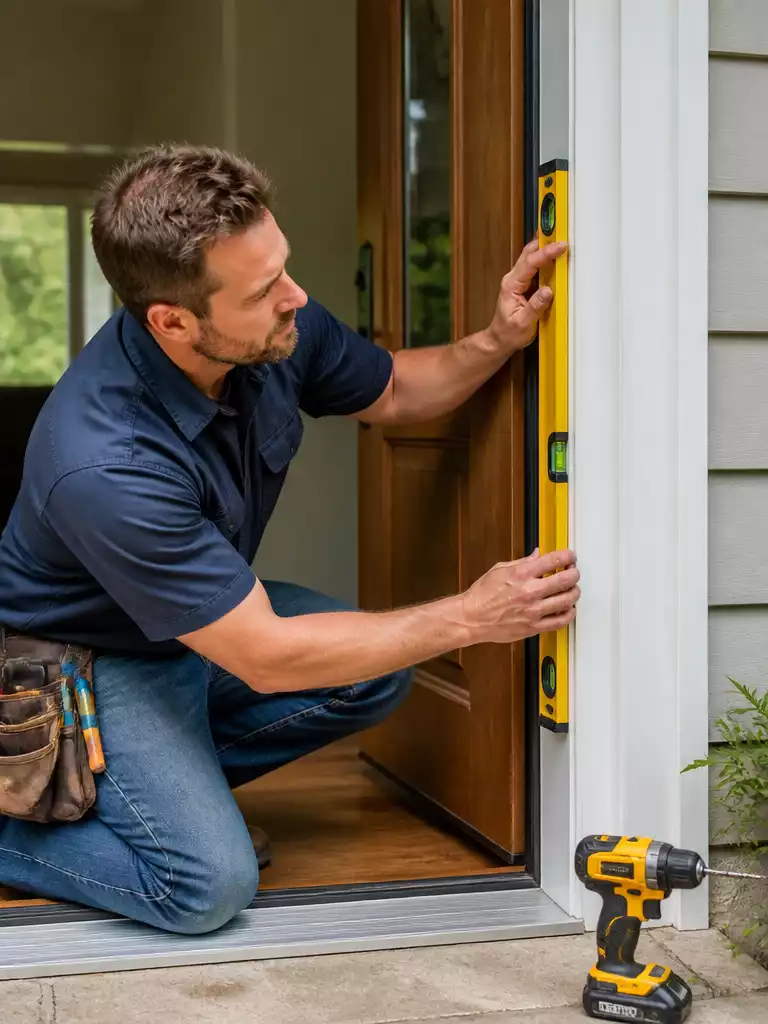
Professional installation ensures your high-end door performs as beautifully as it looks on day one.
The price tag hanging on a showroom door is rarely the number you’ll see on your final invoice. It is easy to fall in love with a slab, only to realize that the labor required to make it swing perfectly can equal the cost of the door itself.
Understanding the labor gap helps you avoid the sticker shock that often hits during the quoting phase. Here is how the professional fees typically break down based on the complexity of your entryway.
A standard swap assumes your “Rough Opening” is square and the new pre-hung system fits like a glove. However, if you are moving from a single door to a trendy door-with-sidelights, you are moving into structural surgery territory.
In these cases, a carpenter must cut into the “Header”—the support beam that holds up the wall above your door. This isn’t just a cosmetic change; it usually requires a local permit and significant structural reinforcement to keep your home’s envelope safe.
The Hidden Checklist
- Disposal Fees: Don’t assume the contractor will haul away your old 150-pound solid wood door for free.
- Sill Flashing: Always insist on new flashing to prevent subfloor rot, a common “hidden” issue found during removal.
- Interior Trim: Check if your quote includes the replacement and painting of the interior casing.
Expert Insight: Always set aside a 10% cash buffer for behind-the-wall surprises. You don’t want to halt a project because you discovered rotted wood under your old threshold that needs immediate repair.
WHAT MAKES THIS DOOR WORTH SAVING
The “Fixed-Price” Install: This is the gold standard of service. Look for a contractor who offers a flat rate for “Sill-to-Trim” service, which covers everything from structural prep to the final coat of interior paint so you avoid scope creep.
A high-quality installation is the only way to protect your warranty and ensure your home stays airtight. Once the professional is finished, the longevity of that investment shifts back into your hands.
⭐ Best Material Options for Doors
Adjustable Aluminum and Oak Door Threshold
U-Shaped Door Sweep with Vinyl Seal
Adjustable Double Bubble Door Sweep Seal
🧰 Ask Before You Hire:
- Labor Crew: Ask if they use their own direct employees or subcontractors to ensure consistent quality and accountability.
- Lead Time: Confirm if the install date is guaranteed once the door arrives to avoid a gaping hole in your schedule.
- Warranty Scope: Clarify if their labor guarantee is separate from the manufacturer’s slab warranty and how long it lasts.
10. Maintenance Needs: The “Chore” Factor
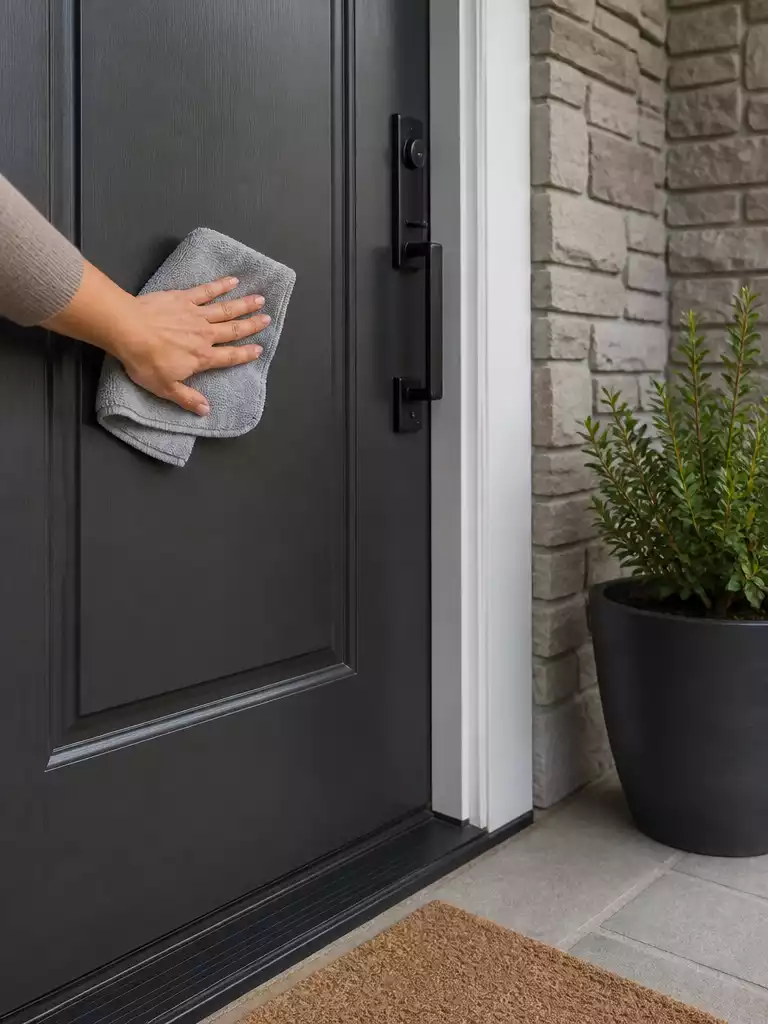
Low-effort upkeep ensures your entryway stays as striking as the day it was installed.
Be honest: How much do you actually like sanding and staining on a Saturday morning? Your answer to that question dictates whether you should invest in the warmth of real wood or the resilience of fiberglass.
A front door is a high-traffic moving wall, and every material handles the environmental “beating” differently. Choosing based on aesthetics alone is a recipe for maintenance regret if you aren’t prepared for the specific upkeep each material demands.
The Maintenance Reality Check
- Wood Maintenance: To keep your warranty valid, many wood doors require a fresh topcoat every 2 years. If you notice the grain starting to “gray” or feel rough, you’ve already waited too long and risk permanent moisture damage.
- Steel Upkeep: Steel is largely hands-off, but it is all about the scratches. While it won’t rot, it will rust if the finish is breached; keep a factory touch-up kit handy for the bottom edge where shoes and pets inevitably kick the paint.
- Fiberglass Cleaning: This is the “soap and water” life. Fiberglass only needs a seasonal wipe-down and an occasional check of the weatherstripping to stay in peak condition for decades.
If you opt for the high-end look of wood, remember that stained finishes are significantly harder to maintain than painted ones. Refinishing stained wood requires careful stripping and sanding to avoid a patchy look, whereas a painted door can often be refreshed with a simple light scuff and a new coat.
Expert Insight: Many homeowners reach for the pressure washer during spring cleaning, but this is a major mistake to avoid. High-pressure water can blow past the factory seals, trap moisture behind the glass, and even delaminate the delicate veneers on expensive wood doors.
Maintenance is essentially a hidden cost that heavily impacts the overall ROI of your investment. For those who want a “set-it-and-forget-it” solution, prioritize a UV-rated factory finish.
WHAT MAKES THIS DOOR WORTH SAVING
The “UV-Rated” Factory Finish: Look for fiberglass doors finished in a factory setting with automotive-grade paint. These are engineered to resist fading for 10+ years, even in direct southern exposure.
By selecting a material that aligns with your lifestyle, you ensure the door remains an asset rather than a chore. This long-term durability is the final piece of the puzzle before calculating your total project value.
⭐ Best Material Options for Doors
Adjustable Aluminum and Oak Door Threshold
U-Shaped Door Sweep with Vinyl Seal
Adjustable Double Bubble Door Sweep Seal
11. Budget vs. Long Term Value
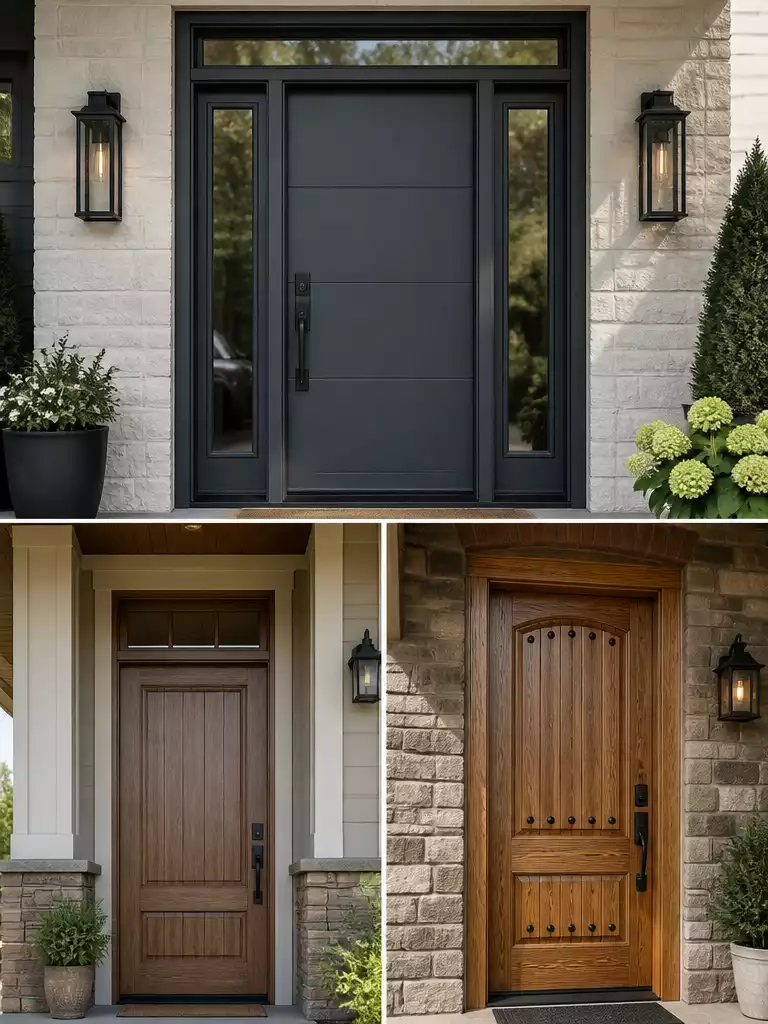
Invest in high-performing materials that slash maintenance chores while maximizing your home’s total resale potential.
Think of your front door as the ultimate power player in your home equity playbook. According to “Cost vs. Value” reports, a front door replacement is consistently one of the highest-returning projects for home resale, occasionally recouping its entire cost the moment it’s hung.
While it is tempting to focus only on the sticker price, the real math happens over the next decade of ownership. You have to weigh the immediate “bang for your buck” against the slow drain of energy leaks and refinishing costs.
Steel is your best upfront winner if you plan to list your house within the year. Because it is affordable and provides an instant face-lift to a tired exterior, it often yields a cost recovery of over 100% in many regions.
Fiberglass is the “forever home” champion, offering a massive 80-97% ROI while saving you thousands in long-term maintenance. Its value lies in the 20 years of durability and lower energy bills you’ll enjoy before ever needing to think about a replacement.
Wood is essentially a luxury emotional purchase rather than a spreadsheet-driven one. While it offers unparalleled beauty, you should expect a lower financial return of around 55% unless you are restoring a high-value historical property where authenticity is mandatory.
The Curb Appeal Multiplier: A mid-range fiberglass door that expertly mimics $5,000 wood is the ultimate strategic hack. It gives you that high-end designer look for a 90% resale recovery without the maintenance headache.
Ultimately, your choice should align with your timeline. If you’re staying for the long haul, investing in the thermal performance of fiberglass pays dividends every month in utility savings.
⭐ Best Material Options for Doors
Adjustable Aluminum and Oak Door Threshold
U-Shaped Door Sweep with Vinyl Seal
Adjustable Double Bubble Door Sweep Seal
🧰 What to Confirm in the Quote:
- The Disposal Fee: Confirm if the price includes hauling away your old heavy door and all related job site debris.
- Transferable Warranty: Ask if the product warranty transfers to the next owner, as this is a major selling point.
- Sill Flashing: Ensure the quote covers new sill flashing to prevent subfloor rot, a common “surprise” cost during installation.
12. Final Decision: The Showroom Walkthrough
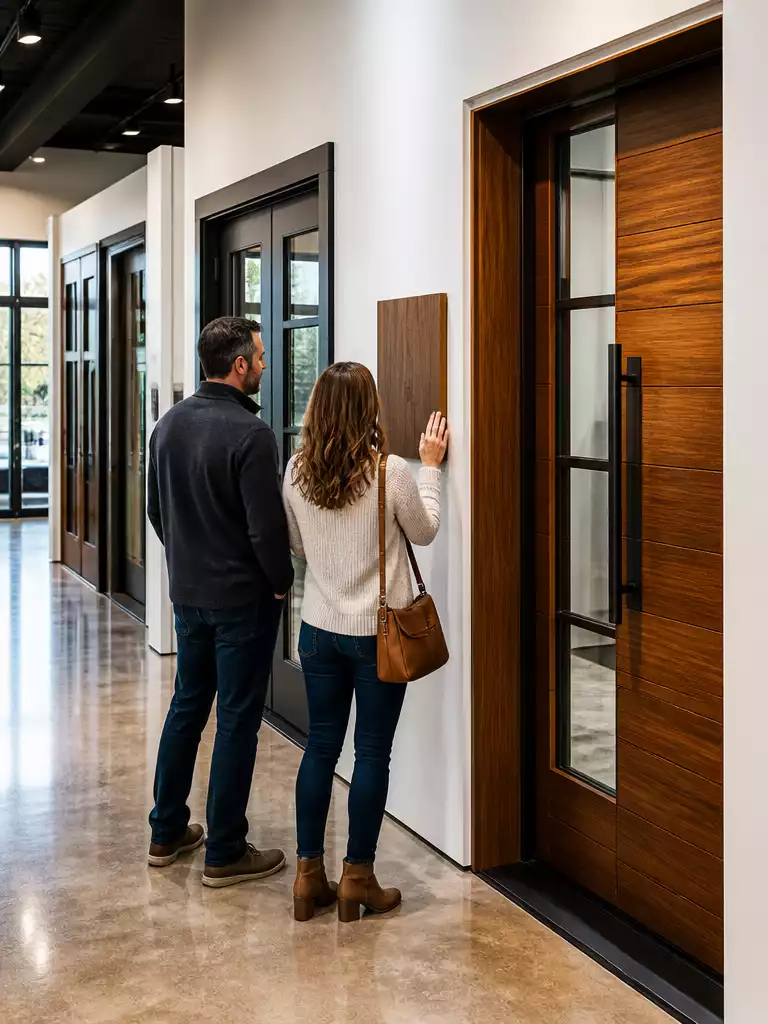
Experience the weight and texture of your new entry in person for total confidence.
You can browse endless galleries on your phone, but you should never buy a front door based on a digital thumbnail. This is a tactile, structural investment that you will interact with every single day, and you need to “test drive” it before signing a contract.
When you arrive at the showroom, don’t just look at the colors; swing the doors open and shut to feel the heft. A high-quality door should feel solid and close with a muffled thud, while a “hollow” or cheaply made version will often vibrate or sound tinny.
The Showroom Quality Check:
- The Reveal: Look at the gap between the door and the frame; it should be perfectly consistent all the way around without any tapering.
- The Finish: Run your hand over the surface to check for factory-smooth paint or realistic grain depth in fiberglass.
- The Hardware Action: Test the deadbolt and handle to ensure the “click” feels mechanical and sturdy rather than loose.
Once you’ve narrowed down your material and style, it is time to gather three “apples-to-apples” quotes from local pros. To get an accurate comparison, ensure every estimate includes the exact same hardware specs, disposal fees for your old door, and the required sill flashing.
Be sure to dive into the fine print of the warranty, as a “Lifetime Warranty” is rarely as broad as it sounds. Often, these policies only cover the actual door slab, leaving you on the hook for the glass inserts or the expensive labor costs if a replacement is needed later.
✔️ Contractor Vetting Checklist
- ☐ Staffing: Ask if they use their own employees or subcontractors; direct crews usually take more pride in the flashing and sealing details.
- ☐ Protection: Verify they carry both active liability insurance and workers’ compensation.
- ☐ Transferability: Check if the door’s warranty transfers to the next owner, which adds tangible value when you sell.
The right door is the one that balances your budget with the security your family needs. When the installation is finally finished, it should be the piece of your home that makes you smile every time you pull into the driveway.
⭐ Best Material Options for Doors
Adjustable Aluminum and Oak Door Threshold
U-Shaped Door Sweep with Vinyl Seal
Adjustable Double Bubble Door Sweep Seal
🔢 The Right Sequence
Following this specific order prevents the common “rework headache” where trim is painted twice or hardware is scratched during the final fit.
- Dry-fit the door slab first to confirm the swing and clearance are perfect.
- Remove the slab and complete all painting or staining in a dust-free environment.
- Install the finished door and add hardware last to avoid tool scuffs.
With these twelve considerations on the table, you now have a comprehensive roadmap to navigate the technical and financial trade-offs of a new entryway. Prioritizing the right material and a secure installation will yield far better results than trying to optimize every minor aesthetic detail at once.
Select the core features that align with your home’s architecture and your long-term ROI goals to ensure your house makes a lasting first impression. If you are preparing for a sale, finalizing your front door refresh is a high-impact decision that pays for itself in curb appeal and buyer confidence.