
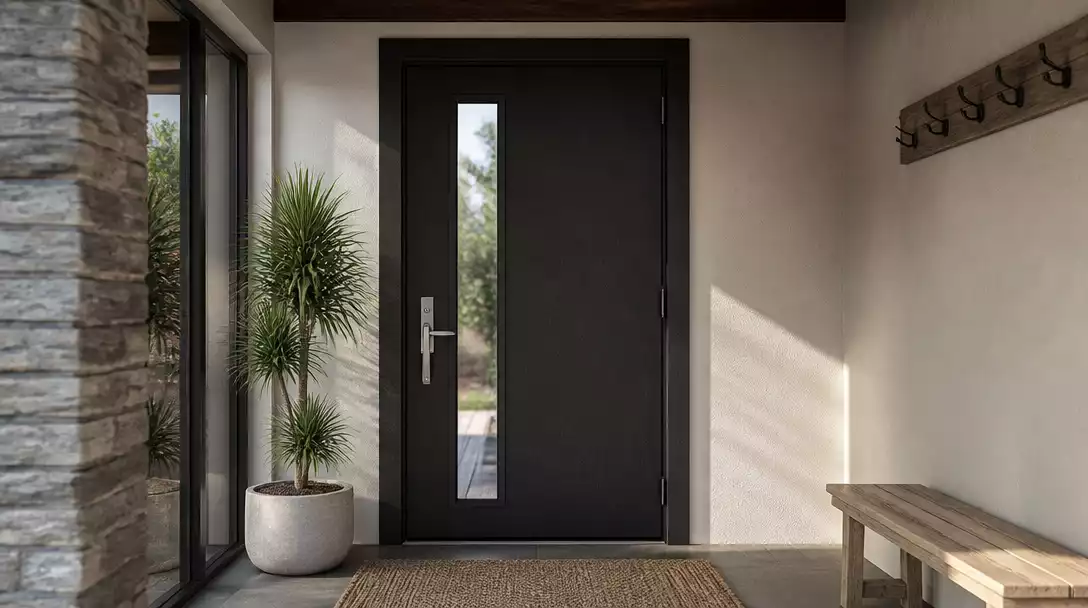
Modern home entry design has shifted from basic aesthetics to complex, performance-driven engineering. This guide narrows the technical noise to 12 critical factors worth your attention, ensuring you get the thermal efficiency and security right the first time. Let’s examine why these technical systems matter.
WHY DOOR CHOICES ARE BECOMING MORE TECHNICAL
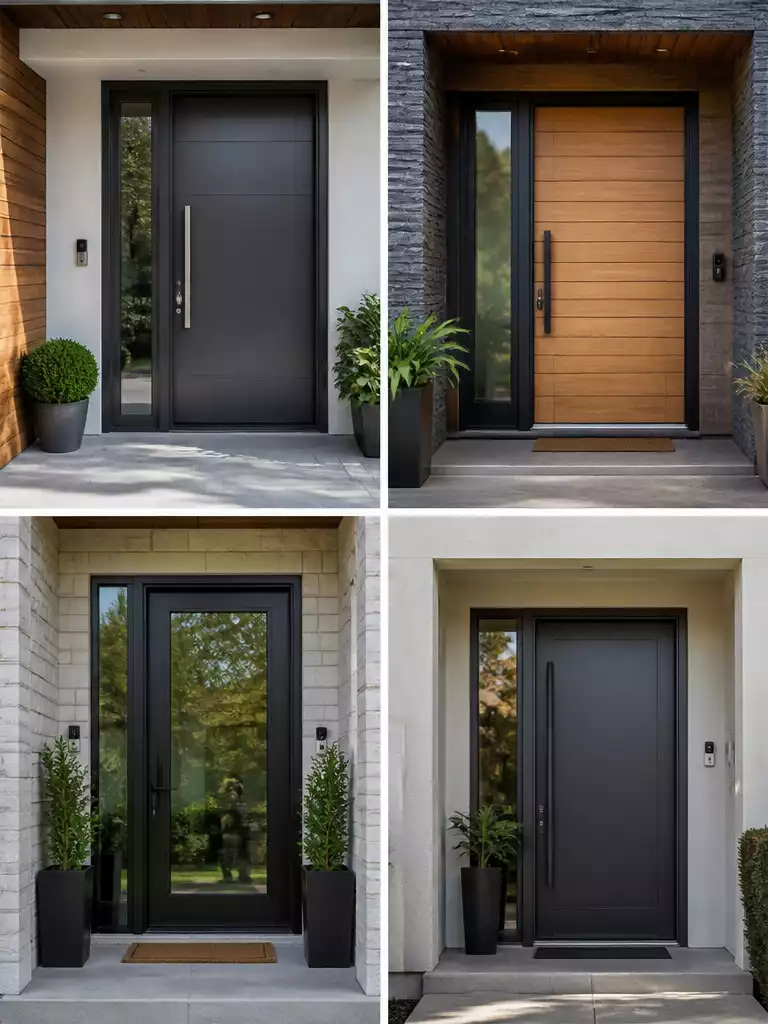
Modern entryways are precision-engineered systems that protect your home from both thermal loss and digital threats.
As an Amazon Associate I earn from qualifying purchases. Affiliate links may earn me a commission at no extra cost to you.
Your front door is no longer just a slab of wood hanging on hinges; it is effectively the most hard-working mechanical component of your home’s exterior envelope. Moving away from the era of simple curb appeal, current entry designs must function as integrated assemblies that manage complex performance demands.
You can no longer view the door, frame, and seal as separate entities. These elements must work in unison to satisfy aggressive thermal bridging requirements and provide secure housing for modern IoT devices.
The “Entryway System” Reality
If you select a design that focuses strictly on aesthetics, you risk installing a barrier that leaks air or creates a signal-blocking “Faraday cage” for your electronics. A truly successful design ensures the following three systems act as one:
- Thermal Efficiency: Managing heat transfer through high-performance cores and precision-fit weatherstripping.
- Digital Integration: Providing clear, unobstructed signal pathways for Wi-Fi and Bluetooth smart locks.
- Structural Integrity: Maintaining code-compliant air-seal standards that prevent drafts and moisture intrusion.
A “pretty” door that fails to seal against the elements is ultimately a failed design, regardless of how it looks from the curb. Prioritizing these technical requirements now prevents the performance regret that often follows a purely aesthetic purchase.
.
Designer Note: The “Assembly First” Mindset
When selecting your next door, treat the entire unit—slab, frame, and hardware—as a single, high-stakes piece of technology. Designers now view this as a primary home envelope component, meaning your choice of finish and material should reflect climate stability rather than just appearance. Prioritize hardware compatibility early to ensure your smart lock choice doesn’t compromise the integrity of the door’s weather seal or thermal rating.
HOW ENERGY EFFICIENCY STANDARDS AFFECT EXTERIOR DOORS
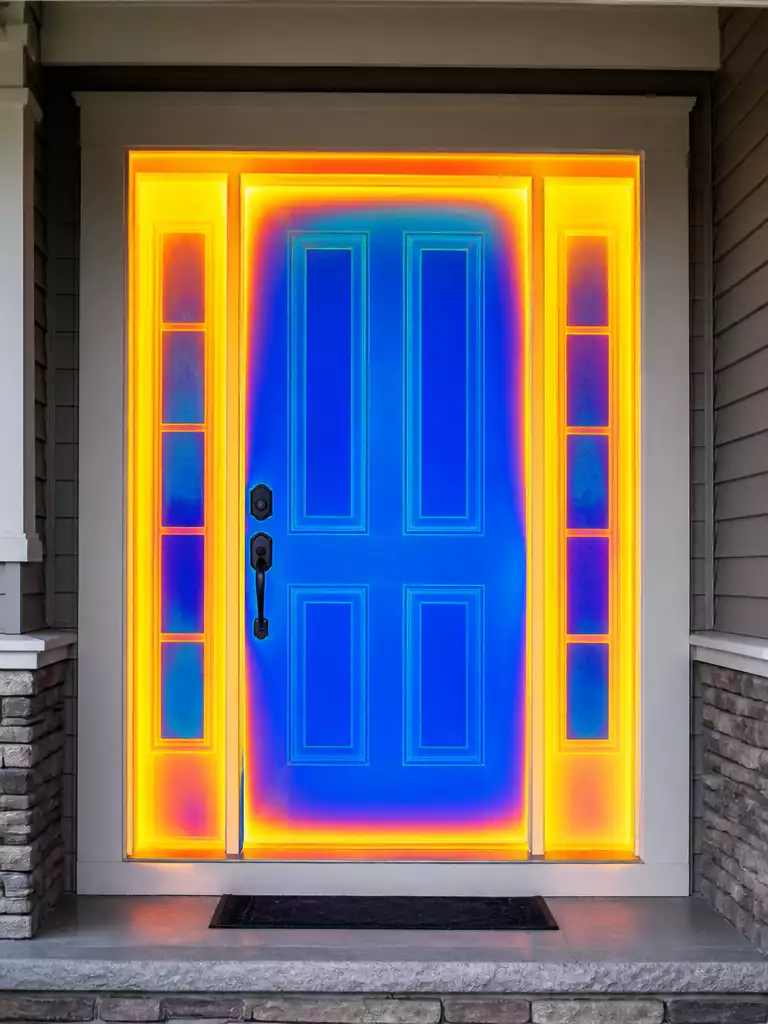
Optimizing your home’s thermal barrier reduces monthly utility bills and creates a more comfortable interior environment.
Every time your heating or cooling system kicks on, a drafty front door is essentially forcing you to pay to condition the outdoors. An inefficient entryway acts as a silent drain on your monthly budget, often allowing air to leak through gaps between the door slab and the frame.
To combat this, modern doors must comply with IECC and ENERGY STAR requirements. These standards don’t just look at the door slab itself; they mandate performance for the entire integrated door assembly.
Key Metrics to Watch:
- U-factor: This measures the rate of heat transfer. The lower the number, the better the door is at keeping your home’s temperature steady.
- SHGC (Solar Heat Gain Coefficient): This represents how much heat from the sun passes through your door. In hot climates, a low SHGC is essential to stop your entryway from becoming a heat trap.
- Air Leakage: High-performance standards, such as those found in California, limit air leakage to 0.3 cfm/ft².
Compliance is rarely about a single component; it is about the seal between your door and its frame. If you install a high-efficiency slab into a poorly sealed frame, the entire unit fails to meet these standards.
When selecting your next door, verify that the entire unit—including the glass, frame, and weatherstripping—carries an NFRC label. This label serves as the only objective proof that your door meets the performance standards required for your climate zone.
.
💰 What This Really Costs
- Annual savings: Investing in a high-performance door typically lowers your utility bills by roughly $100 to $300 each year.
- Hidden labor fees: Don’t forget to budget for professional disposal of your old door and potential frame reframing costs.
- Long-term value: Prioritize the door assembly’s airtightness; it is the most effective way to protect your initial financial investment.
WHAT HOMEOWNERS SHOULD KNOW ABOUT DOOR INSULATION RATINGS
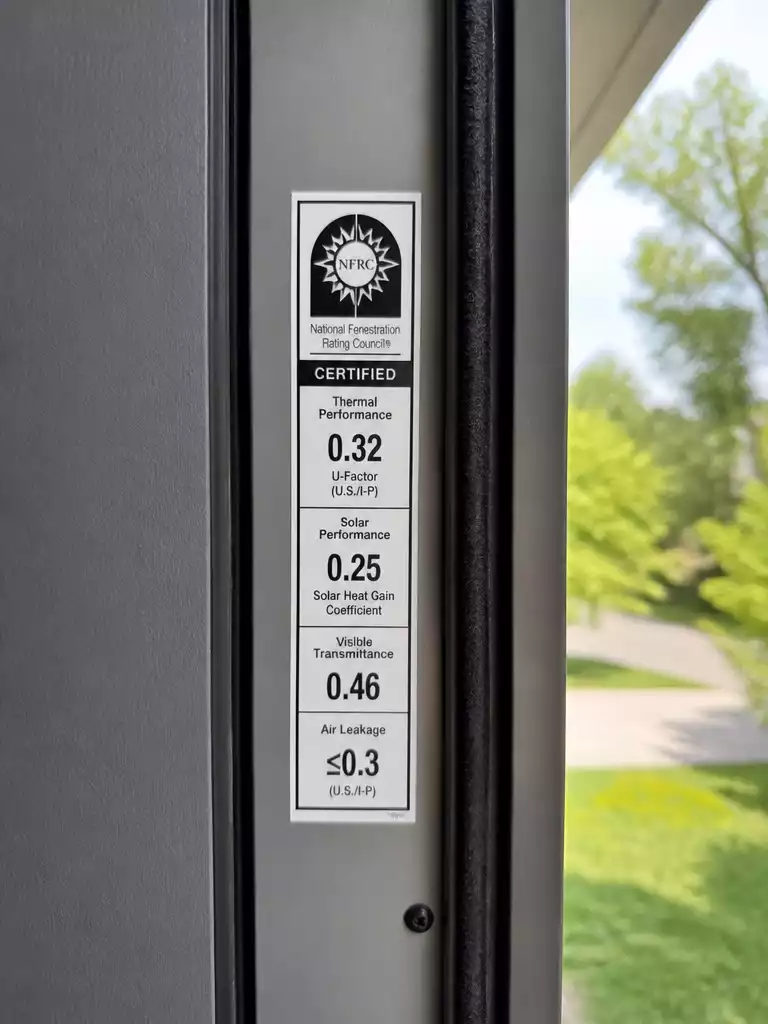
Understanding these technical metrics ensures your home remains comfortable and energy-efficient year-round.
When you start researching your next front door, you will quickly run into two primary metrics: R-value and U-factor. While they both relate to how your door handles temperature, they measure the performance in opposite ways.
The R-value measures the material’s resistance to heat flow, meaning a higher number is better. Conversely, the U-factor measures the rate of heat loss through the entire door assembly, so you want a lower number.
You should prioritize the NFRC (National Fenestration Rating Council) label when comparing products. Marketing claims can be misleading, but this label provides the only objective, third-party verification of the door’s thermal performance.
Pro-Tip for Comfort
For standard residential comfort that balances efficiency and cost, aim for a U-factor of 0.30 or lower. Avoid chasing ultra-high “Passivhaus” ratings unless your home design specifically demands that level of extreme insulation.
Remember that the insulation rating is only as good as the seal around your frame. Even a high-performing door will leak air and energy if it is not installed with a continuous, tight perimeter seal.
.
⚖️ Quick Decision Guide: Choosing Your Door Core
- Choose Fiberglass if: You want the best balance of R-8 thermal efficiency, low maintenance, and high durability.
- Skip Wood if: You live in a high-moisture climate where R-2 insulation and constant refinishing cause headaches.
- Pair it with: A high-performance threshold and weatherstripping to ensure your U-factor isn’t compromised by air gaps.
How Smart Locks Are Changing Entry Door Design
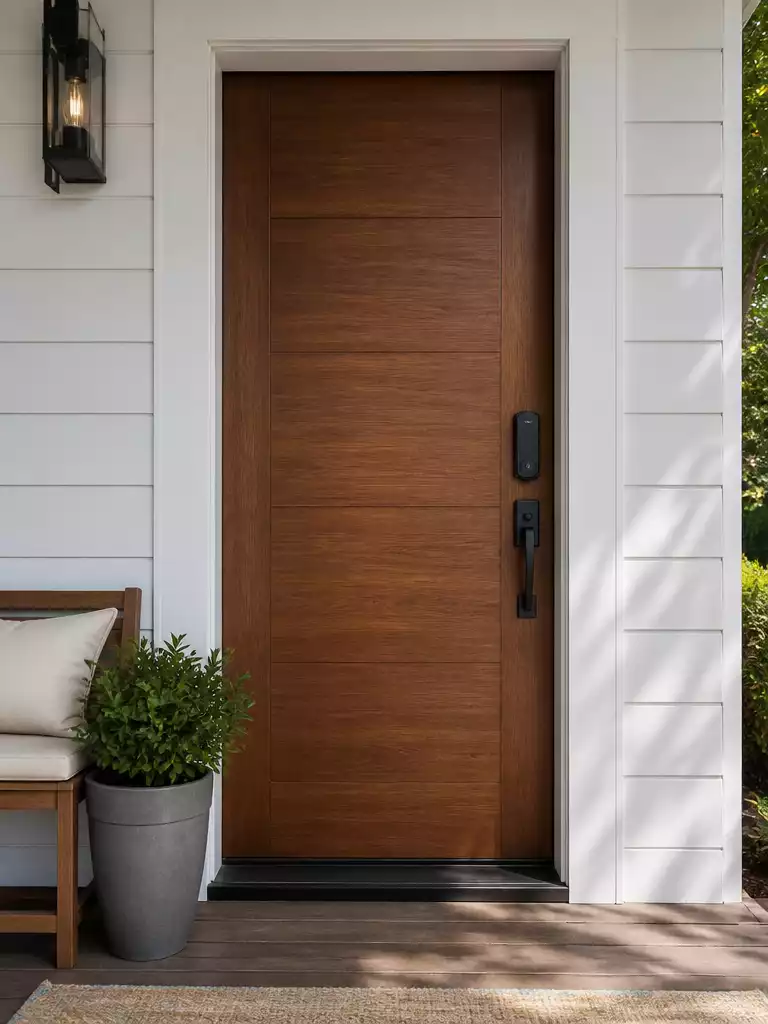
Modernize your entryway with hardware that balances high-tech security with precise physical installation requirements.
The modern entry door has evolved into a digital hub that must accommodate complex internal mechanics. If your door was manufactured without smart lock compatibility in mind, you may find that the hardware conflicts with existing decorative molding or lacks the necessary space for battery packs.
When selecting a door, you must verify that the slab can accept standard smart lock dimensions. A typical smart lock requires a backset of either 2-3/8 inches or 2-3/4 inches and a standard 2-1/8 inch cross bore.
Smart Lock Pre-check
- Check your door thickness; the standard is 1-3/4 inches, but some smart locks struggle with thicker custom doors.
- Measure your backset (2-3/8″ or 2-3/4″) to ensure the lock fits centered on the door stile.
- Ensure your strike plate area is clear of existing decorative moldings that might obstruct flush mounting.
- Confirm if your door frame is steel, as metal can act as a Faraday cage and weaken Wi-Fi or Bluetooth signals.
Beyond the physical bore holes, consider the depth profile of the interior module. Deep-profile locks can easily interfere with storm doors, forcing you to choose between your security upgrade and your weather protection layer.
If you favor metal doors, be aware that these materials can inadvertently block wireless signals. You may need to invest in a signal bridge or ensure your smart hub is positioned within a clear line of sight to maintain consistent connectivity.
Mistake to Avoid: Hardware Binding
Smart locks are highly sensitive to alignment and will fail if your door does not close perfectly. Improper shimming that causes the slightest resistance when latching will lead to motorized “binding,” which drains batteries rapidly and eventually burns out the locking mechanism.
.
💡 Designer Note: Aligning Tech with Aesthetics
When integrating modern smart hardware, prioritize a minimalist aesthetic that doesn’t compete with your door’s architectural lines. Select finishes that complement your existing hardware elsewhere to maintain a cohesive look. Avoid bulky, oversized modules that clutter the door slab; choosing a slim-profile unit ensures the technology feels like a deliberate, sophisticated design choice rather than an afterthought.
Navigating the technical landscape of smart entry systems can feel daunting, but you only need to verify a few physical specs to ensure a seamless integration. Most complications arise from simple oversights that are easy to address with a bit of foresight.
🎯 What Moves the Needle:
- Confirm door thickness matches your chosen lock, as seen in modern entry designs.
- Check your backset measurement to ensure the hardware aligns perfectly.
- Verify that your strike plate area remains clear of interference from existing moldings.
Why Material Choice Matters For Security And Efficiency
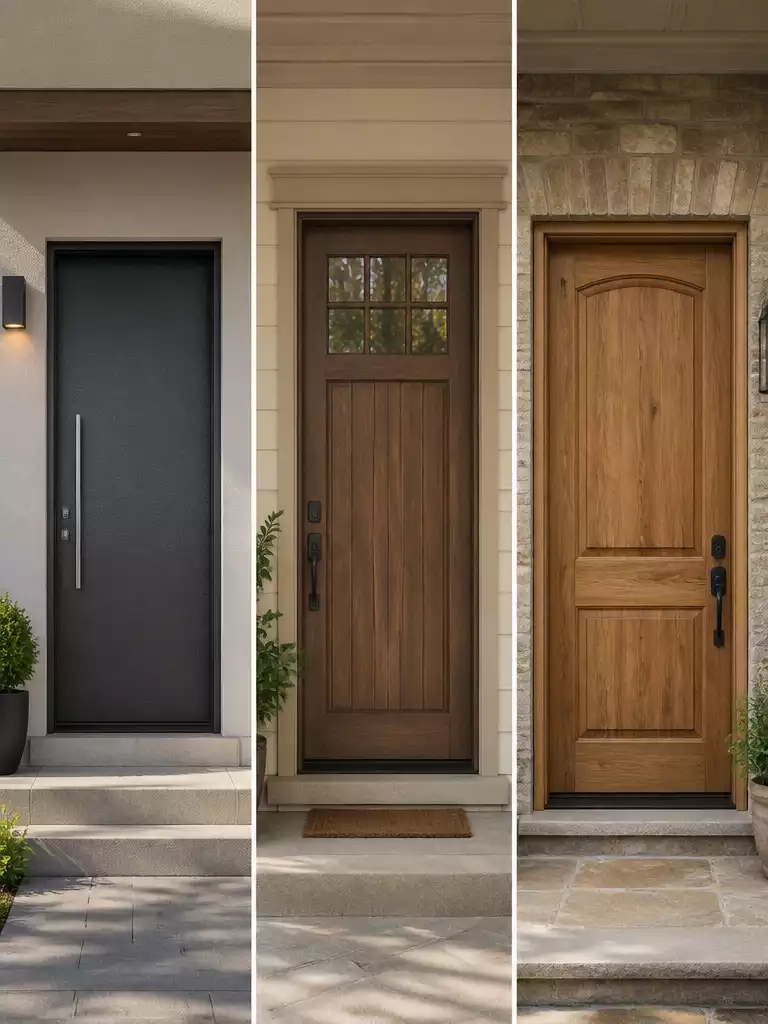
Selecting the right material balances long-term durability with the thermal performance your home requires.
Choosing a door material is rarely about picking the most attractive option; it is about balancing your specific environment against your need for thermal efficiency and physical security. There is no single perfect material, but there is an ideal choice for your local climate and security concerns.
Steel remains the go-to for homeowners prioritizing forced entry protection, as it is incredibly difficult to breach. However, steel is prone to denting and can rust if the finish is scratched in high-moisture or coastal environments.
Fiberglass has emerged as the gold standard for those who want a blend of performance and convenience. It offers superior thermal resistance compared to wood and steel, and it stands up to the elements without the constant refinishing that wood requires.
Key Insight: Regardless of the material you choose, the security of your door depends on the hardware as much as the slab. Always verify that your chosen entry system carries a BHMA Grade 1 security rating to ensure the highest level of physical protection.
Wood provides an aesthetic luxury that synthetic materials often struggle to replicate, but you pay for it in maintenance. Left unprotected, wood will warp or rot, which leads to gaps and significant thermal bridging that compromises your home’s energy efficiency.
If you live in a region with extreme seasonal shifts, material stability becomes a primary concern. Choosing a material that resists expansion and contraction ensures your seals remain tight throughout the year, preventing air leaks that drive up your monthly utility costs.
.
💡 Why This Material Choice Matters:
Beyond simple aesthetics, the right material prevents “thermal bridging”—the process where the door frame conducts cold or heat directly into your home. A stable, properly sealed material ensures that your climate control system doesn’t overwork, ultimately protecting the long-term integrity of both your entryway and your utility budget.
Performance takeaway: Choosing a material that resists seasonal expansion keeps your weather seals airtight year-round.
What Building Codes Can Influence Door Selection
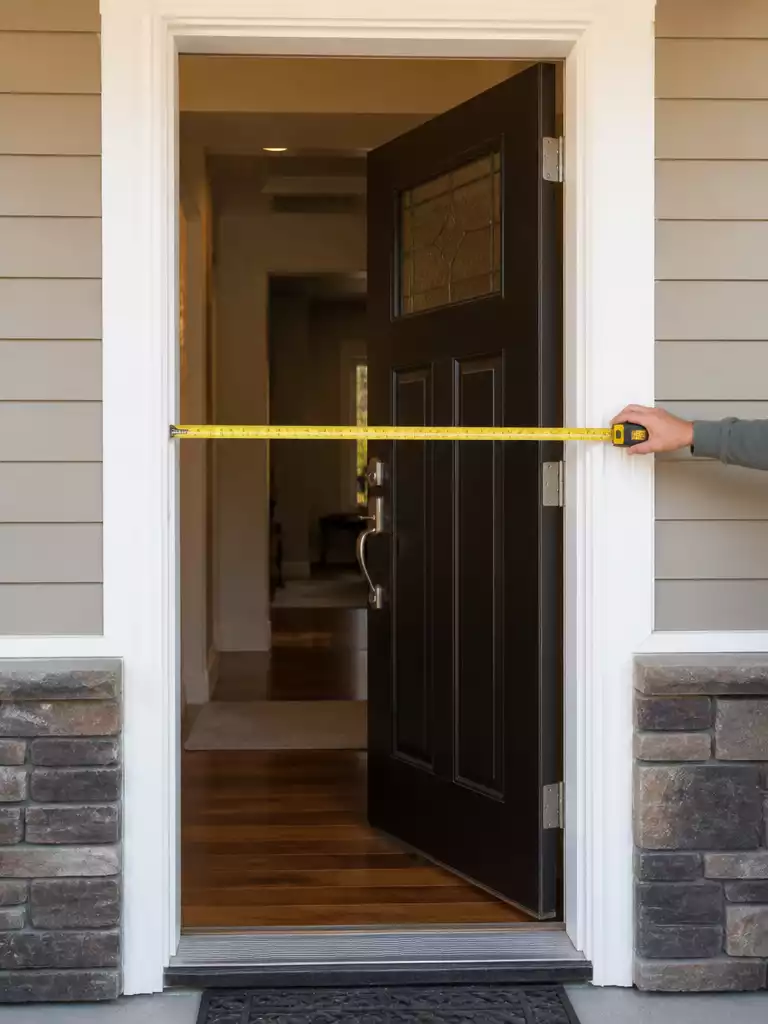
Getting these technical measurements right ensures your home entry meets safety and inspection standards.
Buying a door based solely on its aesthetic is a common path to failing your local building inspection. Modern residential codes demand certified assemblies that function as a single, cohesive unit rather than just an interchangeable slab.
The most critical mandate for any main entry is the egress requirement. You must ensure your door provides a minimum clear opening width of 32 inches when the door is open at a 90-degree angle.
Essential Code Checkpoints
- Clear Width: Verify the 32-inch clear opening requirement, which is often tighter than the actual door slab width due to hardware and frame thickness.
- Threshold Height: Keep the threshold height to a maximum of 1/2 inch, with a standard 1:2 bevel to ensure it remains safe and accessible.
- Fire Assemblies: Doors connecting a garage to the main house have strict fire-rating mandates that require the door, frame, and hardware to be tested as a single system.
Do not attempt to trim or cut your door on-site to make it fit a rough opening. Such field modifications often void the fire rating of a certified assembly, which can lead to an automatic failure during your final inspection.
Planning ahead for these requirements prevents the headache of having to replace a brand-new door because it didn’t pass local regulations. Always check your local jurisdiction’s specific amendments, as they can sometimes be more stringent than the national standards.
.
🧰 Questions to Ask Your Installer:
- Certified Assembly: Will the slab, frame, and hardware be tested and certified as a single, compliant unit?
- Field Modification Policy: Does your installation process involve any trimming or cutting that could void the manufacturer’s fire rating?
- Inspection Documentation: Can you provide the specific spec sheets and NFRC labels required to pass my local building inspection?
How Weather Exposure Changes Door Performance
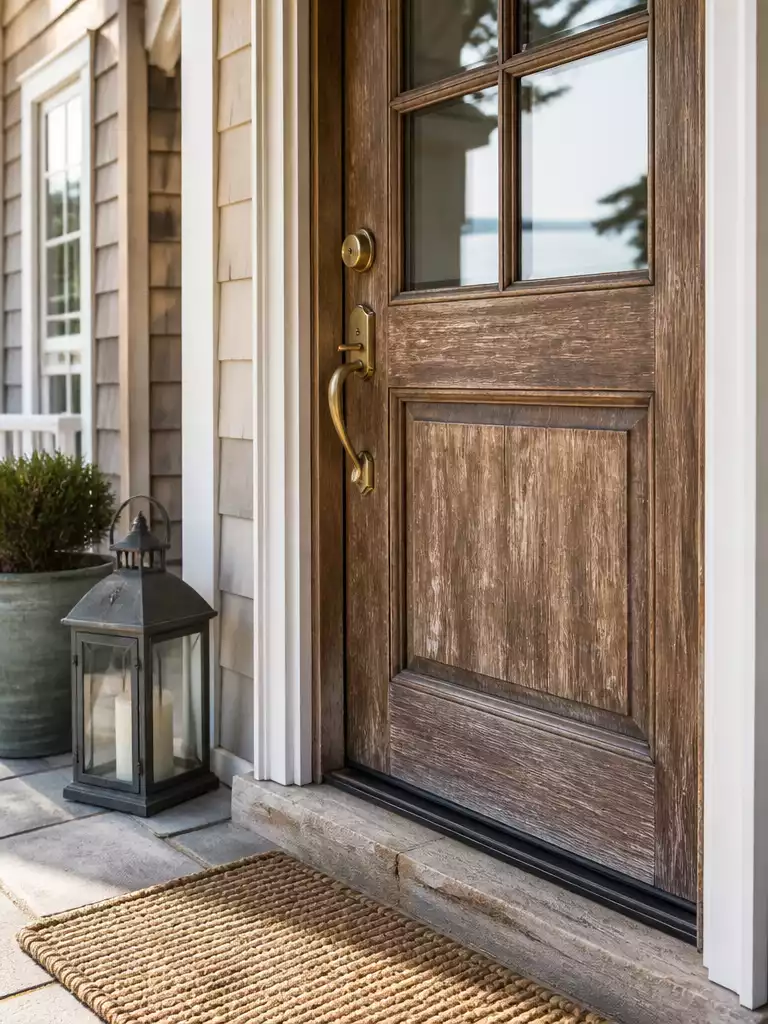
Protect your investment by choosing materials that stand up to your home’s unique climate.
Your front door is a constant weather shield, taking the brunt of every temperature swing and storm that hits your home. When a door isn’t matched to its environmental conditions, you end up with more than just a cosmetic issue.
Dark-colored doors, for instance, absorb significantly more solar heat than lighter finishes. This absorption can raise the surface temperature of the door by up to 30°F, which often leads to warping and eventual failure of the perimeter seals.
Watch for sign of seal failure: If you notice light peering through the edges of your door or feel a consistent draft, your door has likely shifted due to thermal expansion. This movement often causes hardware to bind, which is a leading contributor to smart lock malfunctions.
When selecting your material, consider the stability required for your specific zone. Fiberglass is widely regarded as the gold standard for high-moisture or coastal areas because it resists the rotting and swelling that plague wood in damp conditions.
Steel provides excellent security but can be prone to rusting if the finish is compromised in harsh, salt-heavy environments. Wood remains a beautiful aesthetic choice, but it requires a high-maintenance commitment to refinishing and sealing to prevent the inevitable effects of UV damage and moisture.
The Longevity Rule: Regardless of whether you choose steel, wood, or fiberglass, having a proper porch overhang is the single most effective way to extend your door’s lifespan. Overhang protection shields the assembly from direct rain and intense UV exposure, drastically reducing the impact of the elements.
Before making your final selection, verify the manufacturer’s warranty regarding weather exposure. Many warranties specifically exclude coverage if the door is installed in a location without sufficient protection from the elements, regardless of the material’s inherent durability.
.
💡 Practical Tips for Climate-Resilient Entries:
- Mind the finish: Choose lighter exterior paint colors to reflect heat and minimize the 30°F surface temperature spikes.
- Prioritize overhangs: Install a porch cover or deep architectural awning to shield the assembly from direct storm exposure.
- Seal maintenance: Inspect perimeter weatherstripping annually for compression gaps, especially after extreme seasonal temperature fluctuations occur.
Why Fire Rated Doors Matter In Certain Spaces
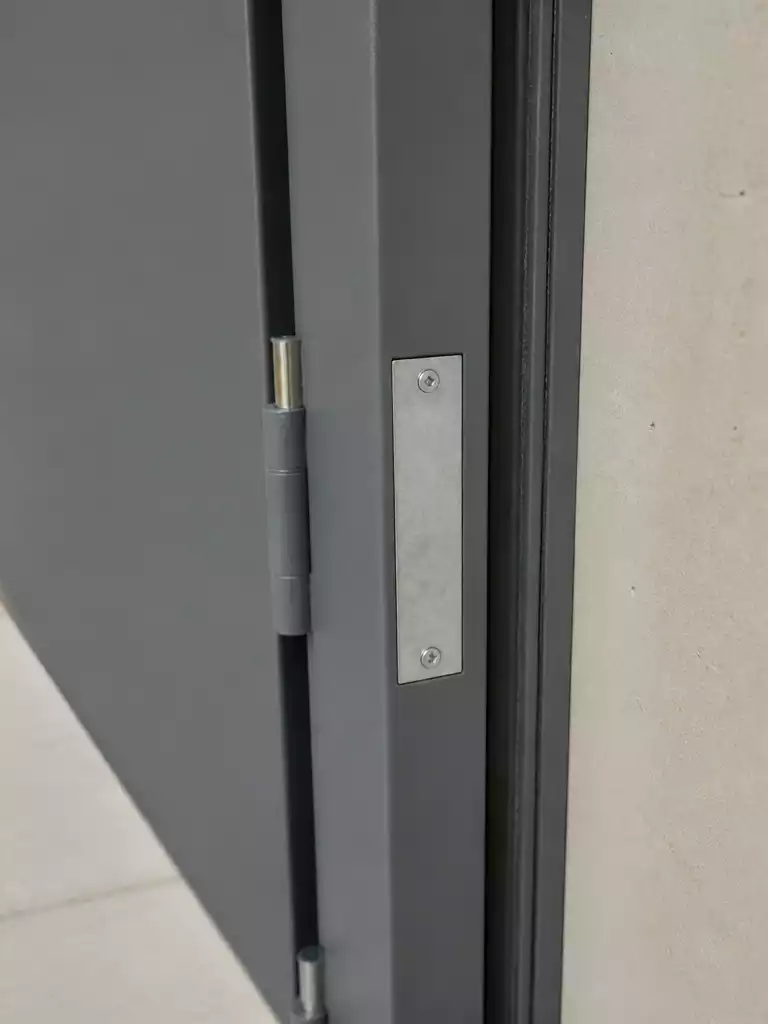
Protecting your home’s integrity with certified assembly standards for critical high-risk transition zones.
When you are selecting a door for a high-risk area—most commonly the entry between your attached garage and your living space—you are not just buying a slab of material. You are purchasing a certified assembly that must function as a single, engineered unit to prevent the spread of fire and smoke.
These doors are rated by the amount of time they can withstand intense heat, typically ranging from 20 to 180 minutes. If you purchase a 60-minute rated door but install it with the wrong frame or hardware, that fire rating is effectively gone.
Warning: Integrity is Everything
Never drill into, cut, or add mail slots to a fire-rated door. Any field modification, no matter how small, destroys the safety certification and can cause your door to fail during a fire emergency.
A true fire-rated assembly requires that every component be part of the tested system. This list includes the door slab, the specific door frame, the hinges, and the automatic closing device required to keep the door shut.
If you replace the hinges with a non-certified pair or swap the automatic closer for a standard one, you have compromised the entire assembly. Always verify that the hardware you select is explicitly approved for use with your door’s specific fire rating.
Fire Rating Checklist
- Check for the official metal certification tag embedded in the door edge.
- Confirm the frame matches the manufacturer’s fire-rated specifications.
- Ensure all hardware—specifically hinges and closers—carries a matching fire rating.
- Verify local codes regarding the required minute-rating for your specific home layout.
Most residential building codes mandate these assemblies for garage-to-house access to provide a critical barrier. Treating these doors as a system rather than a piece of decor ensures your home stays compliant and, more importantly, safe.
⭐ Top Products for Fire Rated Doors
Meeting Stile Gasketing Split Astragal Seals
Commercial Door Push Bar Panic Exit Device
Heavy Duty Self Closing Spring Door Hinges
🧰 Questions for Your Installer
- Certified assembly: Does the quote include the specific frame, hinges, and automatic closer tested with this slab?
- Field adjustments: Will any onsite trimming or modifications be required, and how will that impact the certification?
- Documentation proof: Can you provide the manufacturer’s specification sheet and the fire-rating label verification before the install?
How Accessibility Standards Affect Door Width And Hardware
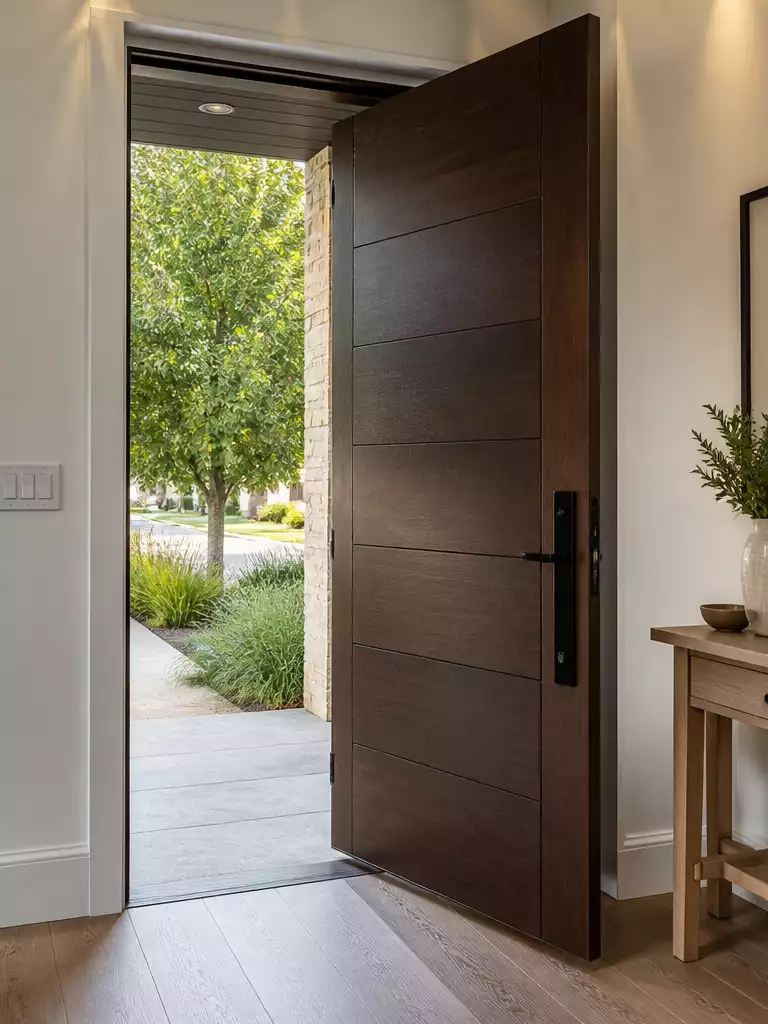
Designing an inclusive entryway ensures your home remains functional and welcoming for every family member.
Approaching your front door through the lens of Universal Design means creating an entry that works for everyone, regardless of age or physical ability. It is about removing the friction that makes a simple task like coming home feel like a struggle.
The 5 lbf Rule: For a door to be considered truly accessible, it should require no more than 5 pounds-force (lbf) to open. If your current door requires a heavy tug, it is likely failing this basic accessibility standard.
When selecting your new door system, prioritize hardware that avoids the need for tight grasping or twisting. Lever-style hardware is far superior to traditional round knobs for accessibility, as it can be operated with a single hand or even an elbow.
You should also plan for the placement of these operable parts. The ideal height for locks and handles sits between 34 and 48 inches above the finished floor.
Accessibility Planning Checklist
-
✓
Clear Width: Aim for at least 32 inches of clear opening width when the door is held at a 90-degree angle. -
✓
Threshold Height: Keep your threshold height at a maximum of 1/2 inch to prevent tripping and ensure smooth passage for mobility aids. -
✓
Long-term Investment: Consider opting for a slightly wider entry beyond the 32-inch minimum to future-proof your home for aging-in-place.
If you have the space, a wider entryway is one of the smartest long-term investments you can make in your home’s layout. It pays off by providing easier movement for everything from heavy furniture deliveries to strollers and mobility equipment.
.
🧰 Questions for Your Installer:
- Hardware Compatibility: Can this specific lever-handle set be installed at the 34-inch height without obstructing the deadbolt?
- Clearance Requirements: Does the chosen threshold and door sweep assembly maintain the 1/2-inch height limit required for easy wheelchair access?
- Egress Verification: Will the finished door unit provide a full 32-inch clear opening width when the door is held open at 90 degrees?
What Current Design Trends Say About Glass And Minimalist Doors
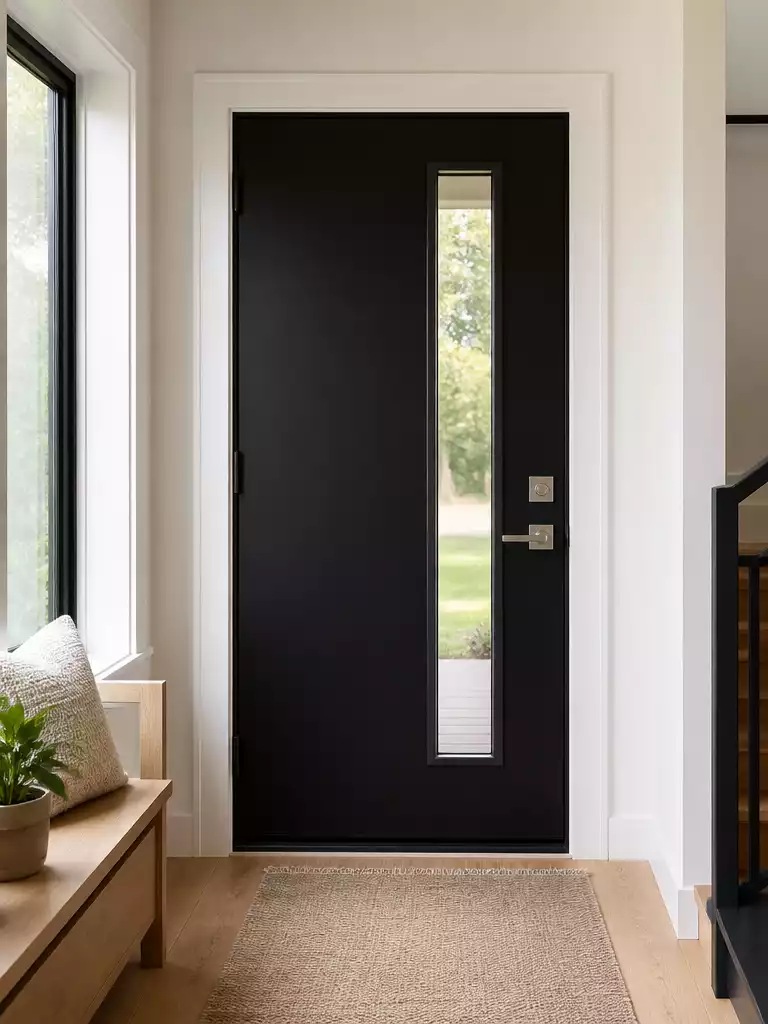
Achieve a sophisticated, light-filled entry without compromising your home’s thermal comfort or security.
Modern design favors expansive light, but adding large glass panels to your entry creates a significant thermal load. Without proper planning, that aesthetic brightness leads directly to higher energy bills and potential condensation issues.
If you love the minimalist look, prioritize door systems engineered with advanced thermal breaks. These components prevent the frame from conducting cold or heat, which is essential to keep frost from forming on the interior side during winter months.
The Glass Performance Check: When choosing a door with significant glass area, insist on triple-pane glazing and high-performance Low-E coatings. These features are the industry standard for maintaining energy code compliance in glass-heavy designs.
Large glass panes also carry security and environmental considerations that go beyond simple style. In hurricane-prone or severe weather zones, your glass choice must meet specific impact ratings to withstand debris and wind pressure.
Minimalist frames require precise, professional installation to ensure those thermal breaks perform as intended. Even a slight misalignment during installation can bridge the gap, essentially turning your high-end frame into a thermal conduit for outside temperatures.
.
💡 Why Minimalist Glass Frames Work
The beauty of a minimalist, glass-heavy door lies in its ability to blur the line between your entryway and the outdoors. By choosing frames with integrated thermal breaks, you maintain that clean, architectural aesthetic without creating an internal “cold spot.” This design choice works best when the door’s frame material—whether fiberglass or metal—is specifically rated to handle the increased thermal conductivity of extra glazing, ensuring your home stays comfortable and energy-efficient year-round.
How Installation Quality Affects Long Term Door Performance
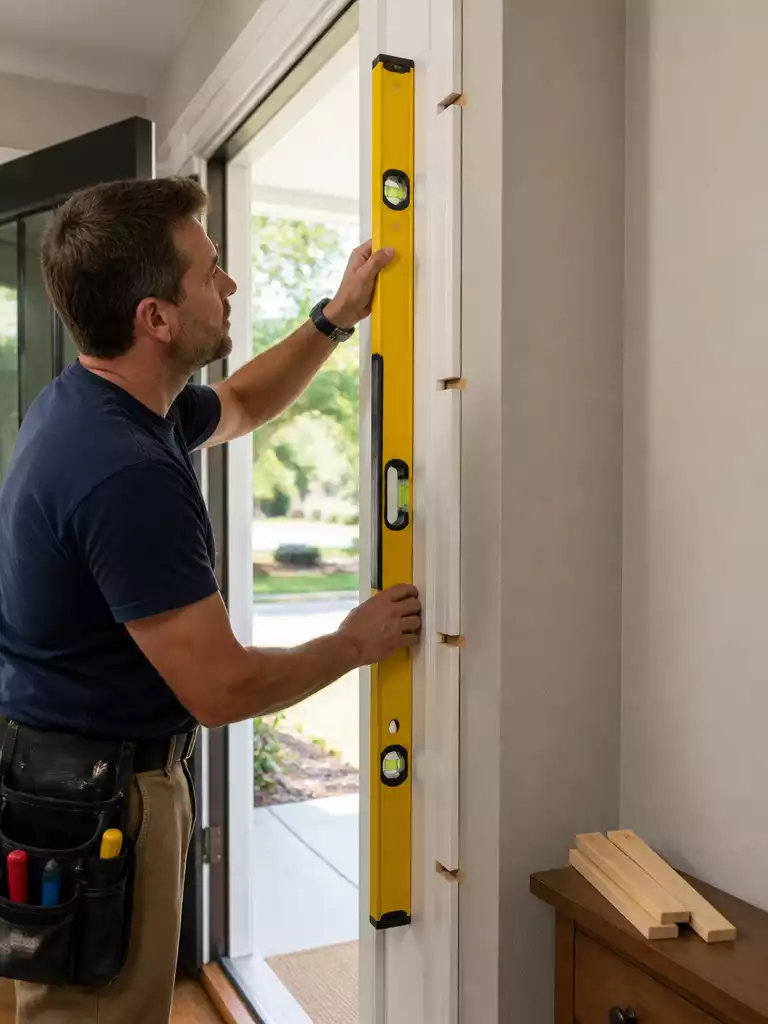
Precision installation is the final gatekeeper for your home’s security, efficiency, and long-term durability.
The golden rule for exterior entryways is simple: a five-thousand-dollar door installed poorly will consistently underperform compared to a five-hundred-dollar door installed with absolute precision. In the world of high-performance building, the door is only as effective as the seal between it and the rough opening.
For a door to function as a certified assembly, it must be installed strictly plumb, level, and square. Even a slight deviation in the frame alignment can lead to significant air leakage, forcing your HVAC system to work overtime to compensate for the thermal bridge.
The Warranty Trap
Most manufacturers explicitly state that their limited lifetime warranties are voided if the door is not installed according to their specific, multi-step technical manual. If you choose to DIY, you are effectively self-insuring the entire unit against warping, seal failure, and mechanical issues.
Hardware binding is the most common symptom of an improperly shimmed frame. When the frame is not perfectly square, the deadbolt and latch strike plates won’t align, which puts unnecessary stress on the handle mechanism.
This misalignment is the leading cause of smart lock failure. If your smart lock motor has to work against a binding deadbolt, it will drain batteries in weeks rather than months and eventually burn out the internal gears.
Before you finalize your installation plan, be aware of these critical requirements:
- Plumb and Square: The frame must be checked at multiple points to ensure the door remains stationary when opened to 45 degrees.
- Proper Shimming: Use load-bearing shims at all hinge and strike plate locations to support the weight of the slab without bowing the jamb.
- Flashing and Sealing: Waterproofing the sill and the perimeter of the frame is the only way to prevent moisture-related rot and structural degradation over time.
- Hardware Alignment: Test the lock operation before finalizing the interior trim to ensure the deadbolt throws smoothly with zero resistance.
If you are hiring a contractor, do not assume they know your specific door manufacturer’s requirements by heart. Ask them to review the installation manual provided with your specific unit before they start the job to ensure compliance with the manufacturer’s warranty terms.
.
🔢 The Right Installation Sequence
Following this specific order prevents structural binding and ensures your weather seals perform exactly as the manufacturer engineered them to.
- Rough Opening Audit: Confirm the frame is perfectly plumb and square before touching the door slab.
- Shim Precision: Use composite shims at each hinge point to prevent future sagging and hardware binding.
- Seal Calibration: Test the threshold contact with the door bottom to guarantee an airtight, code-compliant seal.
What Buyers Should Research Before Choosing A New Door
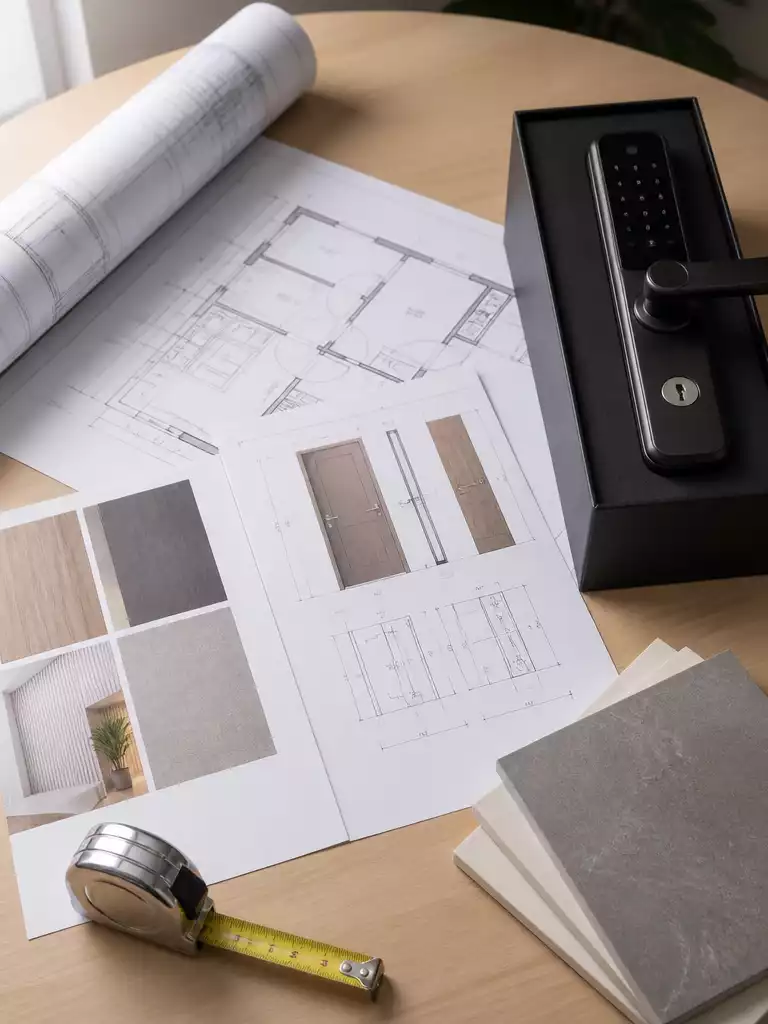
Organize your technical requirements now to prevent costly errors and ensure long-term performance.
Before you commit to a purchase, you need to verify that your door assembly is engineered to work as a single, cohesive unit. Requesting the right documentation prevents the common mistake of buying a slab that doesn’t match the frame requirements or hardware specifications.
Use this Pre-Purchase Document Checklist to hold your vendor accountable for performance and security standards. Demanding these specific items ensures you aren’t left with an incompatible setup that voids your warranty.
Required Spec Sheet Checklist
- NFRC Labels: Verify the U-factor and SHGC ratings independently.
- BHMA Grade 1 Security Rating: Confirm the hardware meets the highest standard for forced entry protection.
- Warranty Exclusions: Explicitly ask which conditions or field modifications will void your coverage.
- Assembly Certification: Confirm if the door, frame, and hardware are tested as a single, integrated assembly.
Confirming your smart lock compatibility is just as critical as checking the door’s thermal performance. Ask your vendor if the door material or internal structure will interfere with wireless signal strength, especially if you are choosing a steel entry door.
Pro-Tip: Ask your vendor this exact question: “Is this entire assembly—door, slab, frame, and hardware—tested and certified as a single unit?”
If they cannot provide an answer or documentation, you are likely looking at a mix-and-match unit that may fail to meet your local energy and security codes.
Always verify your local building code requirements before finalizing your order. Requirements for egress, fire ratings in garage-to-house entries, and threshold heights vary significantly by region and can lead to inspection failures if overlooked.
⭐ Our Picks for New Door Research
Fast Fingerprint Recognition Keyless Door Lock
Three Pack Keyed Alike Entry Lockset
Smart Wi-Fi Enabled Keyless Entry Deadbolt
🧰 Questions for Your Installer:
- Assembly certification: Can you provide documentation showing the door slab, frame, and hardware were tested together as a single, fully integrated system?
- Warranty terms: Which specific field modifications or adjustments—like trimming or drilling for hardware—will void the manufacturer’s official warranty for this door?
- Code compliance: Does this installation plan meet local egress clearance standards and fire-rating requirements for my specific entry point?
With all twelve technical factors laid out, the path to a high-performance entry is significantly clearer. Focusing on the one or two standards that solve your specific security or efficiency challenges is far more effective than trying to overhaul every single detail at once.
You can confidently prioritize the structural integrity of your front door assembly, knowing that hitting those key requirements secures your investment. Make those deliberate choices, and you will see the results in both energy performance and curb appeal.