
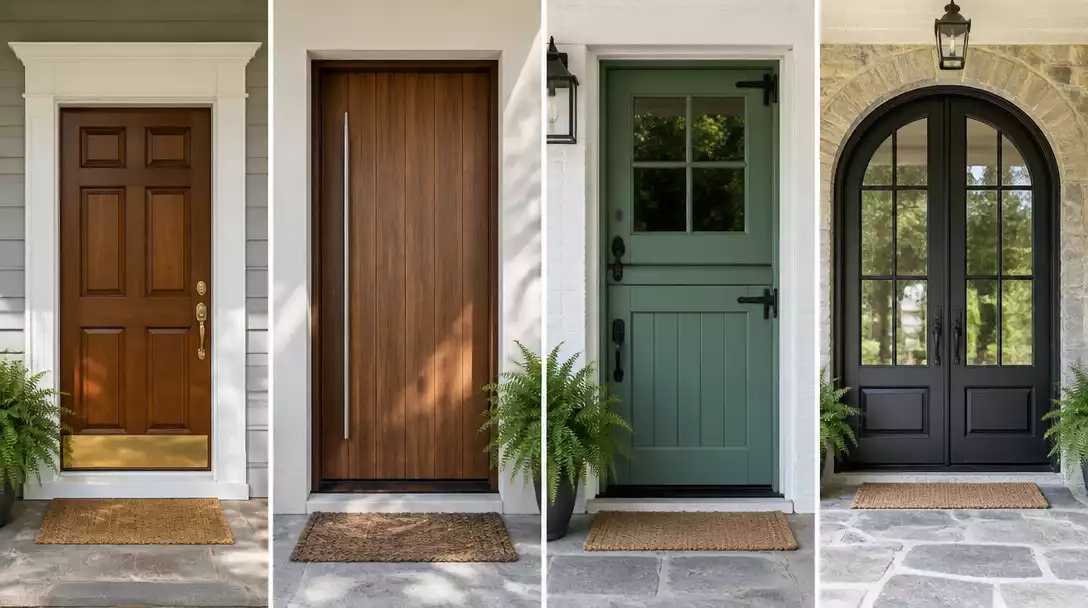
Your front door is the highest-ROI visual element for boosting your home’s curb appeal. This guide collects 10 distinct door styles worth saving to help you identify the right match for your architecture. Let’s start with the timeless appeal of paneled designs.
Classic Paneled Door
Create depth and architectural character using the geometry of light and shadow.
As an Amazon Associate I earn from qualifying purchases. Affiliate links may earn me a commission at no extra cost to you.
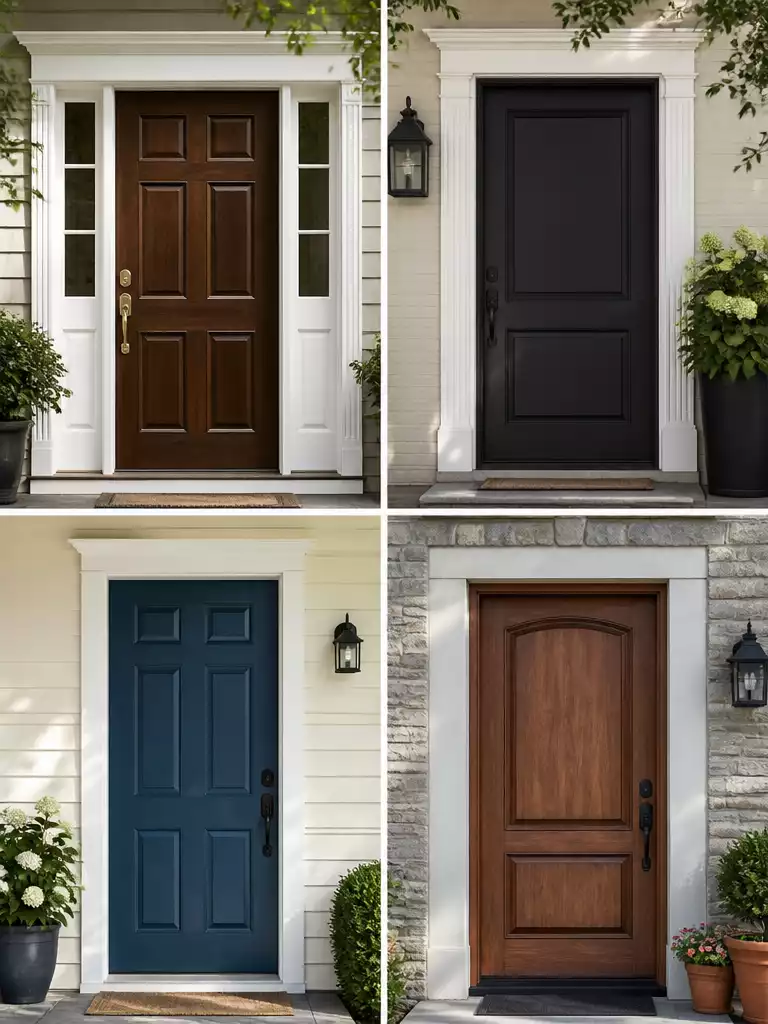
The magic of a classic paneled door lies in its ability to manipulate sunlight. By using recessed panels, the door creates a rhythm of shadows that adds instant visual depth to an otherwise flat facade.
Before selecting your design, consider the formality of your home’s architecture. Use this guide to determine which profile matches your exterior:
- Shaker Panels: Defined by flat, recessed center panels and simple square edges, making them the best fit for casual revival or cottage-style homes.
- Raised Panels: These feature beveled or molded edges that catch the light, providing the formal weight required for traditional colonial or grand heritage entries.
Proportional Alert: Always match your panel count to the height of your doorway. A six-panel door on a short, squat opening often feels cramped and visually “noisy” rather than orderly.
.
💡 Why This Works:
The appeal of a paneled door comes down to “architectural depth.” By using physical recesses, the door forces the sun to create natural, shifting shadows across the face of the wood. This constant play of light makes the entryway feel substantial and grounded, effectively breaking up the flat, uninviting surfaces common on many modern builds.
Visual takeaway: Choose deeper, beveled panel profiles to maximize shadow contrast on north-facing, low-light entryways.
Modern Flush Doors
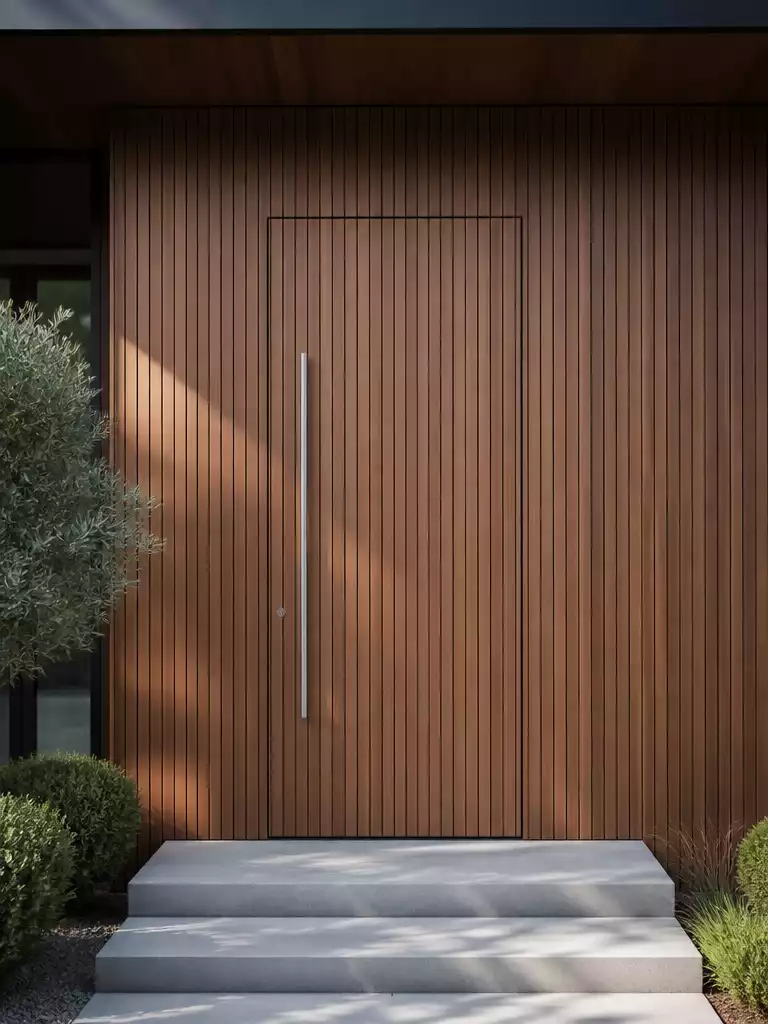
Achieve a high-end, architectural look by turning your entrance into a seamless wall feature.
Modern flush doors trade traditional molding and recessed panels for a completely flat surface. By removing all visual clutter, the door acts as a clean extension of your home’s exterior siding rather than a framed-out interruption.
Because there are no decorative moldings to hide seams, this style demands precision. The quality of the finish and the accuracy of the installation are entirely visible, leaving no room for sloppy gaps.
Pro Design Tip: For the ultimate hidden entrance, match the material and grain of your door exactly to your adjacent wall cladding. When closed, the door practically disappears into the facade.
The hardware you choose defines the personality of a flush door. You should skip traditional knobs, which look out of place on such a refined surface.
- Long vertical pulls: These help emphasize the height of the entryway and feel intentional.
- Recessed finger pulls: A perfect choice if you want the hardware to be nearly invisible.
- Grain orientation: Use vertical grain to make a short entryway look taller, or horizontal grain to widen the appearance of a narrow home.
.
🏡 How This Works in a Real Home:
- Entryway depth: Avoid installing flush doors in very shallow porches where the lack of shadow makes the entrance feel flat and uninviting.
- Daily maintenance: Surface smudges show more readily on flat planes; choose a durable, wipeable satin or eggshell finish rather than high-gloss.
- Siding transition: Use a high-quality weather stripping system to ensure the door’s flat edge seals tightly against the siding for a clean, consistent look.
Craftsman Style Doors
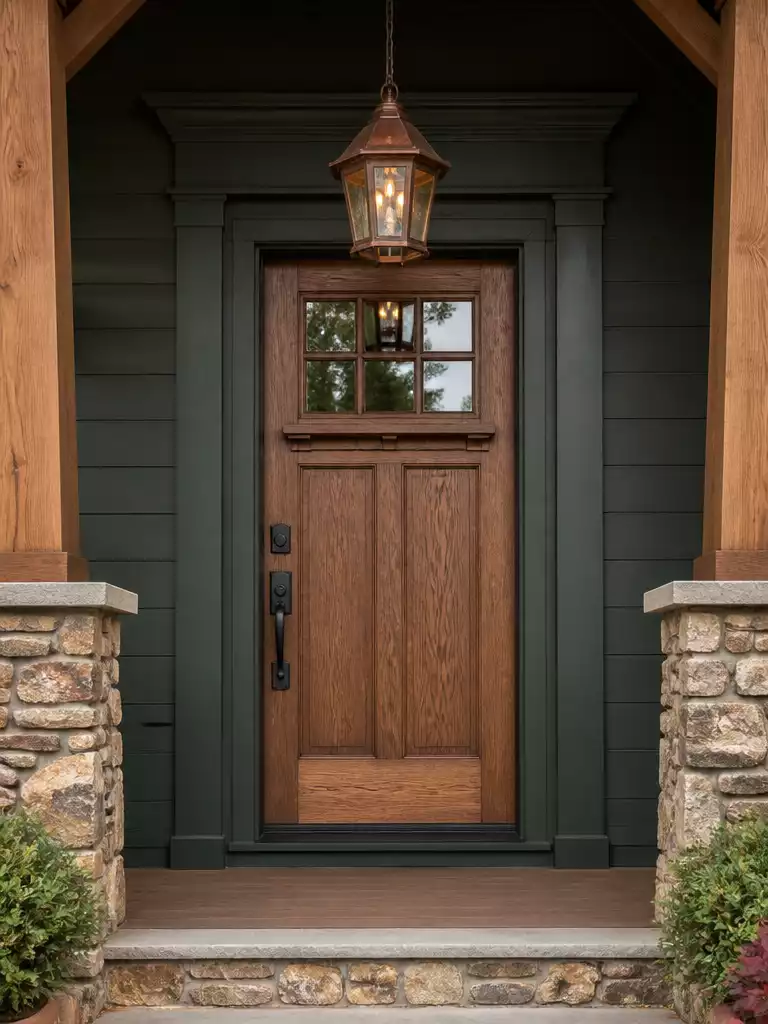
Ground your home’s entrance with the heavy, hand-crafted proportions of classic Arts & Crafts design.
A true craftsman entrance relies on the marriage of a thick, heavy wood frame and glass inserts positioned strictly in the upper third of the door. This design creates a weighted look that feels intentional and sturdy, rather than light or decorative.
You should choose this style if your home features heavy porch columns or stone accents that require a substantial door to balance the visual space. It is the only option that successfully anchors a home without appearing undersized against thick timber or masonry supports.
The dentil shelf—that small, block-like molding detail under the glass—is not just decorative; it is a critical requirement for keeping the aesthetic authentic. Without this heavy horizontal line, the door loses the signature shadow play that defines the style.
Pro Tip: Avoid bright whites or high-gloss paints on this door style. Lean into deep, earthy stains or matte-finish paints to celebrate the wood grain and structural weight.
.
💡 Why This Works:
The Craftsman door’s success is rooted in its heavy-handed geometry. By pushing the glass to the top and anchoring the base with a substantial rail, the design forces the eye to perceive the entryway as a structural foundation for the home, which creates a sense of immense stability and permanence.
Visual Grounding: The weighted bottom rail prevents the entrance from looking top-heavy or disproportionate against wide porch pillars.
Dutch Door
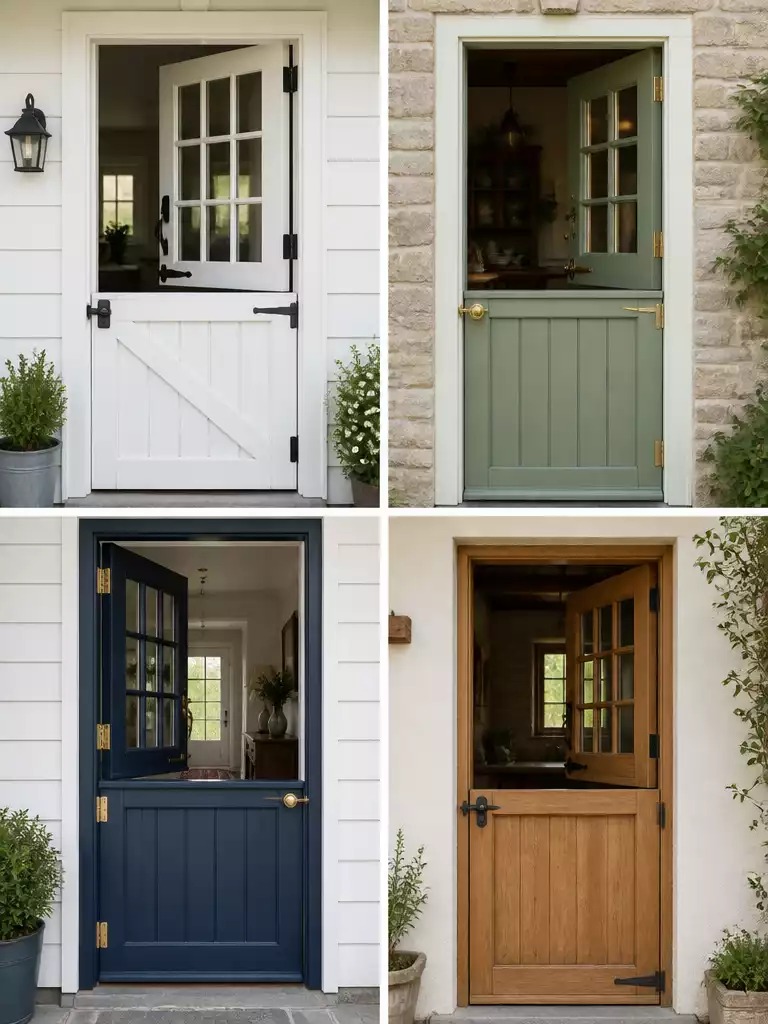
Create a welcoming neighborhood connection while keeping the lower half of your home secure.
The split-leaf design of a Dutch door acts as a functional social barrier, allowing fresh air and sunlight into your foyer while keeping pets or small children safely inside. The horizontal line created by the divide adds an immediate casual, inviting rhythm to your home’s facade.
This style is the visual anchor for cottage or farmhouse-inspired exteriors, leaning heavily into a storybook aesthetic. If your home has a formal, rigid architectural style, this door may feel too whimsical or out of place.
The Weather-Seal Challenge
Because the door has an extra seam in the middle, it can be prone to air drafts and moisture leaks. Focus on high-quality internal latch hardware and professional weather-stripping to maintain the divide without sacrificing your home’s energy efficiency.
When selecting your hardware, prioritize the internal latch as a decorative design element rather than just a functional piece. Choose finishes that contrast with the door color to emphasize the split-leaf craftsmanship.
.
🧰 Ask Before You Hire
- Weather-stripping integration: Ask how they plan to seal the horizontal seam to prevent drafts without making the door feel stiff.
- Hardware compatibility: Confirm if the internal latch mechanism is rated for exterior exposure to prevent rust and sticking over time.
- Threshold alignment: Inquire about matching the door finish to your existing threshold to ensure a clean look that resists water intrusion.
Narrowing down your home’s character often feels daunting, but visual balance relies on the relationship between your door’s scale and the surrounding siding. You don’t need a total overhaul to find a look that feels intentional and high-end, as exploring proper architectural fitting helps eliminate dozens of mismatched options instantly.
Focusing your budget on the main entryway is the singular, most effective way to elevate your home without needing to achieve a dozen perfect details at once.
Glass Panel Doors
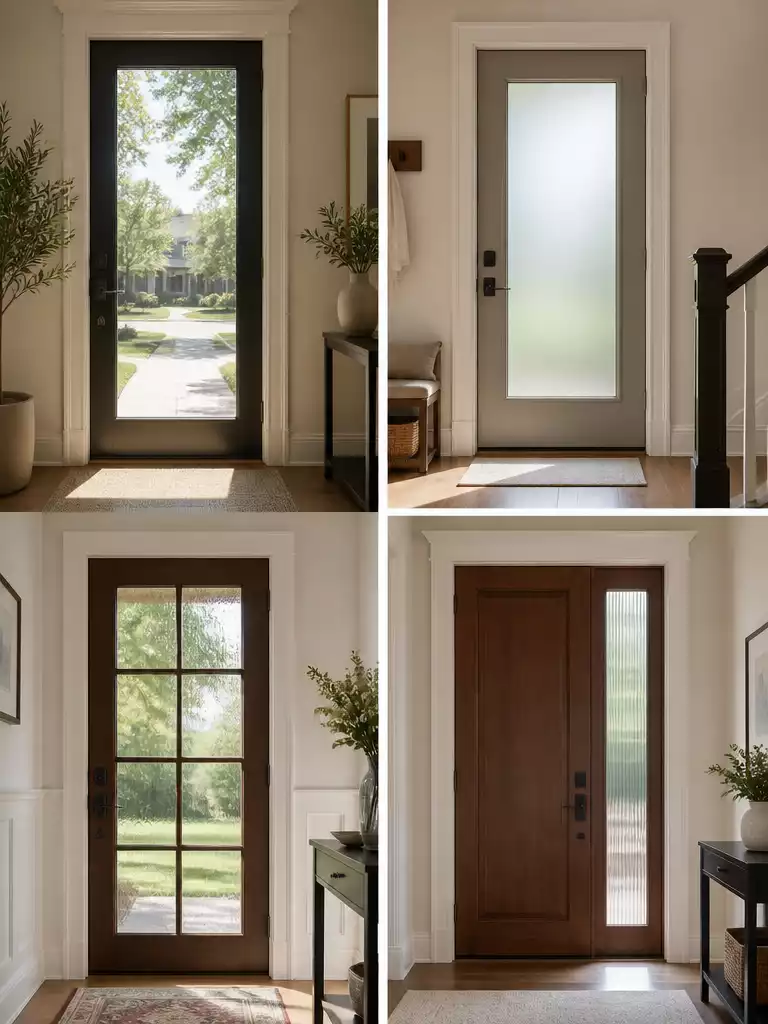
Transform your dark entryway by using natural light as a functional architectural element.
Glass panel doors act as a lantern for your foyer, pulling exterior light deep into the home. They are the ideal choice for entryways that lack adjacent windows or suffer from a cramped, gloomy layout.
When selecting your glass, the pattern of the muntin grid does more than just hold the glass in place. It dictates how light fractures and spreads across your interior floors, creating shifting geometric shadows throughout the day.
Pro Tip: Evaluate your street exposure before choosing clear glass. If you face a busy sidewalk, opt for textured glass like seeded or fluted; it obscures the view from outside while still allowing maximum light transmission.
Consider whether you need a full-length glass insert or a smaller transom above the door. A transom window adds height to your entryway without compromising the structural integrity of the door itself.
.
✨ Finishing Touches: Beyond the Glass
Selecting your glass is only half the battle; the surrounding hardware and trim details determine whether your door feels like a custom feature or an off-the-shelf addition.
- Hardware Finish: Coordinate your handle sets and hinges with the muntin color to create a cohesive, deliberate frame around the glass.
- Threshold Detail: Ensure your door sweep is color-matched to the door’s base to avoid a distracting horizontal break at the floor level.
Bold Color Statement Door
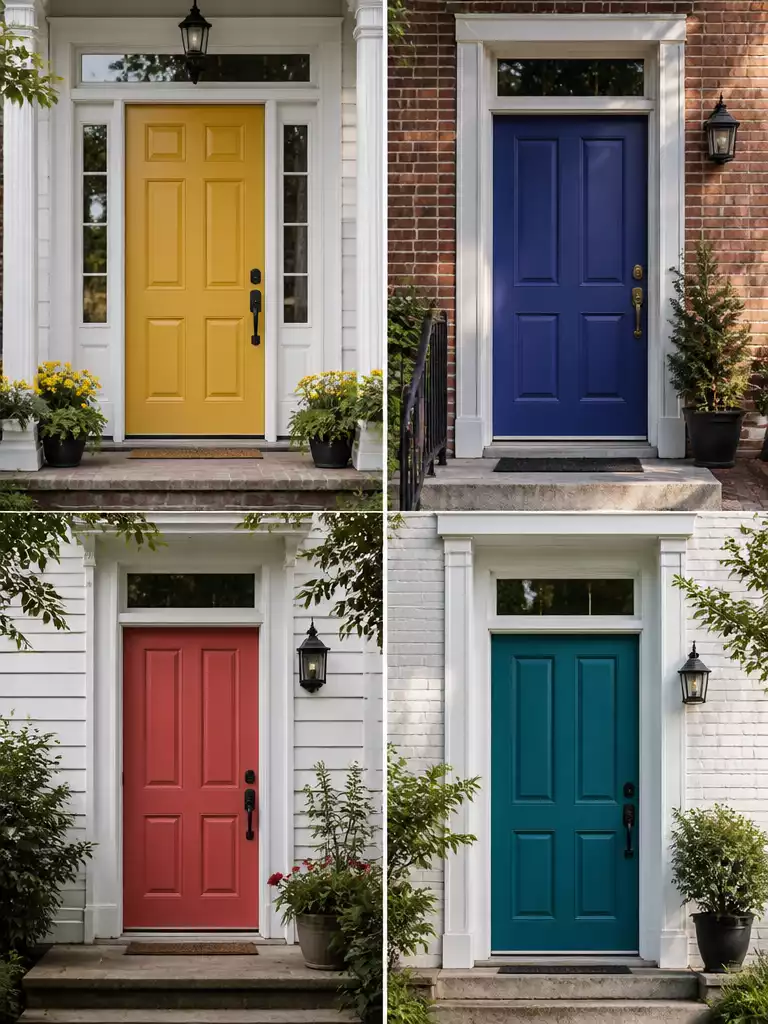
Transform your home from neutral to custom with a single gallon of high-impact paint.
Choosing a bold color statement door is the fastest way to add personality to a standard facade without the cost of structural renovations. A vibrant hue shifts the narrative of your home, turning a predictable entry into a deliberate focal point.
Pro Tip: Always use a semi-gloss finish for your statement door. The higher sheen reflects enough light to keep the pigment from looking muddy or flat in the shade, ensuring your color choice truly pops.
When selecting your shade, look to the color wheel to determine the vibe you want to achieve. Complementary colors, like an orange door against a blue house, create high-energy contrast that feels sharp and intentional.
If you prefer a more cohesive look, lean into analogous colors that sit side-by-side on the wheel. Regardless of the color you pick, treat your trim as the frame for your artwork.
This style is ideal for homeowners who want to boost curb appeal on a weekend budget. If your home has a lot of architectural detail, skip the bold colors and stick to a crisp black or white to let the moldings do the work.
.
💡 Why This Works
A bold door acts as a visual anchor that draws the eye directly to your entryway, distracting from less-than-perfect exterior siding or dated landscaping. By manipulating focal depth with a high-contrast hue, you create a professional designer aesthetic that feels intentional rather than accidental, instantly elevating the perceived value of your home’s first impression.
Design Takeaway: Use your front door’s color as a “jewelry piece” for the house—keep the surrounding palette neutral to let the saturation truly shine.
Rustic Farmhouse Door
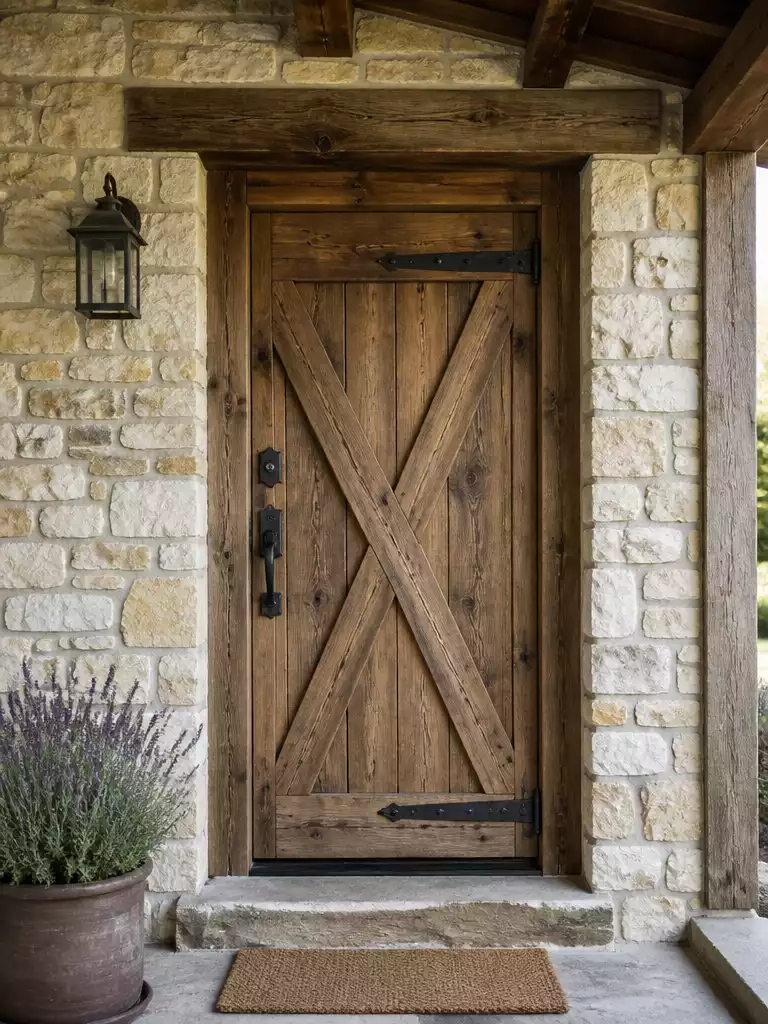
Add authentic character to your entryway with raw wood textures and bold structural bracing.
A rustic farmhouse door relies on weathered authenticity to anchor a home’s exterior. These doors move away from sleek, factory-finished surfaces and instead embrace the raw, uneven character of reclaimed wood or thermally modified timber.
The visual impact comes from the geometry of the bracing. Whether you choose a classic X-brace or a Z-brace, these elements create a dynamic, non-symmetrical focal point that signals a casual, barn-inspired aesthetic.
Why Imperfection Wins Here: Unlike other styles where grain patterns are hidden by paint, this look thrives on knots and irregularities.
These natural flaws actually elevate the design, providing the visual depth that mass-produced doors lack.
You cannot achieve this look without the right hardware. Heavy iron strap hinges and pull handles are not just functional, they are essential visual requirements that define the farmhouse silhouette.
Avoid this style if your home features ultra-modern steel beams or high-gloss finishes, as the clash in textures will feel disjointed. Instead, lean into this look if your home has natural stone, shiplap, or exposed timber framing.
.
📈 The Long-Term Payoff:
Rustic farmhouse doors are heavy on personality, but they require a commitment to maintenance. Because they often feature natural timber and iron, they can be more susceptible to the elements than composite doors. If you prioritize long-term value, ensure the wood is thermally modified or properly sealed to prevent warping and rot, which keeps your curb appeal high for years rather than just seasons.
Finish selection: Use high-quality exterior stains rather than paint to protect timber integrity and highlight grain texture.
Arched Top Doors
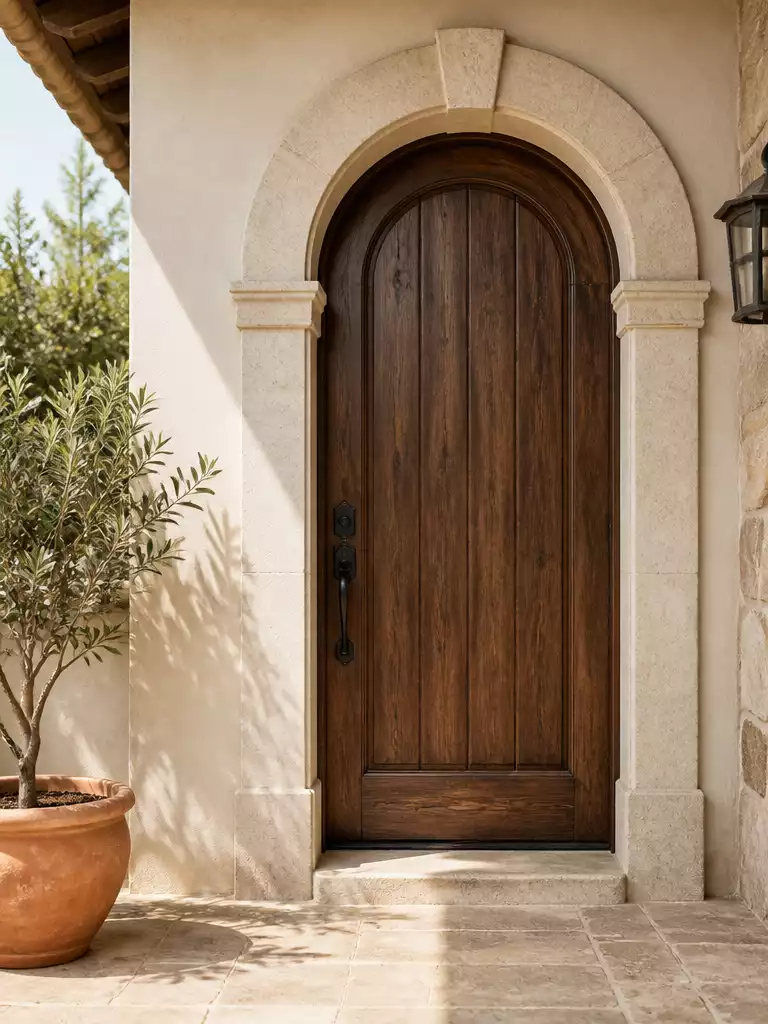
Softening rigid rooflines with a custom curve creates an immediate, high-end architectural focal point.
An arched door acts as a visual softening agent, breaking up the repetitive rectangular grid of standard windows and rooflines. This style works best for homeowners looking to lean into Mediterranean, Tuscan, or historic revival aesthetics where soft lines define the exterior character.
Because the top of the door is curved, you are committing to a custom-fit opening. This requires specific attention to the jambs and headers during installation to ensure the arch lines up perfectly with your existing masonry or trim.
Pro-Tip: Use a Keystone. If your doorway feels too plain, add a decorative keystone or stone trim work around the arch. This draws the eye upward, significantly increasing the perceived height of your home’s entryway.
If you have a modern or strictly minimalist facade, consider skipping this style. The curved geometry often clashes with the sharp, linear profiles found in contemporary architecture.
.
⚖️ Quick Decision Guide:
- Choose this if: Your entryway features stone arches, stucco walls, or rounded windows that need a harmonious focal point.
- Skip this if: Your home has a strict contemporary or mid-century linear profile, which will clash with curved geometry.
- Pair it with: Heavy iron hardware or a custom-fit keystone to emphasize the sweeping curve and grand architectural scale.
Double Entry Door
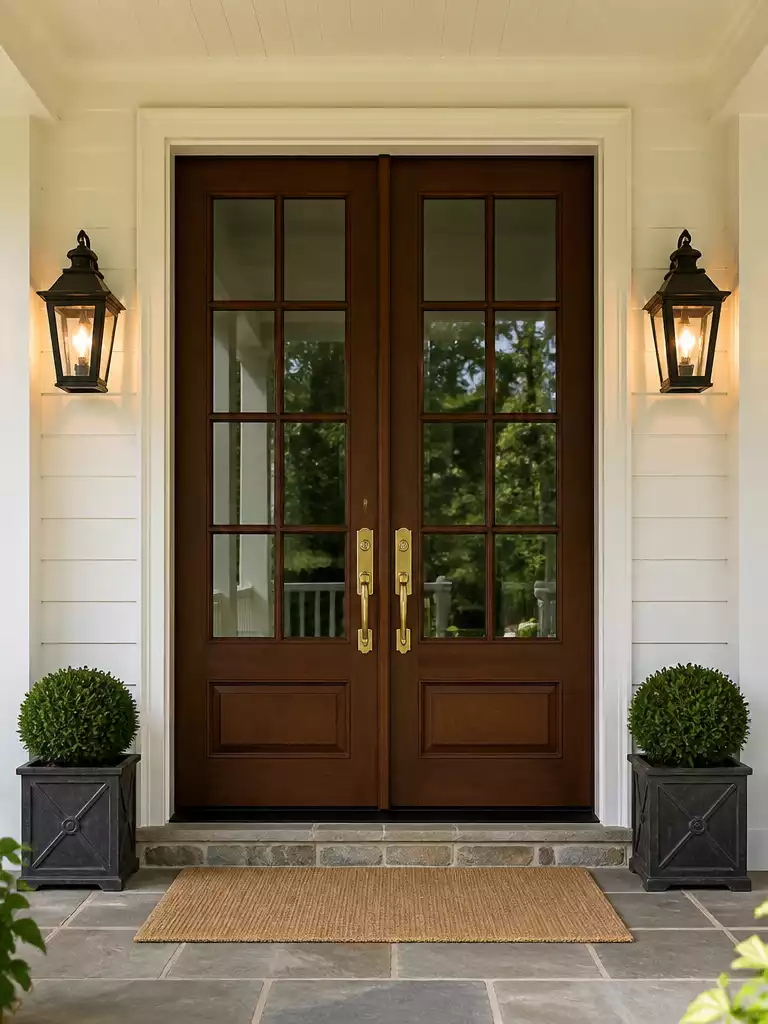
Create a sense of grand arrival by balancing scale and architectural symmetry at your entrance.
Double entry doors use visual balance to turn a standard entryway into a definitive focal point. By utilizing two identical panels, you create a sense of scale that works best on homes with generous porch widths.
Before committing to this style, consider how the doors actually function in your daily routine. Most homeowners prefer an active/passive configuration where one door remains fixed with flush bolts while the other handles daily traffic.
Double doors can accidentally make a small home feel disproportionately diminutive. Skip this style if your porch width is less than six feet, as the sheer mass of the entry will overwhelm your facade.
If you want the grand aesthetic without losing the ability to carry groceries through a single opening, look for operational astragals. These allow you to release the passive door quickly, giving you the full width of the entryway whenever you need to move large furniture.
.
Pivot Door
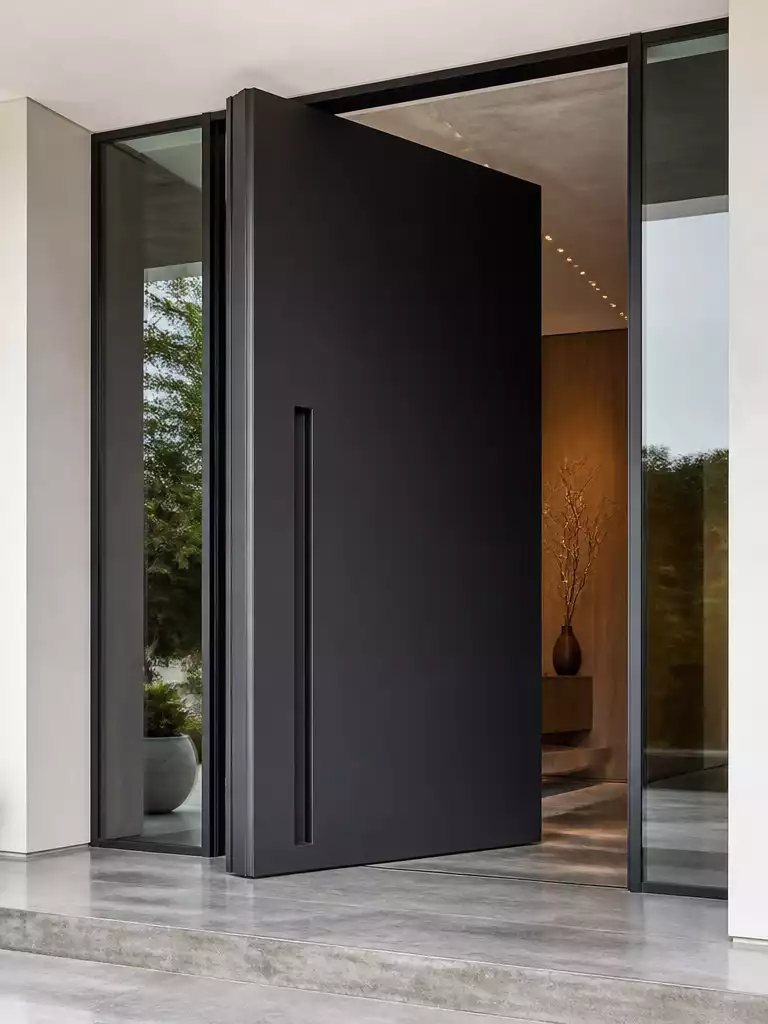
Create a theatrical, high-end entrance with a door that rotates on a vertical axis.
A pivot door feels less like a traditional swinging barrier and more like a piece of architectural machinery. Instead of standard butt hinges on the side, the door rotates on a vertical axis, allowing for a much larger and heavier panel than your home’s entry could otherwise support.
This style is reserved almost exclusively for high-end contemporary architecture where the door is meant to make a massive visual statement. Because it sits flush with the wall when closed, it creates a seamless, hidden-entrance effect that keeps your facade looking incredibly clean.
Structural Requirement Alert:
Unlike standard doors, pivot models require a reinforced floor header to support the off-center weight distribution. You must consult a structural engineer or professional installer during the framing phase to ensure your entryway can handle the unique mechanics of this rotation.
If you are planning a modern renovation, consider these specific traits to see if a pivot door fits your project:
- Oversized Scale: These doors can reach widths of five feet or more, providing a grand, theatrical arrival that standard double doors cannot match.
- Minimalist Hardware: Most pivot designs utilize long, vertical pulls that emphasize the height of the door, completely eliminating clunky deadbolts or handles.
- True Flush Fit: When closed, the door acts as a continuous extension of your siding or wall cladding, perfect for achieving a rigorous, minimalist aesthetic.
This is a specialized choice that demands a significant investment in both hardware and structural prep. If you are aiming for a classic or cottage-style home, skip this style in favor of something more traditional like a paneled or Dutch door.
.
🧰 Questions for Your Installer:
- Load-bearing capacity: How will the floor header be reinforced to handle the off-center weight of this pivot mechanism?
- Weather stripping: What specific sealing system will be used to prevent drafts around the unique pivot point gaps?
- Maintenance schedule: How often will the internal pivot hardware need professional lubrication or alignment checks to ensure smooth operation?
With ten distinct styles now at your disposal, the path toward a renovated entrance is much sharper. Focus on the one or two designs that genuinely align with your home’s architectural era rather than attempting to incorporate every concept.
A truly cohesive facade stems from a single, deliberate selection that honors your home’s original lines. If you feel ready to narrow your search, you can choose a front door that bridges the gap between style and your specific home’s bones. Decide on the fit first, and the curb appeal follows naturally.