
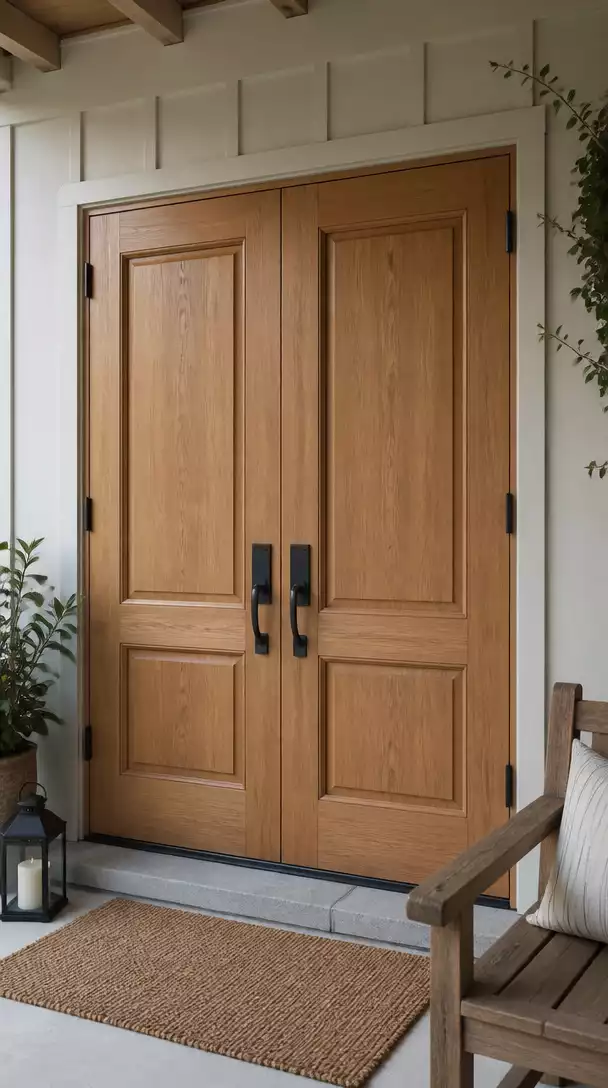
Most wooden double front doors fail within years due to structural warping and moisture, not style. This guide breaks down the technical pillars of long-term durability and weatherproofing to ensure your entrance remains functional for decades. It all starts with the biological makeup of the wood itself.
Wood Species: Resilience vs. Aesthetics
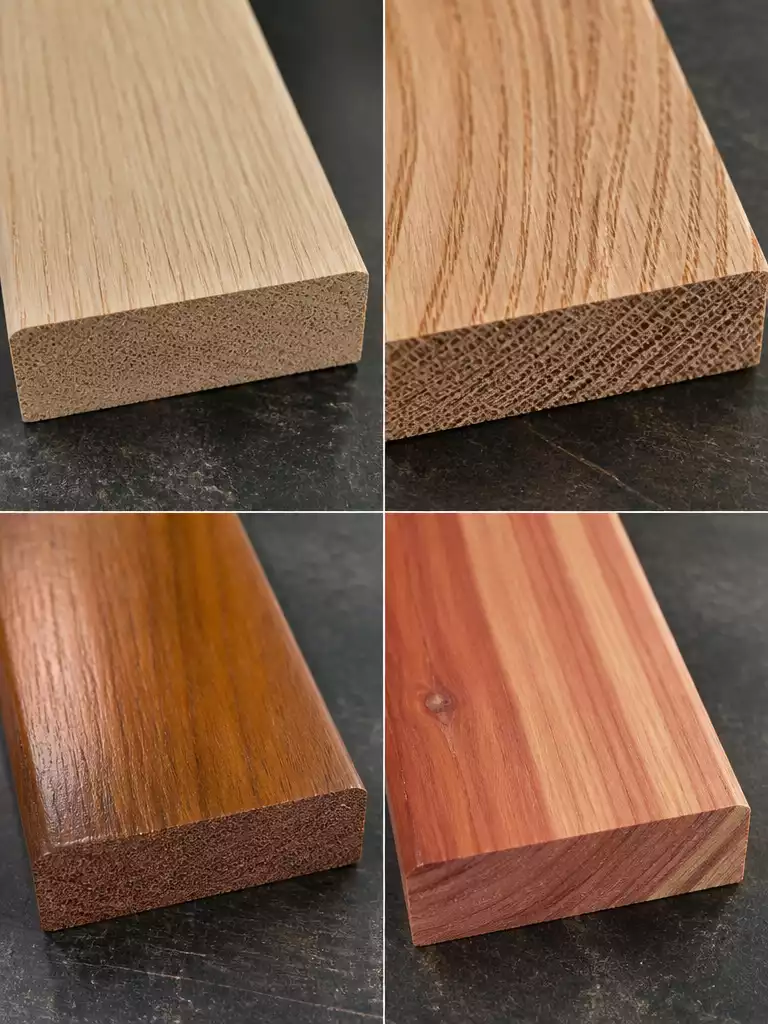
Choosing heartwood species that naturally resist rot and moisture for decades of durable entryways
As an Amazon Associate I earn from qualifying purchases. Affiliate links may earn me a commission at no extra cost to you.
White Oak’s natural waterproofing beats Red Oak’s open pores: On the Janka Scale, hardness alone doesn’t guarantee durability. White Oak’s tyloses clog pores, forming a natural water barrier, while Red Oak’s open pores act like tiny straws letting moisture seep in, accelerating rot. Tropical woods like Teak and Mahogany resist decay with natural oils that repel termites and fungi without chemicals. Be cautious with Western Red Cedar heartwood—its tannin can bleed through finishes unless properly primed, causing unsightly dark streaks over time.
White Oak’s cellular structure creates a dense, waterproof barrier uncommon in other hardwoods. For example, a Red Oak door often shows early water damage within five years in moist climates, while White Oak doors endure much longer with proper sealing.
If you want a double door that lasts decades, focus on heartwood species only—sapwood lacks the natural toxins and invites decay quickly. Skip softwoods or Red Oak if you live where rain and humidity dominate; White Oak or tropical hardwoods like Teak offer a 30+ year lifespan worth the investment, especially when priced upwards of $2,000 for quality heartwood slabs.
.
📋 What to Check First:
- Confirm Heartwood Use: Verify that only heartwood faces the exterior to maximize natural rot resistance and durability.
- Inspect Grain Orientation: Check that the wood grain runs vertically on door stiles to reduce warping risks over time.
- Check Species Suitability: Make sure your chosen wood species matches your local climate’s moisture and insect exposure.
Solid vs. Engineered Core: Stability Factors
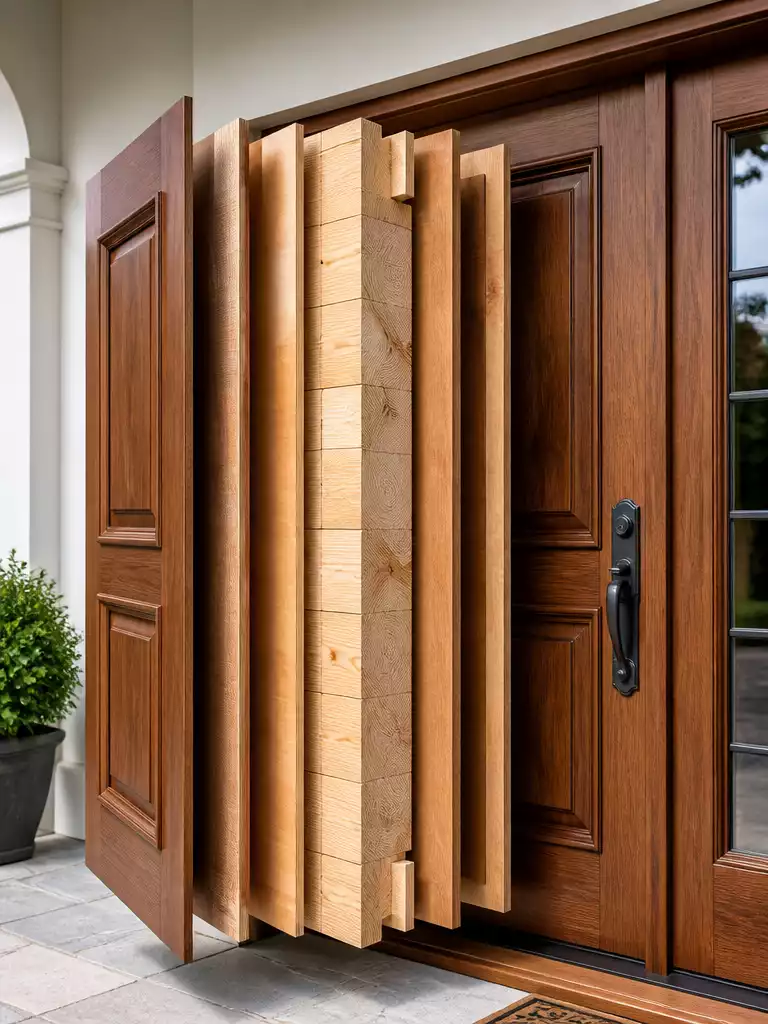
Choosing the right core construction ensures your double door resists warping and stays perfectly aligned for decades.
Engineered cores cancel warping better than solid slabs: A single 2-inch solid wood slab might sound sturdy, but in a 7-foot double door, it’s prone to twisting and cupping. Stave-core construction uses glued wood blocks with alternating grain directions that neutralize wood’s natural movement. Laminated Veneer Lumber (LVL) cores act like plywood on steroids, offering superior straightness and stability, essential for doors that meet perfectly in the middle over long periods.
Many homeowners get burned by cheap engineered doors sporting paper-thin veneers—less than 1/16 inch—that bubble and peel in humid summers. For longevity, look for at least a 1/4-inch thick hardwood veneer on the outside; it sands and refines like solid wood, preserving your door’s life and appearance.
If you want a wooden double door that stays square and functional beyond seven years, avoid pure solid slabs. Engineered stave or LVL cores with thick veneers cost more upfront but eliminate warping headaches. Skip this approach if you expect to replace your door every few years or are budget-constrained under $2,000. For a 30-year door, engineered cores are the smart choice for structural stability.
.
📋 What to Check First Before Choosing Your Core:
- Verify Veneer Thickness: Confirm the door has at least a 1/4-inch hardwood veneer for refinishing and durability.
- Confirm Grain Direction: Ask if the core uses alternating grain blocks to minimize warping over time.
- Inspect Core Weight: A quality LVL or stave-core will feel heavier but more stable compared to a solid slab of the same size.
Joinery and Construction: The Skeleton of Longevity
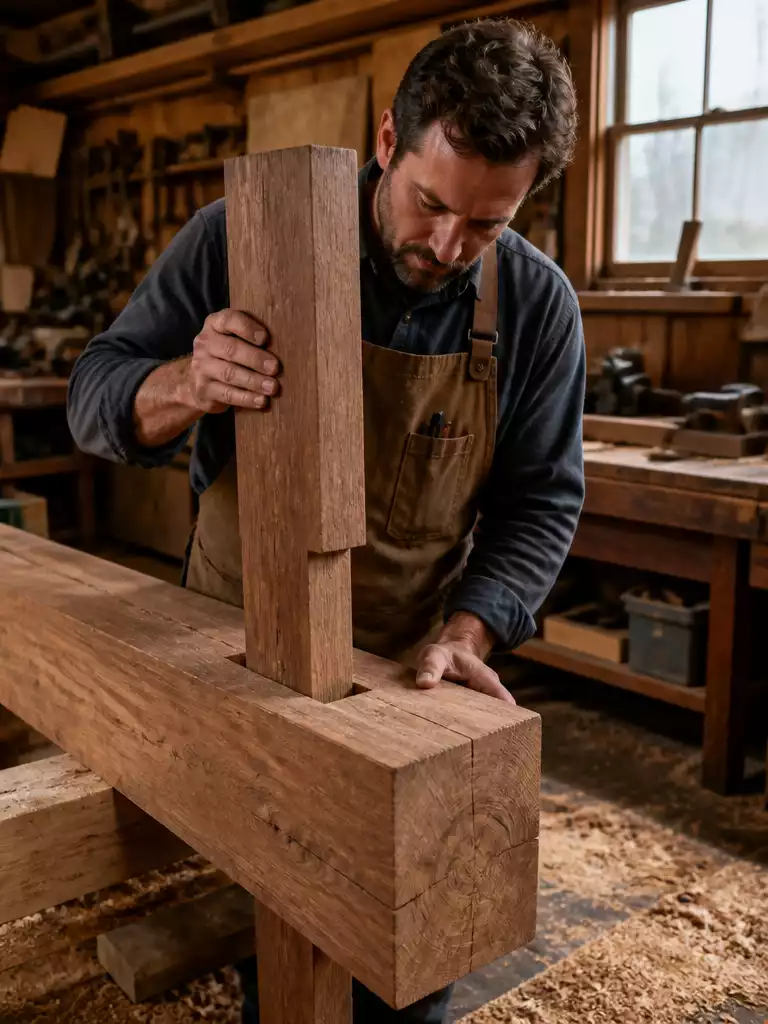
Strong mortise-and-tenon joinery secures heavy double doors against sagging for decades
Mortise-and-tenon joinery prevents 30%+ sag over 10 years: A double door leaf 36 inches wide puts serious weight and leverage on its frame, causing “diamonding” unless the joinery locks the stiles and rails with a minimum 4-inch deep wood-on-wood mortise-and-tenon joint. Cheaper doweling or glued joints won’t handle this tension, and standard wood glue fails quickly in humid entryways without waterproof Type III adhesives designed to resist moisture and joint separation.
The cope-and-stick profile is more than decorative molding—it’s a structural groove that tightly interlocks the frame’s edges, adding mechanical strength. If you spot nails or staples holding the molding instead of a continuous cope-and-stick joint, expect faster warping and loose edges after a few seasons. The combination of deep mortises and waterproof adhesives forms the backbone of a door that holds its shape and functionality for decades.
If your front door is a heavy double slab with double-pane glass, this joinery is non-negotiable. Skip any door that relies on dowels or cheap glue—it’s a shortcut that adds hidden costs down the line. Proper mortise-and-tenon joinery usually adds 10-20% to the upfront price but pays off by preventing costly sagging and drafty gaps. For homeowners who want a door that lasts beyond a decade, insist on this level of craftsmanship or be prepared for replacement within 7–10 years.
.
📋 What to Check First Before Committing to Joinery:
- Joint Depth: Confirm the mortise-and-tenon depth is at least 4 inches for maximum mechanical strength.
- Adhesive Type: Ask for Type III waterproof adhesive certification to ensure long-term moisture resistance.
- Profile Integrity: Verify the cope-and-stick joints are continuous and mechanically interlocked, not nailed or stapled superficially.
Climate Suitability: Matching Material to Environment
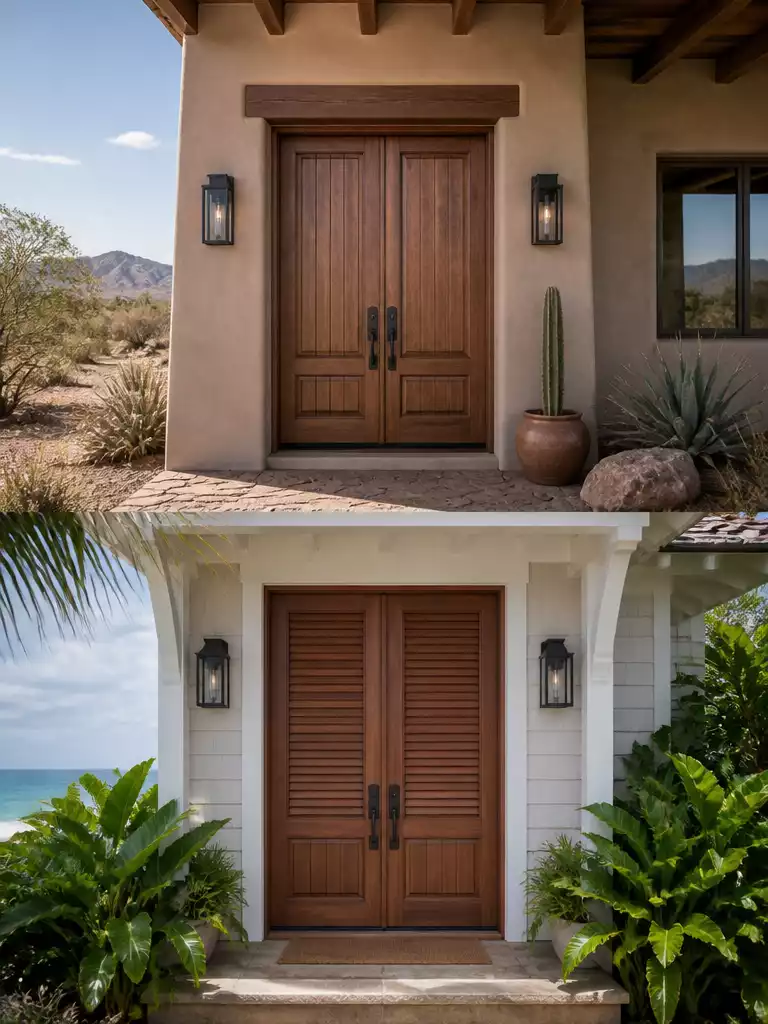
Selecting wood tailored to your local climate protects your door from warping and rot for decades.
Accoya Doors Resist Moisture Swelling: A wooden door that thrives in Arizona’s dry heat often fails within years in Louisiana’s humidity because wood expands and contracts unevenly. Floating panels are essential in arid zones to prevent cracking, while coastal climates demand woods like Iroko or Accoya that resist salt-air damage by preventing fiber crystallization, extending door life beyond 30 years.
Equilibrium Moisture Content (EMC) matters more than you realize. Wood kiln-dried for a humid climate won’t immediately swell after installation, avoiding early warping or sticking. For example, a door dried to 9% EMC in dry Arizona will crack once exposed to Louisiana’s 16% humidity. This mismatch is a common cause of premature door failure and costly callbacks.
If your home faces salty ocean air, choose Accoya or Iroko—both priced higher but worth the investment to avoid the fuzzy, degraded fibers that ruin regular hardwoods. Skip these if you live inland or in consistently dry climates, where standard kiln-dried hardwoods with floating panels offer decades of durability around a $2,500+ price point. Matching wood to environment isn’t optional; it’s the difference between a door lasting 30 years or 3.
.
📋 What to Check First Before Choosing Your Door Wood:
- Local Humidity Levels: Confirm your region’s average humidity to select properly kiln-dried wood matching that EMC range.
- Salt-Air Exposure: If near the coast, verify salt spray frequency and opt for salt-resistant species like Accoya or Iroko.
- Panel Movement Needs: Determine if your door design allows floating panels to accommodate wood shrinkage without cracking, especially in dry climates.
Moving through these details shows your attention to what truly supports longevity. Even careful choices in wood and joinery are part of a bigger picture that includes environment and protection. This balanced approach ensures your wooden double doors aren’t just beautiful but built to endure.
⚡ Keep This in Mind:
- Consider how climate suitability interacts with your door’s core and joinery for lasting strength.
- Explore front door care tips to complement material choices and reduce weather wear.
- Focusing on structural details helps keep your expectations grounded and manageable.
- Progress is about layering the right elements, not rushing perfection.
Finish and Sealant: The First Line of Defense
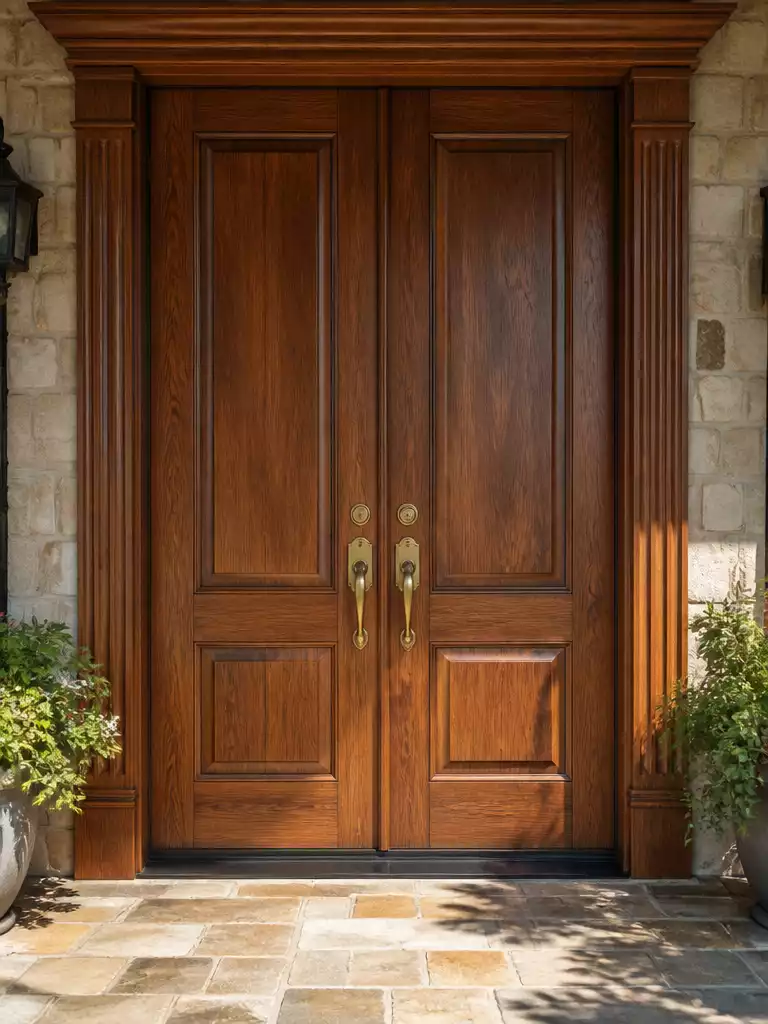
Proper sealing on all six sides extends door life and prevents warping from moisture.
The Door to Skip if Bottom Edge Is Left Raw: The Six-Side Rule is critical: if the top and bottom edges aren’t sealed, the front and back finish won’t save you. Thick film-forming varnishes trap moisture once they crack, but high-solids penetrating oils allow wood to breathe while shedding water. Also, UV inhibitors in the finish protect lignin from turning brittle under the sun, preventing premature graying and splintering.
Check the bottom edge carefully after installation—using a mirror if needed—to confirm it’s fully sealed. A raw bottom edge will absorb standing water like a sponge, leading to the fastest door failures. Marine-grade spar urethane offers excellent protection in full sun and rain but can be tough to sand during refinishing, so plan accordingly for future upkeep.
Finish and sealant quality is right for homeowners who want their wooden double doors to last 20+ years with manageable maintenance. Skip this option if you’re looking for a low-cost door under $1,500 or if regular refinishing isn’t on your schedule. Expect to invest in high-solids oils with UV blockers and insist on sealing all edges—especially the bottom—to avoid early warping and costly replacements.
.
🛠️ Practical Tips for Finish Longevity:
- Edge Preparation: Lightly sand all six edges before sealing to ensure finish adhesion and uniform protection.
- Multiple Coats: Apply at least three coats of high-solids oil or spar urethane, focusing extra layers on edges and joints.
- Regular Inspection: Check for tiny cracks or peeling annually and spot-treat before moisture penetrates the wood core.
Panel Style and Proportions: Structural Implications
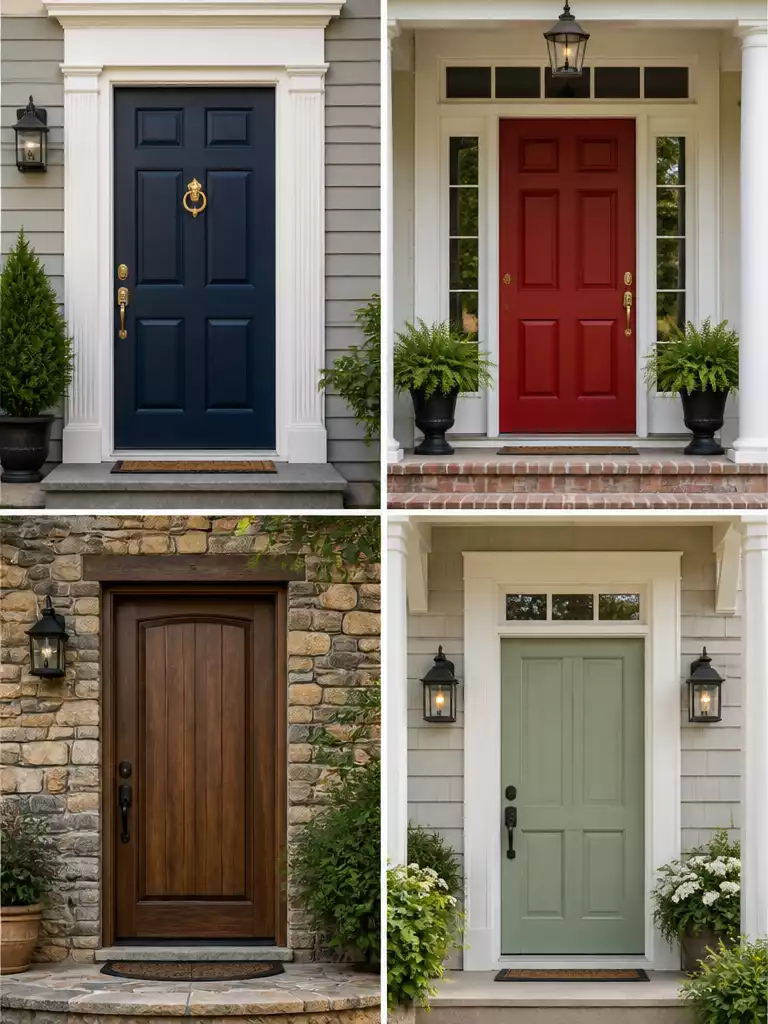
Smarter panel design lets your door breathe and resist cracking for decades
Massive solid panels risk splitting over time: A single large flat wood panel on a double door is a structural gamble. Raised panels fit into grooves and float freely, allowing up to a 1/4 inch seasonal expansion without cracking the surrounding frame. This floating panel design prevents the “split down the center” problem common in wide slabs and is essential for doors built to last 30+ years.
The meeting stiles where the two doors close must be wide enough to hold locking hardware securely without weakening the surrounding wood. Narrow stiles can lead to hardware failure and door misalignment, causing drafts and sticking. A stile width of at least 4 inches is typical for durability and proper lock installation.
If you want a robust door that handles wood’s natural movement, pick multi-panel styles with raised, floating inserts. Skip single, wide solid panels if you live somewhere with extreme seasonal changes or if you’re expecting the door to last decades without cracking. Doors with proper panel proportions often cost $800 or more but avoid costly repairs or early replacement down the line.
.
📋 What to Check First for Panel Style and Proportions:
- Panel Movement: Confirm panels float freely in grooves without glue to allow seasonal wood expansion safely.
- Stile Width: Measure meeting stiles to ensure at least 4 inches for secure hardware attachment and long-term stability.
- Panel Size Balance: Avoid overly large solid panels on exterior doors, especially in climates with wide humidity swings.
Glass Options: Thermal Breaks and Seal Integrity
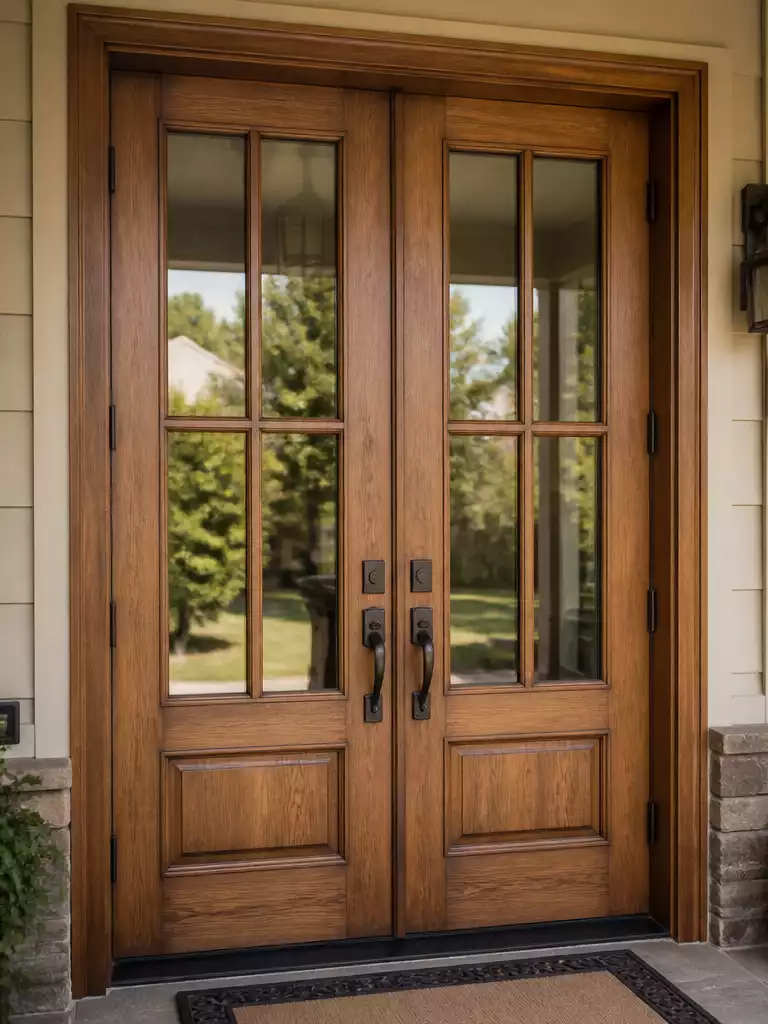
Insulated glass and flexible seals protect wood frames from moisture damage and warping.
Double-Pane Glass with Silicone Seals Prevents Rot: The notorious “foggy window” effect usually means the wood-to-glass seal has failed, not the glass itself. Insulated Glass Units (IGUs) with dual-actuating silicone bedding expand and contract with wood movement, preventing cracks that allow moisture to rot muntins. Low-E coatings further reduce heat transfer, protecting the interior frame from thermal stress.
Many homeowners overlook that traditional glazing putty hardens and cracks as wood expands, causing seal failure within 5 years. For example, a door with standard single-pane glass and putty can develop condensation inside the frame, leading to softened muntins and visible deterioration. Silicone seals maintain flexibility, keeping the wood dry and structurally sound over decades.
This door is right for anyone who wants longevity with glass inserts and is willing to invest roughly 10–20% more upfront for quality IGUs and professional silicone installation. Skip it if your budget maxes out under $1500 or if your entry sees extreme impact at frequent intervals—tempered glass lowers breakage risk but doesn’t eliminate it completely. Remember, tempered IGU glass prevents heat-stress cracks common in dark-stained wood frames, making this a smart choice for sunny climates.
.
📋 What to Check First Before Choosing Glass Inserts:
- Seal Flexibility: Confirm the installer uses silicone bedding, not traditional putty, to allow wood movement without cracking.
- Glass Tempering: Verify all glass is tempered, especially for dark stains or sunny exposures to prevent heat-stress fractures.
- Unit Thickness: Check IGU thickness fits your door frame properly to avoid gaps that compromise seal integrity and insulation.
Hardware Compatibility
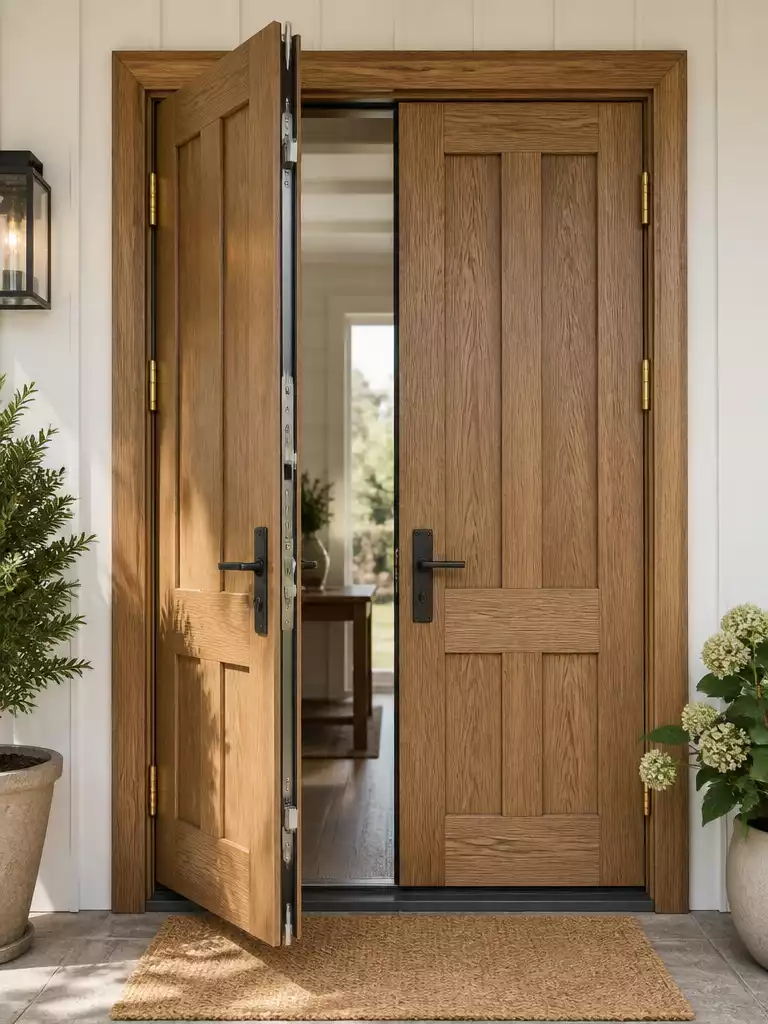
The right hardware keeps double doors tight, water-safe, and long-lasting under daily use
Every drilled hole is a water risk: Hardware isn’t just for security; each bore hole is a potential straw letting moisture into the wood core. Double doors need a 3-point locking system to pull heavy slabs tight, stopping warping. Rubber gaskets behind escutcheon plates prevent “weeping” water damage, while ball-bearing hinges support heavyweight hardwoods without sagging or rubbing the finish.
Standard hinges often fail on thick hardwood doors, causing slow sagging that leads to rubbing and finish damage. For example, ball-bearing hinges rated for 250+ pounds keep the door aligned perfectly. Also, an integrated “T-Astragal” with weatherstripping seals the gap between doors—a critical spot for air and water leaks in double doors.
This hardware setup suits anyone installing heavy wooden double doors that must last 30+ years. Skip it if you want cheap hardware or expect to replace locks every few years. Good multi-point lock systems and ball-bearing hinges typically add 15–20% to your door budget but pay off in durability and peace of mind.
.
📋 Before You Install Hardware:
- Confirm Bore Hole Alignment: Measure precisely where locks and handles will mount to avoid misaligned holes that allow moisture entry.
- Check Astragal Compatibility: Ensure your selected multipoint lock and weatherstripped T-astragal coordinate to seal the door gap efficiently.
- Test Hinge Weight Rating: Verify hinges are rated for your door’s exact weight, especially with heavy hardwoods and added glass panels.
Sizing and Standard Openings: Settling and Stress
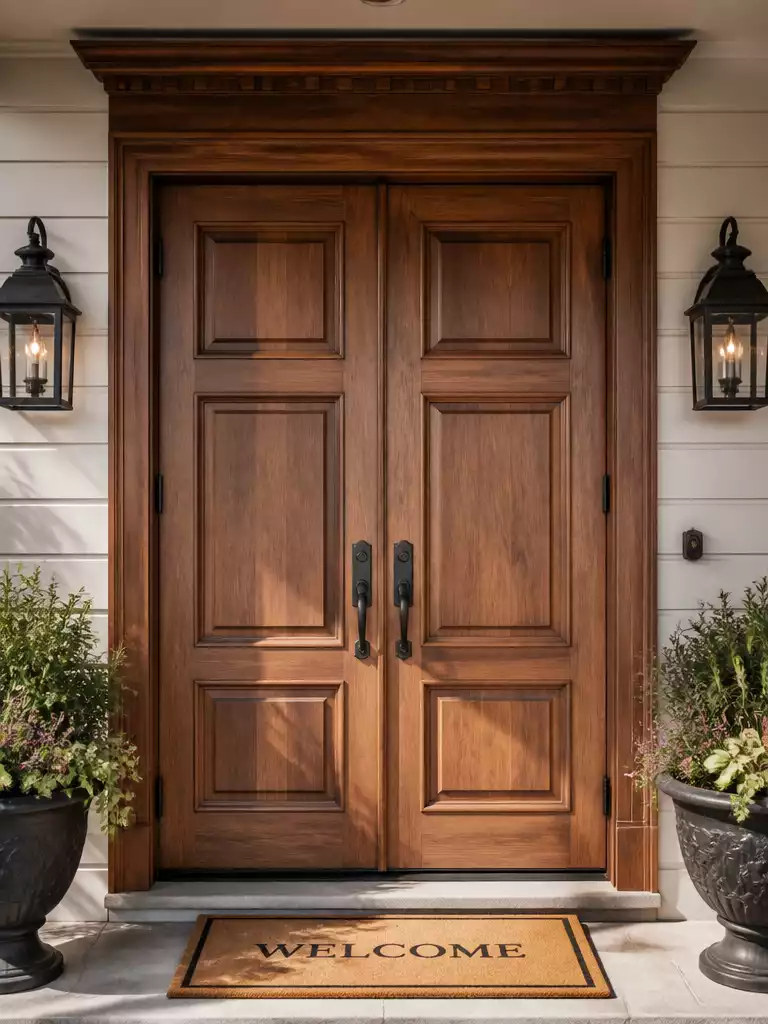
Precise door sizing ensures smooth operation despite seasonal wood movement and house settling.
The 1/8-inch Gap Is a Lifesaver, Not a Flaw: A consistent 1/8-inch reveal around all four sides allows wooden double doors to expand and contract seasonally without sticking or warping. Too tight a fit invites binding, while oversized openings can cause drafts and frame stress. Also, an adequately sized header beam is vital; undersized headers sag over time, pinching doors and cracking joints, shortening door lifespan.
Jamb depth matching the wall thickness is another overlooked detail that prevents door frame racking during house settling. For example, a door installed in a 6-inch wall but framed with a 4-inch jamb risks twisting and uneven gaps after the first winter. This subtle dimension can make or break your door’s decade-long durability.
If you’re considering custom or site-built frames, prepare for potential failures within ten years—factory pre-hung doors in squared frames are worth the premium, saving headaches and replacement costs. That makes this sizing approach essential for anyone investing $3,000 or more in a wooden double door that should last decades. Skip this if you’re aiming for a quick fix or budget entry door; it’s not designed to perform under seasonal wood movement or structural stresses.
.
📋 What to Check First:
- Measure Door Widths: Confirm each door leaf matches the opening’s width plus the 1/8-inch gap on all sides for smooth operation.
- Inspect Header Size: Ensure the structural beam above the door is correctly sized to prevent sagging under the double-door weight.
- Verify Jamb Thickness: Match jamb depth exactly to wall thickness to avoid racking and uneven settling after installation.
Installation Quality: Plumb, Level, and Square for Life
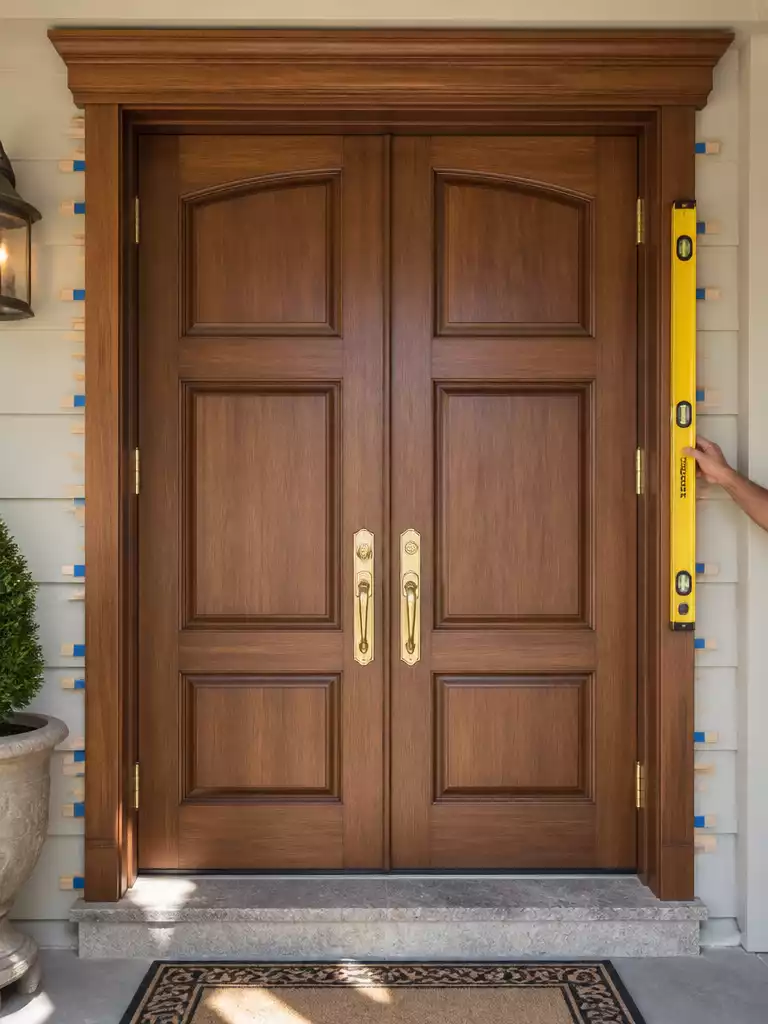
Precision installation ensures your wooden double doors stay aligned and functional for decades.
Hinges need 2.5-inch screws into framing: A door just 1/4 inch out of plumb means gravity is pushing its hinges to fail every day. Long screws anchored deep into house framing—not just the jamb—are essential to resist sagging and misalignment over 30 years. Proper shimming behind hinges transfers weight correctly, preventing damage to trim and ensuring the door swings true.
Installing a sub-sill pan flashing beneath the threshold directs water away from the subfloor, guarding against hidden rot that often ruins doors faster than visible wear. The “ghost swing” test—checking if the door swings open or closed on its own halfway—quickly reveals if the frame is square. If it’s off, tension will eventually break down joinery and hardware alignment.
This installation method suits homeowners investing in longevity and precision. Skip it if you’re looking for a quick, budget fix or planning to replace doors in under a decade. Expect professional installation costs to rise with these quality steps but know that every 2.5-inch hinge screw and shimmed block helps your door meet a 30-year lifespan expectation without sag or draft.
.
📋 What to Check First Before Installation:
- Wall framing integrity: Confirm studs are straight and sturdy to anchor hinge screws deep and securely.
- Door rough opening size: Verify exact width and height leave room for shims and the 1/8-inch reveal all around.
- Subfloor condition: Inspect under the sill for rot or unevenness where the sill pan flashing will sit to avoid leaks.
Maintenance Schedule: The Longevity Multiplier
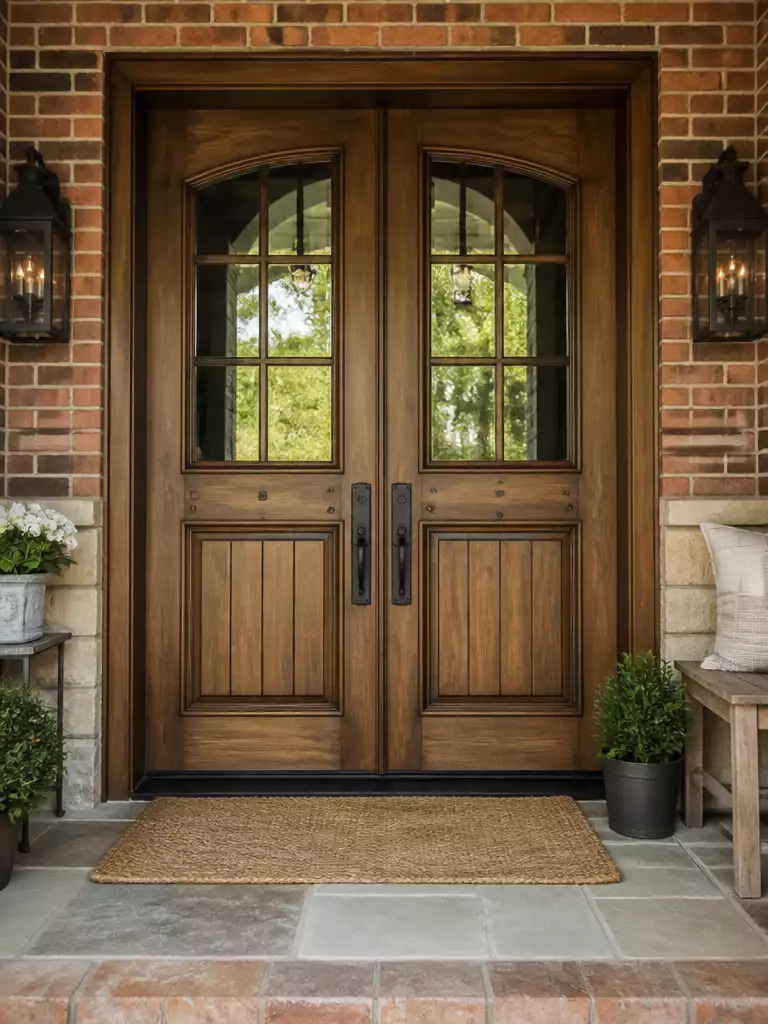
Consistent upkeep boosts wood door lifespan and prevents costly replacements
Maintenance Is a $5,000 Replacement Preventer: The right wooden double door demands ongoing care—not a one-and-done task. An annual wash with mild soap to clear pollutants followed by a beeswax buff can add years to the finish. Weatherstrip seals wear out every 5–7 years, so swapping them keeps moisture from sneaking into vulnerable wood rebates and causing rot.
Pay attention especially to horizontal surfaces like the top of the mid-rail and the bottom sill—these take the most weather abuse and often develop tiny cracks if neglected. Skipping minor scuffs and delaying refinishing only sets up the door for major finish failure that demands a full chemical strip.
This maintenance routine suits homeowners ready to invest 5 minutes a year into door care and budget for a weatherstrip replacement every half decade. If you prefer a zero-fuss entry or aren’t prepared for a 30-year commitment, this door isn’t your match. But if longevity matters, following a 3-year scuff-and-buff cycle plus annual cleaning is the longevity multiplier that keeps your entry looking and performing strong for decades.
.
📋 Installation Quality Quick Reality Check:
- Hinge Screw Length: Confirm screws penetrate deeply into framing studs, not just the jamb, to avoid sag over time.
- Shimming Placement: Inspect that solid shims are behind every hinge, transferring door weight to the structure, not trim.
- Sill Pan Slope: Verify that the sill pan slopes away from the home to channel water outside and protect subflooring.
Cost vs Longevity: Calculating the 30-Year Value
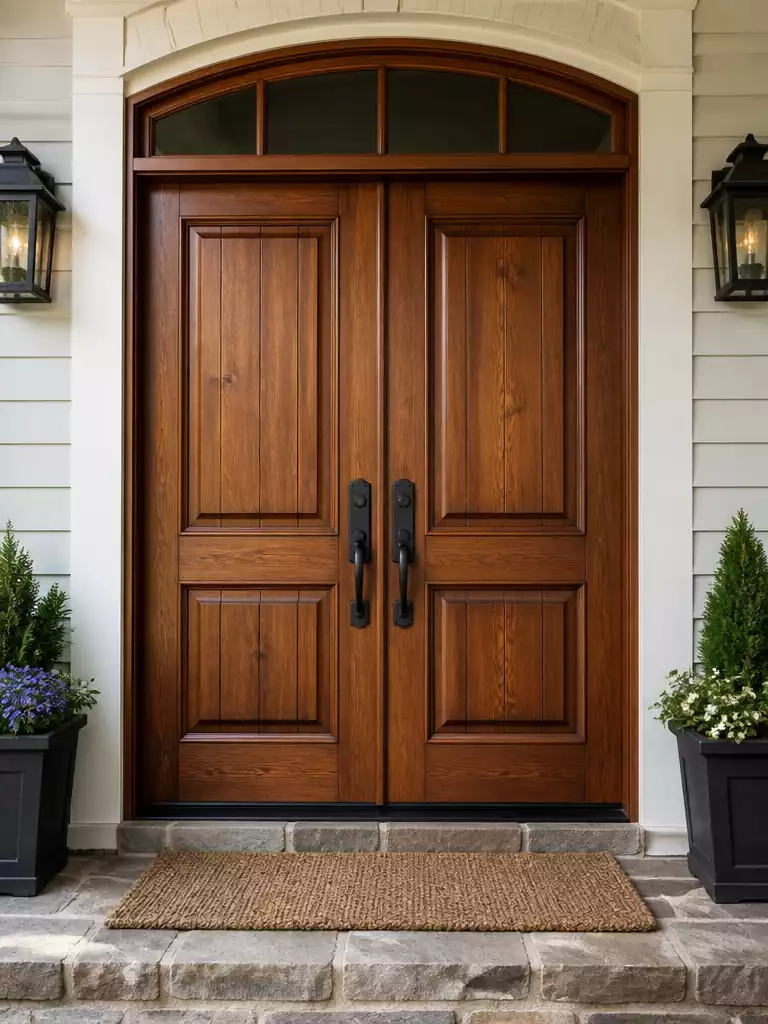
Invest wisely upfront for a wooden door that pays dividends in durability and savings.
The $8,000 Door Lasts 40 Years: A $2,000 door that needs replacing every 7 years actually costs you about $285 per year. Meanwhile, investing $8,000 in a high-grade wooden double front door that endures for 40 years reduces your annual cost to roughly $200 per year. This upfront premium also buys superior energy efficiency and less frequent maintenance, cutting hidden costs like warping-related drafts and repainting.
The “Cheap Wood” tax hits hardest through repeated repairs and energy waste. For example, lower-end pine doors often warp, causing sticking and air leaks that spike heating bills, and require repainting every 2-3 years. These ongoing expenses, plus eventual landfill disposal, escalate your true door costs well beyond the purchase price.
This choice is ideal if you want to avoid recurring headaches and boost resale value since home inspectors flag warped doors as signs of neglect. But it’s the wrong door if your budget caps out below $3,000 or if you aren’t ready to factor in professional installation and premium hardware, which can add 30–50% to the initial price. For lasting performance, think of it as a 30-year investment, not just a quick fix.
.
📋 What to Check First Before Installation:
- Frame Squareness: Use a carpenter’s square to confirm the door frame is perfectly square before hanging the doors.
- Hinge Alignment: Check hinge mortises are flush and aligned on both doors to prevent uneven weight distribution.
- Sill Drainage: Verify that the door sill has proper slope and flashing to ensure water drains away from the threshold.
You now have a clear framework to evaluate wooden double front doors based on durability and lasting quality rather than fleeting trends. Focus on the aspects that feel most achievable and trust that thoughtful decisions here can truly stand the test of time.
Choosing well-crafted materials and reliable construction lays a foundation of comfort and resilience that will quietly enhance your home for years to come. Taking even one small step towards longevity is an investment in peace of mind and lasting beauty.