
Mastering the gray walls, white trim, and black doors combination provides the high-contrast structure every home needs. This guide rounds up 12 door ideas worth saving so you can find the exact undertone that fits your space. Let’s look at how these rooms get the balance right.
Warm Gray Living Room
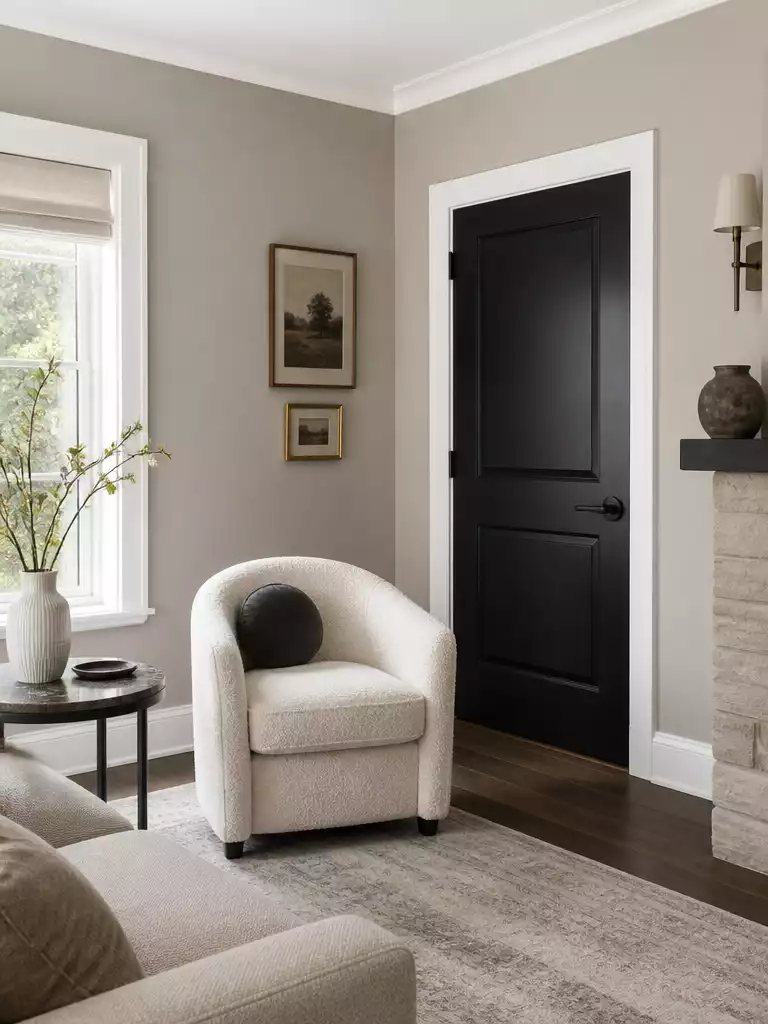
Master high-contrast design by anchoring sharp black doors with soft, tactile textures and warm gray walls.
As an Amazon Associate I earn from qualifying purchases. Affiliate links may earn me a commission at no extra cost to you.
Introducing a black door into your living space can easily feel like stepping into a corporate office if you aren’t careful. The trick to keeping this look cozy is to lean into a warmer, greige-based gray for your walls rather than a sterile cool tone.
This warmth acts as a necessary anchor, ensuring the room feels like a home rather than a showroom. Because the black door provides such a sharp visual punch, you must counterbalance that severity with layered, soft textures.
Try incorporating these elements to soften the room’s overall impact:
- Boucle or wool throws draped over seating to break up flat surfaces.
- Natural stone side tables or coffee tables to introduce organic, earthy weight.
- Matte-finish metals on lighting fixtures rather than polished chrome or brass.
Pro Finish Strategy
To master the contrast, use semi-gloss for your white trim to reflect a bit of light, and stick to a matte or eggshell finish for the walls. Use a matte or satin finish on the black door to minimize glare, preventing the door from feeling like a giant dark mirror in your relaxation zone.
If your living room lacks significant natural light, stick to the warmer side of the greige spectrum to avoid a muddy appearance. This palette is the perfect choice for homeowners who want a graphic, modern look without sacrificing the comfort required for a daily living space.
.
Designer Note: Why This Balance Matters
Achieving a high-contrast look without the room feeling clinical requires a careful dance of undertones. A warm, greige-based gray acts as a neutral bridge, mellowing the intensity of the black door. By prioritizing organic, matte-textured materials like wool and stone, you break up the flat, light-reflecting surfaces, creating a layered, intentional space that feels welcoming rather than severe.
Cool Gray Entryway
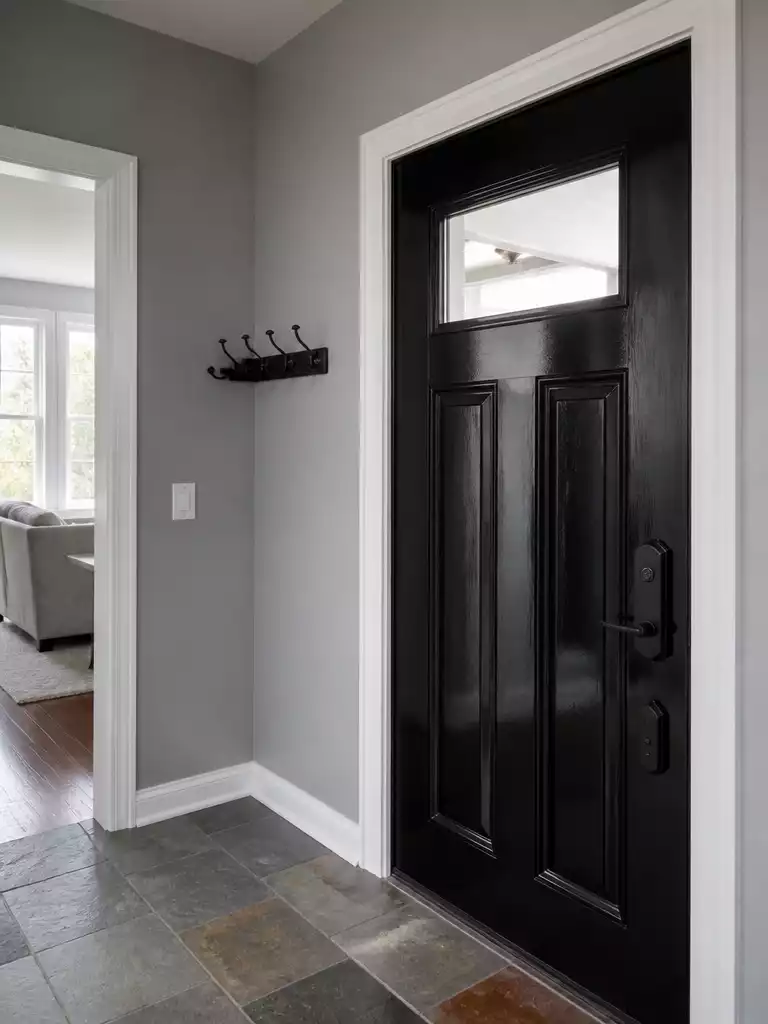
Create a high-impact, durable first impression that handles daily traffic with ease.
The entryway is your home’s first line of defense against the elements, meaning it requires high-performance finishes to stay looking sharp. Because this is a high-traffic zone, your black door should be finished in a high-sheen enamel to weather constant scuffs and cleaning.
Many entries lack windows, which often makes them feel dark or muddy if you choose the wrong wall color. A crisp, cool gray keeps the space feeling clean and awake rather than heavy or enclosed.
Pro Tip: Use semi-gloss for both your trim and your black doors in this zone. The higher sheen makes these surfaces infinitely easier to wipe down when mud or scuffs appear.
The white trim acts as a vital visual guide in a narrow or windowless space. It frames the transition between the gray walls and the black door, providing the architectural legibility needed to define the room’s borders.
If your entry is particularly tight, avoid flat or matte paints on your trim, as they will trap dirt and look worn within weeks. Stick to a consistent, high-quality semi-gloss that handles the daily shuffle of bags, shoes, and coats.
.
💡 Why This Works:
Using a cool-toned gray in a windowless entryway prevents the “muddy” look that often happens when natural light is scarce. The crispness of the gray, paired with clean white trim, creates a high-contrast boundary that makes a small, dark space feel purposeful and polished rather than cramped or neglected.
Visual Reset: Cool grays draw the eye forward, successfully turning a narrow hallway into an intentional, gallery-like transition.
Greige Hallway
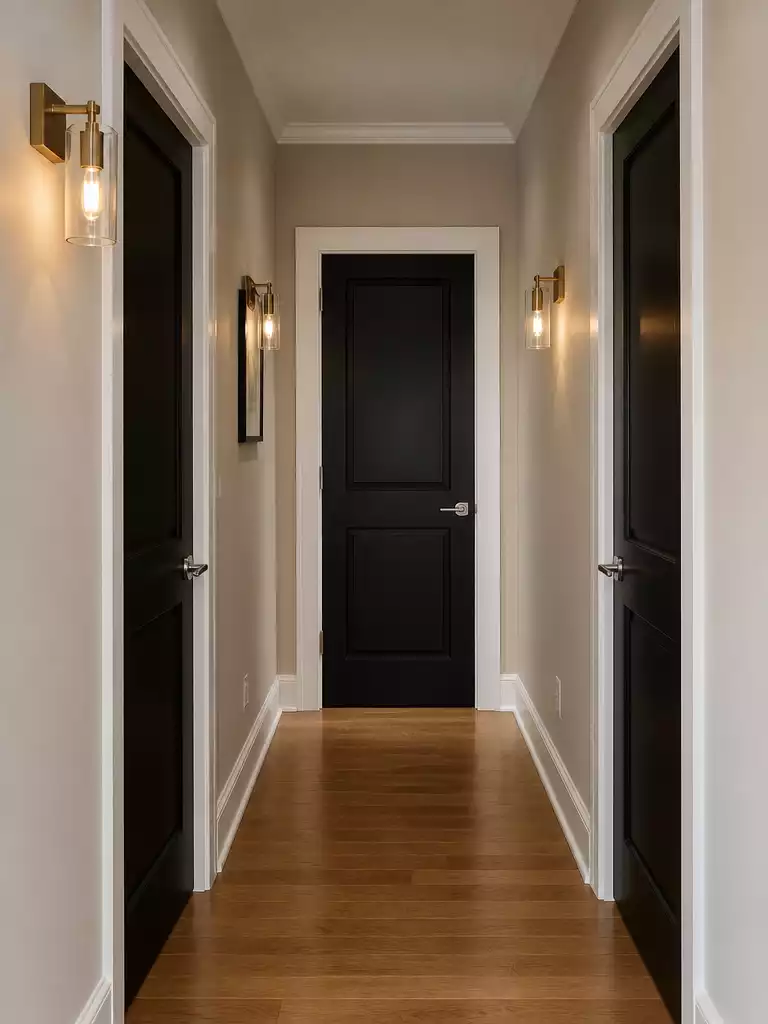
Create a rhythmic, gallery-style path that connects your rooms with balanced, neutral warmth.
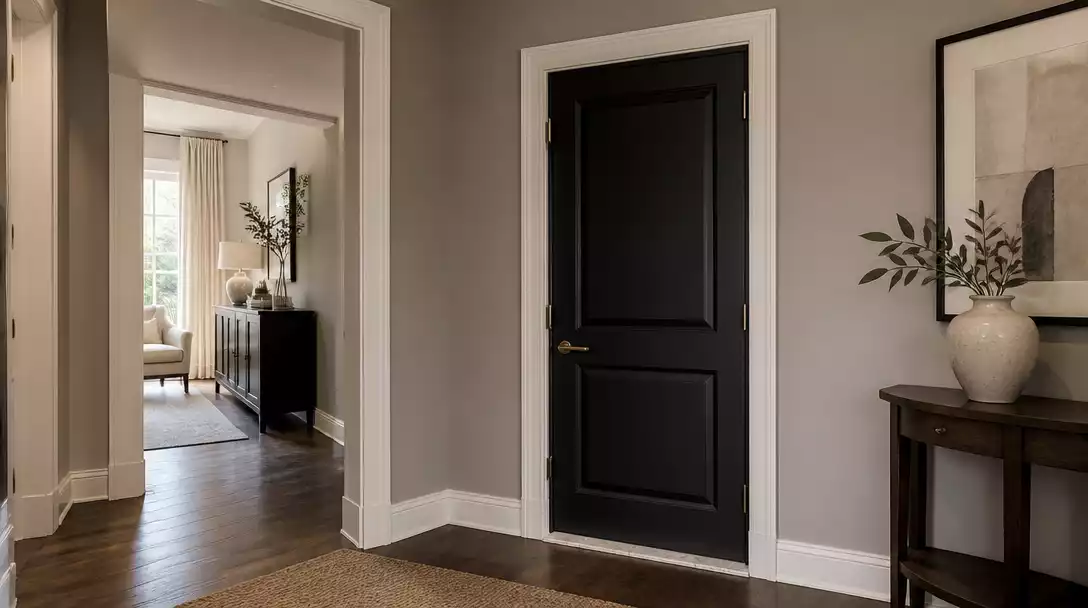
Hallways often suffer from a “choppy” feel because they are broken up by multiple door frames and shadows. Using consistent trim profiles and mapping out your black door placement creates a rhythmic, intentional path that guides the eye naturally.
Greige is the anchor here because it acts as a bridge between the warmer and cooler rooms in your home. It avoids the jarring transition that can happen when you move from a stark white space into a heavily charcoal one.
Pro Tip: Install wall-mounted sconces to wash the gray walls in warm light. This layout turns a functional transition zone into a gallery-like experience that highlights the black doors as focal points.
If you are debating which gray undertone to choose for your hall, use this quick guide to determine what works best for your home’s natural light levels:
Avoid charcoal in very narrow hallways, as it can make the walls feel like they are closing in. Stick with semi-gloss for your trim and doors to provide the necessary durability against high-traffic scuffs.
.
💡 Why This Works:
- Visual Rhythm: Repeating black doors and consistent trim creates a “punctuation” effect that turns a disjointed hallway into a cohesive, intentional gallery path.
- Undertone Harmony: Greige acts as a neutral bridge, preventing the harsh “clash” that occurs when moving between different warm and cool zones of your home.
- Gallery Effect: Using wall-mounted sconces on gray walls adds depth, drawing the eye forward and making narrow spaces feel like a deliberate design feature.
Soft Gray Bedroom
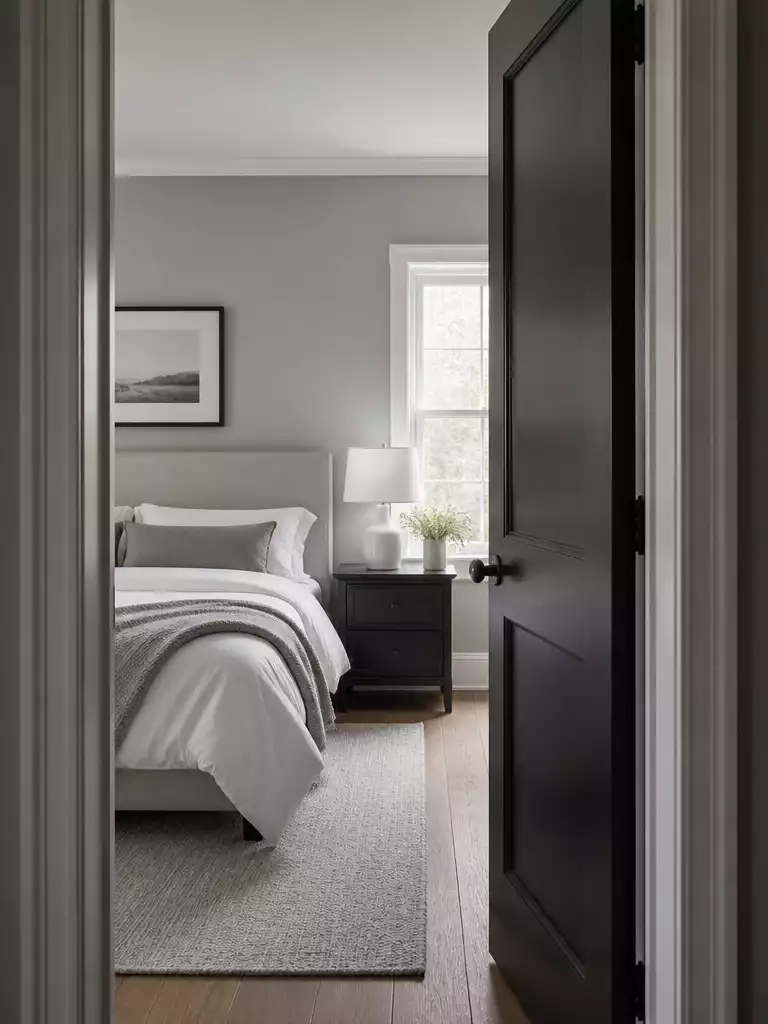
Create a restful sleep sanctuary by balancing high-contrast architectural lines with ultra-soft, cozy textiles.
The biggest hurdle in a bedroom is ensuring your high-contrast palette doesn’t feel clinical or jarring. You want a calm contrast that provides visual interest without waking you up the moment you step through the door.
Morning light often contains a strong blue shift that can make cool gray wall paint look sterile or icy. To keep the space feeling warm and welcoming, opt for a gray with slight brown or beige undertones rather than a true cool blue-gray.
Pro Tip: Avoid high-shine or high-gloss finishes on your black doors in the bedroom. A matte or eggshell finish prevents light reflection and glare, which is essential for maintaining a dark, sleep-ready environment.
To soften the severity of a black door, lean heavily on upholstered elements and natural textures. A fabric-covered headboard or floor-to-ceiling linen drapery will absorb sound and break up the sharp lines of your trim and door frames.
When selecting your finishes, keep this quick guide in mind to ensure your bedroom remains a sanctuary:
- Trim and Doors: Use semi-gloss enamel for durability and a slight reflective quality that highlights the architectural trim.
- Walls: Stick to an eggshell or flat finish to hide wall imperfections and reduce light bounce.
- Textiles: Incorporate boucle, velvet, or heavy wool to provide the tactile softness required to balance the sharp black-and-white accents.
This layout is right for those who love the graphic impact of black doors but need a space that still feels like a quiet, private retreat. If you prefer a space with no visual “weight” at all, you might find the black door too dominant for your personal taste.
.
🏡 How This Works in a Real Home:
- Softened sightlines: Place a plush lounge chair near the black door to pull the eye away from the sharp frame.
- Daily ease: Choose matte black hardware to minimize fingerprints on the door, keeping the high-contrast look clean longer.
- Natural layers: Introduce woven baskets or wood nightstands to ground the gray walls, making the room feel lived-in, not staged.
Establishing a cohesive color palette across your home often feels like a high-stakes balancing act that requires total perfection. In truth, your home’s impact relies on a few intentional choices rather than getting every single detail right the first time you upgrade your interior doors.
Consistency in your trim and wall undertones anchors the entire space, allowing the high-contrast aesthetic to feel intentional rather than accidental.
Charcoal Accented Office
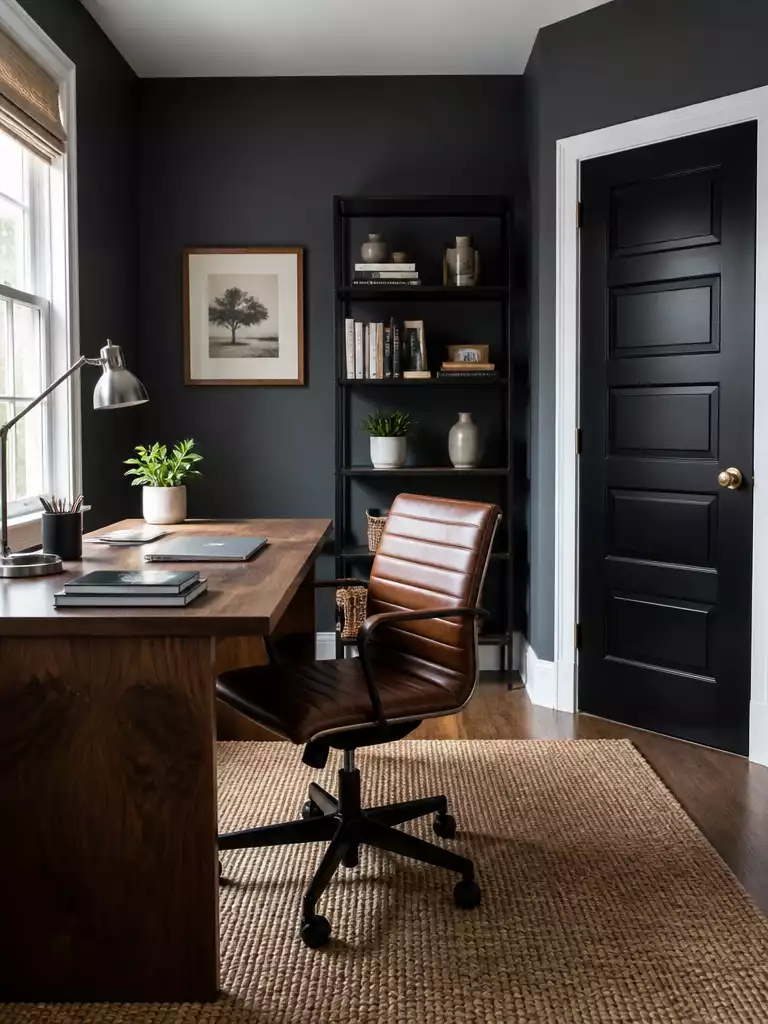
Create a focused workspace where deep contrast drives productivity and minimizes visual distraction.
When you spend hours at a desk, a high-contrast environment can actually help you lock in on your tasks. The psychology of a charcoal-walled room with black doors creates a sense of enclosure that keeps your attention firmly on your computer screen rather than the rest of the house.
However, this setup is a high-stakes move for small rooms. If your office lacks substantial natural windows, use a warmer gray undertone instead of a true charcoal to prevent the space from feeling like a basement.
Glare Reduction Tip: Since dark walls and black doors can reflect light in distracting ways, opt for true matte finishes on your walls. Use a semi-gloss sheen only for the door and baseboards to ensure the architecture pops without creating a mirror effect on your wall surfaces.
To keep the room from feeling sterile or overly cold, you must pull in organic materials. A heavy wood desk, a leather chair, or even a woven area rug will soften the monochromatic transition between the gray walls and black frames.
This layout is perfect for those who want their office to feel like a serious sanctuary. If you are someone who needs a bright and airy atmosphere to feel creative, this moody charcoal scheme might be too intense for your workflow.
.
🧰 Questions for Your Installer:
- Surface Prep: Ask if they recommend sanding the door base to ensure the matte-to-gloss transition looks seamless.
- Glare Control: Verify if they can use a high-quality leveling agent to keep the semi-gloss finish smooth.
- Maintenance Scope: Confirm if the chosen finish is durable enough for frequent cleaning without losing its deep charcoal pigment.
Light Gray Kitchen
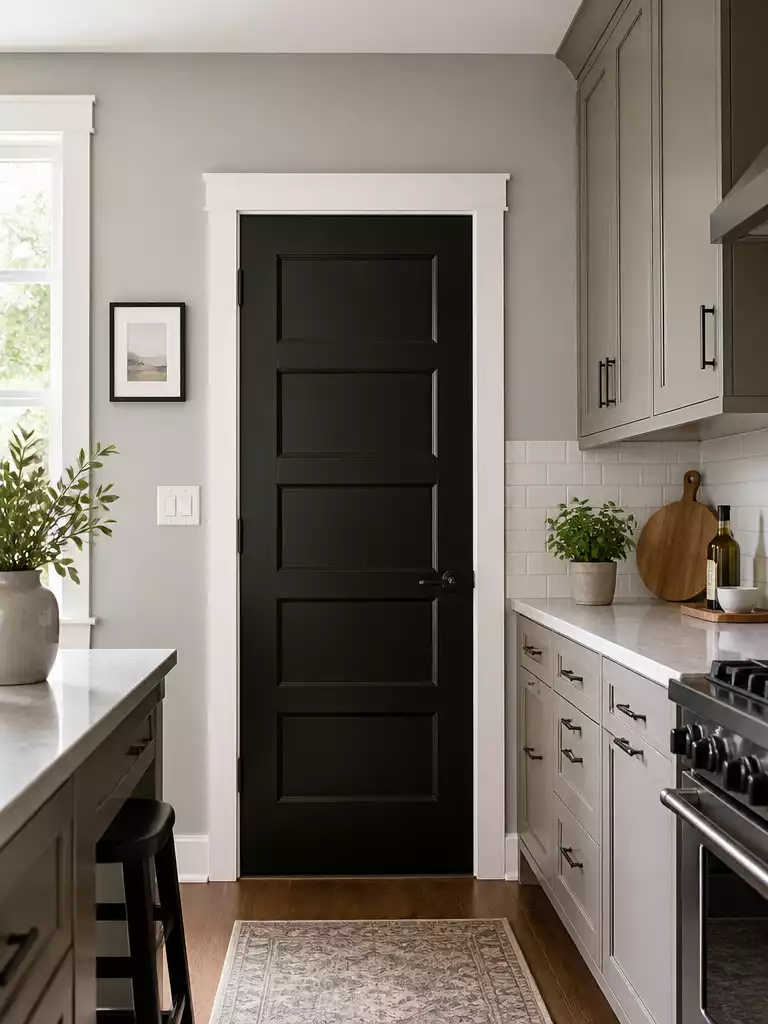
Create an airy, high-contrast kitchen by balancing light gray walls with bold black accents.
In a kitchen, your black door acts as a punchy focal point that needs to work in harmony with your cabinetry and appliances. If you choose a door that is too heavy, it will distract from the rest of your kitchen design rather than anchoring it.
Light gray walls are the secret to keeping this space feeling open and airy, even when you introduce dark, high-contrast elements. This choice ensures the room feels bright during the day while providing a clean background for your kitchen hardware to pop.
Consistency is key for your trim work. Ensure the white you select for your door casing matches the white used in your backsplash tile or countertop veins to keep the room from feeling disjointed.
Avoid flat paint finishes on your kitchen doors and trim. Use a semi-gloss finish to ensure surfaces are wipeable enough to handle daily kitchen splatters and high-traffic wear.
.
⚖️ Quick Decision Guide: Choosing Your Kitchen Gray
Selecting the right shade of gray hinges on your kitchen’s specific light exposure and how it interacts with permanent fixtures like countertops.
- Choose cool gray: Best for sun-drenched kitchens where the natural light balances the potential for a sterile, blue-toned finish.
- Choose warm greige: Ideal for north-facing or shaded kitchens to prevent the space from feeling chilly or uninviting.
- Pair with white: Keep your trim white-on-white with your backsplash to anchor the black door without creating visual clutter.
Gray Sunroom
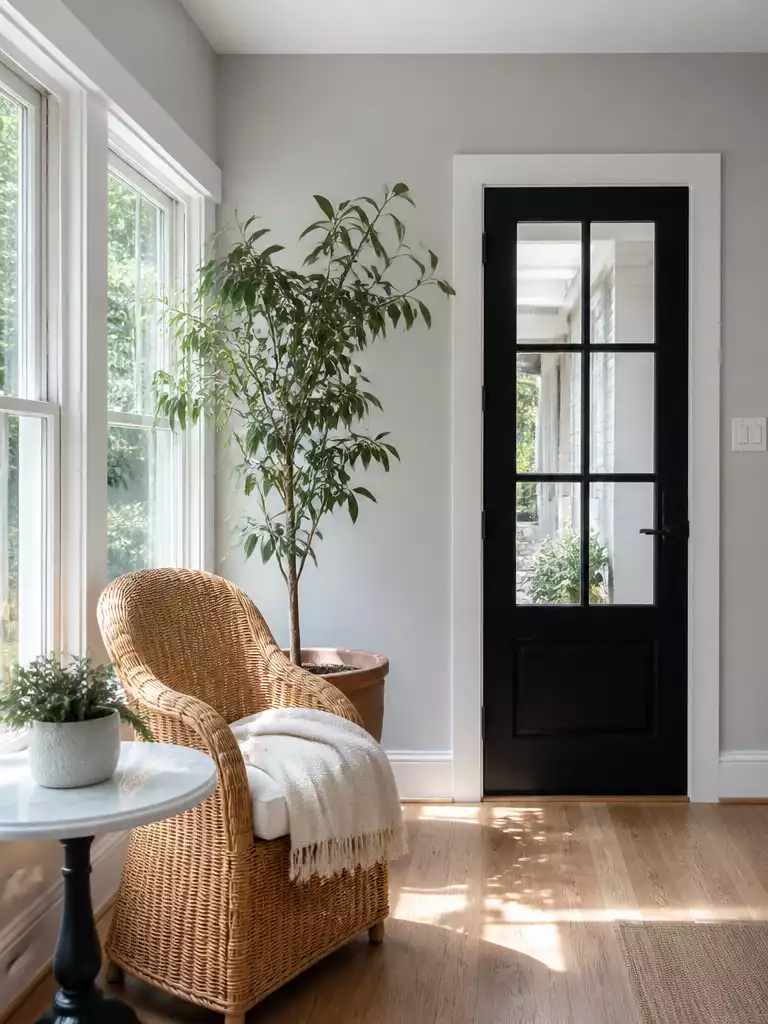
Harness natural light to ground your sunroom with high-contrast, organic textures.
Sunrooms often fall into the trap of feeling sterile when painted in standard gray tones. Because intense sunlight acts like a bleaching agent, your walls can end up looking washed out or unexpectedly blue if you choose a gray with cool undertones.
To keep the space grounded, you must lean into natural fibers that add warmth. Incorporating rattan furniture, linen drapery, and large indoor plants prevents the gray-white-black palette from feeling like an institution.
The Black Door Strategy
Use the black door as a sharp silhouette to anchor the room. Without this dark punctuation point, the high volume of natural light often makes the gray walls feel weightless and unanchored.
If you are planning your palette, consider these common sunroom variables before you commit to a paint bucket:
- Bright Southern Exposure: Opt for a warmer gray or greige to neutralize the blue shift caused by direct, intense sun.
- Shaded or Northern Exposure: A true neutral gray works well here, as the lack of harsh light prevents it from looking overly chilly.
- Textile Choices: Stick to woven, matte materials like jute or wool to balance the semi-gloss white trim and the high-contrast door.
Avoid this mistake: Do not use a cool, blue-based gray in a south-facing sunroom. The combined effect of direct sunlight and the cool base will make your walls look like baby blue rather than a sophisticated gray.
.
💡 Why This Works
In a sun-drenched room, the high-contrast trio of gray, white, and black can easily feel disjointed. By introducing natural textures, you bridge the gap between the sharpness of a black door and the airy, bleached-out quality of light gray walls, creating a cohesive, organic space rather than a sterile one.
Visual takeaway: Use woven textures like jute or rattan to ground the space and prevent the gray from feeling flat.
Moody Gray Den
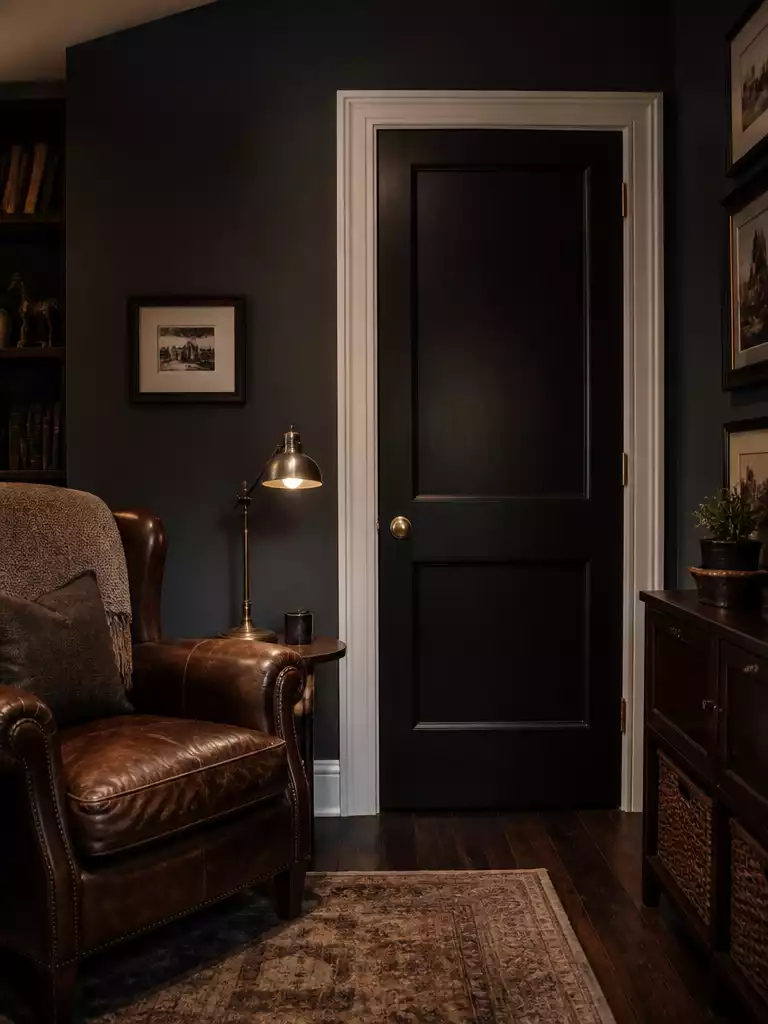
Transform your den into an intimate retreat with high-contrast depths and warm, inviting textures.
A den is meant to be a sanctuary, and this color palette leans into that by using dramatic contrast to create a distinct sense of enclosure. The black door acts as a sharp focal point, anchoring the space against moody, mid-to-dark gray walls.
Because dens often have lower ambient light, the choice of gray is critical to avoiding a flat or “muddy” look. Mid-gray tones provide a grounded, sophisticated backdrop that makes the room feel intentional and cozy rather than dark and depressing.
Pro-Tip for Low Light: Steer clear of cool, blue-based grays in a dim den, as they can feel clinical and detached. Instead, opt for a warmer gray that maintains its depth and richness under evening lamp light.
Texture is the secret to making this high-contrast look work without feeling like a cave. Integrating organic materials bridges the gap between the dark walls and the bold black doors.
- Leather Upholstery: A cognac or chocolate leather chair or ottoman provides a warm, tactile contrast that pops against moody gray walls.
- Layered Lighting: Use multiple light sources, like brass sconces or floor lamps, to highlight the depth of the gray paint and draw attention to the architectural lines of the black door.
- Wood Tones: Incorporate reclaimed wood shelves or side tables to introduce natural warmth that keeps the space feeling grounded and lived-in.
This room is perfect for those who want a dedicated space for reading or relaxing that feels separate from the rest of the house. If you prefer a space that feels airy or bright throughout the day, you should skip the moody charcoal walls and stick to a lighter pearlescent gray.
.
💡 Why This Works
The beauty of a moody den lies in the interplay between deep wall tones and the sharp, architectural silhouette of the door. When you anchor a low-light room with darker grays, you naturally lower the eye’s horizon, which creates an immediate psychological sense of intimacy and seclusion perfect for unwinding.
Visual benefit: Using mid-to-dark tones eliminates the stark contrast that makes small dens feel disjointed or unfinished.
Pale Gray Nursery
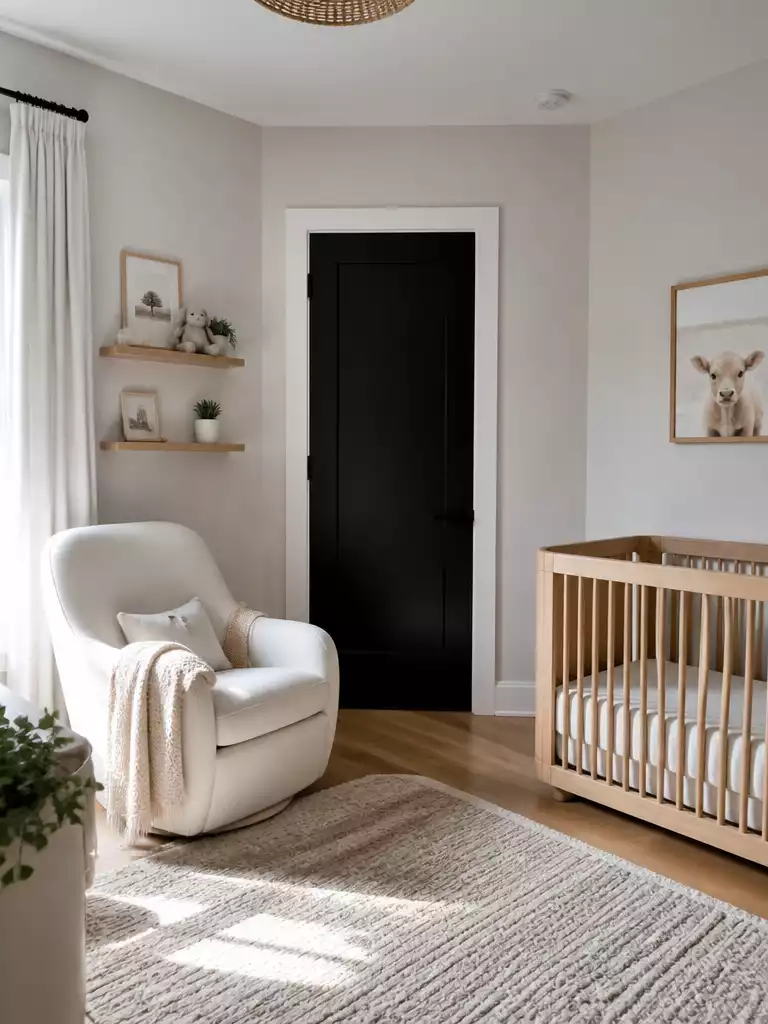
Create a soothing sleep space that uses high-contrast lines to boost visual development.
A nursery requires a delicate balance between high-contrast design and a restful atmosphere. While the graphic trio of gray, white, and black provides excellent visual stimulation for an infant, the execution must remain soft enough to encourage sleep.
Greige undertones are far more forgiving here than cool, icy grays. A pale, warm-leaning gray prevents the room from feeling chilly during late-night feedings, keeping the space grounded and cozy.
Design Tip: Use rounded furniture silhouettes—like an oval crib or a curved glider—to break up the linear severity of black door frames and white trim. This contrast in shape makes the room feel less like an office and more like a nursery.
Because nurseries are high-traffic zones for spills and messes, functionality is non-negotiable. Choose matte or eggshell finishes for the walls to hide imperfections, but stick to semi-gloss for the black doors to ensure they remain wipeable.
If you are planning this room, prioritize these textile and material choices:
- Washable area rugs in neutral tones to anchor the dark door frame.
- Soft, rounded nursery seating to soften the sharp architectural lines.
- Textiles that feel plush rather than industrial to balance the high-contrast color palette.
Avoid: Do not use more than one or two black doors in a small nursery. Over-saturating a child’s space with heavy black accents can overwhelm the pale gray backdrop and make the room feel smaller than it is.
⭐ Top Products for Pale Gray Nursery
Woven Cotton Rope Storage Basket Bin
📋 Quick Reality Check for Nursery Hardware:
- Check door latching: Ensure the black door hardware latches quietly so you don’t wake a sleeping baby.
- Inspect corner sharpness: Verify that your door handles or knobs don’t have sharp, protruding edges that pose risks.
- Confirm finish durability: Test the black enamel for scuff-resistance, as little hands will eventually touch these doors frequently.
Gray Mudroom
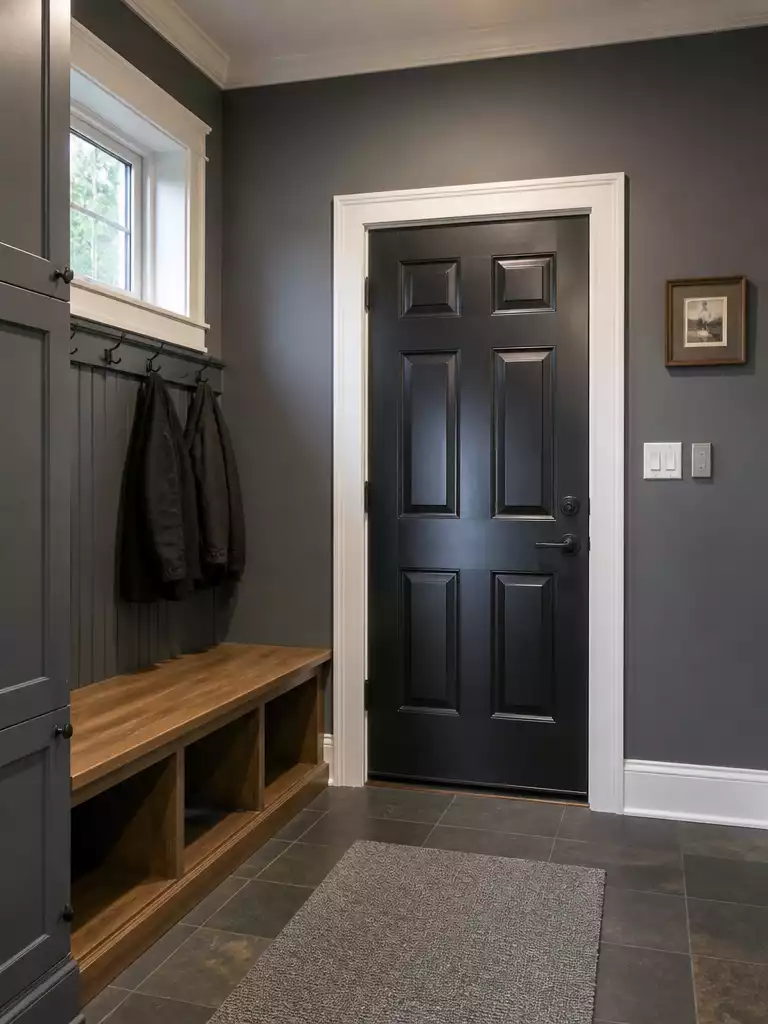
Create a hardworking transition zone that hides daily wear while maintaining a sharp, graphic profile.
The mudroom is the ultimate testing ground for color durability because it faces constant contact with shoes, bags, and wet gear. Relying on pale grays here usually backfires, as they quickly show dust and mud splatters that make a space feel unkempt within weeks.
Instead, choose a medium-toned gray that provides a forgiving backdrop for high-traffic areas. This shade acts as a reliable workhorse, bridging the gap between your interior living spaces and the exterior elements without highlighting every scuff.
Pro Tip: Use high-durability eggshell finish for walls to allow for easy wipe-downs without the glare of high-sheen paint. For the black door, stick to semi-gloss enamel to ensure it withstands repeated handling and moisture.
The black door serves a crucial function here beyond just style—it marks a clear psychological transition point between the house and the outside world. By installing it against white trim and medium gray walls, you create an architectural boundary that makes the mudroom feel like a deliberate, organized zone rather than a hallway catch-all.
Avoid faint or cool-leaning grays in this zone, as they tend to look sterile or “dirty” under fluorescent or low-light conditions. If your mudroom lacks a dedicated window, lean toward a warm-undertone greige to keep the space inviting rather than cold.
.
🔢 The Right Sequence for Mudroom Durability:
Establishing a proper workflow prevents the common mistake of painting high-traffic surfaces before site prep is truly complete.
- Prep wall surfaces: Fill all dings and sand smooth to ensure the eggshell finish adheres without showing texture.
- Apply trim first: Paint your white trim and frame the door opening before tackling the larger wall surfaces.
- Finish the door: Apply semi-gloss enamel to the door last to avoid accidental splatter on your freshly finished walls.
Greige Dining Room
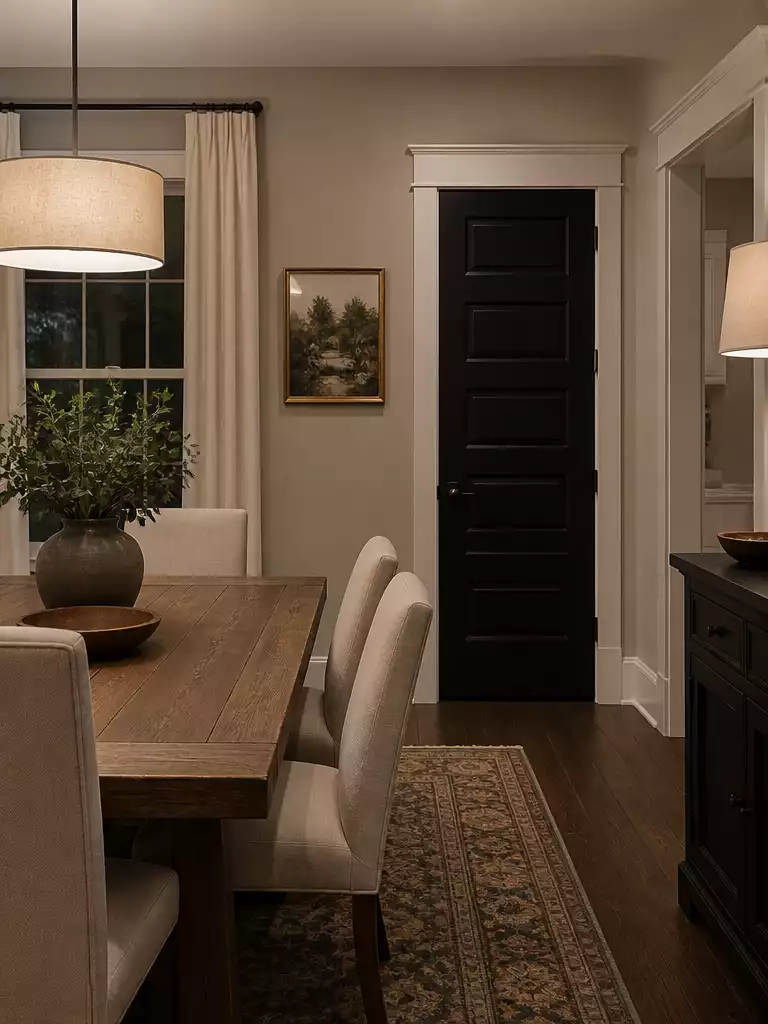
Warm greige walls and black doors create a sophisticated, cozy backdrop for evening dinner gatherings.
As an Amazon Associate I earn from qualifying purchases. Affiliate links may earn me a commission at no extra cost to you.
The dining room serves as the perfect stage for dramatic lighting, making the interplay between greige walls and black doors feel particularly intentional. A solid wood dining table acts as the central bridge, pulling the warmth from the greige walls while grounding the sharp contrast of the black doors against the floor.
To keep the space from feeling like a harsh barrier, utilize soft window treatments like flowing drapery. These fabric layers soften the room’s edges and prevent the black doors from dominating the visual line of sight during daylight hours.
Pro Tip: For the most cohesive look, choose upholstered chairs in a neutral tone that matches your wall color’s undertone. This creates a seamless flow that directs focus toward your dining table centerpiece rather than just the door frames.
If you prefer a lighter, more airy dining aesthetic, stick to a pale greige that remains gentle under warm evening lamps. Avoid high-gloss finishes on walls here, as they can cause distracting reflections from your dining area lighting.
.
✨ Finishing Touches: Elevating the Evening Ambiance
Since dining rooms rely heavily on mood, your hardware and lighting choices serve as the final jewelry that ties the gray and black scheme together.
- Metallic Accents: Choose matte brass or antique bronze hardware to add warmth that complements greige walls and softens the black door contrast.
- Layered Lighting: Install a dimmer switch on your chandelier to transition from bright, functional daylight to a soft, intimate glow for evening meals.
Gray Open Plan Space
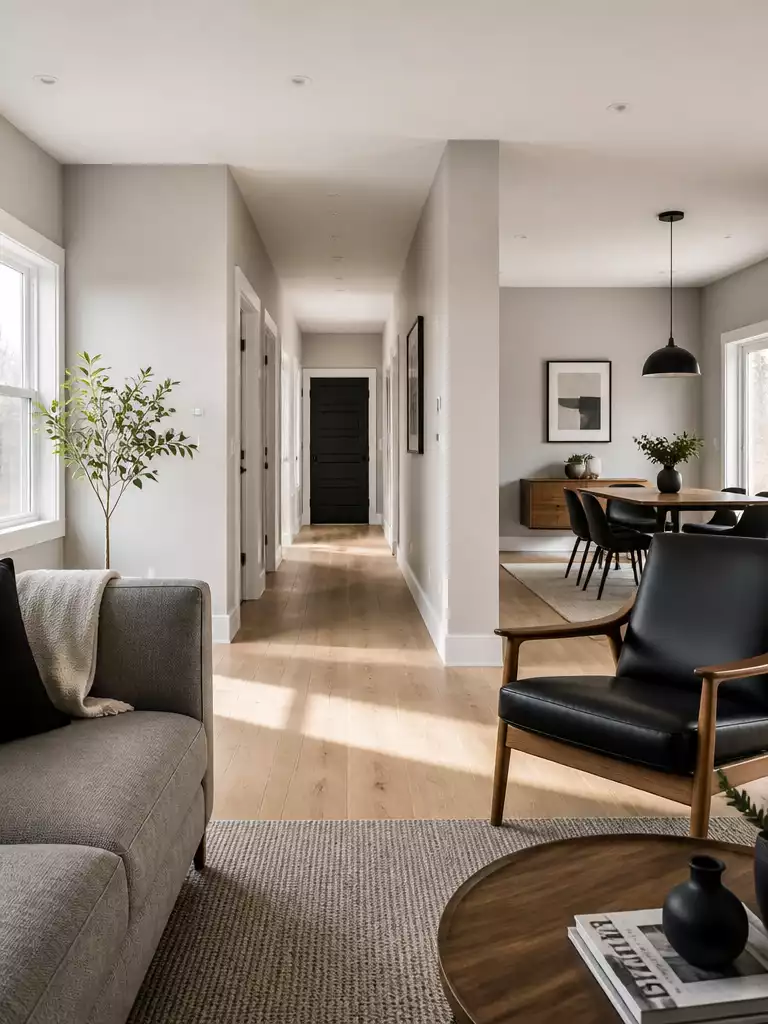
Create a cohesive, architecturally legible home by mastering the flow of light and shadow.
As an Amazon Associate I earn from qualifying purchases. Affiliate links may earn me a commission at no extra cost to you.
Designing an open plan space requires a strict adherence to repetition. When walls share the same visual field, any variation in trim profiles or gray undertones will immediately expose a lack of planning.
Choose a mid-light greige as your universal anchor. This specific tone is the only one that survives the transition between sun-drenched windows and deep, shaded corners without shifting into a jarring blue or muddy brown.
The Unification Checklist
- Standardize trim: Use one exact shade of white for every baseboard, crown molding, and door casing in the entire footprint.
- Connect the rooms: Carry the same mid-light greige wall color through the kitchen, dining, and living zones to eliminate visual “choppiness.”
- Punctuate with black: Use black doors as intentional markers at the end of every major sightline to provide necessary contrast.
- Match your finishes: Apply the same semi-gloss sheen to all doors and trim to ensure the light reflects consistently across the whole open area.
If your home gets intense, changing light throughout the day, avoid the urge to switch paint colors between zones. A single, well-tested mid-light greige provides the stability that separate colors will inevitably destroy.
Warning: Never mix drastically warm and cool grays in an open floor plan. Walking from a warm-toned living room into a cool-toned kitchen will make the transition feel accidental and amateur.
.
With all twelve interior configurations now in front of you, the path to a balanced, high-contrast entry becomes much clearer. Selecting the one or two applications that best match your home’s existing light ensures a cohesive result without the need to incorporate every layout mentioned.
A few deliberate choices carry the entire aesthetic, so identify the gray undertone that fits your space first. You can explore further upgrading your rooms with intentional door selections, then focus on the trim and wall finishes that anchor them. The look you are picturing follows naturally once you commit to a single, consistent direction.