
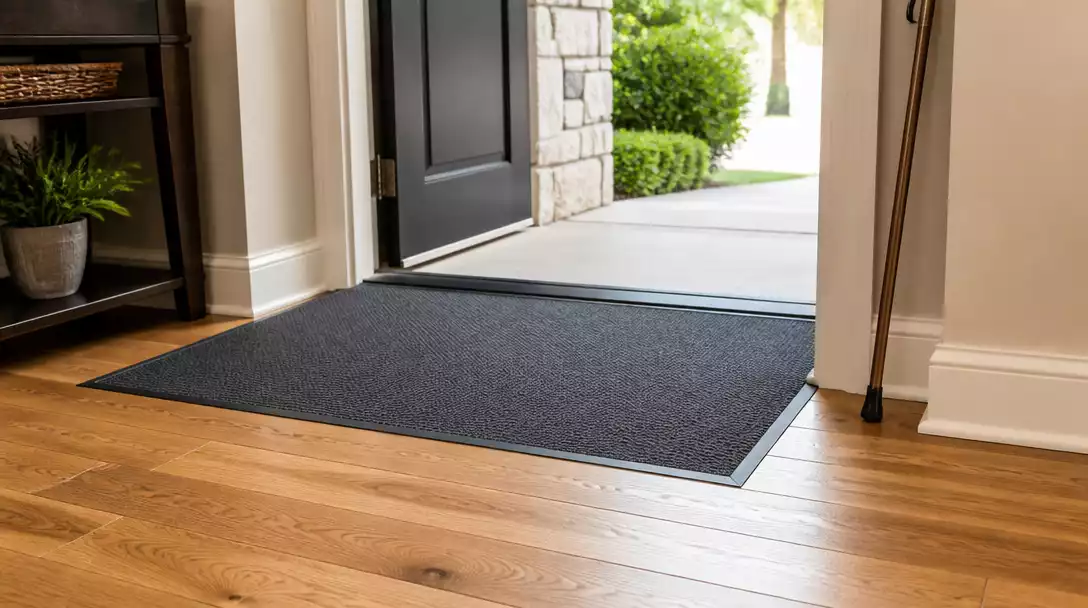
Selecting an ADA-compliant doormat is a critical safety decision that goes beyond simple aesthetics. This guide narrows the search to 12 technical criteria that ensure your entryway remains accessible and secure. Check your home’s thresholds against these standards to make the right choice the first time.
Pile Height and Threshold Clearance
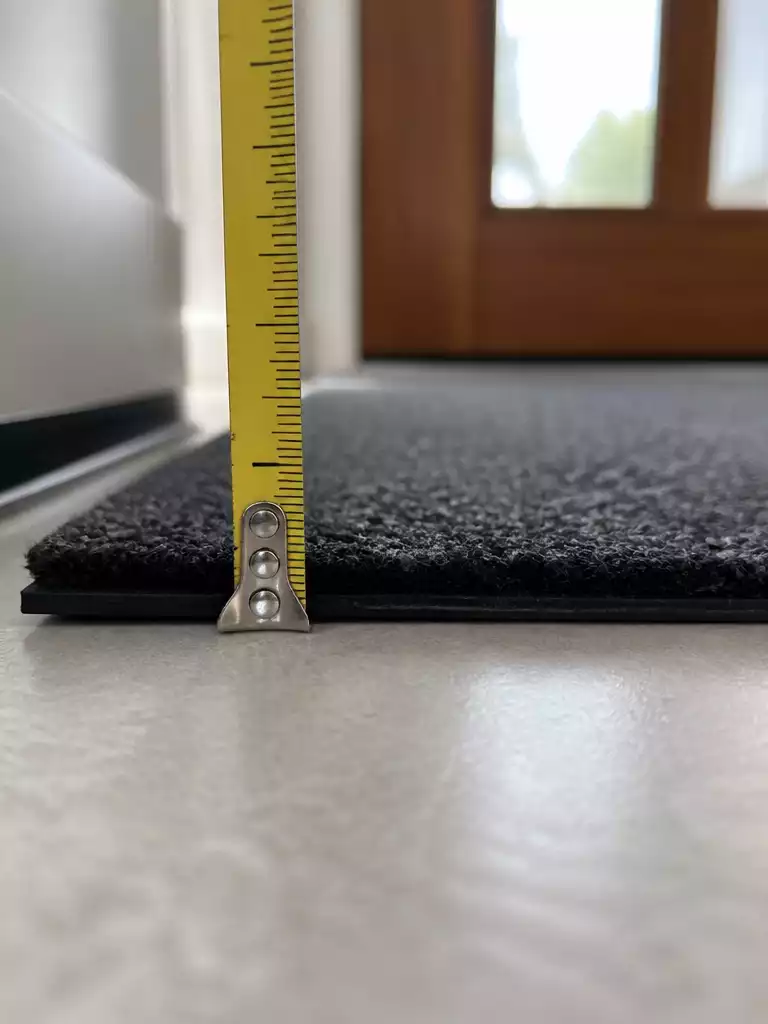
Getting these measurements right ensures a seamless, trip-free entry for everyone who visits.
As an Amazon Associate I earn from qualifying purchases. Affiliate links may earn me a commission at no extra cost to you.
Many homeowners fall into a dangerous trap by simply eyeing the fiber thickness of a new mat. They assume that because the surface feels low, it will clear the door easily, but they ignore the bulk of the backing material underneath.
To avoid a mid-project disappointment, you must measure from the floor surface to the very top of the mat, including the backing. This total height is the only number that matters when determining if your door will swing over the mat without binding or catching.
The 1/2-Inch Rule
For new construction, the absolute limit for floor surface height is 1/2 inch (13 mm). If you intend to use a mat that exceeds 1/4 inch in height, it must incorporate a formal bevel to remain safe and compliant.
If your current door clearance is tight, a mat exceeding 1/4 inch might cause binding regardless of its compliance status. Take a simple ruler and measure the gap between your door bottom and the finished floor before you buy.
Watch for the “Binding” Hazard
If the mat height creates a vertical lip greater than 1/4 inch without a proper slope, it stops being an accessory and becomes a high-risk trip hazard. Always verify your specific clearance to ensure the door swing remains smooth and unobstructed.
⭐ Top Products for Pile Height and Threshold Clearance
Low Profile Indoor Outdoor Entry Mat
Heavy Duty Commercial Flat Weave Mat
Thin Rubber Entrance Floor Runner Mat
📋 What to Check First
- Door swing arc: Clear any debris from the threshold and measure if the door clears the mat’s thickness throughout its entire path.
- Threshold base: Inspect the floor directly beneath the door for uneven transitions or gaps that could cause the mat to shift or curl.
- Full-load compression: Test if the mat remains firm under pressure, ensuring a wheelchair caster doesn’t sink more than 1/4 inch during entry.
Colour Contrast With the Floor
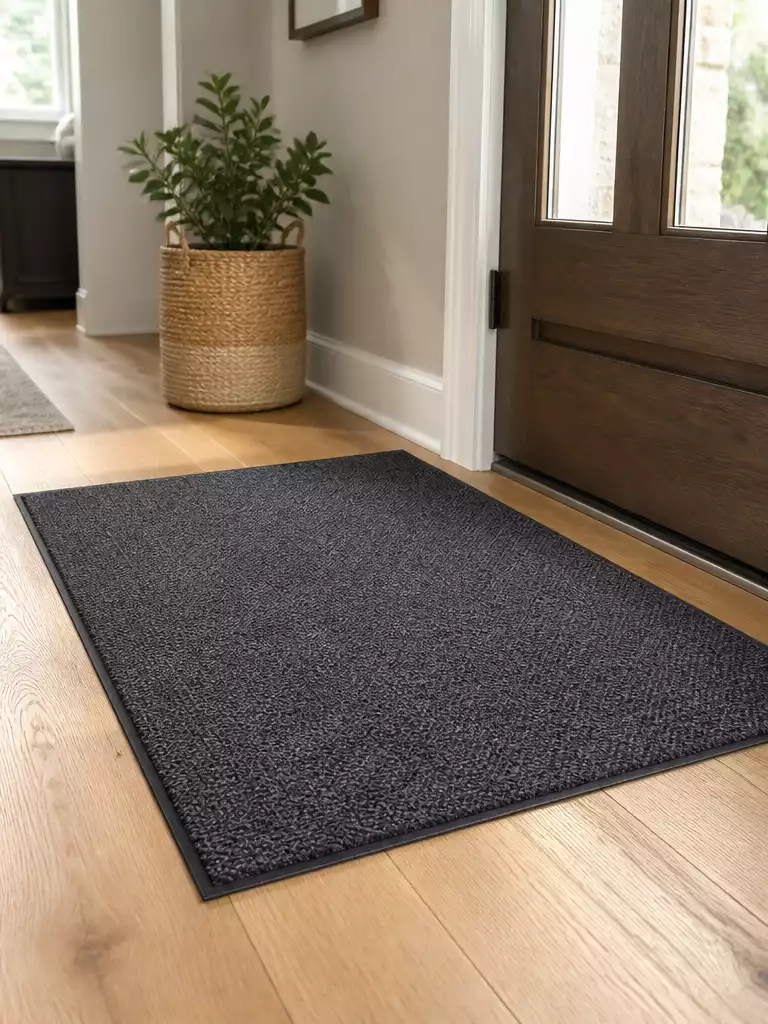
High visual contrast turns a simple doormat into a clear, detectable boundary for everyone.
It is easy to focus on style when picking out a doormat, but in an accessible home, your choice serves a critical safety function. For those with low vision, a mat that blends into the surrounding flooring creates a dangerous blind spot at the threshold.
While there is no strict ADA mandate requiring a specific color contrast for standard residential mats, the Light Reflectance Value (LRV) difference is your best guide. Aiming for a 70% contrast between your flooring and the mat is considered the gold standard for reliable detection.
The High-Contrast Rule: If you have light-colored flooring like maple or white oak, opt for a charcoal, slate, or deep navy mat. Conversely, if your floors are dark or espresso-toned, a light grey or tan mat provides the necessary visual separation.
This approach helps users distinguish the edge of the mat from the floor perimeter, preventing stumbles before they happen. It is important to remember that this is a best practice for detection, which is distinct from the formal “detectable warning surfaces” like the truncated domes you see at subway platforms.
When you are shopping, take a moment to place a sample or check the color against your floor material in natural light. If the tones are too similar, the mat effectively disappears, increasing the risk of a trip hazard for guests or family members who rely on visual cues to navigate.
By prioritizing luminance contrast, you create an entryway that is as functional as it is polished. You do not need to sacrifice your aesthetic, but you should always choose a shade that signals a clear transition to anyone walking through your door.
⭐ Editor’s Picks for Colour Contrast With the Floor
High Visibility Striped Welcome Floor Mat
Bright Red Rubber Safety Entrance Mat
Border Pattern High Contrast Welcome Mat
⚠️ Common Mistakes to Avoid When Choosing Contrast:
- Ignoring lighting conditions: A mat that looks bold in the store may disappear under dim entryway recessed lighting.
- Over-prioritizing patterns: Busy, multi-colored prints often mask the mat’s edge, making it harder for vision-impaired users to detect.
- Assuming “dark” means contrast: Placing a dark charcoal mat on an espresso-stained hardwood floor provides almost no functional visual separation.
Beveled Edge Transitions
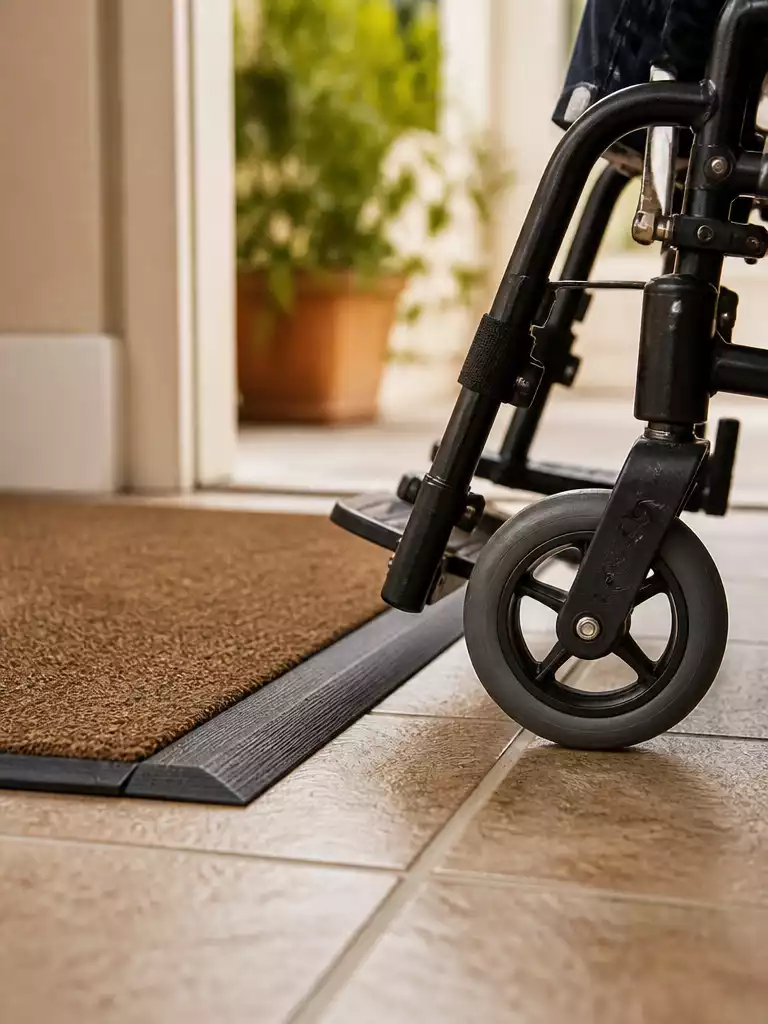
A smooth, sloped edge ensures every guest can cross your threshold with complete confidence.
Most standard department store mats rely on a simple vertical edge, which is a major red flag for accessibility. These abrupt lips turn an entryway into a collection of miniature speed bumps that catch canes, walkers, and wheelchair casters.
To keep your home safe, you need to look for a 1:2 slope ratio. This means for every 1/4 inch of height, the mat should provide 1/2 inch of slope length.
The Vertical Edge Warning
Any vertical edge taller than 1/4 inch without a proper bevel is an immediate trip hazard. If your mat has a sharp, square edge, it is essentially a trap for anyone with limited mobility.
Beveling isn’t just about the visual slope; it is about physical integrity. When you shop, press firmly on the edges of the mat to ensure the transition is solid.
Avoid mats that use “tapered” foam edges that feel soft or squishy under pressure. If the bevel compresses when a wheel rolls over it, it will eventually curl or ripple, creating the exact hazard you are trying to avoid.
A firm, molded rubber bevel maintains the 1:2 ratio permanently, ensuring your entrance remains a safe zone for years. If you notice a mat starting to pull away from the floor or the edges beginning to lift, it is time to replace it rather than attempting a temporary fix.
⭐ Recommended for Beveled Edge Transitions
Non Trip Beveled Edge Entry Mat
Safety Sloped Transition Floor Mat
Tapered Edge Rubber Safety Doormat
Slip Resistance When Wet
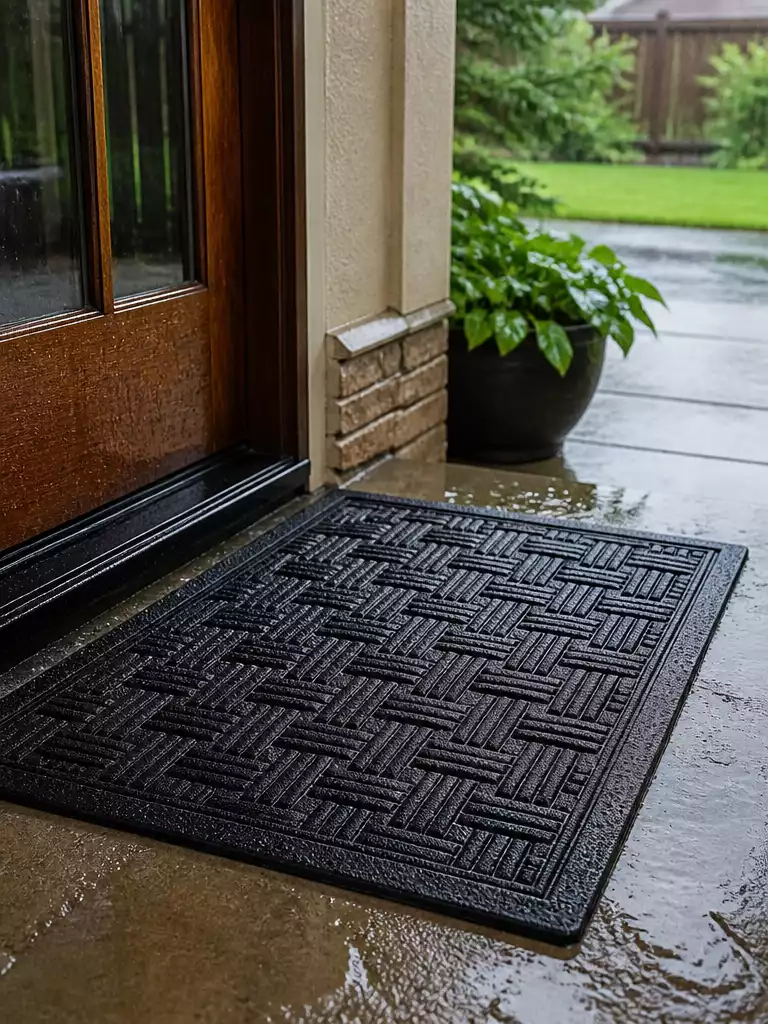
Ensure every step remains secure and stable, even during the heaviest rainy weather.
A flat mat can quickly turn into a significant safety hazard if it lacks proper traction during wet weather. When moisture accumulates, materials that are not specifically engineered for high-friction performance often become slick and unpredictable.
You should prioritize waterproof materials over absorbent fabrics, which tend to soak up moisture and stay damp for hours. Fabrics that remain saturated are not only prone to harboring mildew but also lose their grip on the floor surface beneath them.
Pro-Tip: Demand Documentation
While there is no specific ADA-mandated value for residential mats, look for manufacturers who provide documented test results. If a company cannot share their wet-test data, treat the product as a potential risk for your entry.
Understanding how a mat functions under pressure is key to avoiding slips. While the Americans with Disabilities Act does not set a specific Dynamic Coefficient of Friction (DCOF) for residential doormats, you can use the ANSI A326.3 standard of 0.42 DCOF for hard surfaces as a helpful reference point for quality expectations.
Beyond the surface material, the ability to maintain a clean entryway is a non-negotiable safety factor. Select a mat that is easily removable so you can regularly clean both the mat itself and the floor underneath, preventing moisture buildup that could compromise the grip of the backing.
Safety Check: The Maintenance Routine
- Check that the mat remains stable after heavy rain or snow.
- Remove the mat weekly to wipe away trapped grit or standing water.
- Ensure the backing has fully dried before placing it back on your floor.
⭐ Best Slip Resistance When Wet
Textured Surface Anti Slip Entrance Mat
Water Absorbent Rubber Backed Floor Mat
Grit Top Safety Entrance Floor Mat
🧰 Questions to Ask Your Supplier
- Wet-test data: Can you provide documented testing results that verify the mat’s performance in saturated, rainy conditions?
- Material composition: Is this mat constructed from high-density, non-absorbent materials that won’t lose their shape when wet?
- Maintenance requirements: Does this product require specialized cleaners, or can it be easily removed and rinsed for safety?
Establishing a safe threshold is a permanent installation, which can make the stakes feel unnecessarily high when you are scanning the market. Refining your door design choices early on simplifies the rest of your home updates, ensuring your primary entrance remains functional for years.
Focusing on the structural integrity of your mat installation ensures long-term results that far outweigh the pressure of chasing every minor aesthetic detail.
Wheelchair and Walker Roll-Over
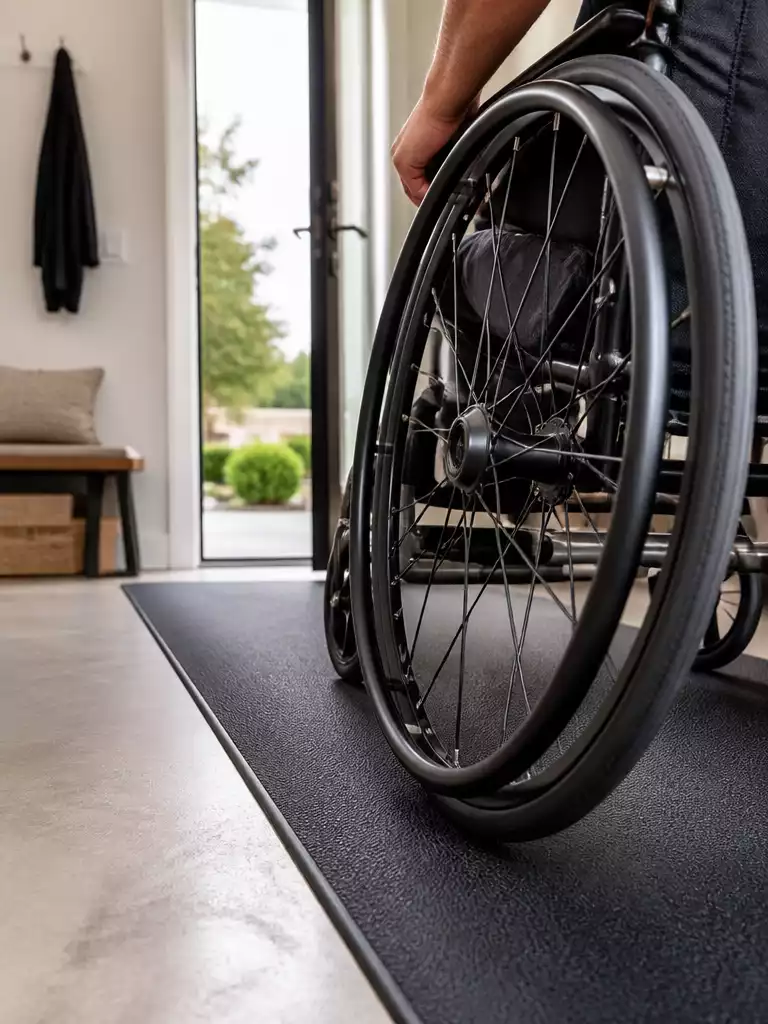
Ensure smooth, effortless momentum for mobility aids by selecting surfaces that resist compression.
The sensation of pushing a wheelchair or walker over a soft mat often feels like moving through deep sand. This added resistance is more than just a minor inconvenience; it significantly increases the physical effort required for a user to navigate their own entryway.
High-pile rugs, thick plush mats, or those with heavy foam-cushioned backings are the primary culprits behind this mobility barrier. These materials compress under the weight of a chair or walker, creating a divot that forces the user to exert extra force just to maintain forward momentum.
The Sinking Test: If a manual wheelchair wheel sinks more than 1/4 inch into the mat surface when you apply pressure, it is effectively non-compliant for easy mobility.
For a seamless transition, you need a surface that mimics the firmness of your hard flooring. High-density rubber or low-pile, tightly woven materials provide the necessary structural integrity to keep wheels on the surface rather than digging into it.
When shopping, look for mats designed for commercial or high-traffic accessibility, as these are engineered with consistent surface density in mind. A mat that feels rigid and unyielding under your hand is a strong indicator that it will perform well for wheels and walkers.
Avoid the “Cushion Trap”: Never prioritize “plush” or “comfortable” padding for an entryway mat. These features are fundamentally incompatible with the physics of mobility aids and will create a persistent roll-over hazard.
⭐ Our Picks for Wheelchair and Walker Roll-Over
Industrial Rubber Heavy Duty Doormat
Firm Base Commercial Grade Entrance Mat
Smooth Top Rigid Surface Entrance Mat
🏡 How This Works in a Real Home:
- The push test: Before committing, place the mat down and push your empty wheelchair across; if it feels like rolling on carpet, it’s too soft.
- Daily transition: Ensure the mat is placed on a level section of your floor to prevent the edges from lifting during frequent back-and-forth traffic.
- Low-profile choice: Opt for heavy-duty rubber or industrial-grade low-pile designs, as they provide the most consistent, natural surface for effortless daily navigation.
Firmness Underfoot
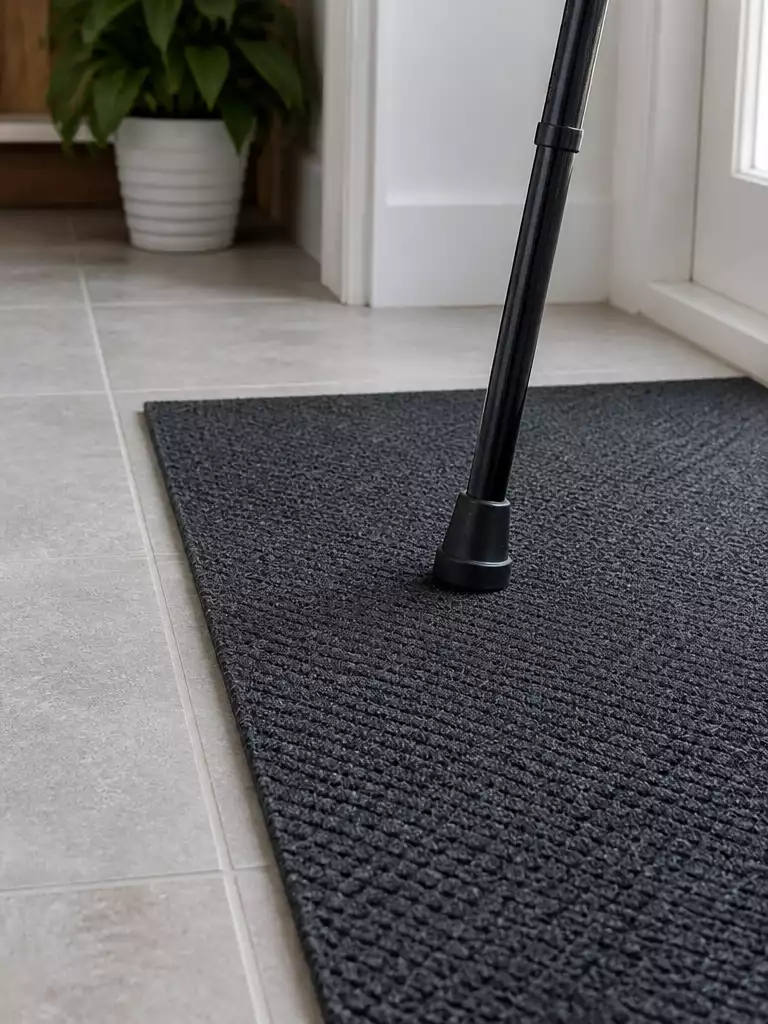
A stable, unyielding surface provides the necessary confidence for every step and movement.
When searching for the right mat, it is common to prioritize comfort, thinking a cushy, plush surface will feel luxurious underfoot. In an entryway, however, surface firmness is a safety requirement that supersedes the desire for padding.
Compressible foam or thick, high-pile materials create significant instability, particularly for users navigating with walkers or canes. These soft materials cause the device to sink, which adds unnecessary resistance and significantly increases the risk of a trip.
The Stability Test
To verify if a mat is suitable, perform a simple pressure test. If a wheelchair wheel or cane tip sinks more than 1/4 inch into the mat surface, it is effectively non-compliant for easy, safe mobility.
A rigid, high-density surface allows canes and crutches to find purchase without sliding or dipping. This consistency is what makes a space truly accessible, turning your entryway into a reliable transition zone rather than an obstacle.
If you currently have a mat that feels like a sponge, it is time to move toward high-density rubber or low-pile, industrial-grade materials. Your goal is a firm foundation that does not bow or shift under the weight of a user or mobility device.
⭐ Top Products for Firmness Underfoot
Compression Resistant Heavy Duty Floor Runner
Solid Core Dense Fiber Doormat
High Density Reinforced Rubber Floor Mat
💡 Simple Steps for Safer Entryways:
- Daily Inspection: Check that your mat remains perfectly flat; curls or ripples act as invisible tripping hazards for guests.
- Weighted Testing: Apply pressure with a cane or walker throughout the mat’s center to ensure the surface stays rigid.
- Material Selection: Opt for high-density rubber or industrial-grade low-pile fibers that resist compression, keeping your path consistently firm.
Backing That Stays Put
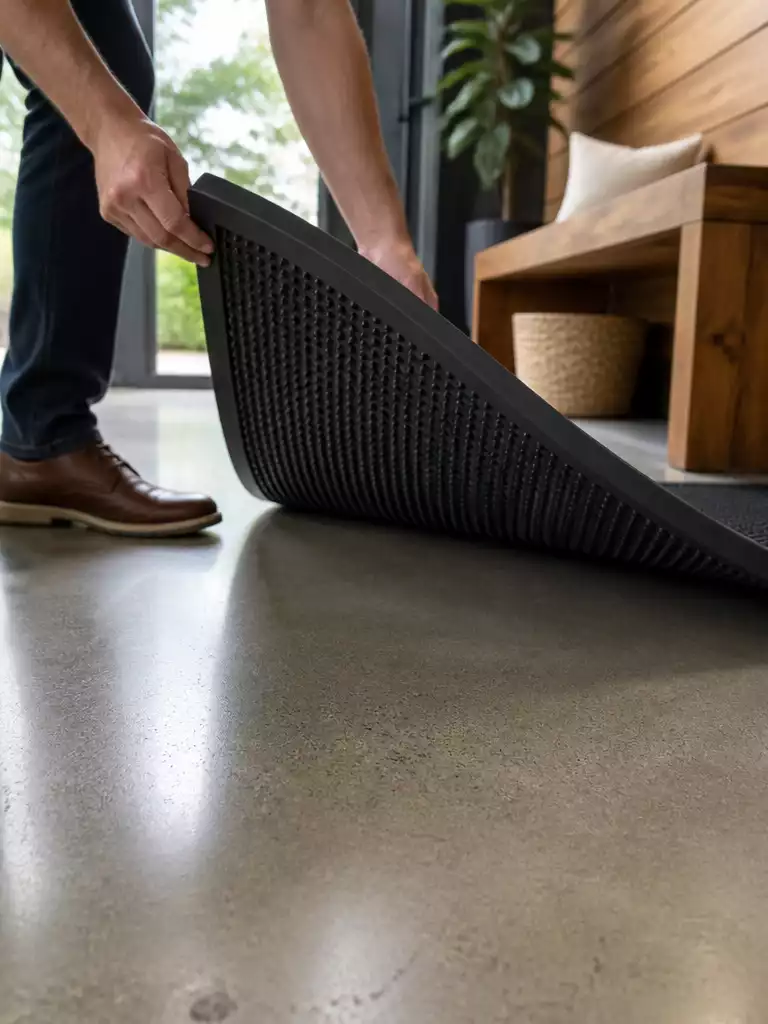
A secure, non-slip base keeps your entryway safe and prevents dangerous, unexpected mat migration.
A mat that shifts or “creeps” as you walk over it isn’t just an annoyance; it is a genuine liability for anyone using a cane, walker, or wheelchair. When a mat slides, it can catch on mobility aids or cause a loss of balance during a simple transition into your home.
Rubber backing is the industry standard for maintaining grip on hard surfaces like tile, wood, or polished concrete. Unlike flimsy fabric or thin foam, high-density rubber provides the necessary friction to prevent the mat from migrating under foot traffic or rolling weight.
Avoid Unbacked Mats
If a mat is unbacked or uses a loose, lightweight fabric base, it is not suitable for an accessible home. These options fail to provide the consistent traction required to remain stationary during use.
If you find that your mat still shifts even with a rubber base, particularly in high-traffic areas, you may need to introduce temporary adhesive security. These specialized rug-taping solutions or double-sided adhesive strips can anchor the edges firmly to the floor, ensuring the mat stays exactly where it was placed.
When selecting your next mat, prioritize models that arrive with a factory-applied, heavy-duty rubber base. If the manufacturer does not explicitly detail the backing material or provide slip-resistance credentials, you are likely looking at a decorative item rather than a safety-engineered entrance solution.
⭐ Editor’s Picks for Backing That Stays Put
Non Skid Heavy Weight Entrance Mat
Anti Slip Floor Runner With Backing
Heavy Duty Rubber Non Slip Doormat
🔢 The Right Sequence for Mat Security
Secure your mat correctly the first time to prevent mid-day shifting and costly re-installation later.
- Clean the subfloor: Remove all dust or grit to ensure the adhesive backing bonds effectively.
- Test for migration: Place the mat and simulate a full roll-over before applying any permanent adhesives.
- Anchor the perimeter: Apply temporary adhesive strips along the leading edges to lock the mat in position.
Mat Size and Approach Space
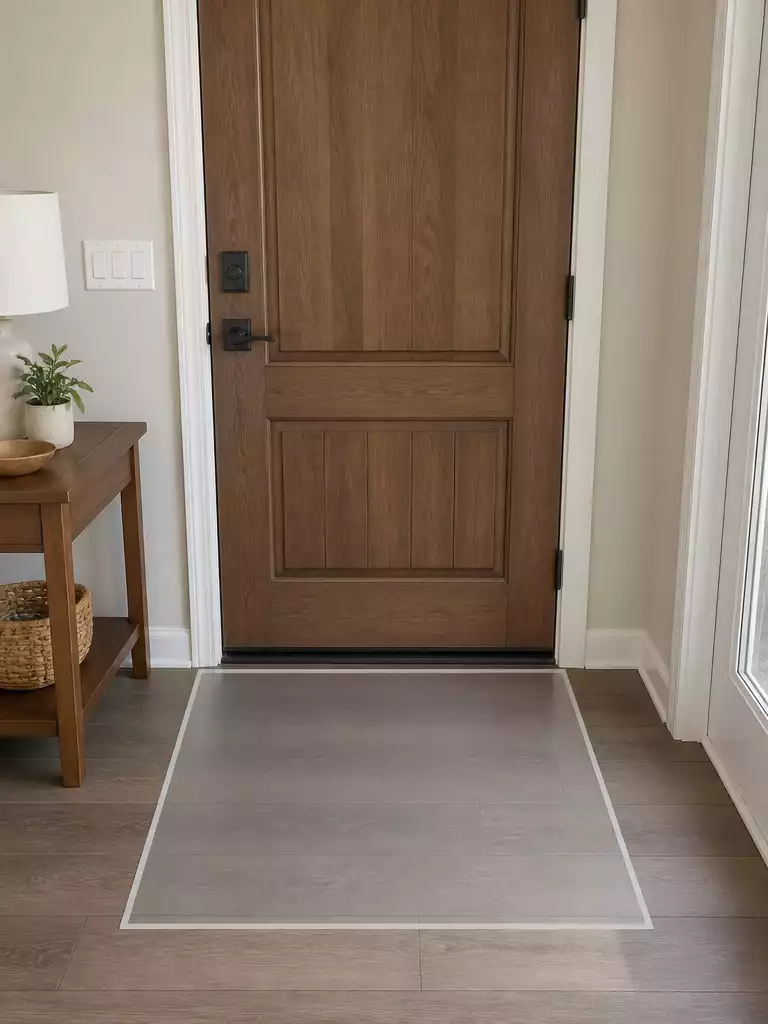
Ensuring your entryway remains a wide-open path for every visitor to arrive comfortably.
Buying the right size mat involves more than just filling the empty floor space in your foyer. You have to account for maneuvering clearance to ensure a wheelchair or walker can approach the threshold without hitting a barrier.
The gold standard for accessibility is maintaining a clear floor space of at least 30 inches by 48 inches directly in front of the door. If your mat is too large, it might intrude into the door’s swing radius, causing the door to catch, bunch up the material, or create a sudden, dangerous lip.
Placement Tip: Before you finalize your purchase, measure the distance from your threshold to the nearest wall or piece of furniture. If that space is less than 48 inches, ensure your mat doesn’t span the entire width, as you need to preserve room for the door to move freely.
A common mistake is assuming that a “standard” large rug will work in an entryway, but these often lack the necessary stability and edge profiles for smooth transitions. If you select a mat that is too small, you risk creating an awkward “seam” where the user has to navigate from the rug onto the bare floor right at the point of entry.
When positioning your mat, focus on aligning it so that the primary direction of travel is fully covered by the mat surface. This prevents the user from having to pivot or adjust their equipment on an uneven surface while trying to manage the door handle or lock.
Entryway Setup Checklist
- ✅ Measure your door swing: Does the door open over the mat area?
- ✅ Verify the 30″ x 48″ zone: Is there enough clear floor space for a chair to turn?
- ✅ Check for obstructions: Remove nearby shoe racks or benches that force a narrow path.
⭐ Recommended for Mat Size and Approach Space
Long Runner Door Mat For Entryways
Large Area Rectangular Entrance Lobby Mat
Oversized Welcome Mat For Wide Entrances
⚖️ Quick Decision Guide: Mat Positioning
- Choose this if: You have a standard 30″x48″ clearance zone and want to ensure zero interference with your door’s swing arc.
- Skip this if: Your entry threshold is extremely cramped; a smaller, custom-fitted mat may be safer than forcing a standard-sized option.
- Pair it with: A heavy-duty rubber backing to ensure the mat stays firmly within your designated 30″x48″ floor space footprint.
Trip-Hazard Edges to Avoid
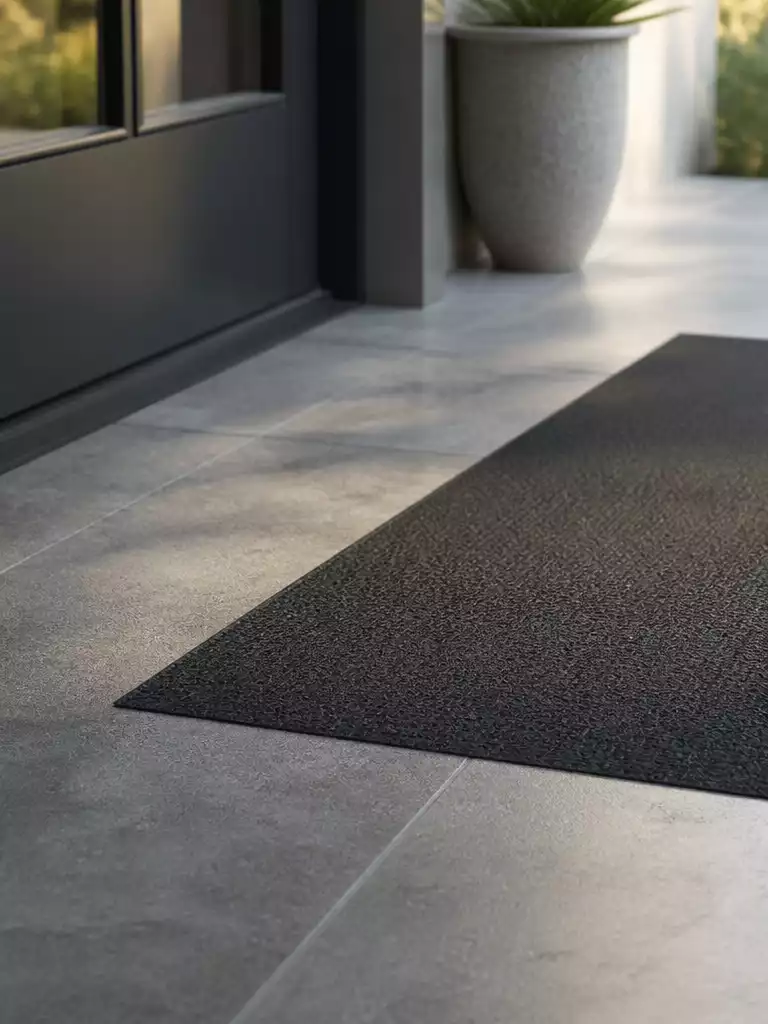
A perfectly flat, flush edge ensures a seamless and safe entry for every guest.
The most common way a compliant mat becomes a dangerous obstacle is through the dreaded “curl.” When the edges of your mat begin to lift, they transform from a helpful utility into a significant tripping hazard.
Edges that lift due to normal wear must be addressed immediately to maintain safety. If you notice even a slight upward bow, it is time to intervene, as these gaps catch toes, canes, and wheelchair casters with surprising ease.
Mistake to Avoid: Treating curled edges with temporary tape or quick-fixes is never a permanent safety solution. If a mat is already prone to delamination or persistent curling, the material has degraded and requires a full replacement.
When shopping, be wary of “cheap” borders or thin, multi-layered constructions that are highly prone to delamination. A quality, ADA-compliant mat should have a reinforced, solid edge that remains flat under heavy foot traffic and repeated wheelchair roll-overs.
Use this weekly inspection routine to keep your entry safe:
- Check the perimeter: Walk the entire edge of the mat to ensure no portion has begun to lift or warp.
- Test the weight: Press down firmly on the corners with your foot or a cane to ensure they stay flush against the flooring.
- Assess the bond: Look for signs of “delamination,” where the top surface is peeling away from the base layer at the seams.
If you find that an edge has lost its ability to stay flat, do not wait for a trip to happen. A mat that no longer lies perfectly flat against the floor is essentially retired from service.
⭐ Best Trip-Hazard Edges to Avoid
Tapered Edge Non Trip Welcome Mat
Flat Entrance Runner With Beveled Edges
Safety Bevel Edge Low Profile Mat
🔢 The Right Sequence for Edge Security
Establishing a secure foundation before the mat sees heavy traffic prevents premature curling and protects your floor surface.
- Clean and dry the floor thoroughly to ensure maximum adhesion for any backing.
- Position the mat and apply firm, even pressure across all edges to set the seal.
- Test the perimeter by walking the entire edge to confirm it remains flush under movement.
Drainage and Water Channeling
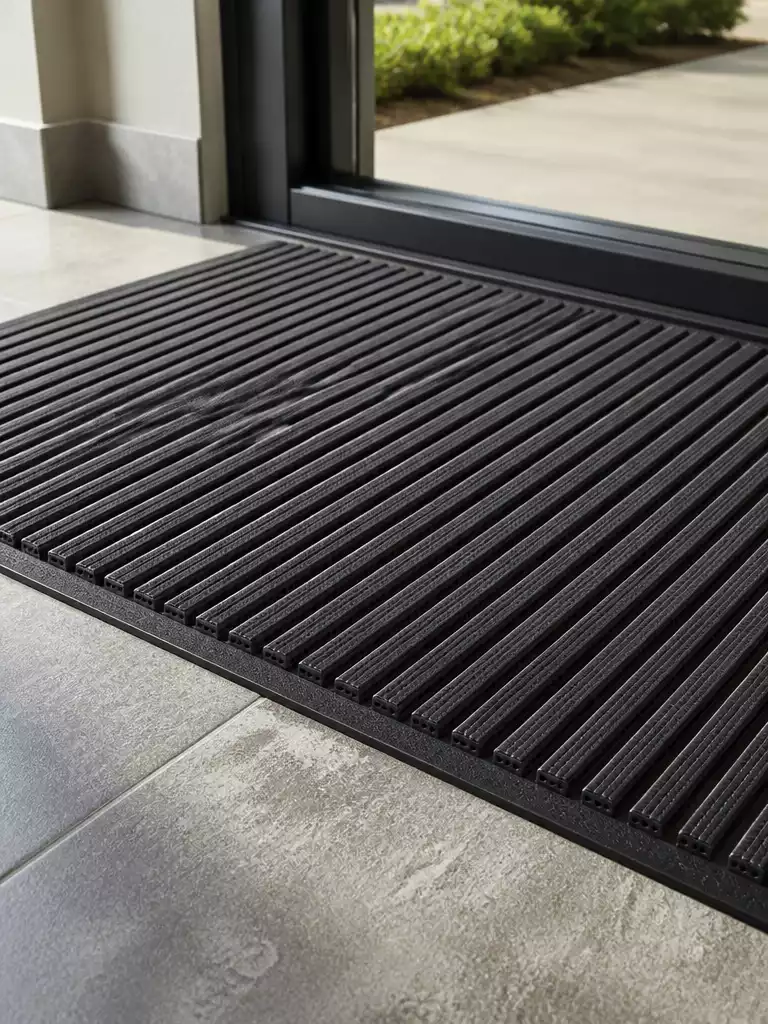
Proper channel orientation keeps your entryway dry while ensuring smooth, snag-free movement for everyone.
When you choose a mat with drainage ports or channels, you are adding an extra layer of moisture management to your home. However, poorly designed drainage openings can quickly turn a safety feature into a significant mobility hazard.
The 1/2-inch rule is your primary safety standard for any drainage opening. If an opening is larger than 1/2 inch, it creates a high risk for cane tips or small wheelchair casters to become stuck, leading to sudden, dangerous stops.
The orientation of these channels is just as important as their size. Always aim to place your drainage channels perpendicular to the direction of travel for anyone entering or leaving the home.
This layout forces the wheels of a chair or walker to cross over the channels rather than getting trapped inside them. Simple, linear channel patterns are almost always safer than complex or decorative cut-outs.
Safety Check: The Pencil Test
Before finalizing your choice, take a standard pencil and press it into the drainage openings. If the tip of the pencil sinks deep into the hole or gets caught, the mat is likely to cause entrapment for a cane or walker user.
If you live in an area with frequent rain or snow, prioritize mats that use channels to direct water away from the threshold area. This prevents standing water from pooling, which keeps your entryway floors from becoming slippery and protects your flooring finish from moisture damage over time.
⭐ Our Picks for Drainage and Water Channeling
Heavy Duty Drainage Hole Rubber Mat
Slotted Rubber Floor Mat For Drainage
Perforated Design Outdoor Scraping Mat
⚠️ Watch Out for These Entrapment Risks:
- Overlooked Openings: Decorative patterns often hide gaps larger than 1/2 inch that easily snag narrow wheels.
- Cross-Traffic Jams: Placing channels parallel to your path creates a natural “track” that steers walker ferrules into trouble.
- Edge Delamination: Cheap drainage ports often start to peel or break away at the corners, creating new trip hazards.
Cleaning and Durability
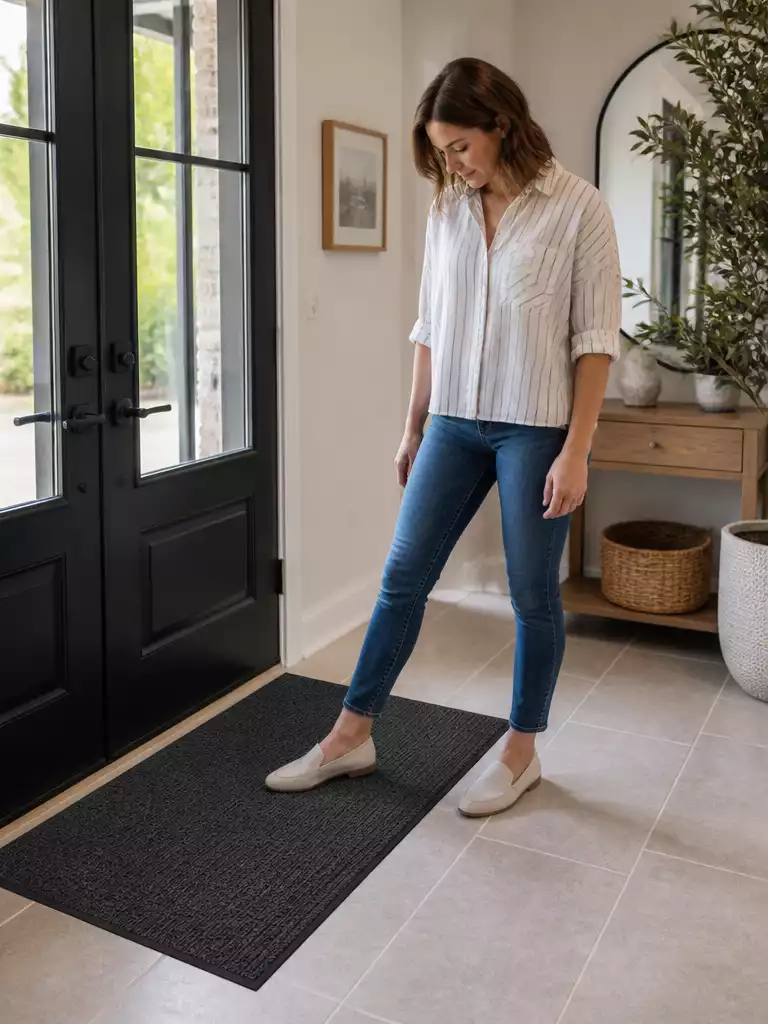
Regular inspections ensure your entryway remains a safe, accessible passage for every guest.
There is no fixed expiration date for an ADA-compliant mat, as its lifespan depends entirely on your specific traffic patterns and local climate. You should view the mat as a functional safety tool that must be retired the moment it loses its structural integrity.
Daily visual inspections are the most effective way to prevent accidents before they happen. Take a quick look at your threshold each morning to ensure the mat is lying perfectly flat and that the edges remain flush with the floor.
Warning: The Curl Test
If you notice the leading or trailing edges beginning to curl or lift, the mat has reached the end of its safe service life. No amount of adhesive tape can reliably fix a degraded edge, and attempting a repair often creates a more dangerous tripping point.
When it comes to maintenance, avoid harsh household chemicals that can break down the rubber polymers over time. Stick to mild soap and water, or follow the manufacturer’s specific maintenance guide if one was provided with the product.
Because these mats are designed to be removable, you should pull them up during your regular cleaning routine to clear away debris that can accumulate underneath. Keeping both the underside of the mat and the floor surface clean is the best way to maintain its slip-resistant grip.
Routine Maintenance Checklist
- Check all four corners for signs of delamination or lifting.
- Verify that the mat has not migrated from its intended position.
- Clear out any drainage channels to prevent water pooling.
- Ensure the surface remains firm and does not dimple under pressure.
If you find that the mat shifts frequently or fails to lie flat after a thorough cleaning, it is time for a replacement. Prioritizing a stable, flat surface is a small cost compared to the safety risk of a compromised transition.
⭐ Top Products for Cleaning and Durability
Washable Industrial Grade Entrance Mat
Moisture Wicking Quick Dry Floor Mat
Heavy Duty Bleach Resistant Rubber Mat
The Right Sequence for Mat Maintenance:
Establishing a regular care routine prevents minor wear from becoming a major safety failure that forces an expensive, premature replacement.
- Perform a weekly visual sweep to identify any edge curling or surface delamination.
- Clean the mat using mild soap and water rather than harsh, rubber-degrading chemical cleaners.
- Rotate the mat orientation monthly to ensure even wear patterns across the entire surface.
Code and Compliance Standards

Keep authoritative documentation on hand to ensure your entryway remains safe and verifiable for years.
When you focus on these specifications, you are moving beyond simple home decor. You are aligning your entryway with the 2010 ADA Standards for Accessible Design, specifically Section 302, which governs floor and ground surfaces.
These protocols exist to create a baseline of safety that protects everyone, regardless of age or physical ability. By treating these requirements as professional standards rather than casual suggestions, you prevent common trip hazards and mobility barriers.
The Compliance Baseline: To meet these standards, your chosen mat must be functionally firm, stable, and slip-resistant. If a mat bows, shifts, or compresses under the weight of a wheelchair caster or a walker tip, it does not meet the legal definition of an accessible floor surface.
Most homeowners never think to save the technical documentation that comes with their purchase. However, keeping a copy of the manufacturer’s data sheet in your home files serves as your proof of compliance should you ever need to verify the product’s safety ratings.
If you are struggling to find this data, look for commercial-grade lines from reputable manufacturers like ITU AbsorbTech or HealthMats. These companies regularly provide the necessary documentation to confirm their products meet the standards for public and private spaces alike.
Compliance Verification Checklist
Download our Compliance Verification Checklist before you head to the store. Use this document to quickly compare product specs against the ADA guidelines we have outlined today.
⭐ Recommended for Code and Compliance Standards
Certified Safety Rated Heavy Rubber Mat
Institutional High Traffic Safety Doormat
ADA Compliant Commercial Grade Entrance Mat
💰 What This Really Costs
- The price range: Expect to pay more for commercial-grade ADA-compliant mats, which often start around a premium price point compared to standard mass-market rugs.
- Hidden installation cost: Factor in the price of high-quality, slip-resistant adhesive or edge-fastening kits if your specific floor surface requires extra security for compliance.
- Why it pays off: Investing in certified materials upfront prevents the frequent replacement costs associated with cheaper, non-compliant mats that curl or fail within months.
With all twelve technical requirements reviewed, you now have a clear path to selecting a mat that functions exactly as it should. Focusing on the one or two criteria most critical for your specific threshold ensures the highest return on your safety investment.
Prioritizing compliance and stability allows your door mats to work as a seamless part of your home’s architecture. Making these deliberate choices provides the lasting peace of mind that comes from getting the details right the first time.