
Most Christmas wreaths look exactly the same, stuck in the usual red berries and plastic ornament cycle. Here are ten fresh wreath ideas that use natural, botanical, actually current materials to make your front door feel intentional instead of default.
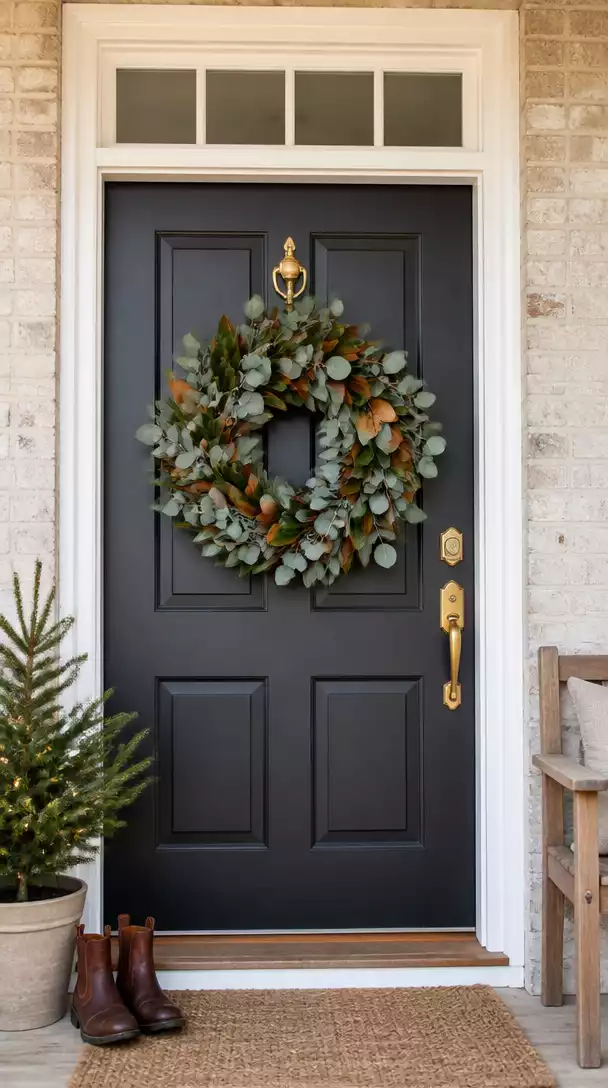
Eucalyptus Wreath
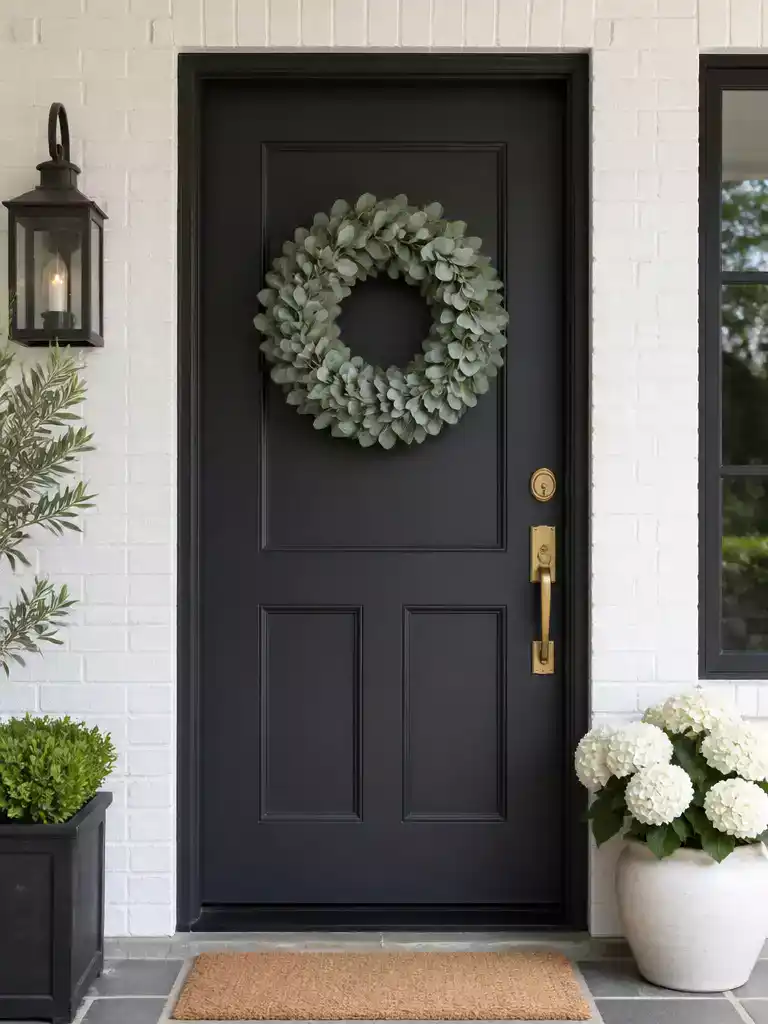
Fresh eucalyptus releases a subtle herbal scent that enlivens every doorstep opening.
As an Amazon Associate I earn from qualifying purchases. Affiliate links may earn me a commission at no extra cost to you.
Fresh silver dollar eucalyptus offers two distinct seasonal looks: The silvery-blue leaves contrast sharply with dark doors like navy or black, reading more as an artful botanical installation than holiday decor. Over three weeks, the leaves shift to muted sage and shrink, lightening the wreath’s sculptural presence while maintaining its signature herbal scent that activates whenever the door opens.
Fresh eucalyptus bundles from florists or grocery flower departments cost less and hold their scent far longer than the commonly sold pre-dried versions, which often arrive scentless. If you’ve only seen eucalyptus in photos, this faint medicinal aroma is the unexpected detail that truly sets it apart and makes a front door feel alive.
This wreath is the most neutral on the list—its dusty blue-grey palette pairs effortlessly with nearly any door color. If you want a wreath that evolves visibly over the season and provides a scent no plastic ornament can match, eucalyptus is your best bet. Skip it if you prefer bright traditional colors or need instant, no-maintenance decor, as fresh eucalyptus requires some initial care and changes appearance over time.
⭐ Top Products for Eucalyptus
Interchangeable Welcome Sign with Eucalyptus
💡 Practical Tips for a Lasting Eucalyptus Wreath:
- Fresh sourcing: Buy silver dollar eucalyptus in small bundles weekly to keep the scent vibrant and foliage fresh.
- Placement: Hang the wreath where it won’t get wet but can catch a breeze to activate its herbal aroma.
- Maintenance: Mist lightly with water every few days to slow drying and preserve color longer on your door.
Magnolia Leaf Wreath
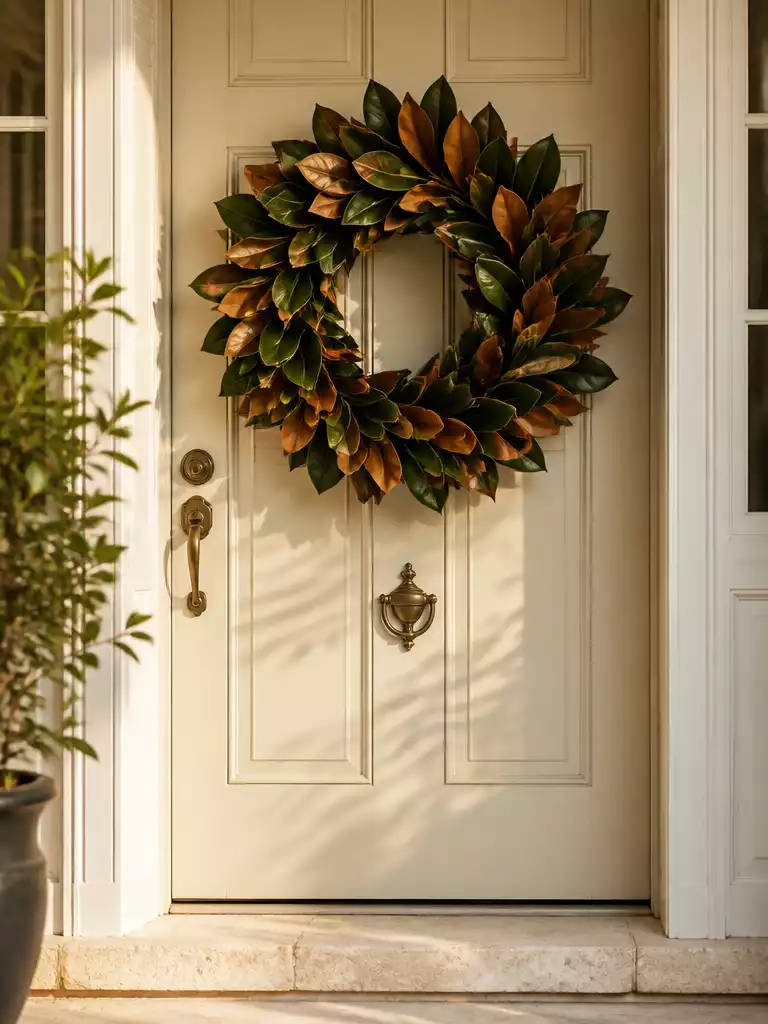
The striking two-toned magnolia leaf adds rich texture and lasting freshness.
Magnolia lasts from early December to New Year’s: Magnolia leaves flaunt a deep green, waxy topside contrasted by a warm coppery-brown felt underside, visible when layered thoughtfully. Their large size—four to eight inches—makes a bold statement, especially on wide doors. Thanks to their waxy coating, they hold up longer than softer greens without curling or browning, lasting for more than four weeks outdoors.
The underside color of magnolia leaves is often overlooked but is key to making the wreath visually rich and expensive-looking. Seeing the warm copper-brown felt nestled against the deep green topside distinguishes a well-made wreath from a flat, uniform one. For example, on a wide cream door, this layering creates depth that invites a second look from across the yard.
Magnolia wreaths are perfect for doors with enough space to avoid feeling cramped—think double-entry or wide single doors. They’re not suited for narrow apartment doors where the leaf scale overwhelms. If you have a magnolia tree nearby, harvesting branches yourself is the best way to ensure longevity and freshness. Otherwise, fresh-cut branches from florists will still deliver weeks of wear. Skip magnolia if you want a small or subtle wreath; its scale demands space and presence.
⭐ Top Products for Eucalyptus
Interchangeable Welcome Sign with Eucalyptus
📋 What to Check First
- Door width: Ensure your door is wide enough to balance a 28-inch magnolia wreath without feeling cramped.
- Leaf layering: Plan to alternate leaf orientation to showcase both topside and underside colors for depth.
- Seasonal timing: Confirm you can hang in early December to maximize the wreath’s long-lasting freshness through New Year’s.
Dried Citrus Wreath
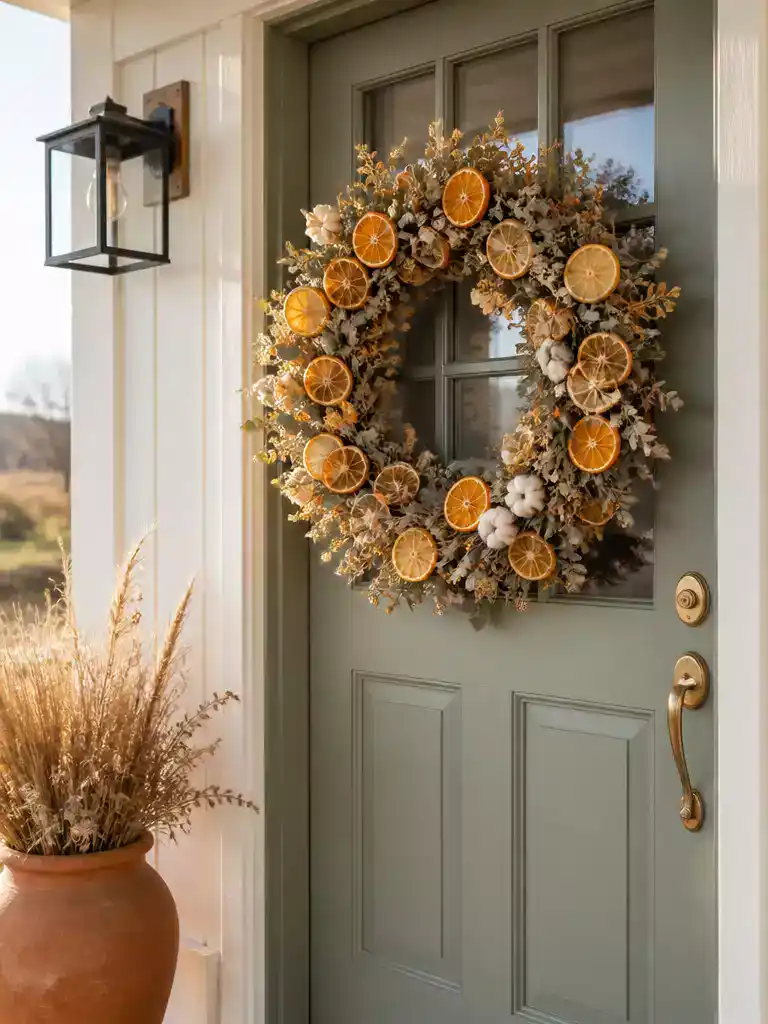
A warm, artisanal wreath that glows with natural light and seasonal texture
Dried Citrus Slices Glow Like Stained Glass: In direct winter sunlight, sliced oranges and lemons become translucent, revealing delicate amber and gold membranes. This wreath requires drying citrus slices in an oven at 170-200°F for 4-6 hours or dehydrating overnight before wiring them onto a base, making it a hands-on project that rewards effort with unique light-play and texture.
The visual magic of this wreath is its backlit translucency, which no other wreath on the list has. Imagine morning sun catching the intricate patterns inside the dried citrus, making the wreath look almost alive. Adding a few whole cloves or cinnamon sticks wires in a subtle spicy scent combo that isn’t just another generic holiday candle.
This wreath is right for anyone who loves a tangible project and values seasonal artistry over convenience. It’s the choice for homes that want a long-lasting, non-traditional palette from late November through January. Skip this if you want a quick, no-prep option or dislike any hands-on drying prep—expect to spend several hours drying the fruit before assembly. For those ready to commit, the warm amber and gold hues paired with a neutral base create a winter botanical look that surprises every guest.
.
💡 Practical Tips for a Stunning Dried Citrus Wreath:
- Slice Uniformly: Cut citrus into evenly thin rounds (about 1/8 inch) to ensure even drying and smooth translucency.
- Layer Thoughtfully: Wire dried slices over a simple base like preserved eucalyptus for texture balance and depth.
- Scent Accents: Add cloves or cinnamon bundles sparingly to avoid overpowering the subtle natural aroma of dried citrus.
White Pine Wreath
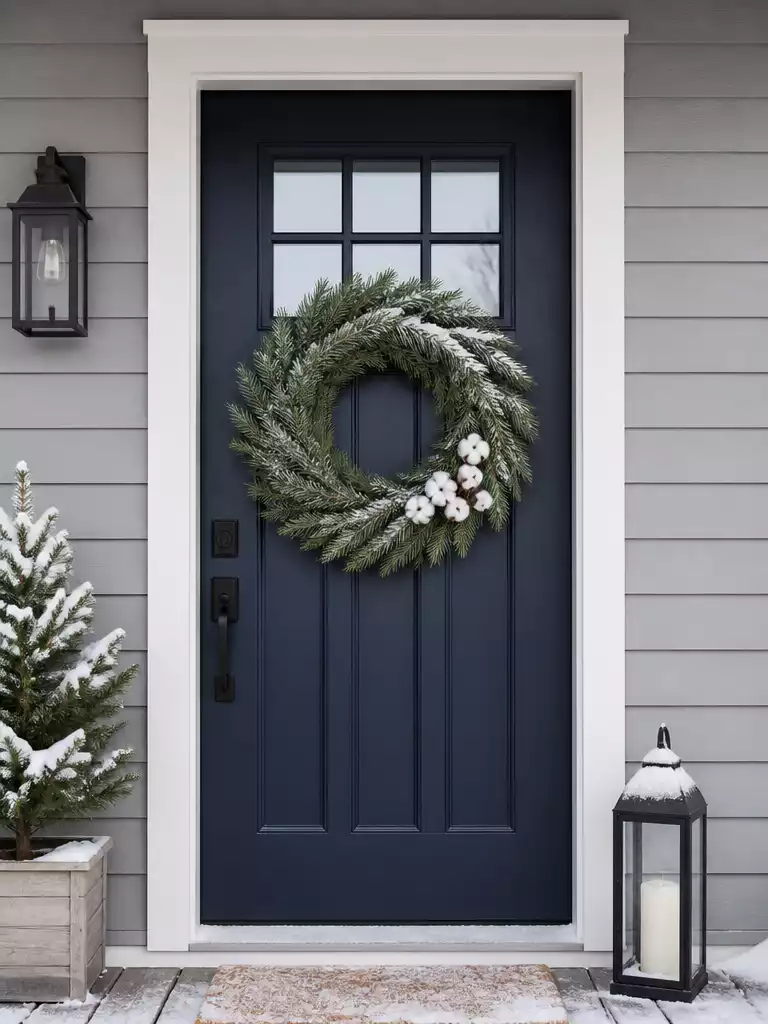
Soft white pine needles shimmer naturally, creating a fresh-foraged holiday look.
White pine’s long needles shimmer like frost: White pine’s needles grow in clusters of five, each three to five inches long, creating a feathery, loose texture that feels foraged, not manufactured. Unlike stiff Fraser firs, this soft texture catches light along the needle length, giving the wreath a gentle shimmer that reads as natural frost without any fake sparkle.
White pine’s long needles also create natural pockets perfect for tucking in small accents like dried cotton stems or pinecones without using wire or picks. This easy styling trick makes it simple to personalize the wreath without complicated tools or floral foam.
This wreath is ideal for cold northern climates where the front door stays below 45°F overnight, because white pine drops its needles quickly indoors or in warm weather. If you live in a mild winter area, skip white pine—the needle loss will be disappointing. For cold climates, a 24-inch white pine wreath offers a fresh, natural alternative to typical dense conifer wreaths with a texture and shimmer uniquely suited to genuine winter mornings.
.
📋 What to Check First:
- Climate suitability: Confirm your area’s overnight lows stay below 45°F to avoid premature needle drop.
- Door size: Measure your door and choose a 22-26 inch wreath to balance white pine’s loose texture properly.
- Accent compatibility: Plan any small natural accents to tuck into needle pockets without crowding or distorting the feathery look.
Progress often feels slow when layering natural elements, yet every small detail adds to a look that feels truly thoughtful. Subtle adjustments build a cohesive style that grows over time, not overnight. This journey is about enjoying the process, not rushing to a flawless finish.
✨ Keep This in Mind:
- Choosing the right wreath size is key—see guidance on front door dimensions for balance.
- Consider the lifespan of natural materials before picking your favorite style for lasting impact.
- Trust the power of simplicity—letting one element shine creates a more timeless look.
Cedar Wreath
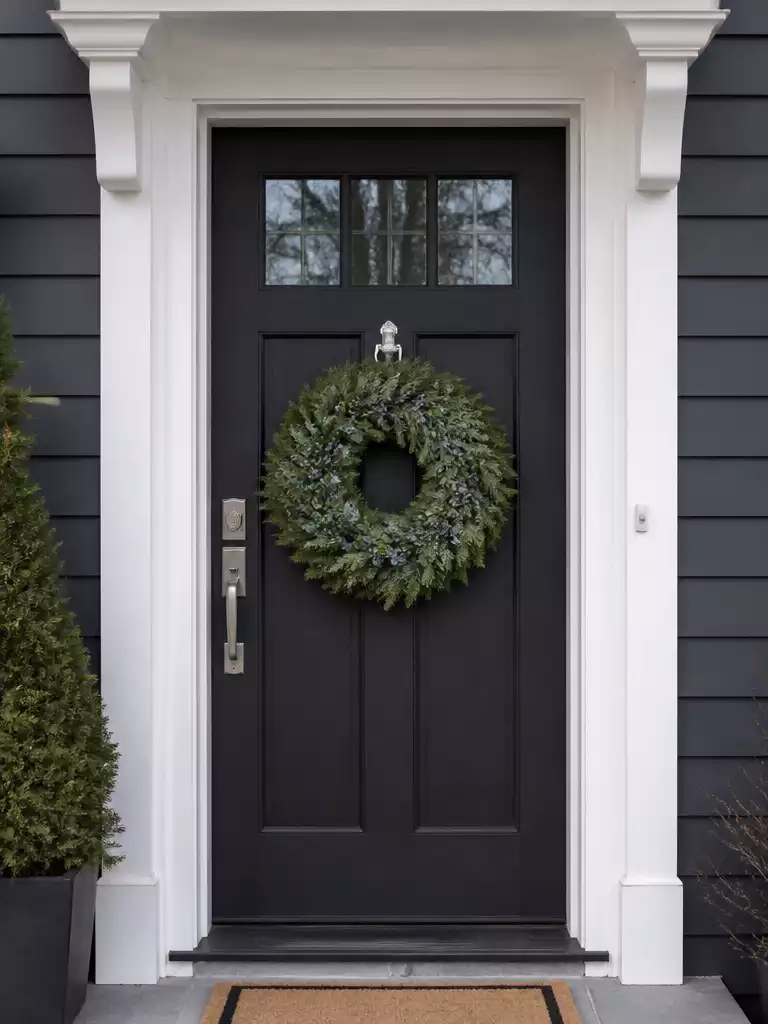
Dense cedar wreath with unique blue-grey berries for a structured, designed front door look
Cedar’s resinous scent and architectural texture stand out: Cedar offers a sharper, more resinous scent reminiscent of a pencil sharpener or cedar chest, not the usual pine smell. Its flat, scale-like foliage creates a dense, mossy surface that complements strong-lined doors like craftsman or modern farmhouse styles rather than softening them.
Eastern red cedar often sports small, waxy blue-grey berries on female branches in December. Not all cedar branches have these, so ask specifically for berry-bearing ones at farm stands or nurseries to add natural visual interest without extra decorations.
This wreath is perfect for those wanting a front door that looks intentionally designed rather than decorated. It’s one of the most affordable options if you live in cedar-growing regions like the eastern US or Midwest, where bundles often come as tree-trimming byproducts. Skip cedar wreaths if you want soft or fluffy greenery or don’t have local access to berry-bearing cedar, as sourcing can be tricky outside cedar country.
.
💡 Practical Tips for Using Cedar Wreaths:
- Berry Sourcing: When buying cedar, ask specifically for branches with blue-grey berries to add natural color without extras.
- Wreath Shape: Build or buy wreaths dense and flat-textured to highlight cedar’s architectural appeal on strong-lined doors.
- Local Availability: Check farm stands or tree-trimming sales in your region to source fresh cedar affordably and sustainably.
Boxwood Wreath
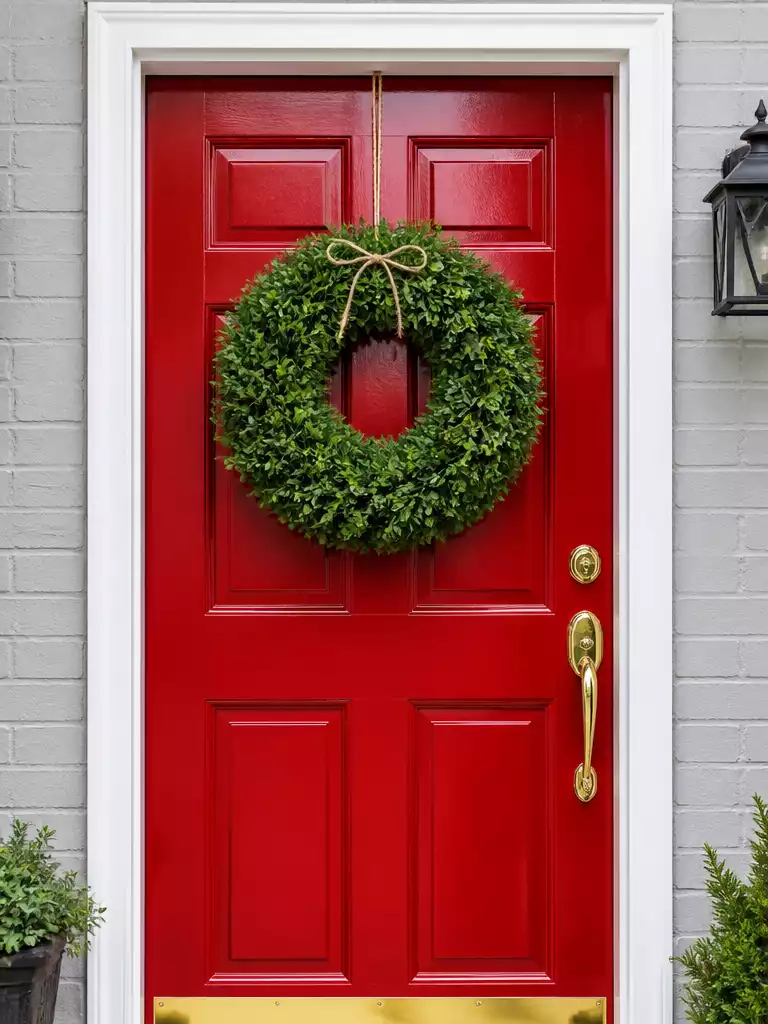
A perfectly rounded boxwood wreath anchors busy front doors with structured greenery.
Boxwood’s geometric precision holds shape tightly: The small, densely packed leaves form a solid mass of deep matte green, appearing as a clean circle from a distance rather than a jumble of botanicals. This makes boxwood wreaths ideal for front doors with busy glass panels or bold hardware, where the wreath acts as a visual anchor rather than a competitor.
Fresh boxwood wreaths last about two to four weeks when hung on the door, but preserved boxwood is a clear investment: it maintains color and flexibility indefinitely, making it reusable year after year. A common misstep is buying a wreath shaped too flat — the best boxwood wreaths have some branches layered forward and back, adding dimension and subtle shadow play that keep it from looking lifeless or overly manicured.
This wreath suits anyone with a visually busy or boldly colored front door who wants a neat, formal statement rather than organic wildness. Skip it if you want a lush, loose look or expect your wreath to last longer than a month fresh—preserved boxwood wreaths cost more upfront but save time over years. At about 22 inches in diameter, this wreath size fills about one-third of a standard door, creating that perfect, intentional presence.
⭐ Top Products for Eucalyptus
Interchangeable Welcome Sign with Eucalyptus
💡 Practical Tips for a Polished Boxwood Wreath:
- Shape maintenance: Lightly mist fresh boxwood weekly to keep leaves vibrant and prevent browning.
- Layer for dimension: When assembling, allow some sprigs to push forward and others back for natural shadows.
- Secure attachment: Use floral wire to anchor thicker stems tightly; this keeps the wreath’s perfect circle intact through wind or handling.
Olive Branch Wreath
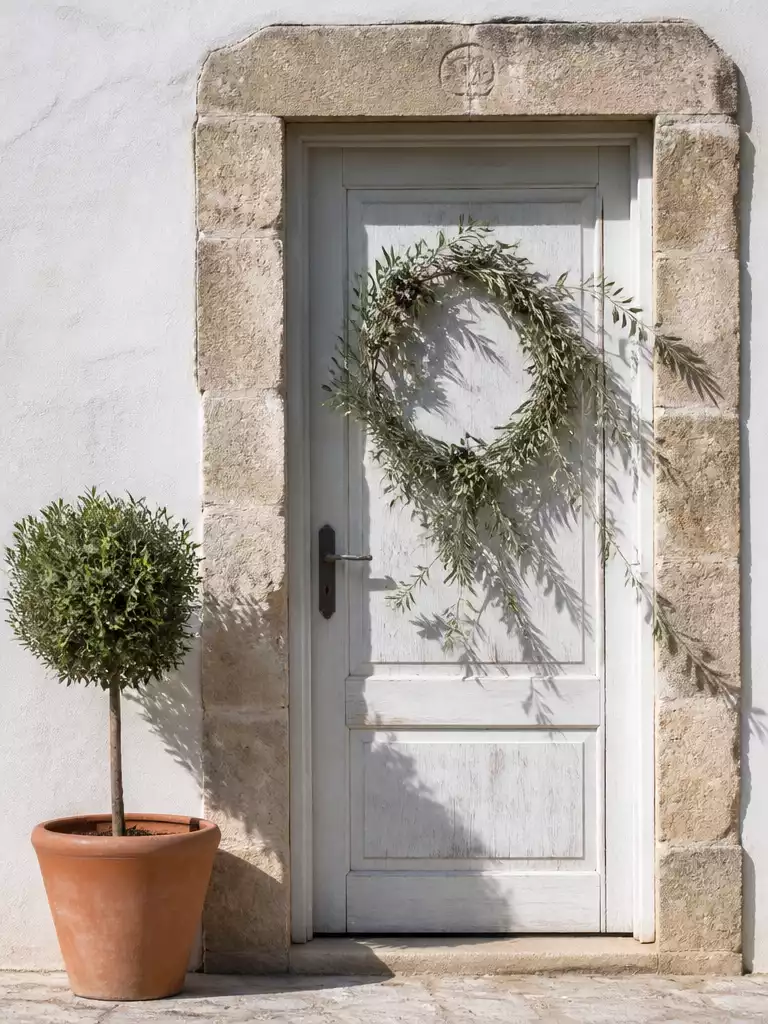
A Mediterranean-inspired wreath that offers unique movement and exclusivity.
Reads as a Mediterranean travel story, not Christmas: Olive branch wreaths stand apart by not signaling holiday at all. Their loose trailing stems with small 2-inch grey-green leaves flash silver-white underneath when stirred by breeze, giving the wreath a living, restless quality that other wreaths lack. The small dried olive clusters add an uncommon, sculptural detail that feels exclusive rather than mass-market.
Olive branches are rarely found at craft stores and more often come from florists or warm-climate ornamental trees, making this wreath a rare sight on December streets. A partially dried olive wreath, with its twisty, driftwood-like structure, fits modern or minimalist doors better, while fresh branches offer softer, trailing elegance.
This wreath is perfect for someone who wants an intentional, non-traditional front door accent that suggests a story beyond Christmas. Skip it if you want a quick grab from a big box store or if your door is in a draftless spot where the subtle wind movement won’t show. Expect to spend more sourcing these botanicals, but the resulting unique, Mediterranean vibe is worth it.
⭐ Top Products for Eucalyptus
Interchangeable Welcome Sign with Eucalyptus
💡 Practical Tips for Styling an Olive Branch Wreath:
- Placement: Hang your wreath where it gets a gentle breeze to showcase the silver underside movement.
- Mix Textures: Pair fresh olive branches with natural twine or woven baskets for a warm Mediterranean vibe.
- Layered Look: Combine dried olive clusters with subtle accent greenery to keep the look sculptural but soft.
Cypress Wreath
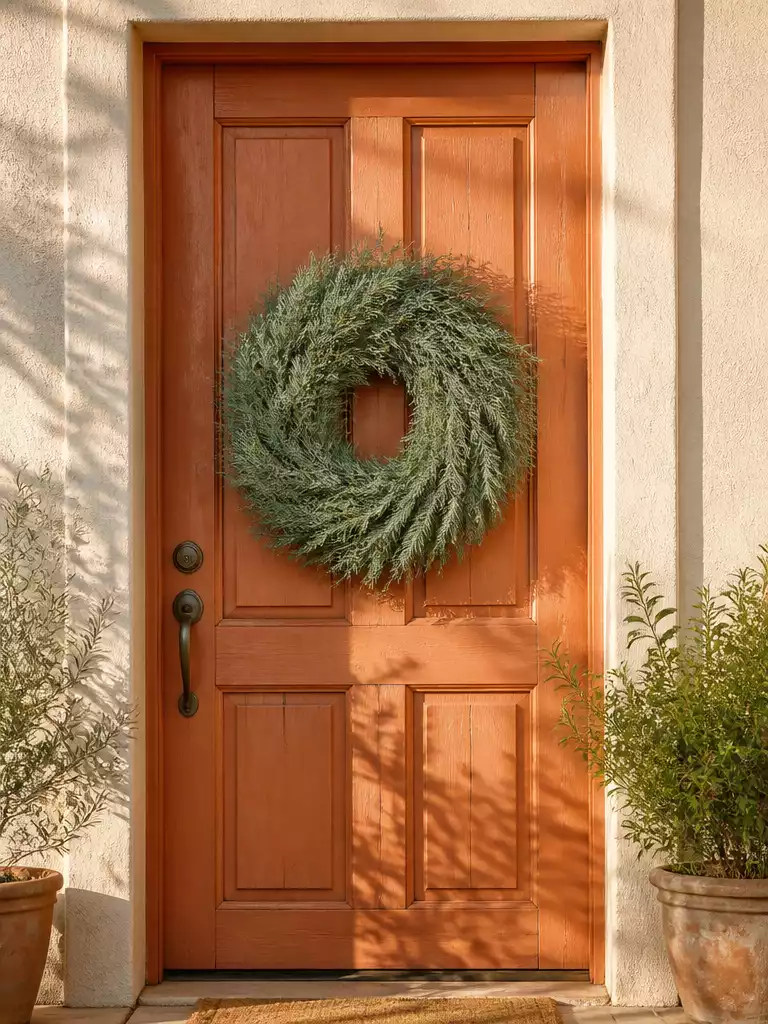
A cool grey-green cypress wreath adds layered depth and shadow to warm-toned doors.
Cypress cools warm doors with layered depth: Unlike other conifers, cypress foliage grows in flat, feathery sprays that stack like shingles, creating a surface rich with visible depth and shadow even in flat light. Leyland cypress’s grey-green tone contrasts with warm door colors like terracotta or aged wood, making the wreath a deliberate design choice. Its planar fronds also hold color and shape for four to six weeks outdoors without wilting or curling.
Cypress sprays wire flat against a wreath frame, which means wreath-makers get a cleaner, tighter finish with less bulk compared to needle-based greens. A homeowner will notice how the layers of fronds catch subtle shadows, giving the wreath dimension even on cloudy days or in shaded entryways.
This wreath is perfect for anyone with a warm-toned front door who wants their greenery to feel intentional and architectural rather than matchy-matchy. Skip cypress if you need a wreath that reads soft and lush—its planar texture isn’t for that. The four to six-week longevity rivals magnolia and makes it a practical alternative for long-lasting outdoor holiday décor.
⭐ Top Products for Eucalyptus
Interchangeable Welcome Sign with Eucalyptus
⚡ Practical Tips for a Flawless Cypress Wreath:
- Layer Direction: Wire each cypress spray so the fronds overlap downward, mimicking natural shingles for depth.
- Secure Frame: Choose a sturdy wire frame since the flat sprays lie snugly but need solid support to avoid sagging.
- Door Contrast: Hang on a warm-toned door like terracotta or wood to highlight the cool grey-green for a thoughtfully balanced look.
Brass Bells Wreath
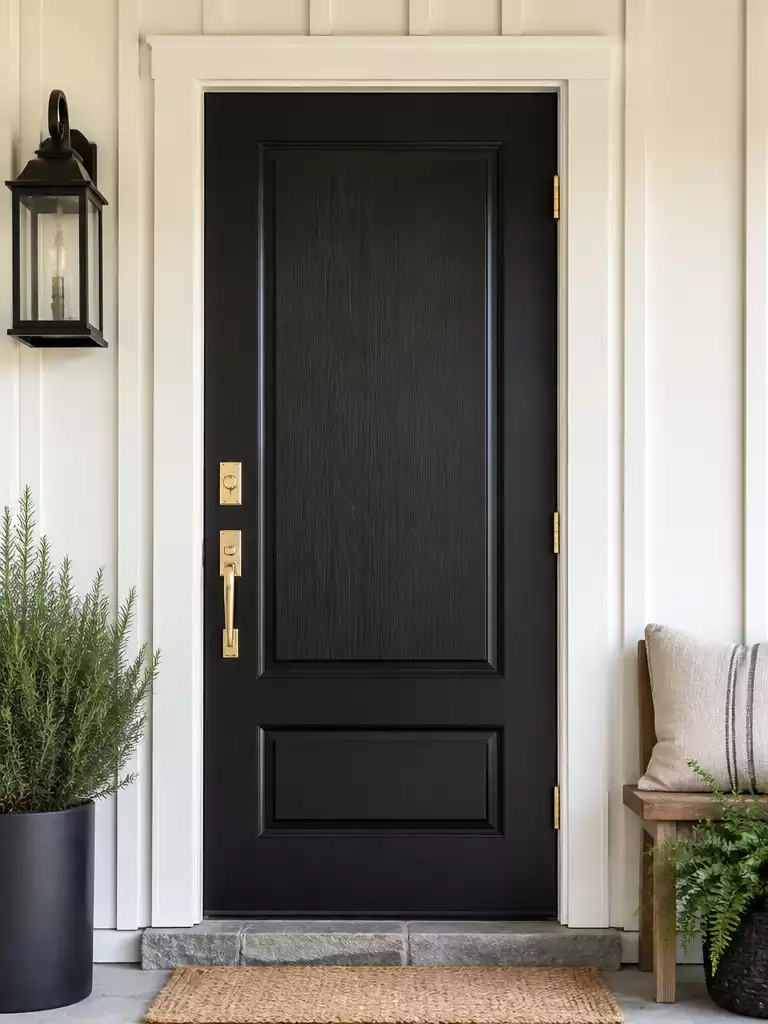
Add warmth and gentle jingling sound with thoughtfully clustered aged brass bells
Brass Bells Accent Adds Warmth and Sound: Brass bells work best as an accent layer on botanical wreaths, introducing a unique sensory element—sound—that no other wreath on this list offers. Use aged brass bells with a warm, muted amber finish to complement dusty greens like eucalyptus or cedar without the harsh glare of shiny gold.
One key detail is the bell cluster placement: group three to five bells off-center at the nine or six o’clock position instead of spacing them evenly. For example, a cluster of large 2-inch and smaller 1-inch bells wired together creates a subtle visual hierarchy and feels intentional, not amateurish.
This wreath style is perfect if you want both visual and auditory warmth on your door but want to avoid the “school craft project” look. Skip this if you prefer a completely quiet wreath or if you want a simple botanical look without accents. Expect to spend around $20 to $40 on a quality set of aged brass bells to achieve this effect.
.
💡 Practical Tips That Work:
- Bell Attachment: Use thin floral wire to securely fasten bells in a tight cluster without damaging greenery stems.
- Sound Check: Hang your wreath in a spot where gentle wind or door movement can create soft jingling sounds.
- Finish Touch: Pair the bells with matte or lightly textured botanical bases to balance visual warmth and avoid too much shine.
Velvet Ribbon Wreath
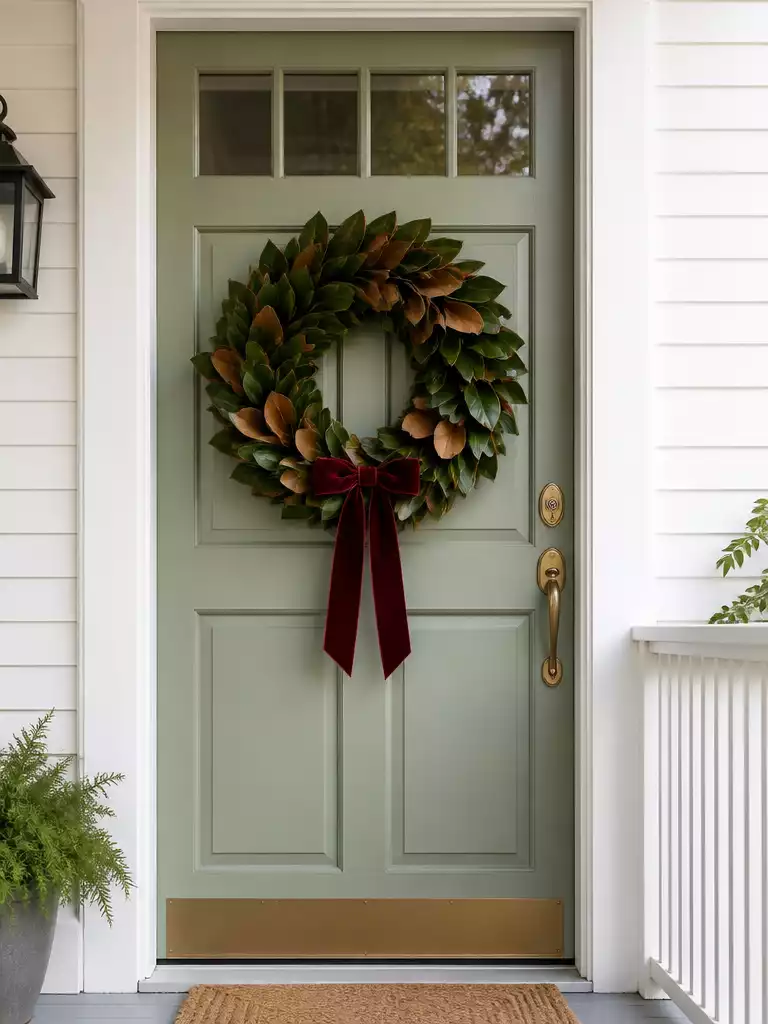
Velvet ribbon adds rich depth and softness that elevates any holiday wreath.
Velvet absorbs light creating depth not shine: Unlike satin or grosgrain ribbons that reflect light and flatten a wreath’s look, velvet absorbs light to create a tactile richness that makes the greenery and door around it appear more layered and intentional. Choosing the right velvet color is key to this effect.
Velvet ribbon color isn’t just about preference — it’s the single most consequential choice for keeping your wreath outside the typical holiday cliché. Deep burgundy, forest green (especially for non-green bases like dried citrus), dusty mauve, deep navy, or chocolate brown all maintain an elevated vibe, while bright red velvet instantly drags the wreath back to traditional Christmas territory.
For most wreaths, a 2.5-inch wide ribbon tied in a simple bow or loose single loop works best. Skip the default top bow; instead, try knotting it at the bottom to let the greenery shine above. If you want a wreath that feels editorial and tactile, velvet ribbon is the last detail to add — but skip it if you want a quick, no-fuss look or hate the idea of maintaining a pile-sensitive material.
.
💡 Practical Tips for Styling Velvet Ribbon:
- Ribbon care: Gently steam wrinkles instead of ironing to keep the velvet pile plush and undamaged.
- Placement choice: Tie the velvet ribbon loosely so it can move slightly in the breeze, adding subtle life to the wreath.
- Layering accents: Pair velvet with minimal metallic elements like a thin aged brass pin for a hint of sparkle without overpowering depth.
You now have ten distinct approaches to refresh your front door with elevated greenery and natural textures that feel truly intentional. Focus on one or two ideas that suit your door and style to keep the process simple and enjoyable.
With each thoughtful choice, your front door will gain a sense of calm sophistication and seasonal comfort that reflects who you are. Even a modest change can make your home’s entrance feel uniquely welcoming.