
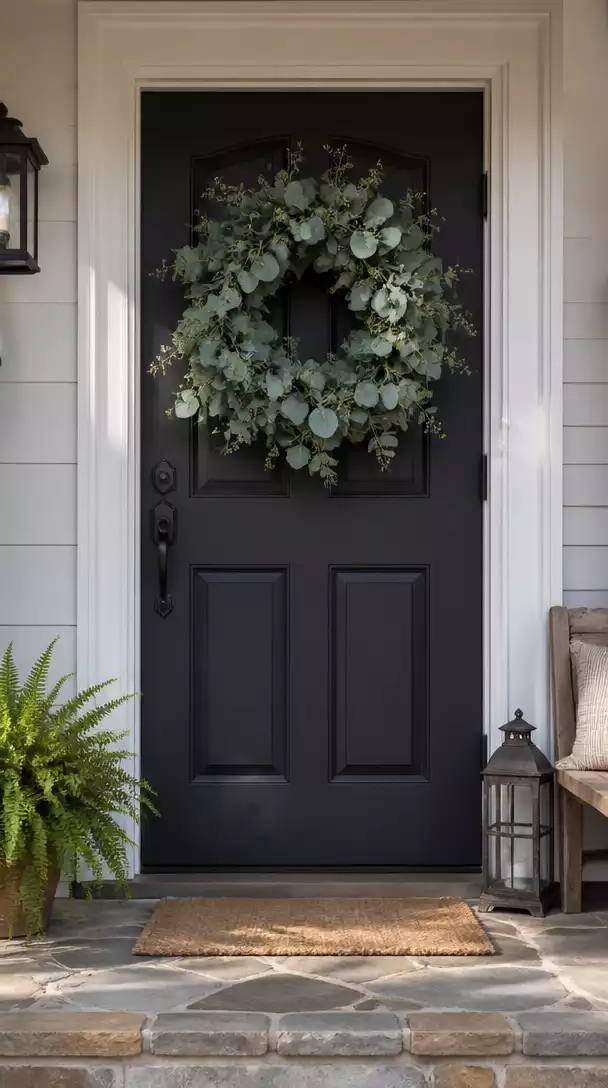
Most Christmas wreaths look identical — dominated by the same red-and-green plastic combination every year. These ideas skip the standard palette, focusing on natural textures and muted botanicals that feel fresh in December and elegant into January. These 10 ideas prove a front door can feel festive without looking like every other house on the block.
Eucalyptus
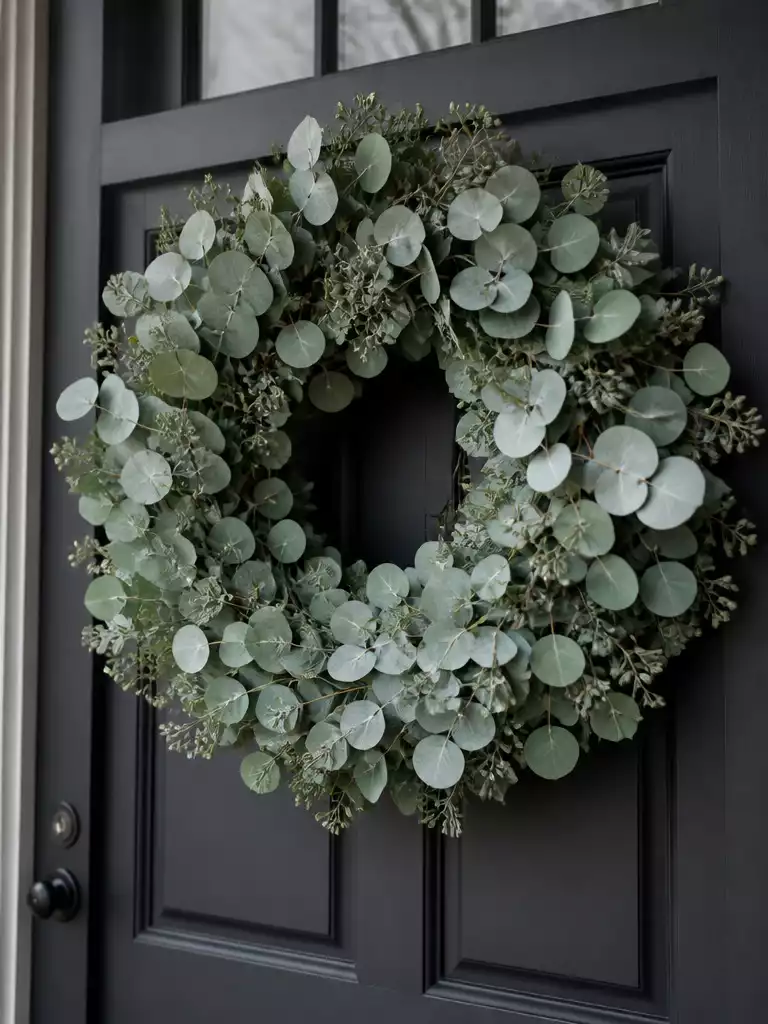
A wreath that grows more interesting as it naturally dries on your door.
A wreath that improves visually as it dries in place: A fresh eucalyptus wreath hung in early December slowly develops a dusty blue-grey bloom on its edges by Christmas week, a natural transformation no spray paint can replicate. Seeded eucalyptus adds texture that stands out from flat silver dollar leaves, making it visible even from the driveway.
Eucalyptus should never be misted or sprayed, as moisture accelerates browning and mold; instead, let it dry naturally on the door. This drying-in-place effect means the wreath looks better over time, opposite to typical greenery that peaks on day one and fades.
This wreath is perfect if you want a low-maintenance, evolving look and love fresh herbal scents that greet guests before they enter. However, skip eucalyptus if your door faces high humidity or frequent rain, since dampness can cause mold. A quality eucalyptus wreath typically costs $50–$80, making it an affordable seasonal statement that pays off by aging beautifully in place.
⭐ Top Products for Eucalyptus
Custom Initial Eucalyptus Door Wreath
📋 What to Check First Before Hanging Your Eucalyptus Wreath:
- Door Exposure: Confirm your front door isn’t in a damp or humid spot that encourages mold on eucalyptus.
- Wreath Size: Measure your door width and choose a wreath roughly one-third its width for balanced impact.
- Secure Hanging: Use a sturdy, adjustable hanger to keep the wreath centered and prevent twisting while it dries naturally.
Magnolia Leaf
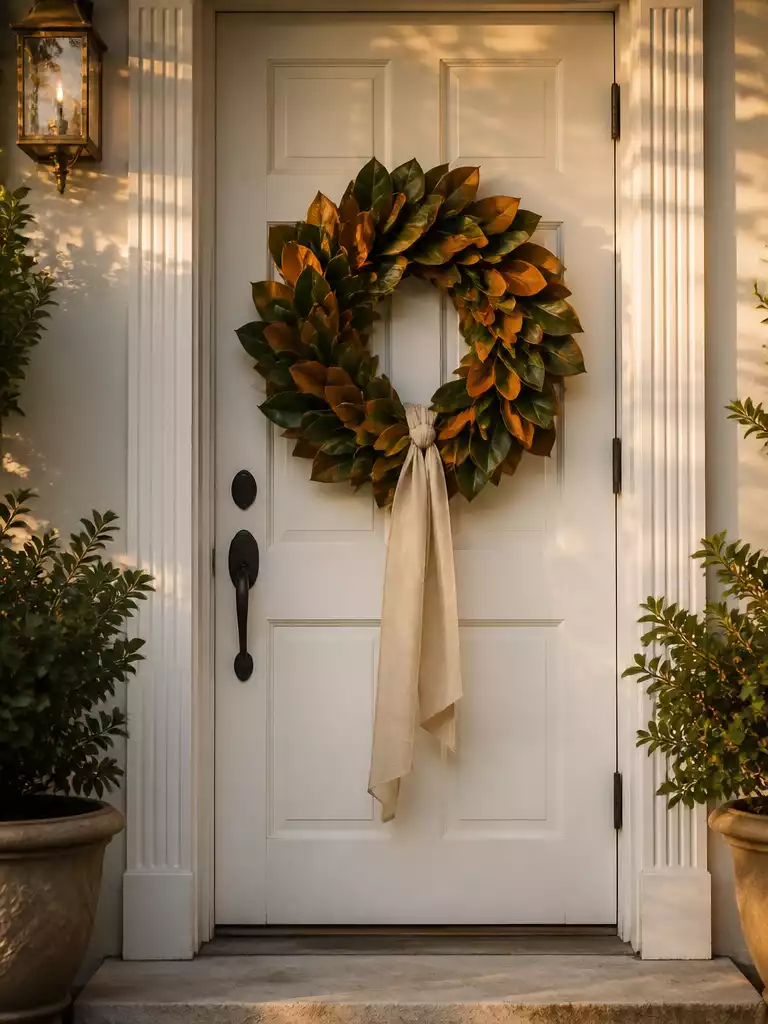
The two-tone leaves add warmth and depth without any extra decorations needed.
Magnolia’s two-tone leaves create warmth and depth: The waxy dark green tops contrast sharply with the warm suede brown undersides, giving the wreath a layered visual richness that most all-green wreaths lack. Seeing both sides of the leaves is a deliberate construction choice that lifts this wreath above flat, one-note versions.
The brown underside of magnolia leaves is often overlooked but is the secret to its sophisticated design. When stems curl to reveal that suede texture, it adds a warmth and dimensionality visible even from the street, making the wreath feel intentional and considered rather than generic.
This wreath is perfect for homes in wet or cold climates because magnolia leaves hold their shape for weeks without curling or dropping. If you want a wreath that lasts two to three seasons and gains a warm tobacco color over time, magnolia is a practical and stylish investment. But skip it if you want a fresh-cut scent or if you’re after a wreath that changes color dramatically during December — this one ages gracefully but subtly.
.
💡 Practical Tips to Showcase Magnolia’s Two-Tone Leaves:
- Leaf arrangement: When crafting or buying, ask for leaves positioned to reveal brown undersides for warmth and depth.
- Weather resilience: Place your wreath where it can get occasional rain or cold without worry, magnolia thrives in varied conditions.
- Seasonal care: Store in a cool, dry spot after the season to maintain structure and deepen the warm tobacco tones over years.
Dried Citrus
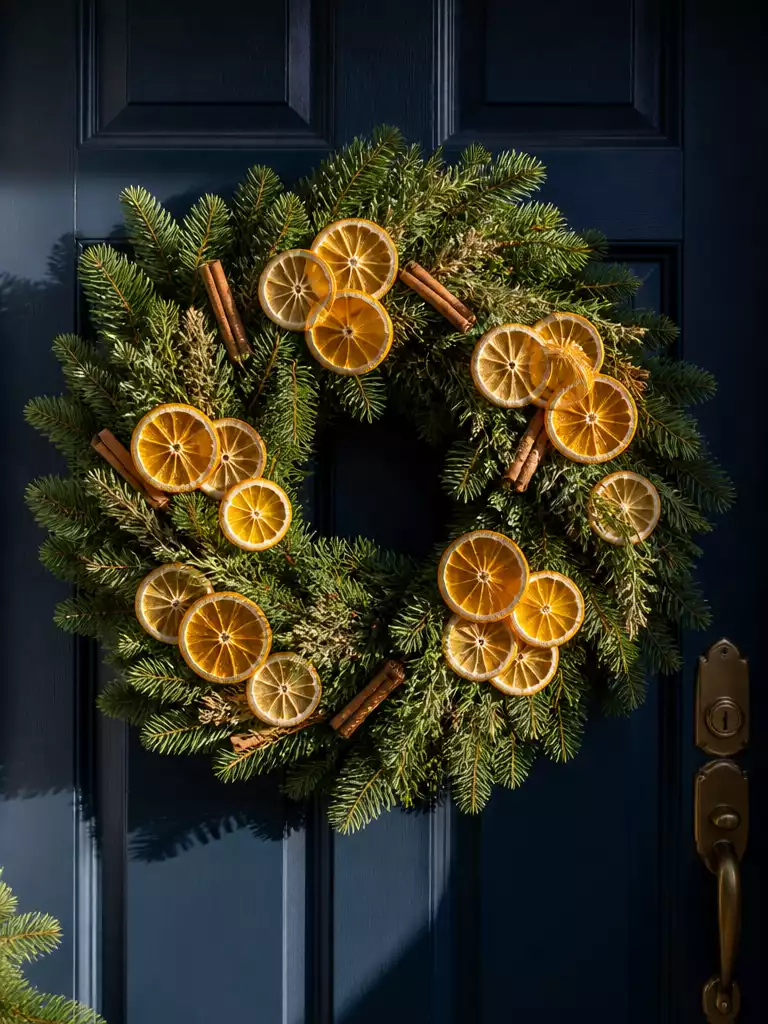
A warm amber glow and subtle spice scent transform your front door’s charm.
Dried citrus wheels glow like amber stained glass: When morning or afternoon sun hits a dried citrus wreath, the translucent orange and lemon slices catch light in a way no painted ornament can mimic. Backlit, their seed patterns and burnt orange edges create dynamic, glowing texture that evolves throughout the day, making the wreath a living, changing statement on your front door.
Dried citrus slices are naturally flat and graphic, so they need a sturdy evergreen base — tightly packed boxwood or dense fir works best to support their visual weight. A loose grapevine frame competes with the slices’ shapes, dulling the effect. Avoid faux dyed fruit in neon orange; look for naturally pale amber to burnt orange hues or dry your own in a 200°F oven for 4–6 hours.
This wreath is perfect for a homeowner who loves sensory detail—especially the faint warm orange-spice scent like mulled wine that real dried citrus brings. Skip it if you want a wreath that lasts multiple seasons or resists rain well, since dried citrus is delicate and best for protected porches. Expect to spend about $50–70 for quality dried citrus wreaths or budget time for DIY drying. This wreath is a sensory delight that changes your door’s mood from morning light to dusk.
.
📋 What to Check First Before Choosing a Dried Citrus Wreath:
- Sunlight Exposure: Confirm your door receives direct morning or afternoon sun to highlight citrus translucency.
- Weather Protection: Ensure your porch or entryway is sheltered to prevent moisture damage to delicate dried slices.
- Wreath Base Strength: Choose a dense evergreen or boxwood base sturdy enough to support flat citrus slices without sagging.
White Pine
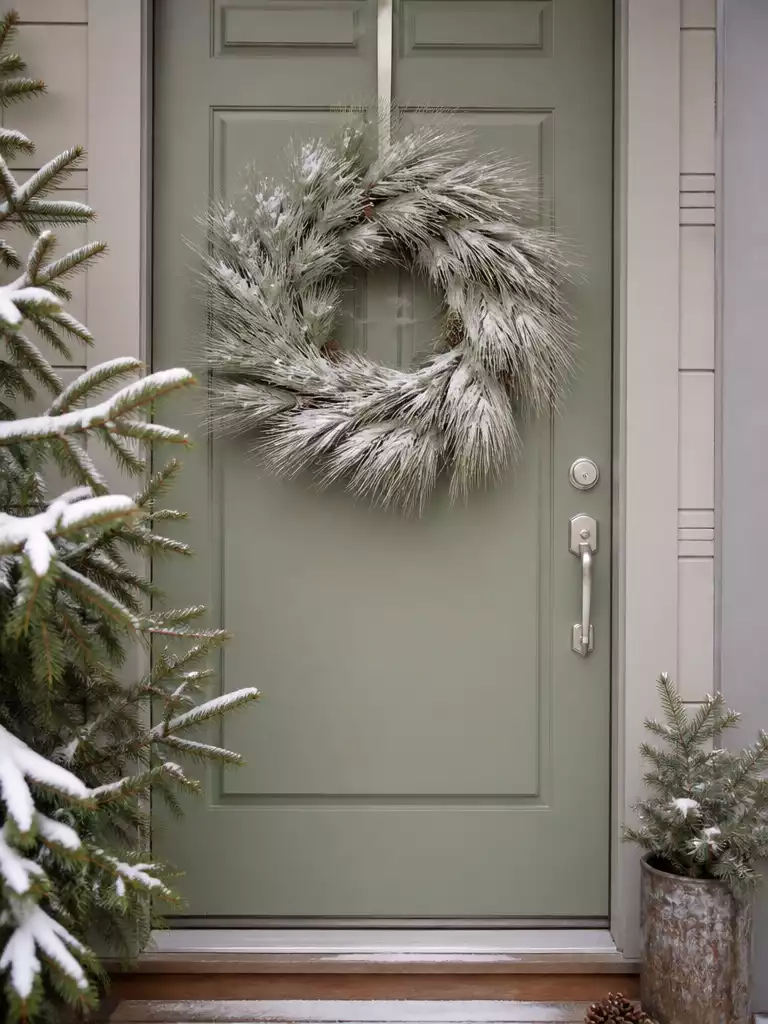
Soft, feathered white pine needles create a naturally relaxed front door statement
White pine’s feathered needles create a soft, undone silhouette: Its 3–5 inch long needles grow in clusters of five that drape outward, giving the wreath an organic looseness unlike the stiff geometry of fir or boxwood. The subtle silver-grey cast as it dries extends its visual life well into January.
White pine’s needles are uniquely soft and flexible, so this wreath gently sways in a breeze rather than standing rigid. For example, a wreath hung on a sheltered porch feels effortlessly natural and lived-in, never forced into a perfect ring shape. This movement adds a layer of tactile appeal from across the street.
This wreath is perfect for homeowners with a covered or recessed entryway, where wind won’t shred the needles. Skip white pine if your door faces strong prevailing winds, since the soft needles shed faster outdoors. If you have a sheltered spot, expect a wreath that ages gracefully for 6–8 weeks with minimal needle loss and a distinctively relaxed vibe.
.
📋 What to Check First for White Pine Wreaths:
- Wind Exposure: Confirm your front door is sheltered to protect soft pine needles from early shedding.
- Door Color Contrast: Choose a door color that highlights white pine’s subtle silver-grey needle tones for maximum impact.
- Placement Height: Ensure wreath placement allows gentle movement without obstruction for natural drape and swaying effect.
Making thoughtful choices can feel like a quiet victory during a busy season. Even subtle shifts in style bring a fresh perspective to your home’s entry. Focus on meaningful details that invite calm and lasting charm rather than chasing perfection.
✨ Simple Reminders:
- Choose one standout material for a polished look, as seen in front door styling ideas.
- Natural textures don’t need over-accessorizing; less is often more.
- Embrace the unique character your wreath develops over time — it tells a story.
- Consider how your wreath complements the door — scale and placement matter.
Cedar
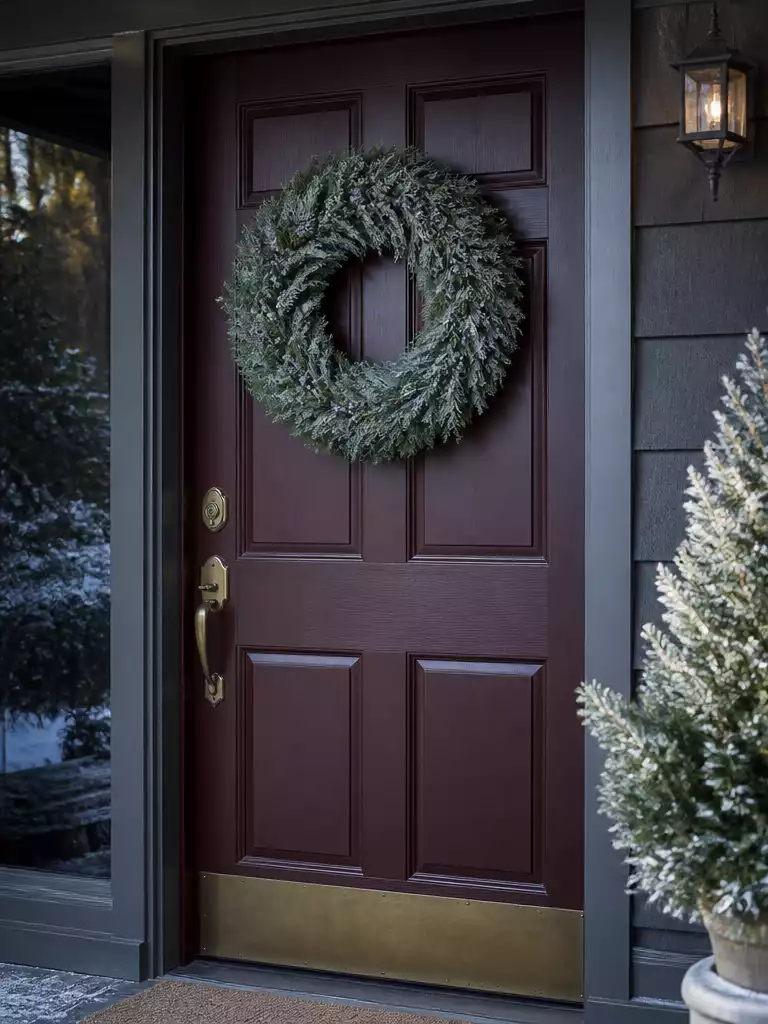
Cedar wreaths offer sharp scent and resilient texture that lasts through wet winters
Cedar’s scent strengthens in cold air: On a freezing December morning, cedar releases a unique sharp, resinous aroma like the inside of a cedar chest—not the generic pine scent. Its flat, overlapping scale-like fronds create a dense, almost tiled surface that reads as a deep blue-green ring with minimal shadow, setting it apart visually from other evergreens.
Cedar berries add another dimension few wreaths have. Small dusty blue-grey berries persist through winter, matching popular muted interior colors without artificial accents. A cedar wreath with berries feels intentionally designed yet natural—a detail to seek when sourcing or ordering.
This wreath is perfect for homeowners dealing with wet, rainy winters in places like the Pacific Northwest or coastal New England thanks to cedar’s natural water resistance and protective oils. Skip cedar if you want a light, airy wreath or live in a dry, warm climate where its scent won’t intensify. Expect to invest around $60-$80 for a quality wreath, but its durability and character make it a worthwhile seasonal upgrade.
.
📋 What to Check First for Cedar Wreaths:
- Door color contrast: Confirm your door’s color complements deep blue-green cedar for maximum impact.
- Berry inclusion: Verify if the wreath includes dusty blue-grey cedar berries for natural color accents.
- Exposure conditions: Assess porch shelter or weather exposure to ensure cedar’s durability holds up outdoors.
Boxwood
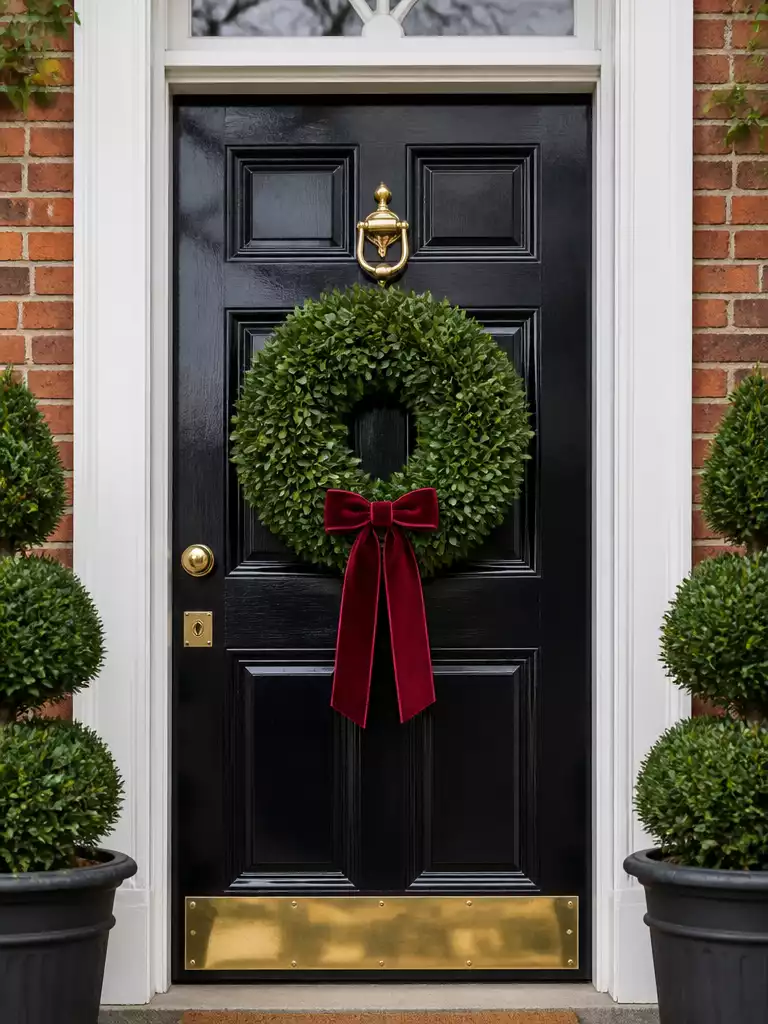
A wreath that matches formal homes with precise geometry and timeless architectural style
Preserved boxwood lasts 2–3 years without upkeep: Boxwood wreaths stand apart with their dense, clipped leaves creating a solid, architectural ring that reads as a deliberate design choice on formal doors like black colonial or Georgian styles. The tight geometry makes the wreath visually weighty and perfectly controlled, unlike loose-needle varieties.
The surface of a boxwood wreath has almost no visible gaps because its small oval leaves cluster densely, giving the wreath a sculptural, topiary-like presence that holds its shape from 30 feet away. This precision suits doors framed by brick pilasters or fanlights, where every detail echoes careful craftsmanship.
Boxwood wreaths are right for homeowners who want a wreath that echoes the precise architecture of their home and dislike casual or rustic looks. Skip boxwood if you want a loose, natural vibe or if you expect to replace your wreath yearly—preserved versions cost about the same as fresh but last 2–3 years with zero watering. This is a buy-once wreath for serious design commitment, not a last-minute seasonal fix.
⭐ Top Products for Boxwood
Custom Initial Eucalyptus Door Wreath
💡 Practical Tips That Work:
- Shape maintenance: Gently reshape preserved boxwood if it flattens during storage to keep that perfect topiary look.
- Ribbon restraint: Choose one bold velvet or satin ribbon color—avoid extra embellishments to preserve the wreath’s clean geometry.
- Storage care: Store your wreath flat in a breathable container to avoid crushing its dense leaves and keep it fresh season after season.
Olive Branch
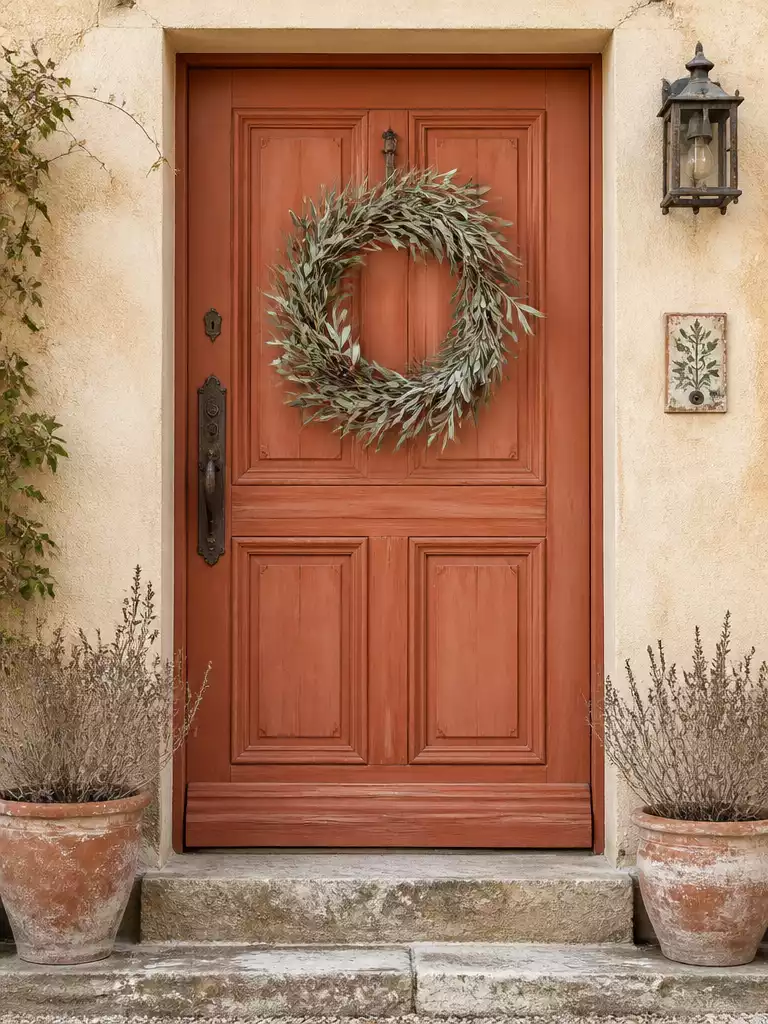
A winter wreath with Mediterranean grey-green leaves for understated seasonal style
Olive Branch Leaves Dry to Silvery Grey-Green: Olive branch wreaths reveal their charm as they age, with leaves curling softly and a muted, refined color that feels like aged zinc or lichen. This drying process enhances texture and depth, making the wreath visually richer by week three rather than fading as it dries.
Olive branches aren’t your average garden find—they’re usually sourced from specialty florists or Mediterranean importers and often sell out early, so plan ahead. Picture a front door with this unique foliage paired with dried lavender or simple linen ribbon, lending a winter look that sidesteps traditional Christmas colors.
This wreath is perfect for homeowners craving a subtle, seasonally appropriate decoration that feels like a Provençal villa in winter. Avoid if you want classic Christmas red or need last-minute decor—the scarcity and muted palette won’t fit a conventional holiday vibe. Expect to invest around $50 or more, reflecting its specialty sourcing and distinct aesthetic.
⭐ Top Products for Eucalyptus
Custom Initial Eucalyptus Door Wreath
📋 What to Check First for an Olive Branch Wreath:
- Door Color Compatibility: Ensure your door color complements muted grey-green tones, like terracotta or warm neutrals.
- Space for Drying: Plan for a wreath location where natural drying won’t be disturbed or exposed to excessive moisture.
- Availability Timing: Confirm olive branches availability early—specialty sources often require pre-ordering before late November.
Cypress
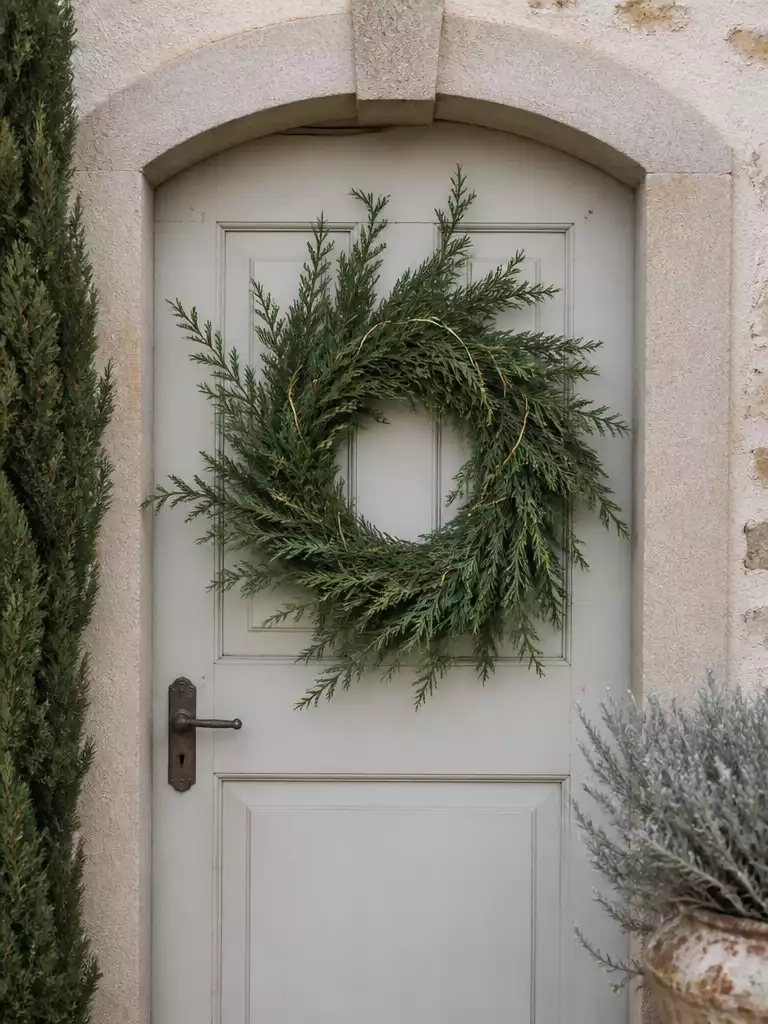
A unique, long-lasting greenery wreath that keeps your door fresh through January
Cypress wreaths last through January without wilting: The dense, firm sprays of Italian cypress foliage point upward and outward, creating a deep green sphere that looks like a miniature forest canopy. Its natural antimicrobial traits resist moisture, making it one of the longest-lasting fresh-cut options for outdoor wreaths.
Few wreath materials rival cypress’s rarity and three-dimensional depth. Unlike flat cedar or boxwood, cypress’s cylindrical sprays branch in multiple directions, giving your front door a living, growing quality that stands out in December and beyond. This is the wreath for anyone tired of the usual holiday greenery.
If you want a wreath that bridges Christmas and winter seamlessly, cypress is your go-to. Skip it if you expect to change your wreath monthly or want a material easy to find at every garden center—the price and sourcing can be higher due to its scarcity. But for durability and distinctiveness lasting into mid-January, cypress is unmatched.
⭐ Top Products for Eucalyptus
Custom Initial Eucalyptus Door Wreath
📋 What to Check First Before Choosing Cypress:
- Door Color Contrast: Cypress’s deep green stands out best against light or neutral-colored doors for maximum visual impact.
- Wreath Size and Shape: Ensure your door can accommodate a full, round wreath to showcase cypress’s three-dimensional sprays.
- Climate and Exposure: Check that your entryway has some weather protection to preserve the wreath’s fresh look through January.
Brass Bells
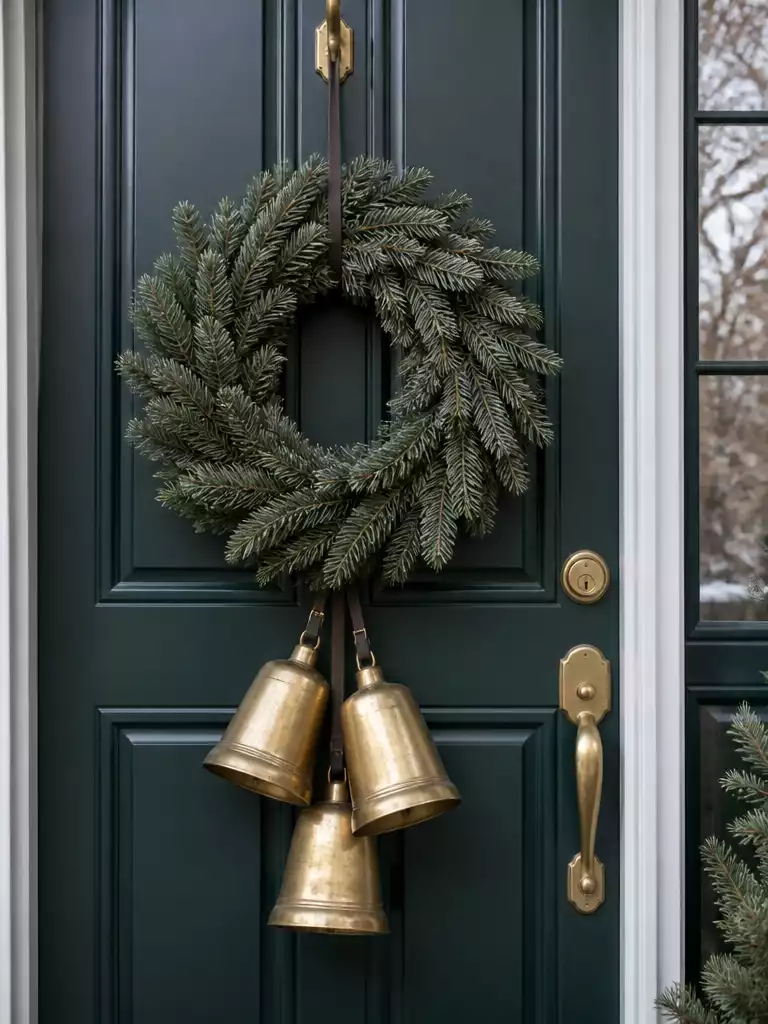
A brass bell wreath that announces your door with warm, evolving chimes and rich patina
Raw brass patinas beautifully over December: Brass bells on a wreath aren’t just decoration—they sound warm and deep with every breeze or door swing. Choose raw unlacquered brass, not gold-painted steel, so the surface develops a rich amber patina through cold and moisture exposure, making the wreath look intentionally aged rather than new.
Brass bells perform best on a minimal wreath base—think a simple evergreen or bare grapevine ring—so the bells become the focal point. Three to five large bells, each about 2 to 3 inches wide, create a deliberate statement; too many small bells quickly feel like cheap jingle-bells. This sizing tip is non-negotiable for a refined look.
This wreath is right for those who want a front door that announces itself with sound and material depth. Skip it if you prefer silent decor or want a quick, no-fuss option; sourcing raw brass craft bells can be pricier and requires ordering early from specialty suppliers. Expect to invest in quality bells that cost more but outlast typical plastic alternatives by developing character over time.
⭐ Top Products for Brass Bells
Brass Bells Wreath
📋 What to Check First:
- Door clearance: Ensure your door swings freely without the bells hitting surrounding trim or siding.
- Wreath weight: Confirm your hanger or hook can support the heavier brass bells without slipping.
- Weather exposure: Check if your entry is sheltered—bells develop better patina and sound indoors or on covered porches.
Velvet Ribbon
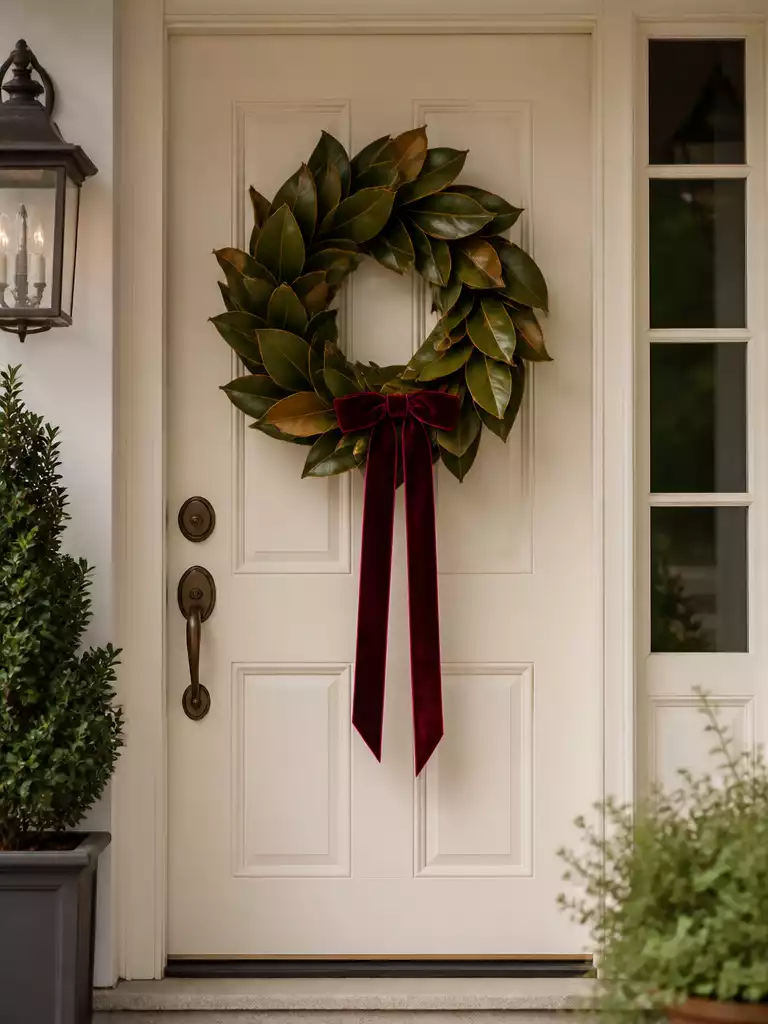
A luxe velvet ribbon instantly upgrades any wreath with relaxed, tactile elegance.
Most wreaths fail because of the ribbon, not the greenery: Velvet ribbon is matte and drapes softly in deep jewel tones like oxblood or midnight blue, creating unique, relaxed folds that catch light differently on every knot. Unlike stiff wired polyester, velvet ribbon looks handcrafted even from ten feet away.
The key is how velvet ribbon folds and knots. It never holds a forced bow shape but falls naturally with light and shadow playing across its soft pile, making wreaths feel less manufactured and more inviting. This subtle texture shift changes the wreath’s whole personality without adding clutter or competing details.
Velvet ribbon suits anyone wanting to elevate a wreath without buying new greenery — it’s a $12 fix that transforms a tired wreath instantly. Skip velvet if you need a rigid bow or want bright traditional reds and greens; velvet’s muted jewel tones like oxblood, forest green, or dusty mauve avoid cliché and read as quietly luxurious instead.
⭐ Top Products for Eucalyptus
Custom Initial Eucalyptus Door Wreath
💡 Practical Tips That Work:
- Ribbon Width: Choose velvet ribbons at least 2.5 to 3 inches wide to create visible, luxurious folds and drape.
- Loose Knots: Tie the ribbon with a relaxed knot rather than a tight bow to showcase velvet’s natural softness.
- Complementary Colors: Match velvet ribbon colors with your wreath’s greenery or door color for a harmonious, elevated look.
You now have ten distinctive ideas to refresh your front door with thoughtful, natural touches that break from the usual holiday clichés. Focus on one or two materials that truly speak to your style, allowing your wreath to feel personal and purposeful rather than overwhelming.
Choosing a single element with intention can transform your entryway into a quietly elegant expression of the season. Your front door will reflect a calm confidence that welcomes both you and your guests warmly, one simple choice at a time.