

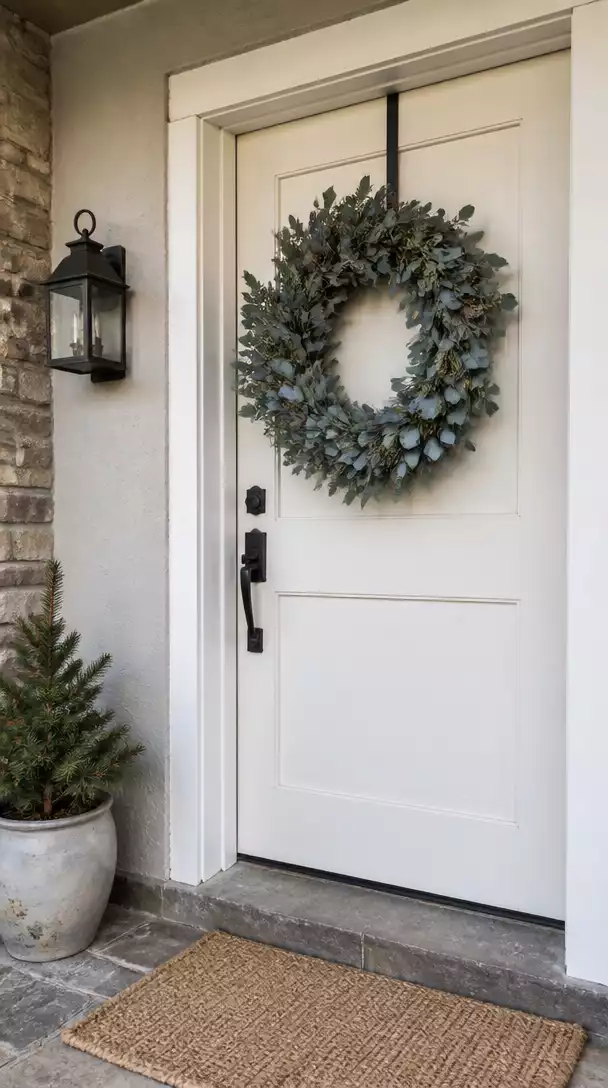
Most Christmas wreaths look nearly identical by December — same tired red and green, same plastic ornaments that fade into the background. These 10 ideas embrace unexpected greenery, natural textures, and refined botanicals for an elevated front door that truly stands out. Starting with eucalyptus sets a fresh tone.
Eucalyptus
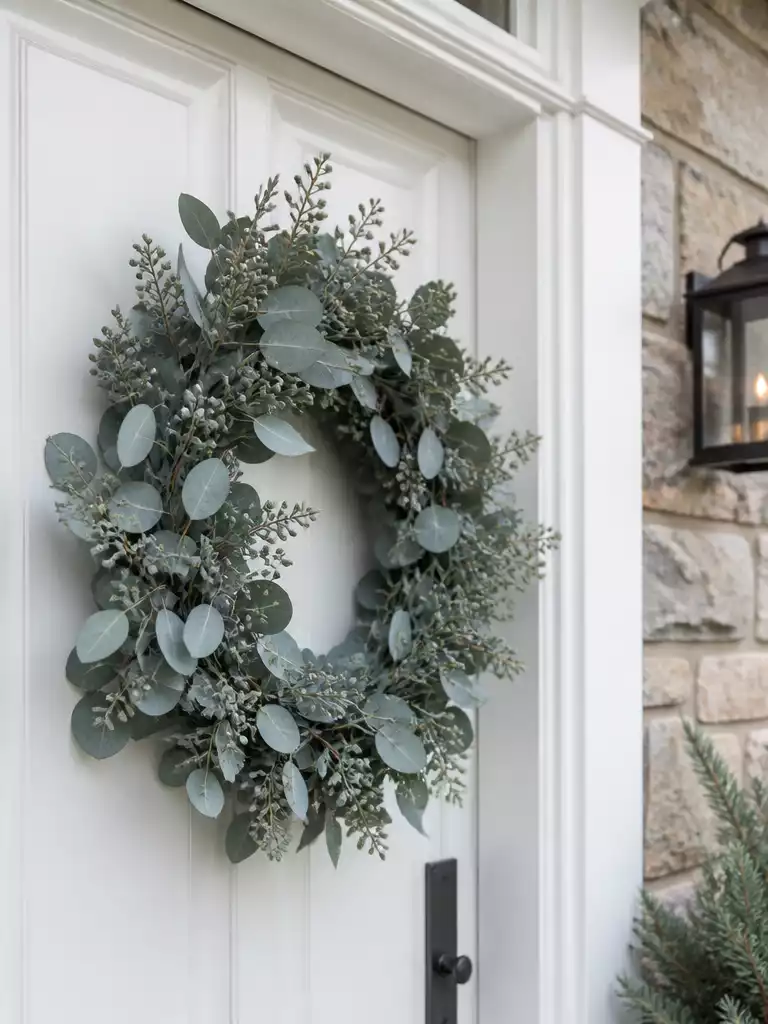
Fresh seeded eucalyptus releases a subtle herbal scent each time your door opens.
The front door that evolves in color and scent through December: Seeded eucalyptus wreaths start with a cool blue-green hue, shifting gradually to dusty silver-sage as they dry, creating a natural patina rather than deterioration. The faint, clean scent released only when the door moves turns arrival into an experience rather than mere decoration.
Seeded eucalyptus’s unique aroma triggers with the door’s motion, setting it apart from any other wreath on this list. Homeowners with direct afternoon sun should avoid fresh eucalyptus, as uneven drying causes curling and leaf drop. Instead, a covered porch or an east- or north-facing door helps the wreath last four to six weeks in good shape without shedding.
This wreath is perfect for anyone seeking a fresh, lightly scented botanical that grows more intriguing with time. If you want a wreath that looks ‘set and forget’ without fading unpredictably, skip eucalyptus on sunny doors or without porch cover. Preserved, glycerin-treated eucalyptus wreaths offer a longer-lasting option for sun-exposed entries, maintaining color and texture without dropping leaves.
.
💡 Practical Tips for a Lasting Eucalyptus Wreath:
- Choose Seeded Variety: Opt for seeded eucalyptus to get that signature textured look and subtle scent release.
- Protect from Direct Sun: Hang your wreath on a shaded or covered porch to prevent uneven drying and leaf drop.
- Consider Preserved Options: For sunny doors, use glycerin-treated wreaths to maintain color and structure all season long.
Magnolia Leaf
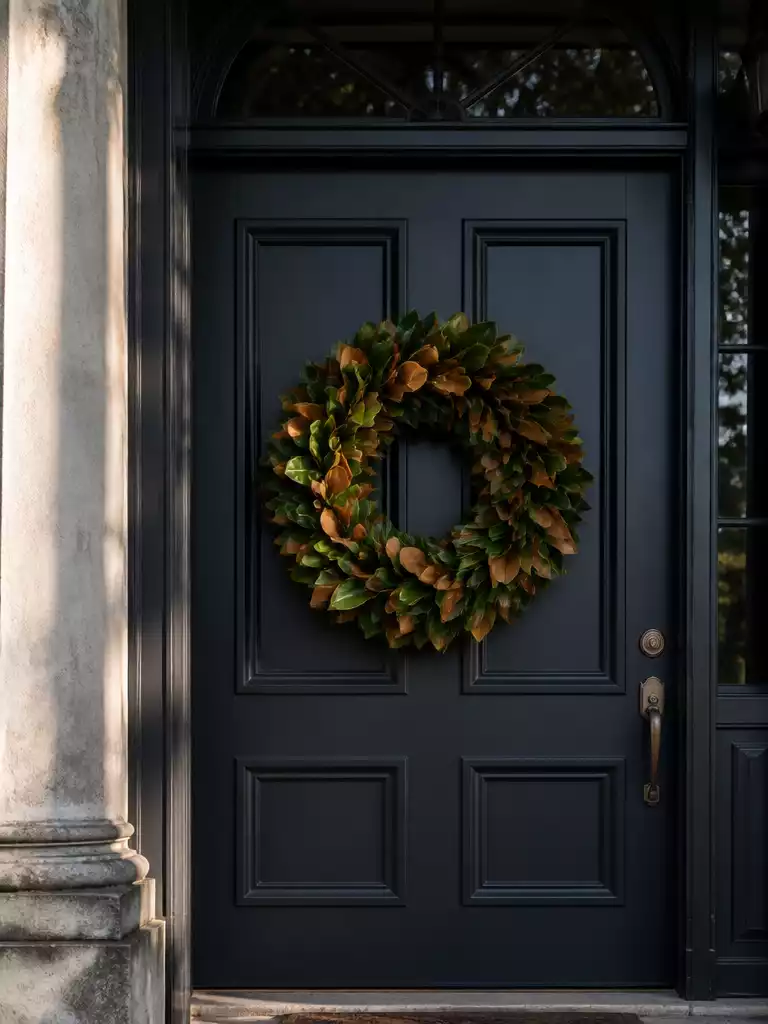
Large, two-toned magnolia leaves add bold texture and warmth to wide front doors.
Magnolia Leaf Wreaths Suit Wide or Grand Doors: A magnolia wreath’s large 4 to 8 inch leaves create visual weight that holds its own on doors 36 inches wide or more, especially those with columns or sidelights. Exposing both the deep green upper surface and the warm caramel-brown underside adds a suede-like texture that shifts in appearance depending on your viewing angle.
Fresh magnolia leaves naturally curl at the edges within one to two weeks, revealing more of the brown underside and enriching the wreath’s depth. This curling is often mistaken for decay, but it actually enhances the dimensionality. If you prefer flat leaves, preserved magnolia is an option but lacks the lively texture of fresh.
Magnolia leaf wreaths are absolutely right for homeowners with grand or wide entryways who want their wreath to feel substantial without oversizing it. Skip this one if your door is narrower than 36 inches or if you want a wreath that stays flat and uniform for the entire season. At about 24 to 28 inches in diameter, a well-layered magnolia wreath is the perfect scale for an imposing door that demands presence.
.
💡 Practical Tips for Styling Magnolia Leaf Wreaths:
- Leaf Arrangement: Alternate leaf angles to showcase both green and brown sides for rich texture and depth.
- Scale Matching: Use a 24–28 inch wreath on doors 36 inches or wider to maintain visual balance and presence.
- Curl Acceptance: Embrace natural leaf curling as a design feature that adds warmth rather than a flaw.
Dried Citrus
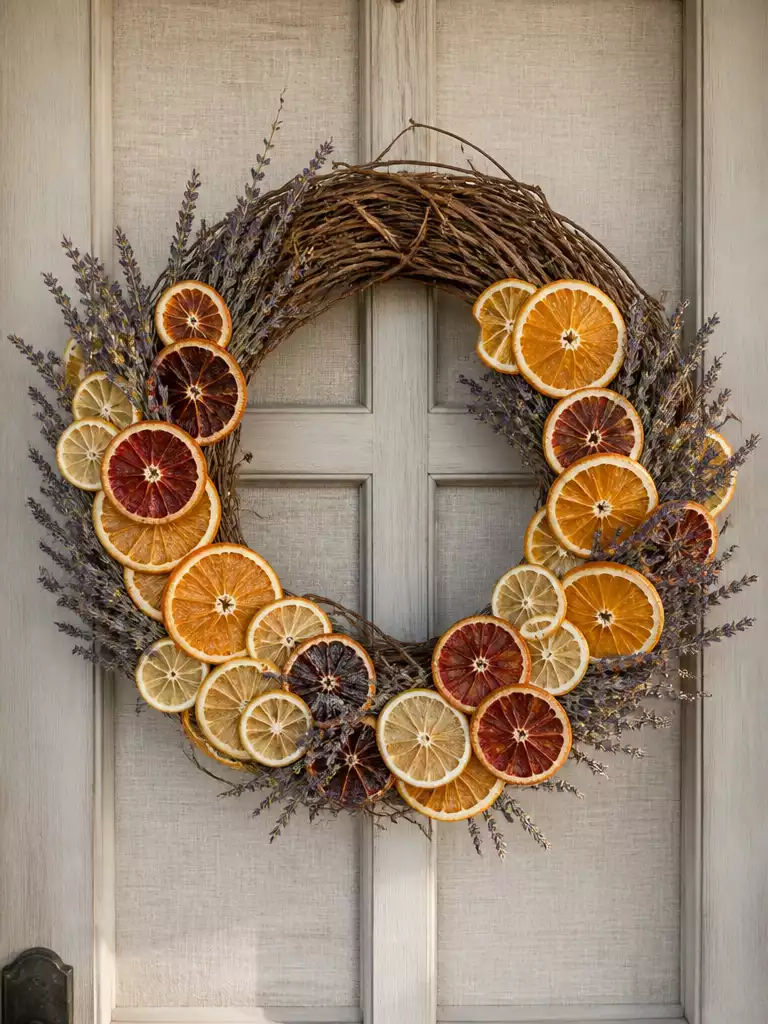
Warm amber and burgundy hues brighten your front entry with artisan-crafted charm
Translucent Citrus Slices Create a Handmade Stained Glass Effect: Dried blood orange slices turn a deep burgundy-rust, navel oranges amber-copper, and lemons hold pale straw-yellow tones, revealing internal membranes like tiny windows. Typically wired onto a grapevine or straw ring base, this layering lends the wreath a warm, autumnal palette that defies holiday clichés with intentional color and texture contrast.
The distinctive pattern inside each slice isn’t just pretty — it’s the key visual that separates dried citrus wreaths from traditional greenery. When clustered on a loose grapevine base, the wreath reads as a carefully curated foraged piece rather than a mass-produced decoration. For example, arranging blood orange and lemon slices in small groups lets the colors play off each other naturally while dried lavender tucked between adds subtle botanical interest.
This wreath is perfect for someone who wants a vibrant, non-green option that still feels seasonal through December without screaming “Christmas.” It’s not for those who want a quick, ready-to-hang wreath or dislike handling fruit slices. Expect to spend a few hours drying fruit at home or paying more for pre-made versions, with oven drying requiring 4 to 6 hours at 200°F on a wire rack. If you want an unconventional, warm door accent that stops scrolls and sparks compliments, this handcrafted approach is a clear winner.
.
💡 Practical Tips for Crafting a Dried Citrus Wreath:
- Slice Thickness: Cut citrus to about ¼ inch for even drying and crisp translucence without burning.
- Base Choice: Use a grapevine ring for a natural, rustic vibe or a straw ring for a cleaner, graphic look.
- Cluster Arrangement: Group slices in small bunches rather than spacing evenly to create organic color flow and depth.
White Pine
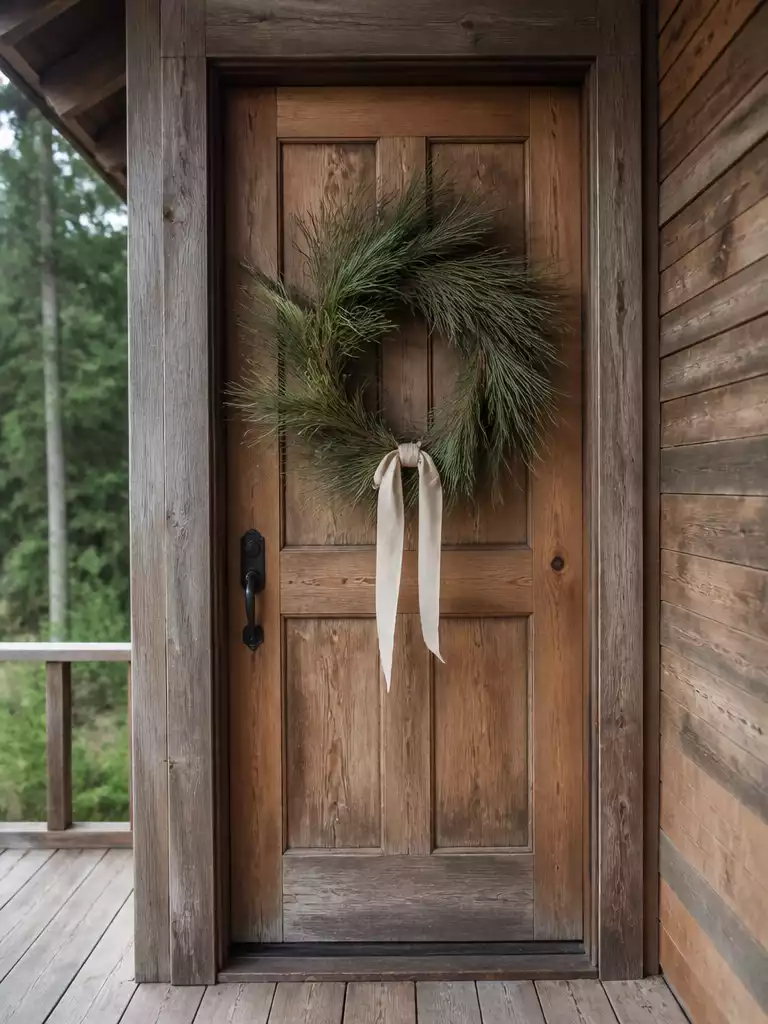
Soft long needles create a feathery look that feels natural and forest-inspired at your doorstep.
Feathery silhouette with 3 to 5 inch needles: White pine needles cluster in groups of five and stretch three to five inches long, creating a soft, draping wreath that looks gathered from the forest floor instead of crafted into a tight, military-round shape. Its blue-green color pairs perfectly with grey, white, or natural wood exteriors.
White pine’s needle retention is a practical bonus. Unlike Fraser fir, it doesn’t aggressively drop needles as it dries, so this wreath holds its form and fullness for three to four weeks without daily misting. That’s a low-maintenance choice for busy households who want fresh greenery without constant upkeep.
Choose a white pine wreath if you want a natural, layered texture that avoids the typical dense evergreen look. Skip it if you prefer a wreath that’s perfectly uniform or if your door gets full sun, as its soft needles are best preserved on shaded entries. Expect your wreath to last about a month with minimal care, making it great for a fresh front door that evolves gracefully through the season.
.
💡 Practical Tips for Styling and Caring for White Pine Wreaths:
- Light Placement: Hang your wreath where it’s shaded from direct afternoon sun to preserve needle softness and color.
- Shape Maintenance: Gently fluff the long needles weekly to keep the feathery, layered look fresh and natural.
- Complementary Accents: Pair with simple linen ribbons or unpainted wood decorations to enhance the wreath’s forest-inspired vibe without clutter.
Finding your style can feel like a slow unfold, but each choice adds meaningful character. Even subtle shifts in texture or color help your front door stand apart. This is about embracing natural variation and trusting that thoughtful details build a lasting look.
✨ Keep This in Mind:
- Consider your door’s scale and style by exploring front door ideas for inspiration.
- Choose materials that feel cohesive and natural — see how texture can transform a space beyond wreaths.
- Allow your wreath to evolve with the season, focusing on what feels effortless and authentic.
Cedar
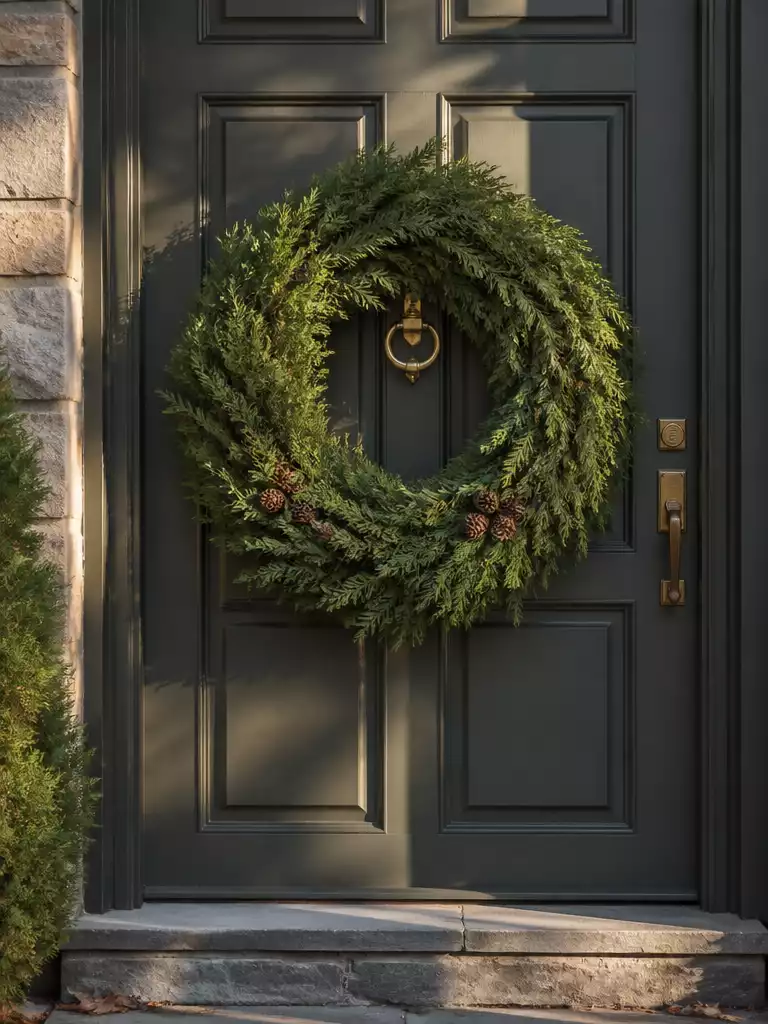
A cedar wreath offers a warm, woody scent that deepens on sunny afternoons and keeps its rich green tone all season.
The wreath that announces itself before the door opens: Cedar’s scent is warm, woody, and faintly pencil-like, activated by afternoon warmth to fill the entry with fragrance several feet away. Its scale-like foliage creates a dense, woven texture distinctly different from feathery pine, while its deep true green color holds steady through December without fading or browning.
Cedar’s foliage consists of flat, overlapping sprays, crafting a tightly braided surface visible even from a distance. For example, a wreath made from Eastern red cedar has finer, bluer sprays, versus Western red cedar’s broader, warmer green fronds—so examine foliage color closely rather than relying on labels when purchasing.
This wreath is perfect for anyone wanting consistent, fresh green color and an evolving scent experience through the season. Skip cedar if you want a lighter, airier texture or need a wreath under $50, as quality cedar wreaths tend toward the higher end of fresh greenery pricing. The heat-activated scent alone makes cedar a front door statement that performs, not just decorates.
.
💡 Practical Tips to Make Cedar Wreaths Shine:
- Placement Matters: Hang your cedar wreath where afternoon sun gently warms it to activate the signature scent.
- Foliage Choice: Compare Eastern red cedar’s blue-green tones with Western’s warmer greens to complement your door color.
- Maintenance Tip: Light misting every week helps preserve freshness without weighing down the dense foliage.
Boxwood
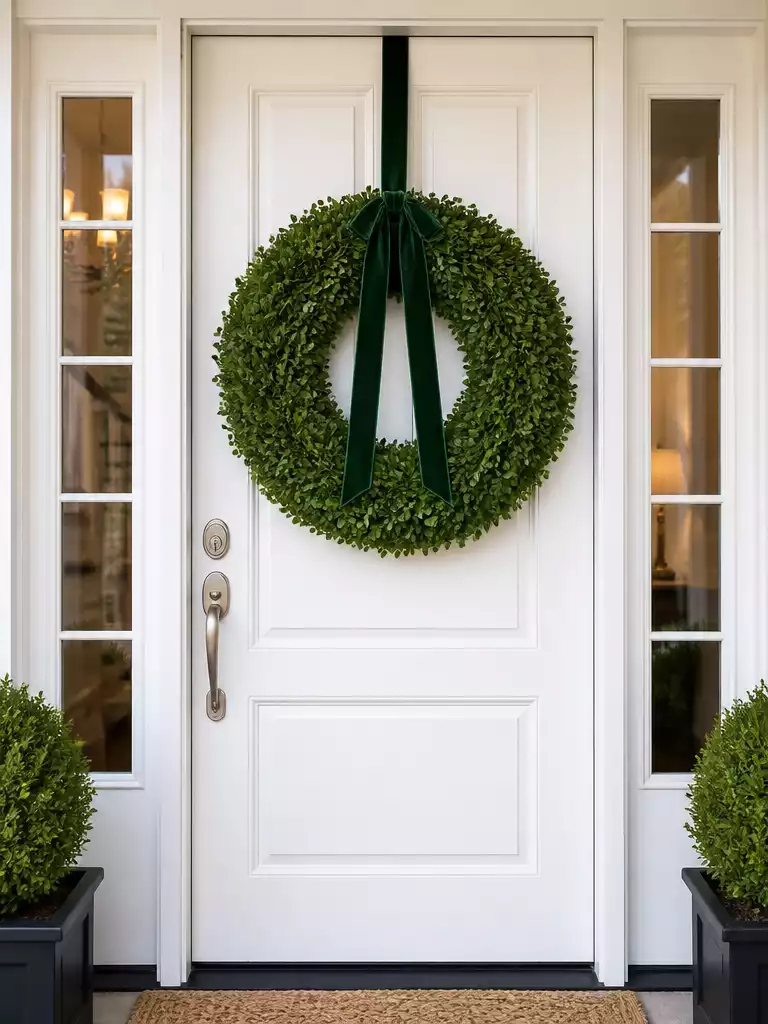
A maintenance-free boxwood wreath offers clean, uniform greenery that lasts all season.
Stays fresh from November to mid-January without care: Boxwood’s small, round, densely packed leaves form a solid green surface that supports rather than competes with architectural door details like panels or glass sidelights. Unlike eucalyptus or white pine, its shape and color hold steady throughout the entire season, making it the easiest fresh wreath to keep looking sharp.
Boxwood’s uniform green surface is the most graphic and least textural among the wreaths here, so it fits perfectly on paneled doors or entries with decorative glass where a busier wreath might steal focus. A common mistake is buying one packed too tightly—this can cause yellowing at the center from poor airflow. Look for slight gaps between stems to ensure longevity and healthy color.
If you want a no-fuss wreath that you won’t have to water, fluff, or reposition for over six weeks, boxwood is your best pick. Skip it if you prefer a wreath with visible texture or if your door faces harsh afternoon sun that might dry out fresh greenery too quickly. Its dependable 24-inch size works well for standard front doors, making it an effortless but intentional statement.
.
💡 Practical Tips That Work for Boxwood Wreaths:
- Gentle Cleaning: Use a soft brush or compressed air to remove dust without damaging the dense leaves.
- Proper Hanging: Secure the wreath with a padded hanger or two hooks to keep its uniform shape perfectly aligned on the door.
- Seasonal Hydration: If your porch is exposed to sun or wind, mist lightly once a week to prevent drying without needing daily care.
Olive Branch
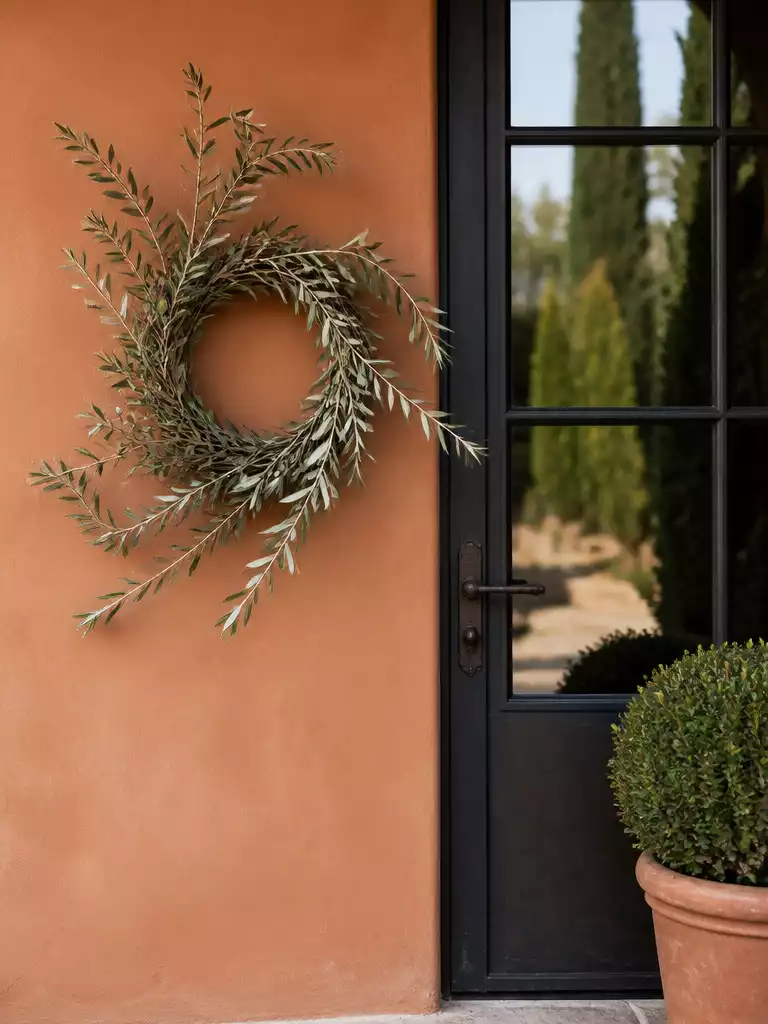
A Mediterranean-inspired wreath that shimmers and shifts with natural daylight.
Olive Branch Wreaths Shift Color and Silhouette with Light: Olive leaves have a unique two-tone palette of silver-green and grey-green that shimmers as daylight changes, giving the wreath a natural, shifting glow. Their long, arching stems create a flowing, irregular form that looks more like a botanical arrangement than a traditional wreath, making them a subtle, design-forward choice for the front door.
Fresh olive branches aren’t your usual garden center find—they’re more often sourced from specialty floral wholesalers or Mediterranean grocers, especially around the holidays. Dried or preserved olive branches are easier to find and hold their soft silver-grey color well, so plan accordingly if you want that signature light-shifting effect all season.
This wreath suits homeowners who prefer minimal, seasonally ambiguous décor and want a wreath that complements a Tuscan or farmhouse style. Skip it if you want a quick, easy find—olive branches typically cost more and require sourcing. Expect to invest around $50 to $80 for a quality wreath. It’s not the wreath to grab if you want a loud holiday statement but perfect if you want a subtle, design-first statement that lingers past December.
.
💡 Practical Tips for Styling Olive Branch Wreaths:
- Placement: Hang your olive wreath where shifting light highlights its natural shimmer throughout the day.
- Securing Stems: Use floral wire to gently shape arching branches, preserving their flowing, irregular silhouette without damage.
- Minimal Accents: Add small dried olive clusters or natural twine for subtle texture without overpowering the wreath’s effortless appeal.
Cypress
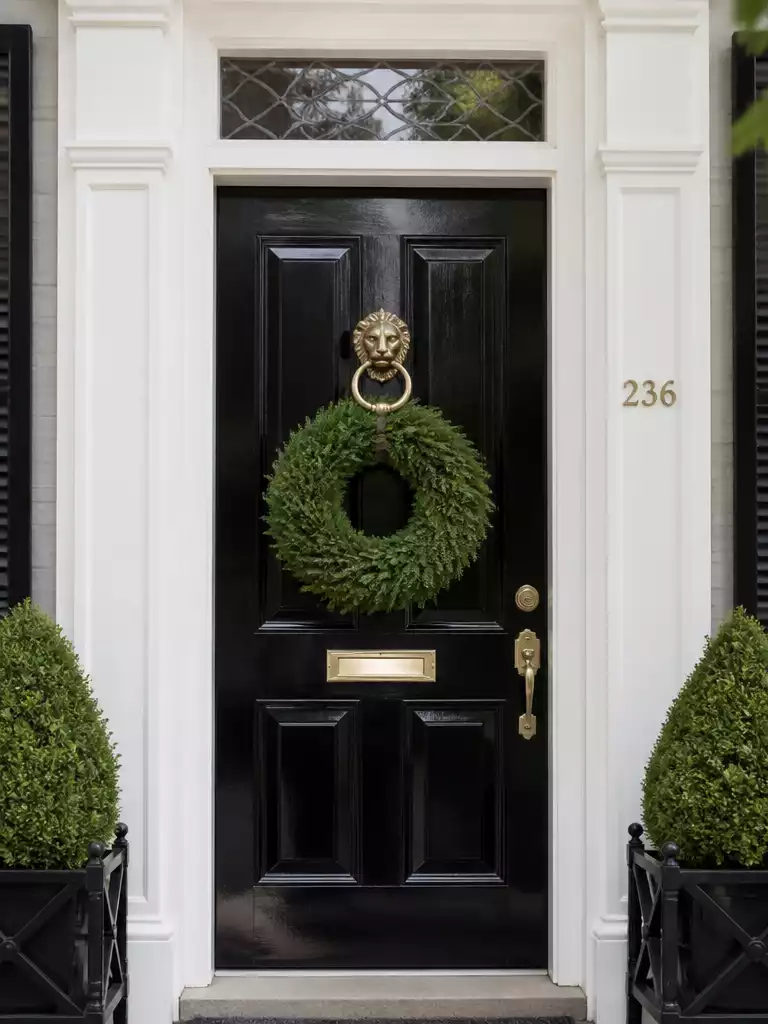
A sculptural wreath that complements traditional architectural details with lasting visual impact
Cypress wreaths hold a sculptural form but are brittle after drying: Cypress branches grow tightly upward, giving wreaths a three-dimensional, almost carved look with sprays reaching outward rather than lying flat. The foliage’s fine, scale-like leaves create a velvet-like texture that fits paneled or pilastered doors well, especially on traditional or Georgian-style homes.
The Leyland cypress variety shows a cooler blue-green hue, while the rarer Arizona cypress has a silver-blue tone, pushing the palette near monochrome on grey or white doors. Unlike other evergreens, cypress dries slowly over four to six weeks but becomes brittle, so handle carefully and don’t expect to reuse it next year.
This wreath is perfect for homeowners with formal entries—think symmetrical columns and fanlights—seeking a structured, architectural statement. Skip it if you want a flexible wreath or plan to reuse it annually. Expect to invest in a one-season piece roughly 22 inches wide that holds shape rigidly but demands careful handling when removed.
.
💡 Practical Tips for a Cypress Wreath That Lasts:
- Gentle Handling: When hanging or removing, support the wreath fully to prevent brittle sprays from snapping off.
- Placement Matters: Keep away from direct heat sources or harsh sunlight to preserve color and avoid accelerated drying.
- One-Season Plan: Treat your cypress wreath as a single-use investment; recycle or compost it after the holidays instead of storing.
Brass Bells
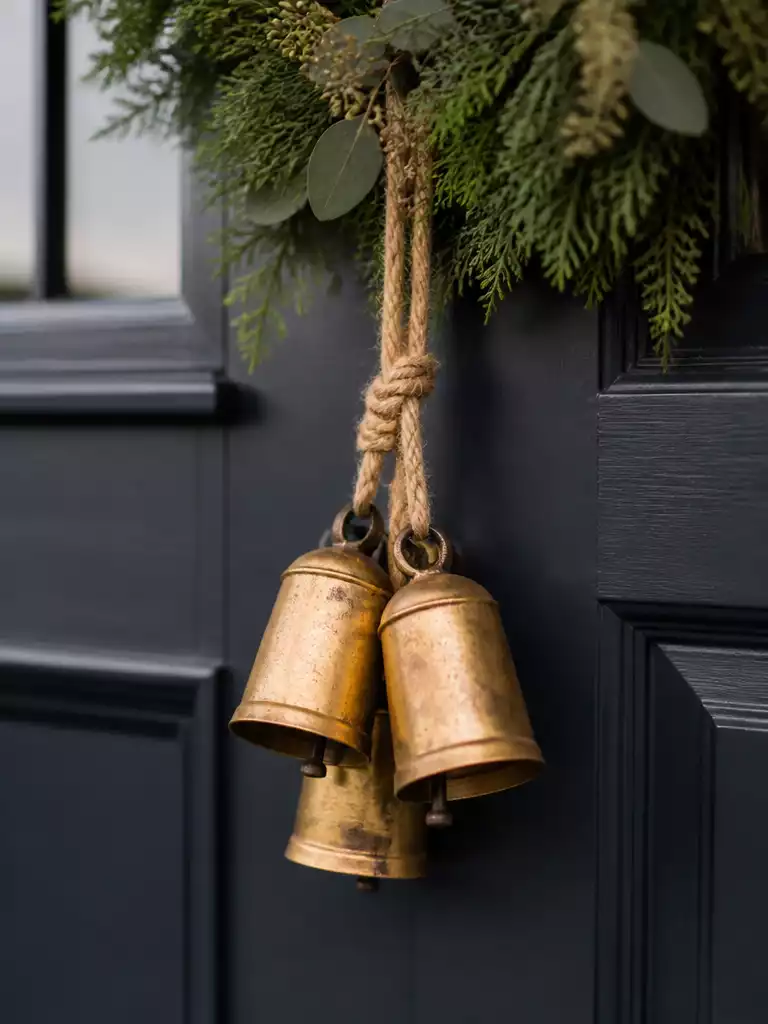
A subtle metallic touch that adds sound and character to natural green wreaths
Brass bells add a low, resonant ring and natural aging: Unlike cheap red-painted jingle bells, unlacquered brass bells develop a warm patina darkening to an antique amber over the season. They’re best used as accents clustered at the base of a eucalyptus, cedar, or boxwood wreath rather than spread evenly, creating a thoughtful, tactile detail that enhances the wreath’s natural texture.
Brass bells for wreaths should be at least one to one-and-a-half inches in diameter to hold their own visually; smaller bells simply disappear in green foliage. Many homeowners find vintage brass bells at estate sales or online resale platforms where they come pre-patinated, skipping the wait for natural aging and offering richer color variation from day one.
This wreath accent is perfect for anyone who wants to add an auditory element and subtle metallic warmth without flashy shine. Skip it if you’re after a standalone wreath idea or want instant bold sparkle—brass bells work best as an elevated complement to other greenery. Expect to invest in quality bells for $20 or more to get the right size and tone, making this a considered upgrade rather than a bargain craft-store hack.
.
✓ Practical Tips That Work:
- Cluster Placement: Group 3–5 brass bells tightly at the wreath’s base for a curated, intentional look.
- Ribbon Choice: Hang the bells from raw linen or jute twine to keep the natural, textural vibe consistent.
- Patina Care: Handle unlacquered brass carefully to preserve the evolving patina without scratches or unwanted polish.
Velvet Ribbon
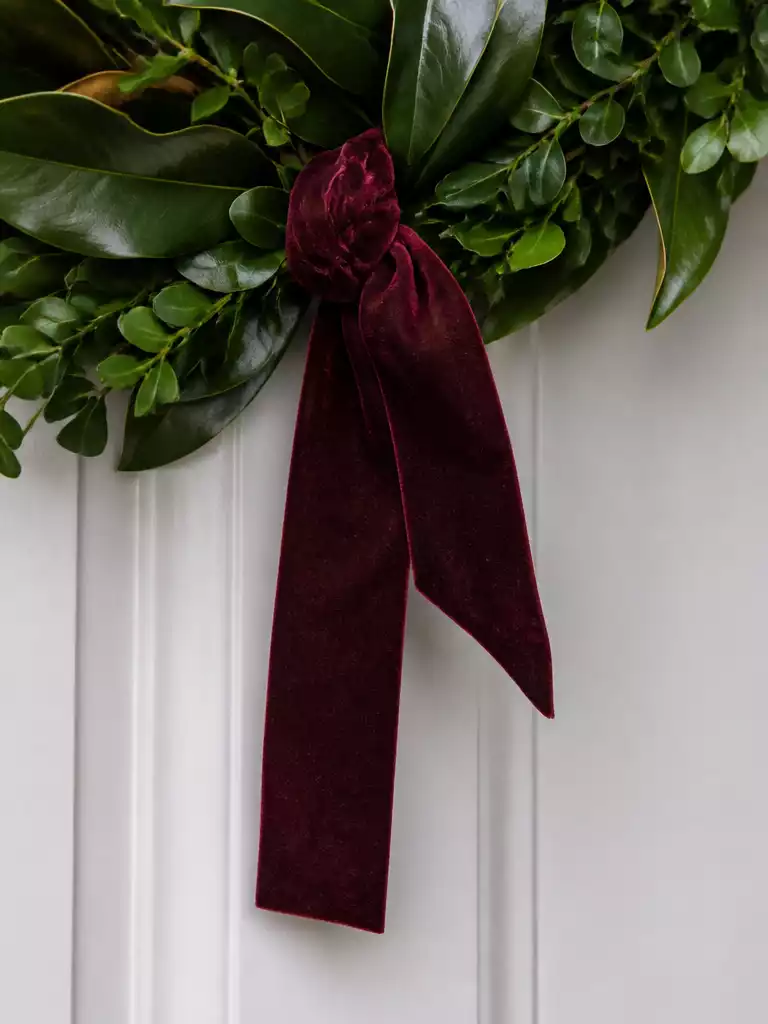
Velvet ribbon adds rich, matte depth that enhances any wreath’s natural beauty.
Velvet absorbs light for rich color without competing textures: Cotton velvet ribbon in deep burgundy, forest green, or dusty plum adds a matte, light-absorbing finish that feels intentional against matte dried botanicals. For a modern look, tie a single overhand knot at the wreath’s base and let the ends hang asymmetrically, avoiding a traditional bow silhouette.
The width of the ribbon matters too; a 1.5 to 2-inch velvet ribbon suits a standard 22-to-24-inch wreath perfectly. Narrower ribbons disappear, while wider ones overpower the greenery and become the visual focal point — which you definitely don’t want in this context.
Choosing the right velvet color based on your door makes a huge difference: burgundy reads warmest on white or natural wood doors, dusty plum pairs beautifully with navy or charcoal, and forest green delivers a tonal, monochromatic look on green doors. Velvet ribbon isn’t for those who want a shiny satin finish; skip it if you prefer bright or reflective materials. But if you want your wreath to look styled, not assembled, this is the finishing touch worth investing in.
.
💡 Practical Tips for Velvet Ribbon Styling:
- Handle with Care: Velvet wrinkles easily—tie gently and avoid pulling tight to keep a soft, relaxed look.
- Ribbon Ends: Cut one end straight and the other on a diagonal to add subtle visual interest without extra fuss.
- Secure Attachment: Use discreet floral wire beneath the knot to hold the ribbon in place through winter weather.
Having explored ten distinctive approaches to front door wreaths, you now have a variety of thoughtfully designed options that move beyond traditional holiday clichés. Focus on the ideas that naturally complement your home’s style and your personal taste rather than feeling the need to incorporate them all at once.
Your front door can become a quietly refined invitation, reflecting comfort and care through subtle, intentional choices. Pick one botanical or texture to start with, and enjoy how that small touch transforms the welcome you create each day.