
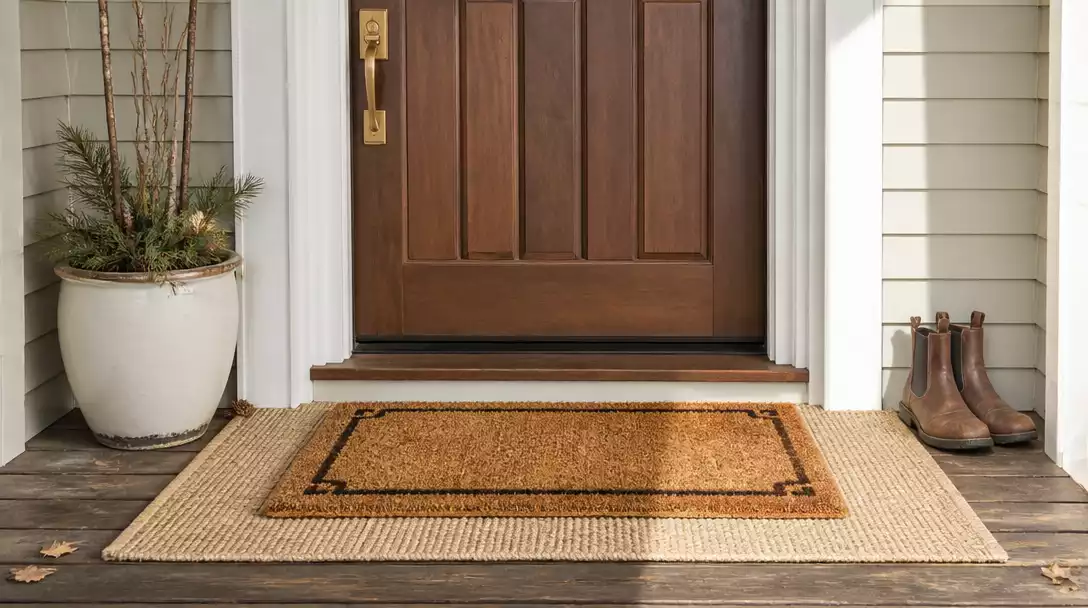
Your front porch mat acts as the first handshake for your home’s exterior. This guide rounds up 14 creative porch mat ideas worth saving to help you find a style that fits your entry perfectly. Let’s look at the best ways to ground your space.
Layered Rug and Mat Combo
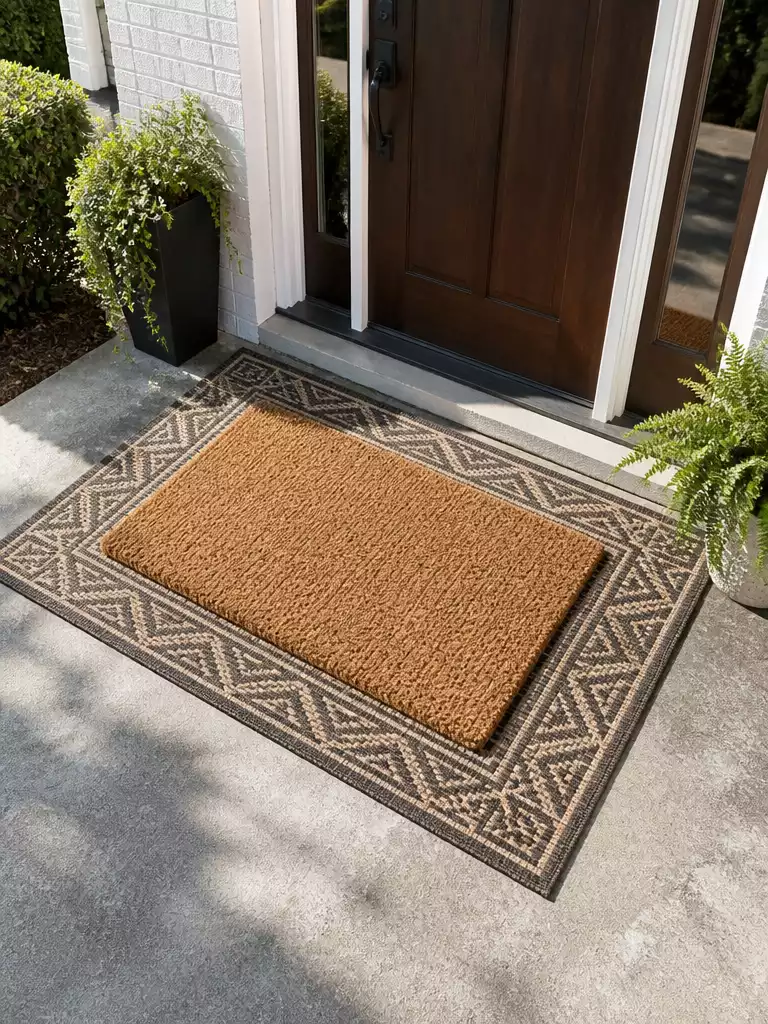
Create instant architectural depth by anchoring your entryway with a high-contrast foundation layer.
As an Amazon Associate I earn from qualifying purchases. Affiliate links may earn me a commission at no extra cost to you.
This technique relies on the 1-foot rule to prevent a cluttered, floating appearance. Your bottom rug must be at least 12 inches larger on all sides than your top mat so the base pattern isn’t swallowed by the smaller piece.
The most effective strategy is mixing materials for both form and function. Use a durable, synthetic patterned base to handle heavy foot traffic and a natural, stiff-fiber coir mat on top to scrub dirt from shoes.
Why this works for seasonal shifts:
You never have to replace the entire foundation. Simply swap the smaller, budget-friendly top mat for different holidays while keeping the base rug constant all year.
This setup is perfect for homeowners who want to hide worn-out porch concrete or add instant visual weight to a front door. If you have a very narrow entryway, skip the layering, as the double thickness can create a tripping hazard or interfere with door clearance.
.
🔢 The Right Sequence to Prevent Rework
Ordering your layers in the correct sequence ensures your mats stay flat, secure, and don’t bunch up when the door swings open.
- Measure the clearance: Check the gap between your door bottom and the threshold to avoid jamming.
- Lay the base: Position your larger, synthetic rug first to anchor the space and prevent slipping.
- Center the top mat: Align your decorative coir mat over the base, keeping the 1-foot border visible.
Oversized Coir Mat
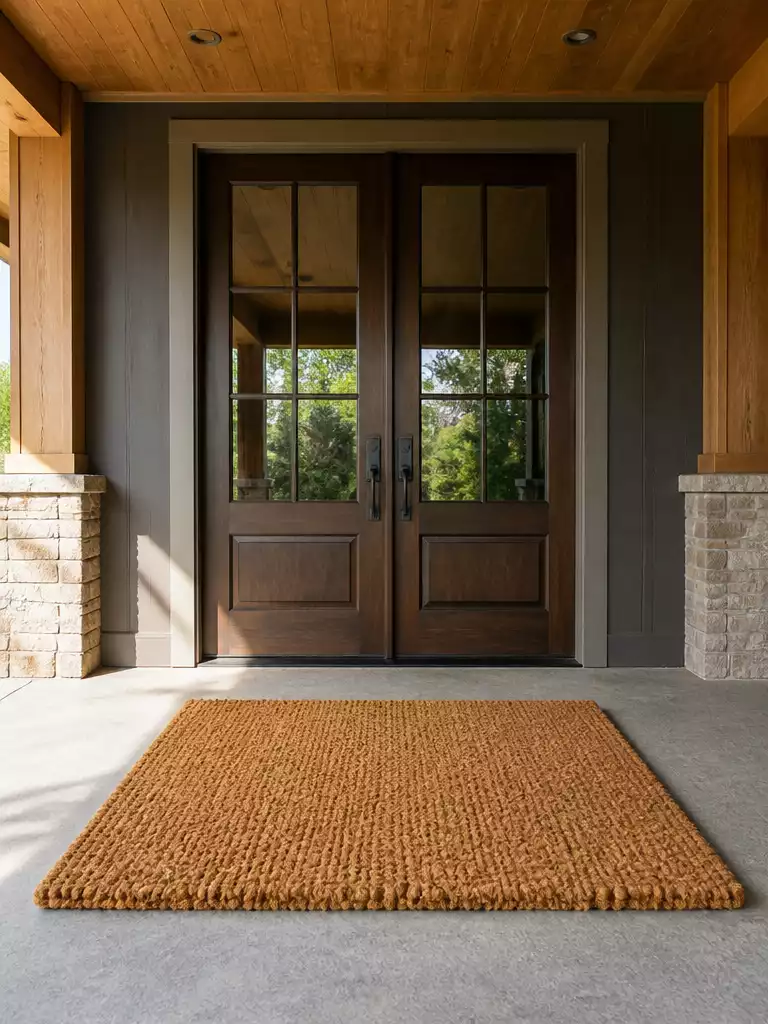
Create a grand, hotel-inspired arrival by scaling your floor decor to match wide entryways.
When you have a wide door frame or an expansive porch area, a standard mat often looks like a tiny, misplaced postage stamp. An oversized 3×5 foot coir mat provides the visual weight needed to ground a large-scale entry, giving your home an immediate, high-end hotel arrival feel.
Warning: Deep-Covered Porches Only
These massive mats act like giant sponges. If placed in an exposed area where rain can hit them, the natural coir fibers will stay waterlogged, rot, and ruin your porch surface in weeks.
The natural, coarse texture of these large mats is what sets them apart from the synthetic alternatives crowding the market. You get an organic, rustic aesthetic that feels substantial underfoot, rather than the slick, thin feel of printed rubber.
Because of their size, these mats are perfect for homeowners who want to fill space without adding busy patterns or extra furniture. Just ensure your threshold is perfectly dry, and you will have a durable, architectural foundation for your front door.
.
🏡 How This Works in a Real Home:
- Daily Foot Traffic: Large mats trap more dirt, but ensure you have a dedicated “landing zone” so visitors don’t trip over the thick-fiber edge.
- Natural Drying: Even on covered porches, place the mat slightly away from the threshold to allow airflow underneath, preventing moisture buildup on your porch floor.
- Seasonal Swap: Keep your oversized mat in a flat, labeled bin during winter to prevent the fibers from flattening or collecting dampness in storage.
Seasonal Wreath Pairing
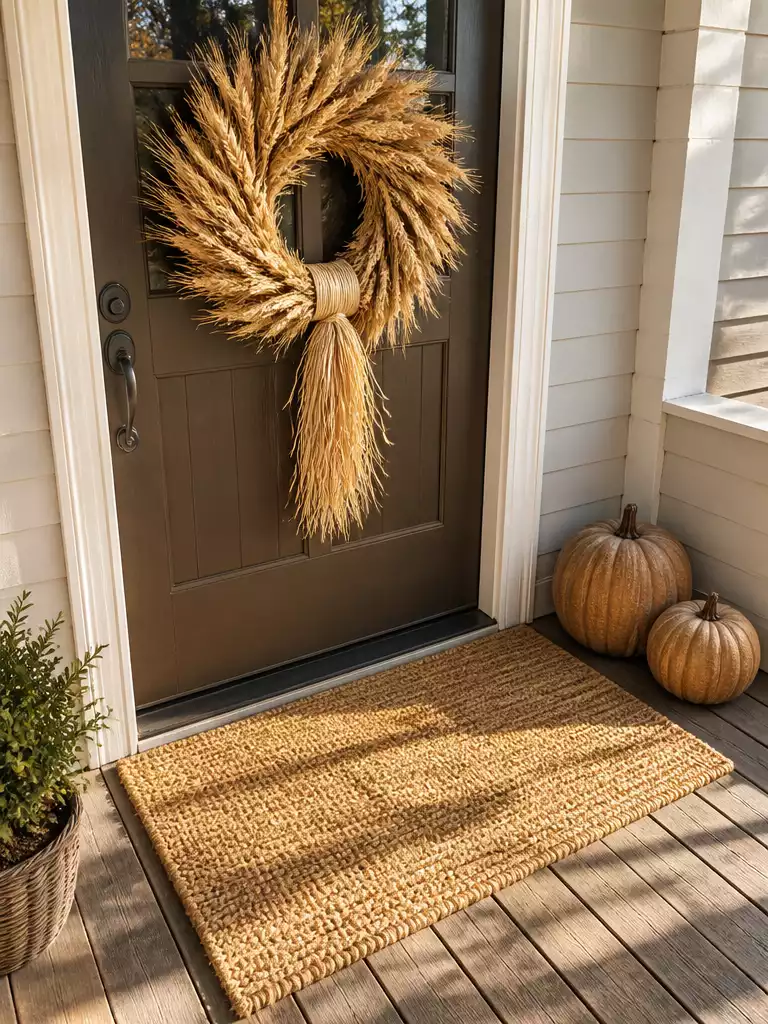
Create a cohesive, designer-level arrival by linking your floor and door decor in perfect harmony.
The most effective way to elevate your porch is to treat your wreath and doormat as a single, unified design installation. By pulling a specific color or texture from your wreath—like the dried gold of wheat or the deep crimson of autumn leaves—you can anchor the entire entryway with a matching mat.
This vertical-to-horizontal symmetry stops the two elements from competing for attention. Instead, they act as a cohesive frame for your front door.
Pro Styling Tip: Use removable adhesive hooks to hang your wreath at eye level. This keeps the look intentional and prevents the “cluttered porch” effect that happens when decor is just leaned against the siding.
To keep this look fresh throughout the year, focus on high-quality faux accents that you can rotate by season. You can easily transition from a bright spring floral wreath with a botanical mat to a crisp raffia and wheat pairing with a natural fiber mat for fall.
- Spring: Pastel-toned floral wreath matched with a light-colored, thin-profile mat.
- Summer: Greenery or herb-based wreath paired with a clean, light-toned coir mat.
- Autumn: Wheat, raffia, or dried leaf wreath anchored by a dark, earthy-toned mat.
- Winter: Pine or cedar wreath paired with a heavy-duty, neutral mat to ground the space.
This strategy is perfect for homeowners who want a high-end look without needing to overhaul their porch furniture or paint. It provides a simple, repeatable formula for staying current with the seasons while keeping your entryway grounded.
.
✨ Finishing Touches:
Beyond the wreath and mat, small accents bridge the gap between “decorated” and “designed.” Aligning these extra details prevents the entryway from feeling like a random collection of seasonal items.
- Textile coordination: Add a porch pillow or outdoor throw blanket in a shade that mirrors your wreath’s primary color.
- Secondary greenery: Place a small, potted topiary or herb near the door to echo the textures found in your seasonal wreath.
Bold Welcome Quote Mat
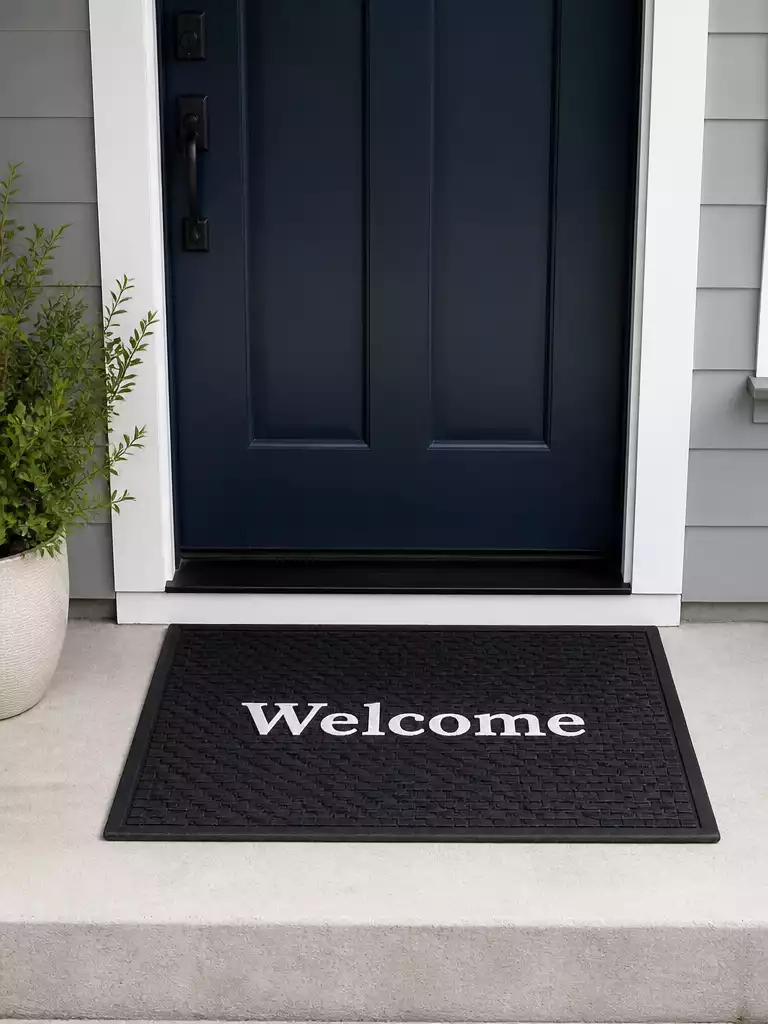
Set the tone for your home with a greeting that shows off your personality.
A bold welcome quote mat is the easiest way to inject humor or a specific vibe into your entryway before a guest even knocks. These mats lean into the “friendliness factor,” turning a standard threshold into a conversation starter.
The Material Gold Standard: Only choose molded synthetic fibers or rubber for text-based designs. Surface-printed vinyl is a common trap that fades within weeks of foot traffic, leaving you with an illegible mess.
When it comes to keeping your quote crisp, placement and maintenance are everything. You want a material that handles heavy wear without the lettering peeling away.
- ✓Garden Hose Cleaning: Skip the stiff-bristled brush. A simple spray from the garden hose is all you need to rinse away dirt without abrading the lettering.
- ✓Avoid Scrubbing: Aggressive scrubbing will ruin the molded fibers and cause your quote to look fuzzy rather than bold.
This style is perfect for homeowners who want their entry to reflect a bit of wit. If you prefer a strictly formal or minimalist aesthetic, you might find quote-based mats a bit too casual for your front porch.
.
🔢 The Right Sequence for Custom Mats:
Getting the order of operations right ensures your quote stays legible and doesn’t get ruined by early exposure to the elements.
- Measure your threshold: Confirm the mat length won’t interfere with the door swing path before purchasing.
- Choose your material: Select molded synthetic fibers to ensure the “Welcome” quote remains sharp and won’t blur.
- Apply a sealant: Spray your new mat with a UV-resistant clear coat to prevent sun-fading of the lettering.
Stepping back from the details, it becomes clear that functional safety is the true anchor of any welcoming entryway. Rather than chasing every style trend, prioritizing the physical stability of your threshold prevents a frustrating experience later on.
An entry remains polished and functional when you verify clear door clearance and secure footing before settling on a decorative aesthetic.
Natural Jute Runner
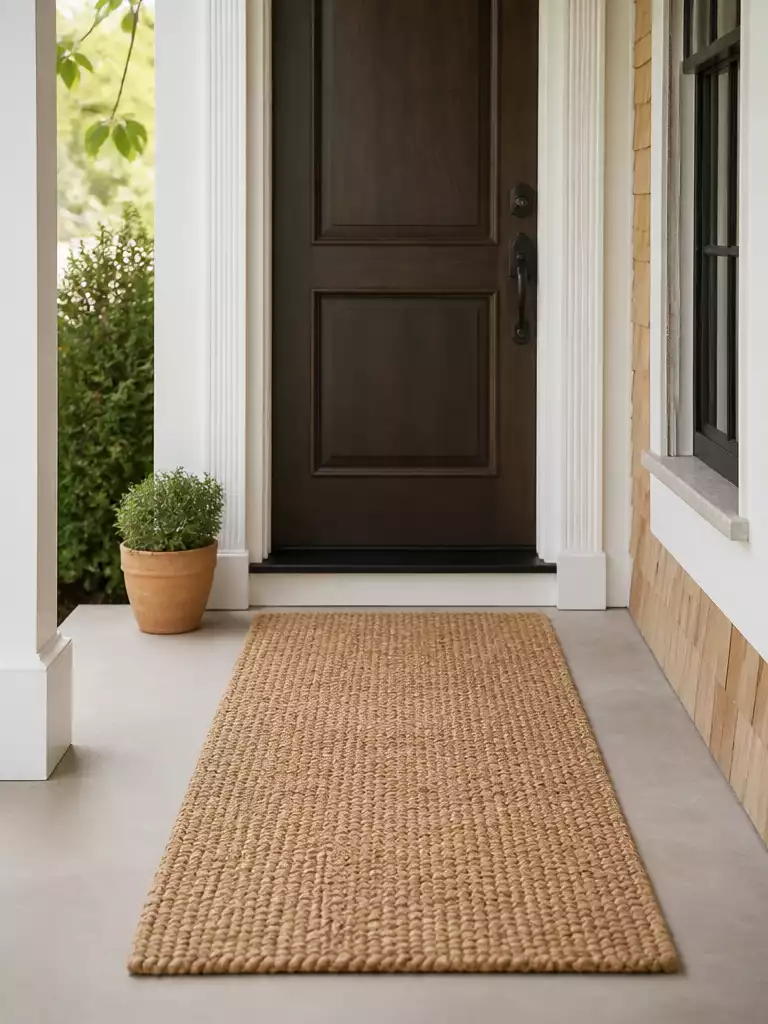
Bring a soft, organic countryside feel to your entryway with the rich texture of jute.
A jute runner is the perfect way to bring an authentic, rustic aesthetic to a narrow entry. By using a runner shape rather than a standard rectangle, you can visually elongate a small porch, making the entire space feel significantly deeper and more expansive.
Unlike stiff rubber or synthetic alternatives, jute offers a tactile, organic softness that makes a home feel immediately grounded. It creates that specific “countryside cottage” vibe that is difficult to achieve with manufactured materials.
The Strictly Dry Rule
Jute is a high-maintenance fiber that thrives only in fully protected, sheltered entryways. If your porch is exposed to rain or heavy moisture, moisture will trap within the fibers and cause them to rot rapidly.
For the best results, consider this a foundation piece. We recommend using the runner as a top layer over a larger, neutral outdoor rug to provide extra stability and protect the jute from direct contact with rough concrete.
.
⚠️ Where This Can Go Wrong:
- Ignoring moisture levels: Placing jute on an open porch guarantees fiber rot and mold growth after the first rainfall.
- Direct soil contact: Jute absorbs ground dampness instantly; always lift the runner off the concrete with a base layer.
- Cleaning mistakes: Avoid aggressive scrubbing or power washing, which destroys the delicate natural weave and causes premature fraying.
Potted Plant Flanked Mat
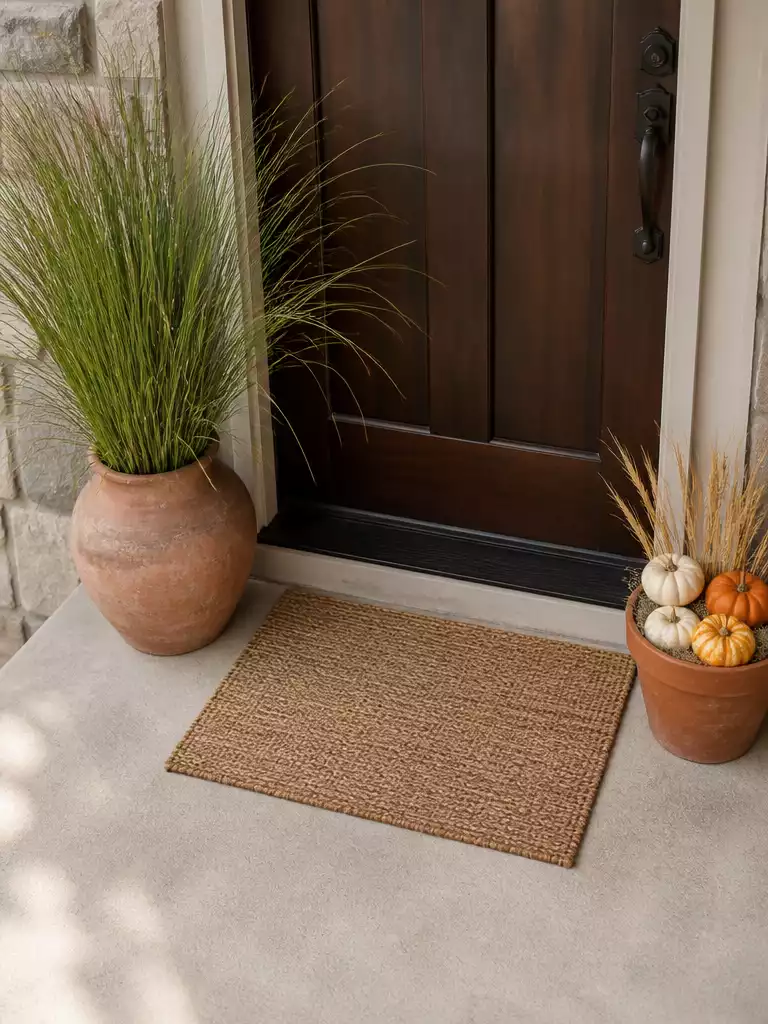
Frame your entryway with layered greenery to create a professional, garden-inspired arrival for your home.
Treat your front door like an art gallery entrance by using a “mini-garden” layout. By flanking your mat with planters, you turn a simple floor covering into the focal point of your porch.
The secret to this look is the “Rule of Three.” Select planters in small, medium, and large sizes to create a tiered visual effect that draws the eye upward.
Pro-Tip: Avoid placing planters directly on the edges of your mat, which makes the entry feel cramped. Instead, leave at least six inches of clear space between the pots and the mat to keep foot traffic flowing easily.
To really round out the design, incorporate hanging baskets nearby at eye level. This bridges the gap between the ground-level mat and your door hardware, making the entire space feel cohesive.
If you prefer low maintenance, use high-quality faux pumpkins and greenery in your containers. These pieces remain vibrant through the seasons, saving you from constant replanting while keeping your porch look fresh.
.
🏡 Real-Home Application:
- Lived-in spacing: Keep planters slightly offset from the mat center to prevent a “staged” look that feels too rigid.
- Daily convenience: Ensure your largest pots sit on the porch deck rather than the mat to allow easy sweeping.
- Natural transitions: Use evergreen shrubs in planters for year-round color that bridges the gap between seasons without daily maintenance.
Half Round Coir Mat
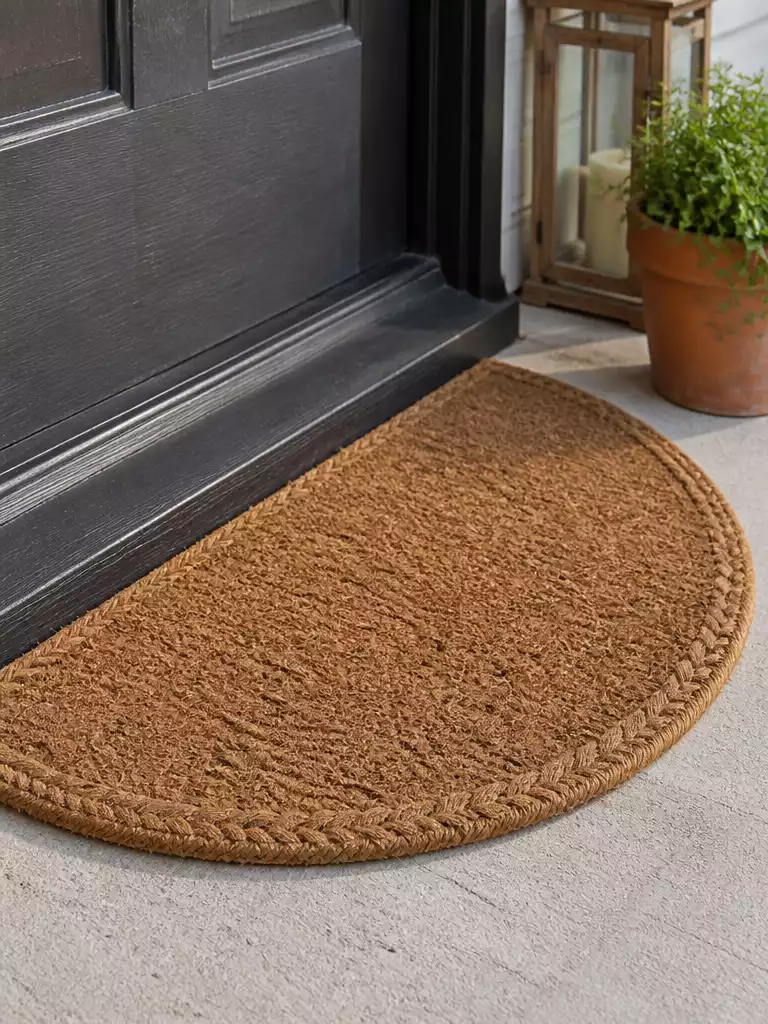
Soften your entryway’s hard architectural lines with a classic, curved silhouette that greets guests warmly.
The half-round shape is a historical design choice that breaks up the rigid, boxy geometry of a standard front door frame. It works best on deep-covered porches where the curved edge can draw the eye toward the center of the threshold.
The Rot Warning: Because these mats are made of natural, absorbent coir fibers, they must stay completely dry to remain usable. Avoid placing this shape in damp or exposed zones where rainwater pools, as the fibers will quickly succumb to mold and rot.
If you choose this style, alignment is non-negotiable for a professional look. Because the curved edge highlights any tilt or off-kilter positioning, you must ensure the flat side is perfectly centered against your door’s threshold.
.
📋 Quick Reality Check: Is Your Porch Ready?
- Door Clearance: Check the gap between your door bottom and the threshold to prevent the mat from jamming.
- Swing Path: Ensure the mat’s thickness doesn’t bunch up or obstruct your door as it swings inward.
- Slippage Prevention: Pair your half-round mat with a low-profile rubber base to keep it anchored on slick concrete.
Patterned Outdoor Rug
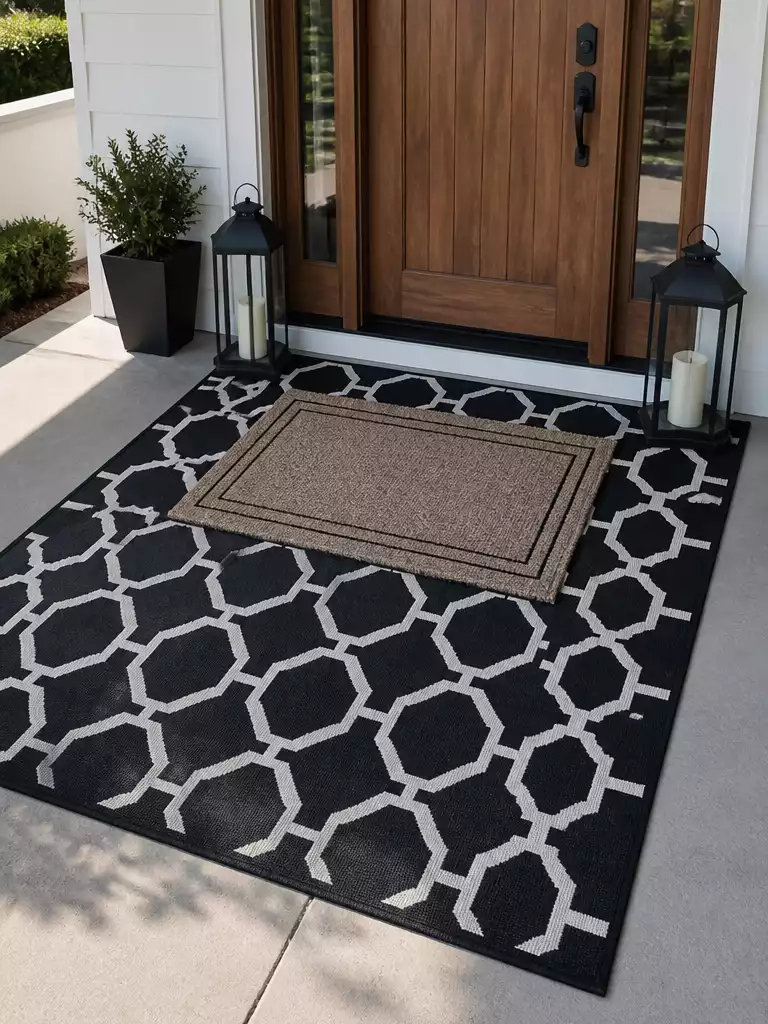
Define your entryway style with a bold foundation that anchors your front door design.
A patterned outdoor rug acts as the main character of your porch, moving beyond the traditional small mat to set a specific mood for your home’s exterior. Choosing a geometric or abstract print immediately signals a contemporary, intentional aesthetic before guests even reach the handle.
The secret to keeping this look polished is material selection. You must choose molded synthetic fibers or rubber-backed weaves to ensure the pattern stays sharp and clear against the porch concrete.
Avoid the Blur: Surface-printed vinyl rugs often look great in the warehouse but blur into a fuzzy, cheap-looking mess after just a few weeks of foot traffic. If you want the design to last through the season, prioritize rugs where the pattern is woven into the construction of the fiber.
Treat this rug as your base layer. You can pair it with a solid, understated mat on top to create a sophisticated, dimensional effect that feels curated rather than cluttered.
This approach works best for homeowners who want to hide stained or dated concrete porch flooring without installing new tiles. However, skip this if your porch has very limited clearance, as the added thickness of a layered rug can catch on the bottom of an inward-swinging door.
.
⚖️ Choose the Right Version:
- Choose this if: You want to ground a large or sparse porch area with a single, high-impact pattern.
- Skip this if: Your porch is small or narrow, as an oversized pattern can visually shrink your entrance.
- Pair it with: A solid-colored, natural-fiber mat on top to keep the geometric lines from looking too busy.
Monogram Coir Mat
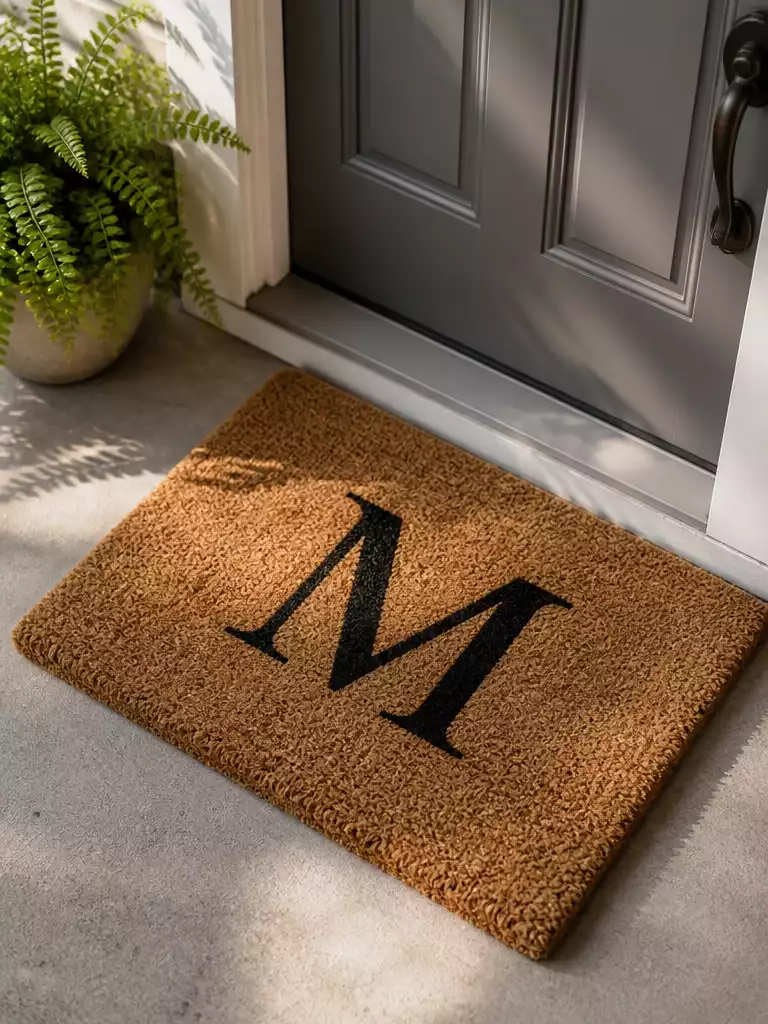
Add a personal touch to your entryway with a mat that greets guests by name.
A monogram coir mat serves as a personalized arrival point that feels custom-made for your home. These mats use the natural, coarse texture of coconut husk fibers to trap dirt effectively before it ever enters your hallway.
For the best results, look for options that feature a heavy-duty rubber-backed base. This structural detail prevents the mat from sliding across concrete or bunching up when the door swings open.
Pro Tip: Off-Season Protection
To keep your monogram sharp and the fibers from rotting, store your mat in a flat, dry bin during winter months. Avoid stacking heavy items on top, as this can permanently crush the fibers and distort the lettering.
This style is best suited for homeowners with fully covered porches who want a high-end look without a custom installation price. If your entry is completely exposed to rain, the moisture will cause the coir to darken and eventually lose its crisp letter definition.
When selecting your design, prioritize molded lettering over painted surfaces. Molded monograms are dyed into the fibers themselves, ensuring the name or initial won’t flake away after a few weeks of heavy foot traffic.
.
🔢 The Right Sequence for Lasting Personalization:
Ordering a custom mat requires careful timing so you aren’t stuck with a weathered or damaged piece before your guests even arrive.
- Measure your threshold: Confirm the total width to ensure the name or monogram remains centered and visible.
- Verify material needs: Select molded coir if the area is fully sheltered to maximize the monogram’s lifespan.
- Plan for storage: Prepare a dry bin immediately so you have a safe home for it when seasons change.
Buffalo Check Mat
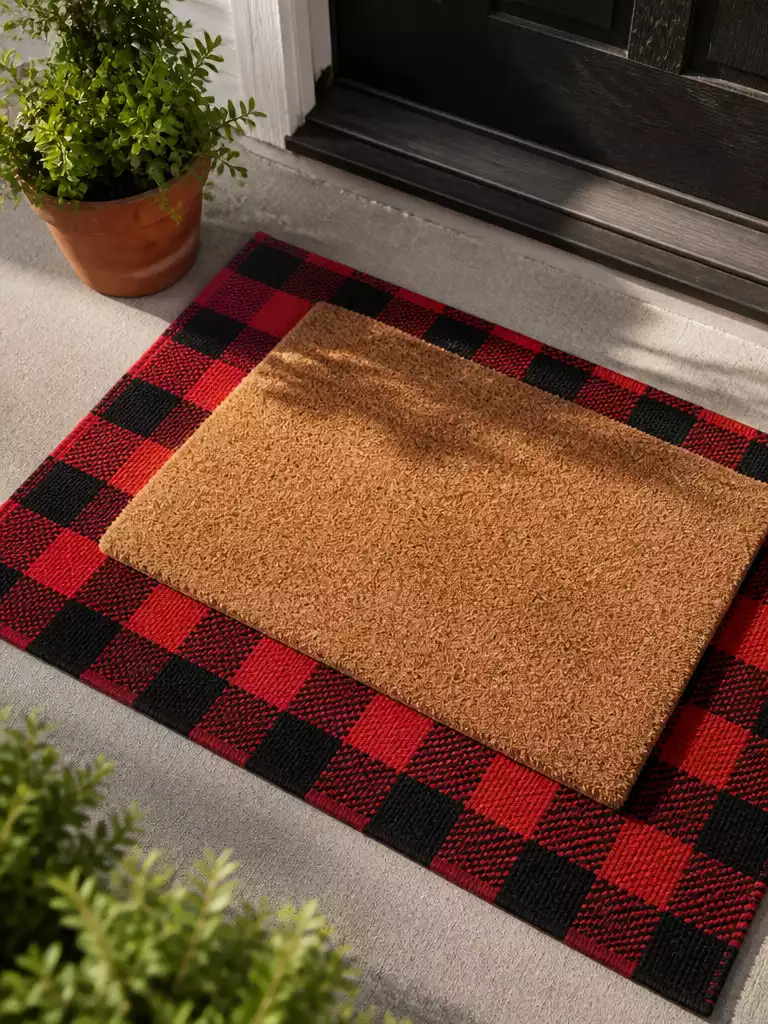
Anchor your farmhouse entryway with a high-contrast pattern that stands the test of time.
The buffalo check pattern is a definitive staple for the modern farmhouse aesthetic. It instantly anchors a porch, providing a graphic foundation that frames your door without competing with your home’s exterior colors.
The Scale Balance Tip: Avoid oversized, dizzying check patterns that overwhelm the space. Choose a standard, medium-scale check and balance the visual weight by layering a solid, neutral-colored mat directly on top.
When selecting your mat, material matters for your sanity. Prioritize molded synthetic fibers or rubber over thin fabric-based rugs.
- Why molded synthetic? These materials hold their shape and keep the plaid pattern crisp even after heavy foot traffic.
- The Seasonal Bridge: This pattern is a reliable choice for any time of year. It pairs perfectly with autumn pumpkins in October and transitions seamlessly into spring decor.
- Avoid the Blur: Skip light-duty woven cotton, which bunches up under the door and loses its geometric sharpness after the first rain.
This style is ideal for homeowners who want a high-impact look with minimal effort. If you prefer a minimalist or ultra-modern aesthetic, consider a subtle grey-and-white check instead of the traditional red-and-black to keep the contrast lower key.
.
⚖️ Quick Decision Guide:
- Choose this if: You want a high-contrast style that anchors your entry regardless of the season.
- Skip this if: Your porch is already busy with multiple colors or complex architectural details.
- Pair it with: A solid, neutral base rug or simple terracotta planters to prevent a cluttered, chaotic look.
Woven Two Tone Mat
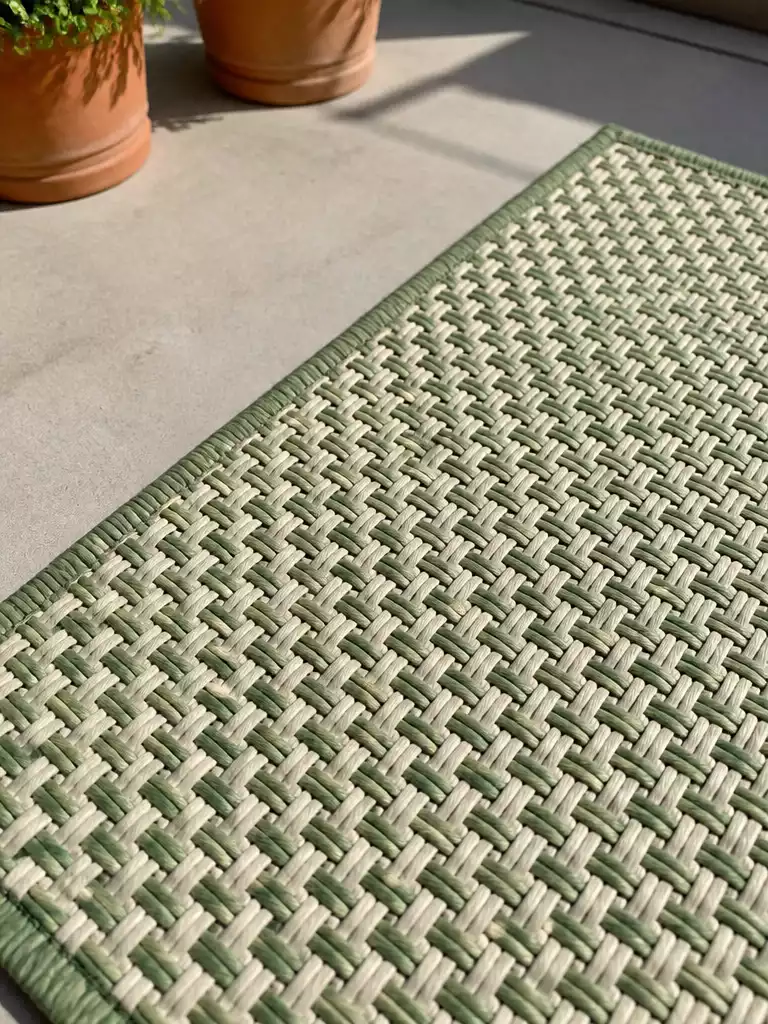
Inject instant visual energy into your entryway with high-contrast woven textures that pop.
Woven two-tone mats are your best bet when you want to shift your porch away from a monochromatic look without adding permanent fixtures. These mats rely on the interplay of two distinct shades to create visual energy that draws the eye directly to the threshold.
When selecting your weave, material makes all the difference in how long your entry stays looking fresh. Use this quick guide to choose the right fiber for your specific porch exposure:
- Synthetic/Rubber Weaves: The only choice for fully exposed, high-sun, or rain-prone areas. They resist fading and won’t hold onto trapped moisture after a storm.
- Natural Fiber Weaves: Perfect for deep, fully covered porches where they remain protected from the elements. They offer a softer, more organic feel underfoot but will rot if they get soggy.
Warning: Avoid Vinyl Borders
Steer clear of mats featuring applied vinyl borders. These inevitably peel, crack, and degrade when exposed to direct sunlight or fluctuating seasonal temperatures.
If you have a neutral-colored home, a two-tone mat acts as the primary accessory for your exterior. It provides a sharp, curated focal point that feels intentional rather than like an afterthought.
.
🏡 How This Works in a Real Home:
- Seasonal rotation: Use natural fibers during dry summer months, switching to synthetic weaves when autumn rain arrives.
- Traffic management: Place your two-tone mat slightly off-center if your door swing path is narrow to prevent bunching.
- Visual grounding: Pair high-contrast mats with solid-colored planters to keep the entry from feeling too busy or cluttered.
Floral Border Mat
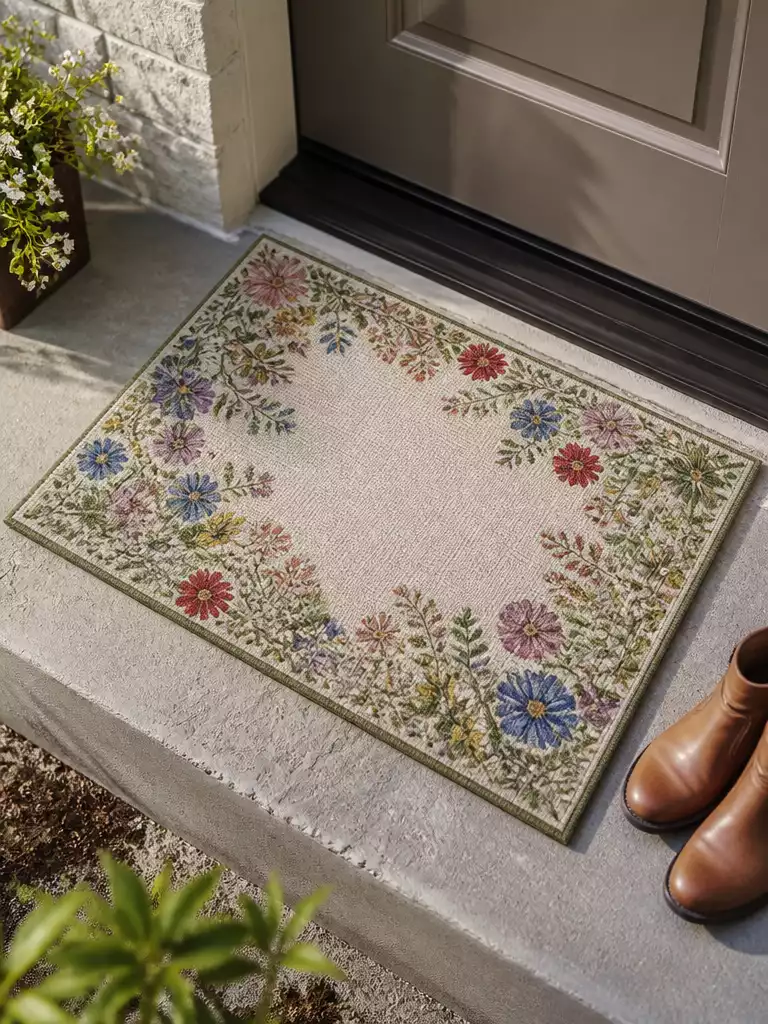
Bring a garden-fresh arrival to your doorstep with a soft, botanical-framed entrance.
A floral border mat uses nature-inspired imagery to turn a standard entry into an intentional, curated space. It acts as a visual frame, drawing the eye directly toward your door rather than letting the porch floor disappear into the background.
This style works best when you want to soften the harsh edges of a concrete or brick threshold without needing real greenery. It is the perfect choice for homeowners who want a pop of color that stays consistent regardless of the current season.
Pro-Tip: The Layering Rule
For the most polished look, center your floral mat on top of a larger, solid-colored outdoor rug. The neutral base creates a contrast that makes the botanical details pop and prevents the pattern from looking busy.
How you maintain your mat depends entirely on what it is made of. If you choose a natural coir version, ensure it stays in a fully sheltered area to prevent the fibers from trapping moisture and rotting.
For high-traffic or exposed entries, opt for a synthetic, molded-fiber version. These are designed to be rinsed with a high-pressure garden hose, keeping the floral colors vibrant even after a rainy week.
.
⚖️ Quick Decision Guide
Choosing between natural fibers and synthetic weaves is the key to ensuring your floral rug stays beautiful instead of becoming a maintenance burden.
- Choose natural coir: Select this for deep-covered, fully protected porches where the botanical print remains dry and crisp.
- Skip natural fibers if: Your porch is exposed to wind-blown rain, as moisture will quickly cause the fibers to rot.
- Pair it with: A solid-colored, weather-resistant base rug to provide the necessary contrast for your floral frame to shine.
Bootscraper and Mat Duo
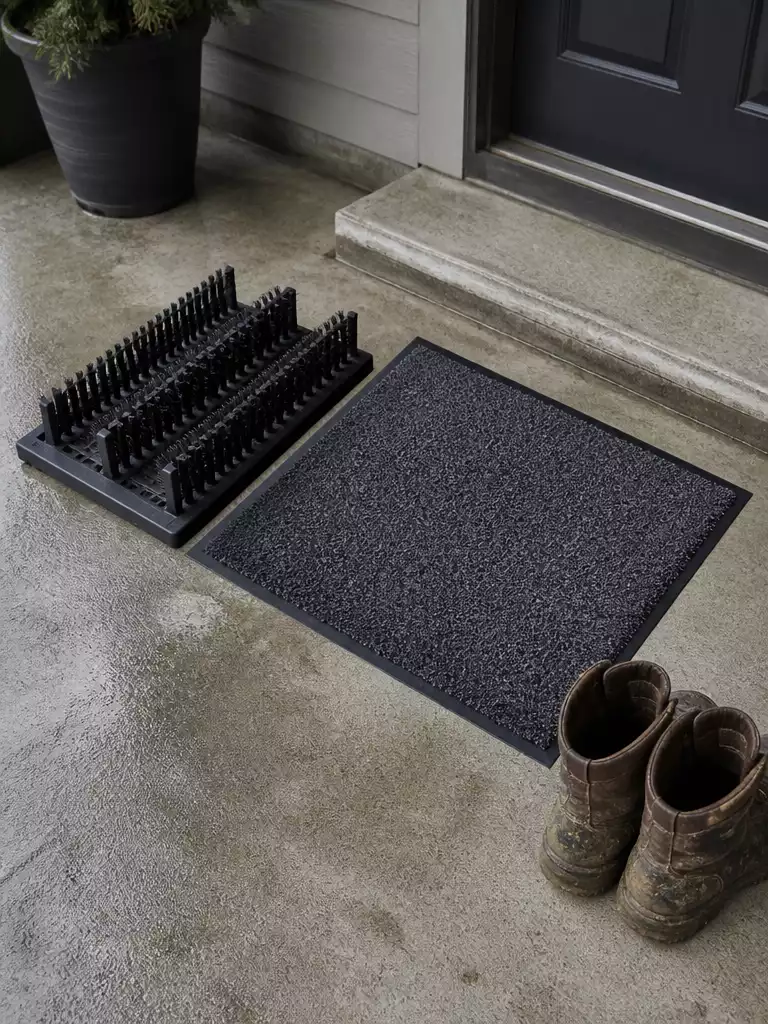
Stop dirt at the door with a dual-zone system that actually cleans your footwear.
If your porch is a high-traffic zone or you live in a muddy climate, a single mat often isn’t enough to handle the debris. This duo setup separates the heavy-duty work from the finishing touch.
You need a two-zone placement strategy to make this work effectively. Place a rigid rubber boot scraper in the primary path to knock off heavy mud, then position a soft-fiber mat directly in front of the door for drying.
Skip the coir for scraping. Natural coir fibers lack the mechanical grip required to dislodge caked-on debris, making them ineffective as a primary scraper.
Stick to rubber for the scraper portion, as it handles repeated exposure to water without rotting or degrading. Maintenance is straightforward; simply blast both pieces with a garden hose when they get too dirty, and let them air dry in the sun.
.
🔢 The Right Sequence for High-Traffic Entries
Setting up a dual-zone system correctly prevents debris from traveling into your home. Follow this sequence to maximize the efficiency of your cleaning duo.
- Secure the scraper: Place your rigid rubber scraper furthest from the door to intercept heavy mud before it reaches the porch deck.
- Position the dryer: Lay the soft-fiber mat directly against the threshold to catch residual moisture and fine dust.
- Test the swing: Open your door fully to confirm neither piece catches or bunches during your daily entry or exit.
Painted Deck Stencil Mat
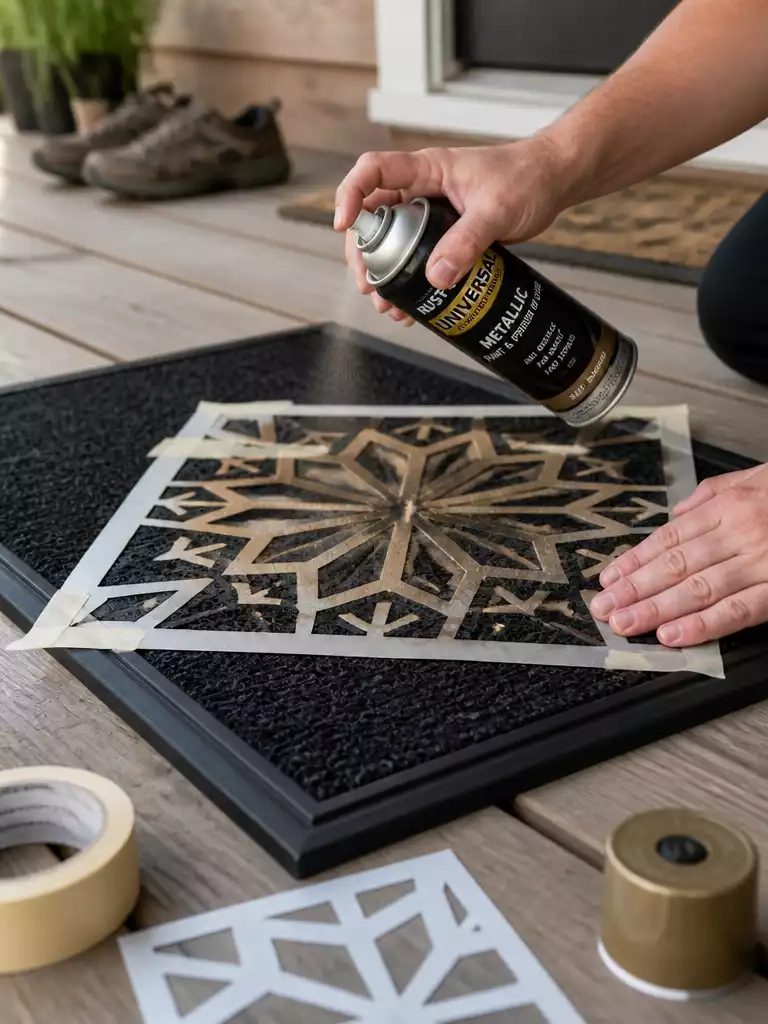
Transform a basic, budget-friendly rubber mat into a custom statement piece with precision paint.
If you want a one-of-a-kind entry that doesn’t cost a fortune, DIY customization is your best path forward. A plain rubber base serves as the perfect canvas because it’s inherently stable and won’t buckle under your design efforts.
The Golden Rule of Paint: Only use weather-resistant outdoor spray paint designed for plastic or rubber adhesion. Standard interior craft paints will chip and peel the first time they meet a rainstorm.
The process is straightforward but requires patience to ensure clean results. You’ll need a durable stencil, high-tack painters tape to hold it in place, and light, even coats of paint to avoid bleed-under.
Steps to a Professional Finish:
- Clean the rubber base thoroughly with soap and water to remove factory oils.
- Secure your stencil flat against the surface; even a tiny gap leads to fuzzy edges.
- Apply your color in two or three thin layers rather than one heavy, saturated coat.
- Finish with a clear acrylic sealant spray to protect your design from UV fading.
Avoid the surface-printed vinyl trap at all costs when choosing your base mat. These mats are mass-produced with low-quality inks that blur and fade within weeks of foot traffic, making them impossible to restencil cleanly.
.
You have now navigated through fourteen distinct approaches to freshening up your home exterior. Choosing the one or two styles that best complement your porch architecture is far more effective than attempting to incorporate every trend. A cohesive entry is built on a few deliberate decisions rather than a crowded collection of accents.
The look you are aiming for comes together when you select a mat that balances your specific threshold needs and personal taste. Refining your front entry is a straightforward task when you focus on a single piece that anchors the space properly. Pick the layout that fits your home’s footprint, measure your clearance, and finalize the arrival point you’ve been planning for your front door.