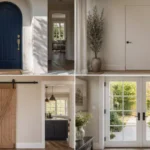

Swapping solid slabs for glass framed interior doors is the most effective way to brighten dark hallways and rooms. This guide rounds up 11 door ideas worth saving to help you balance privacy with natural light transmission. Find the design that fits your space below.
Full Light Glass Panel
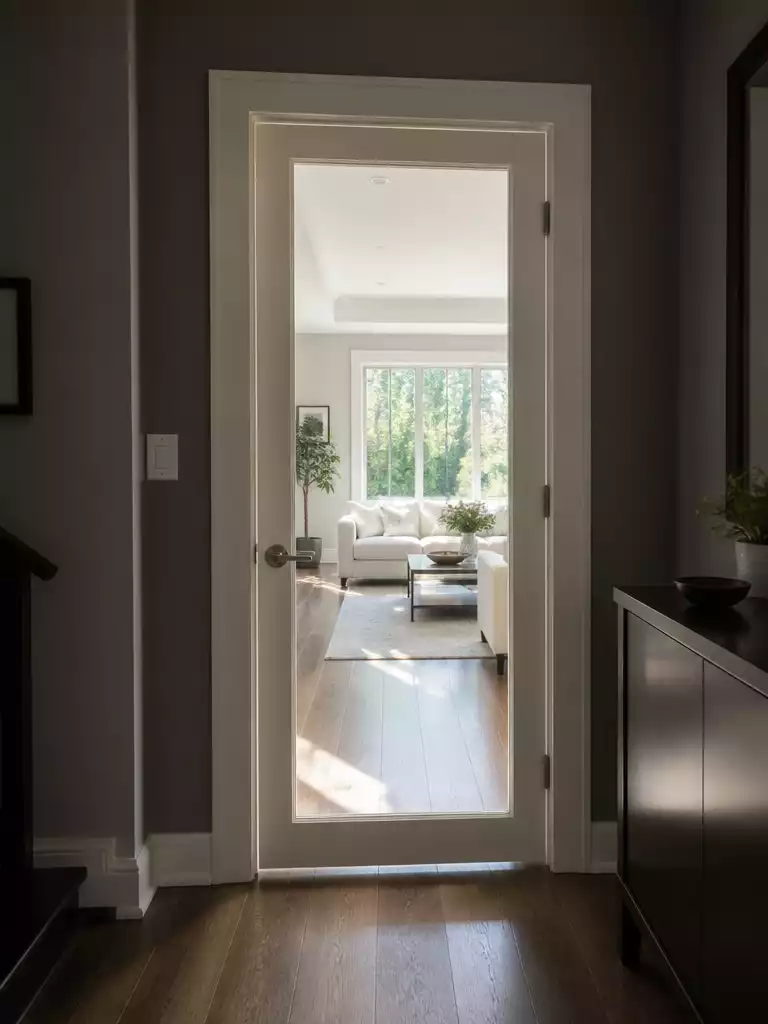
Maximize your home’s natural brightness with an uninterrupted view that connects your living spaces.
As an Amazon Associate I earn from qualifying purchases. Affiliate links may earn me a commission at no extra cost to you.
Replacing a heavy, solid slab door with a full-length glass panel instantly eliminates the “hallway dungeon” effect. This design utilizes a solid frame—typically oak, walnut, or steel—to house a large sheet of tempered glass, allowing up to 90% of light to pass through.
The primary advantage is an uninterrupted sightline that makes compact floor plans feel like one cohesive, expansive zone. It is a highly effective choice for high-traffic, low-privacy areas like a home library or a transition from a windowless hallway to a main living room.
Installation & Maintenance Realities
- Structural Integrity: For DIYers, factory-installed glass is non-negotiable. Trying to mount heavy tempered glass into a standard frame yourself invites structural stress and potential breakage.
- Cleaning Commitment: Clear glass requires frequent, streak-free cleaning to maintain its “invisible” effect. Fingerprints and dust are immediately visible against the light source.
- Fire Safety: Always confirm that your chosen door meets local fire-safety codes, especially regarding proper sealing and necessary airflow requirements for your specific room configuration.
If you prioritize total light transmission above all else, this is your best match. However, if you need a visual barrier for a bedroom or bathroom, you will likely find the lack of privacy here too limiting.
.
💡 Designer Note: Achieving Visual Balance
To make a full-light door feel intentional rather than clinical, consider matching the frame finish to your existing baseboards or window casings. This creates a cohesive “architectural spine” that grounds the glass. In small hallways, choosing a thinner frame profile prevents the door from feeling like a heavy barrier, allowing the light to truly dominate the visual experience.
Frosted Privacy Glass
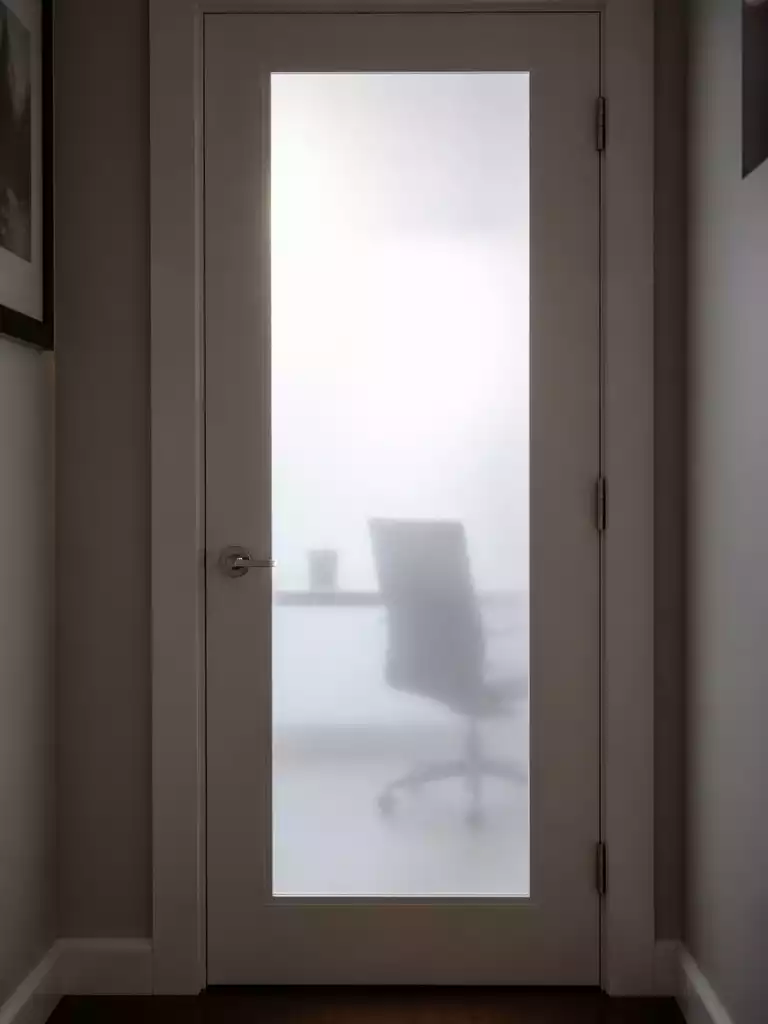
Create a bright, glowing transition while keeping your workspace clutter completely out of sight.
You want the light, but you don’t want the “fishbowl” effect of a clear pane. Frosted privacy glass uses acid-etching or sandblasting to transform a standard door into a source of soft, diffuse illumination.
Instead of direct, harsh beams, the light enters your room as a warm, uniform glow. This effectively hides the mess on your desk or the personal items in your bedroom while still letting you track the time of day through changing light levels.
Pro Tip: Always source factory-frosted glass rather than applying adhesive films yourself. DIY films often bubble or peel in high-humidity areas like bathrooms, whereas tempered factory glass maintains a consistent, streak-free diffusion for decades.
If you are choosing between clear and frosted, think about your tolerance for visual noise. Clear glass is for open-plan living zones, while frosted glass is the correct choice for rooms where you need to retreat without feeling cut off from the rest of the house.
.
📋 Quick Reality Check
- Wall depth: Ensure your frame depth matches your wall thickness; standard interior walls often require custom jamb extensions.
- Swing clearance: Measure the floor space for the door arc to guarantee it doesn’t collide with existing furniture.
- Header alignment: Check that your existing door header is level, as glass doors reveal even minor shifting or sagging.
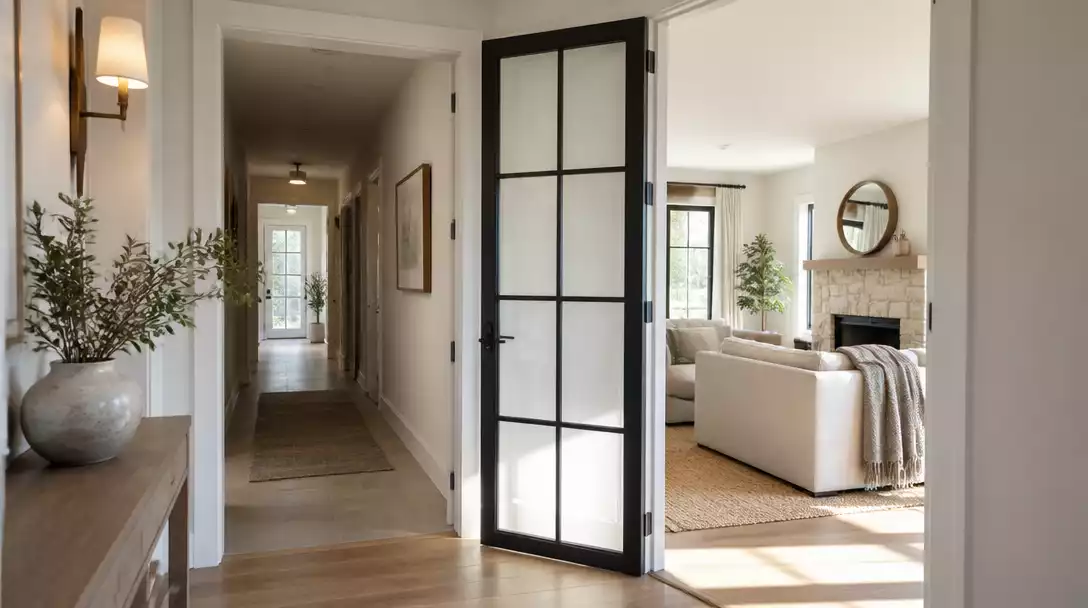
Black Framed Steel and Glass
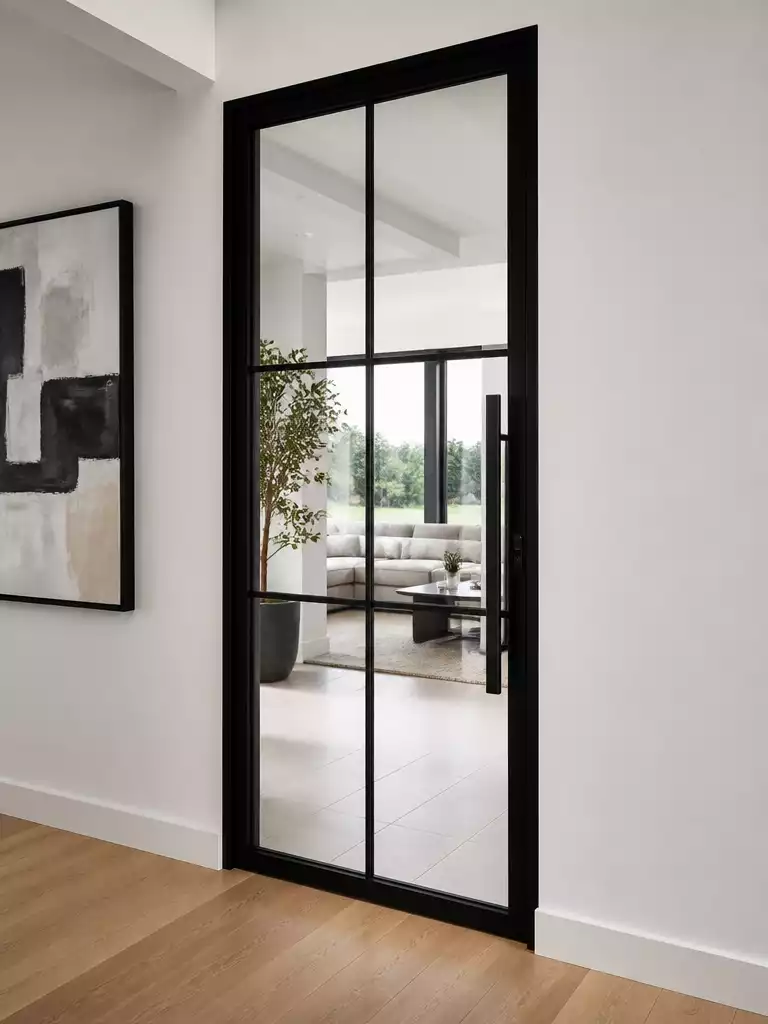
Define your space with an industrial, light-amplifying frame that acts like architectural art.
The industrial skeleton aesthetic relies on dark, slim lines to act as a dramatic frame for the room beyond. By using steel rather than wood, these doors achieve a significantly higher strength-to-weight ratio, allowing for thinner frames that maximize the actual glass surface area.
The black finish creates a high-contrast boundary that turns a simple doorway into a piece of architecture. This design is best for homeowners looking to anchor a modern, open-concept floor plan while maintaining a clear, uninterrupted visual connection between rooms.
Warning: The heavy nature of steel makes this a professional-only installation. Do not attempt to use aluminum “lookalike” frames for floor-to-ceiling heights, as they lack the necessary structural rigidity and will flex over time.
Because these doors are heavy, precision is non-negotiable during the installation process. A pro-only project ensures that the frame is perfectly square, preventing the hinges from sagging and ensuring a smooth, silent operation for years.
.
💡 Why This Works:
By using a slim steel frame to hold expansive glass, you create a “window-wall” effect that tricks the eye into seeing more floor space than actually exists. This architectural framing draws the gaze through the doorway, making the transition between rooms feel deliberate and open rather than just a functional portal.
Visual expansion: The thin, dark grid lines act as a viewfinder, effectively pulling light and depth from adjoining rooms.
Sidelight Panels
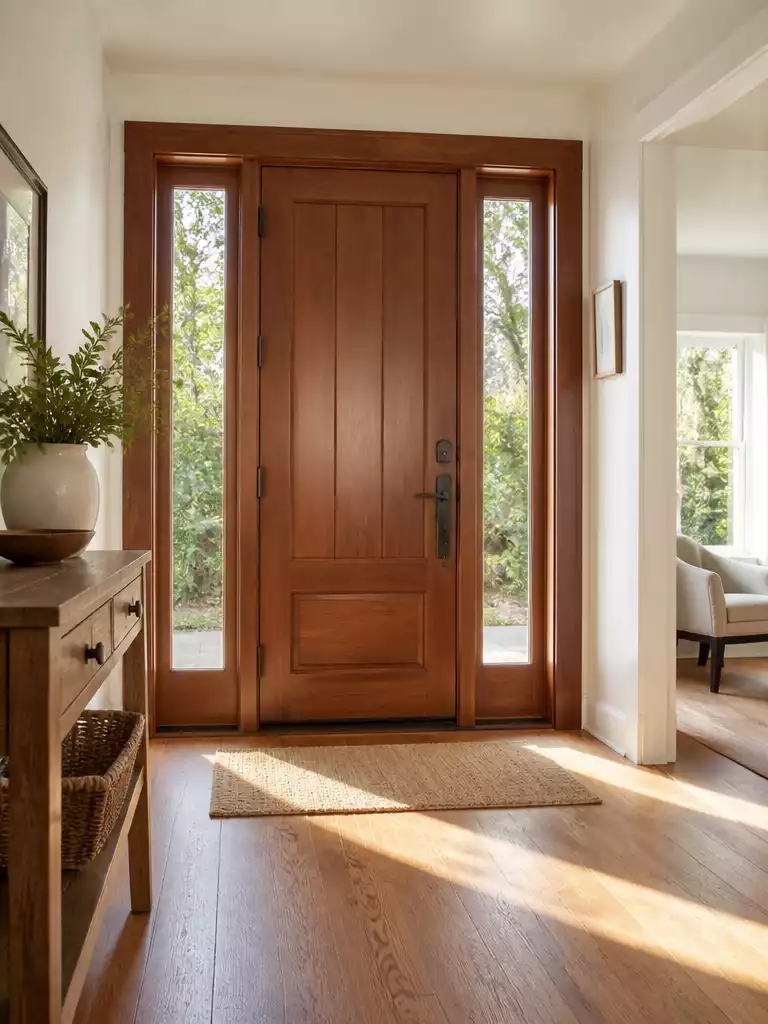
Transform dead wall space into a brilliant, light-flooded entry point for your home.
When you have a solid door, the wall space immediately to its left or right often becomes a dark, wasted corner. Sidelight panels act as literal light-columns, flanking your main entrance to pull morning sun deep into a hallway that would otherwise rely entirely on artificial bulbs.
These inserts provide a 60–80% light transmission boost without forcing you to replace your primary door. By keeping the center door solid, you maintain the security and privacy of your home while gaining the aesthetic prestige of a much wider entry sequence.
Planning Note: This is a structural retrofit, not a quick hardware swap. You will need at least 6 to 12 inches of clearance on one or both sides of your existing door frame to accommodate the installation.
This project is best suited for homeowners with the structural wall capacity to widen an existing opening. If your hallway is already tight or you lack the framing space, you should skip this option in favor of a transom window above the door.
Work with a professional installer for the framing phase to ensure your wall integrity remains intact. Once the structural work is handled, you can focus on choosing glass styles that match the rest of your home’s personality.
.
📋 Quick Reality Check Before You Commit
- Stud placement: Use a stud finder to confirm the presence of structural framing members where you intend to cut for those light-columns.
- Switch locations: Check for hidden electrical wiring or light switches in the wall cavity that will require rerouting by a licensed electrician.
- Load-bearing walls: Verify if the wall is load-bearing; if it is, you will need a structural header to support the opening safely.
Navigating the long-term reality of daily traffic patterns makes some door options feel far more practical than others. You can cut through the noise by focusing on how a door functions during your busiest hours, rather than trying to perfectly match every single interior upgrade you see.
Only two or three high-traffic entry points actually dictate the flow and feel of your entire home.
Transom Window Above
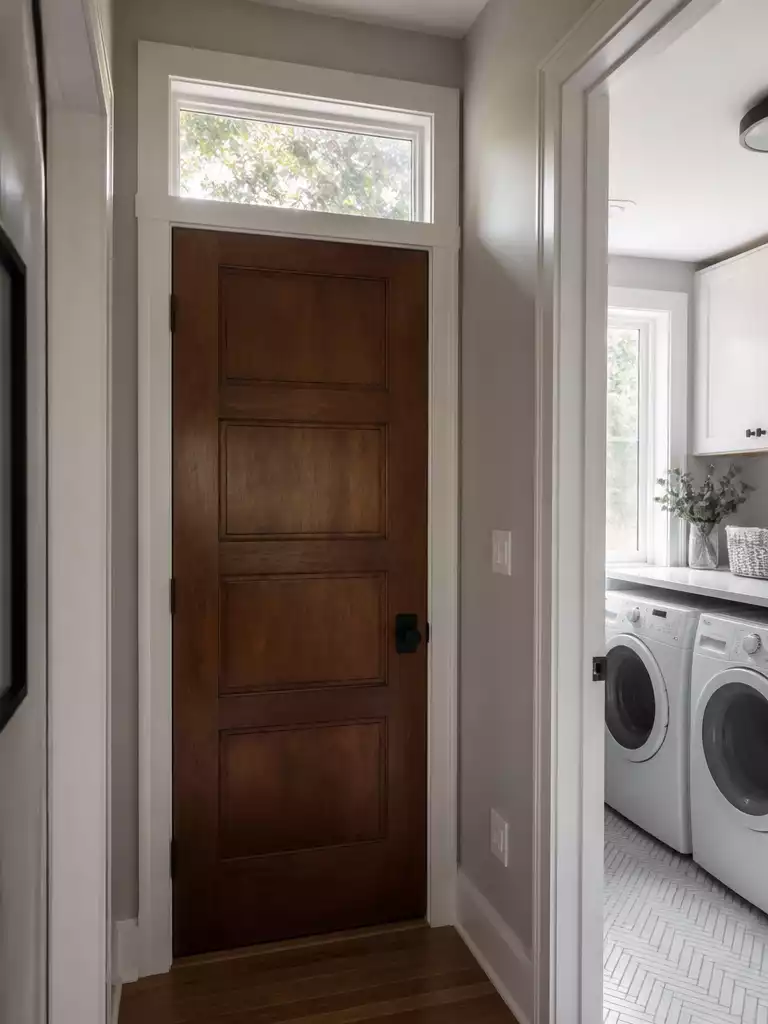
Unlock trapped ceiling light and create a sense of height in narrow hallways.
High-up light often gets trapped in a doorway’s header, leaving hallways feeling cave-like even if the room next door is flooded with sun. Adding a transom window above your door is the smartest way to grab that “borrowed light” without needing the floor space required for sidelights.
These windows act as a horizontal bridge between spaces, drawing the eye upward and making your ceilings feel significantly higher than they actually are. Because they are fixed high above the door, they provide consistent, consistent illumination throughout the day without the privacy concerns of a door-level window.
Pro-Tip for DIYers
Matching the door’s frame material and finish to the transom frame is the secret to a professional result. If your woodwork is painted white, ensure the transom casing is perfectly aligned to look like one continuous unit.
This is an ideal solution if you are connecting a hallway to a bright laundry room or kitchen that already has windows. Skip this option if your ceiling height is under 8 feet, as the window may look cramped or disproportionate to the door below.
.
💡 Why This Works
Transoms function as a clever visual trick to break the “header barrier” in smaller homes. By extending the perceived height of a doorway, they shift the focal point upward, creating an airy, open feeling that tricks the brain into seeing a much grander, more spacious transition between rooms.
Vertical Expansion: This solution effectively maximizes vertical light capture without requiring any additional floor or wall clearance.
Reeded Glass
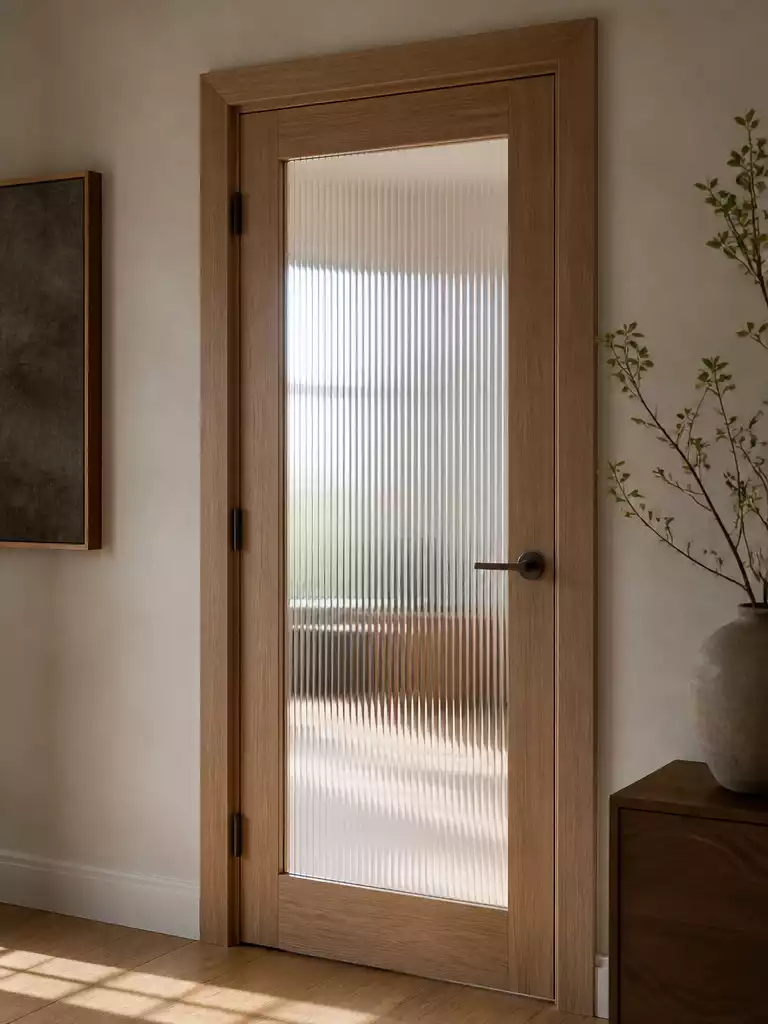
Transform harsh sunlight into a warm, textured wash of light while maintaining essential privacy.
Reeded glass acts like a prism, turning direct light into a soft, linear pattern that feels intentional and designed. Unlike flat frosted options, the vertical ribs add a mid-century modern character that hides clutter without blocking the room’s overall brightness.
This is the ideal choice for bedrooms or bathrooms where you want a sense of movement behind the door without revealing specific shapes or messy details. It provides a high level of privacy while still allowing about 70-80% of light transmission.
Pro Tip: Orientation Matters
The direction of the reeds changes how the room feels. Use vertical reeds to draw the eye upward and make a low ceiling feel taller, or horizontal reeds to widen the look of a narrow hallway.
If you are planning a DIY installation, stick to factory-installed glass panels. Attempting to retrofit existing door slabs with textured glass sheets often leads to structural stress and poor sealing, which can cause the glass to rattle or crack over time.
.
💡 Why This Works: The Vertical Logic
Reeded glass transforms a plain doorway into a vertical feature that manipulates light and perception. By diffusing incoming rays into soft, linear patterns, it eliminates the “flat” look of standard glass, effectively layering texture onto your walls and making narrow transition spaces feel significantly more intentional and architecturally expanded.
Design Takeaway: Match reed orientation to your ceiling height to visually manipulate the room’s proportions.
French Glass Double Doors
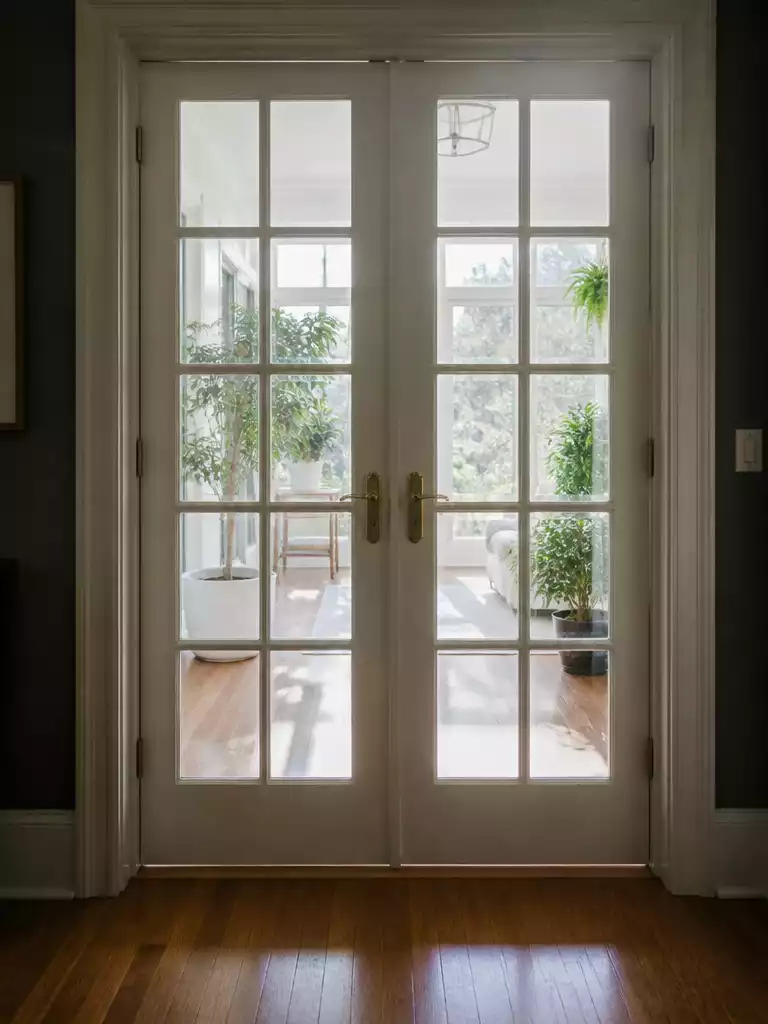
Create a grand, light-filled transition between your rooms with this classic architectural statement.
French glass double doors transform a cramped, windowless hallway into a primary entrance by physically and visually opening up the wall. These doors are the best way to capture 80–90% light transmission, effectively borrowing sunshine from an adjoining living room or dining area.
The multi-panel glass aesthetic adds a distinct, rhythmic pattern that feels more structured than a single wide door. Because these doors swing outward or inward, you must account for the swing radius in your floor plan to ensure they don’t hit hallway furniture.
Pro-Install Requirement
Do not attempt this as a DIY project unless you are a master carpenter. Any slight sag in the framing will be immediately visible where the two doors meet, causing them to catch or swing unevenly.
Choose this style if you want to maximize the “open concept” feel without knocking down walls. If you lack the floor space for a double-door swing, you should skip this and consider a pocket glass door instead.
.
🧰 Questions for Your Installer
- Frame alignment: How will you ensure the center meeting point remains perfectly level to prevent future door sag?
- Structural support: Does our existing rough opening require additional header reinforcement to support the weight of two glass doors?
- Sealing performance: What weatherstripping or threshold solution do you recommend to maintain thermal efficiency between these two rooms?
Pivot Glass Door
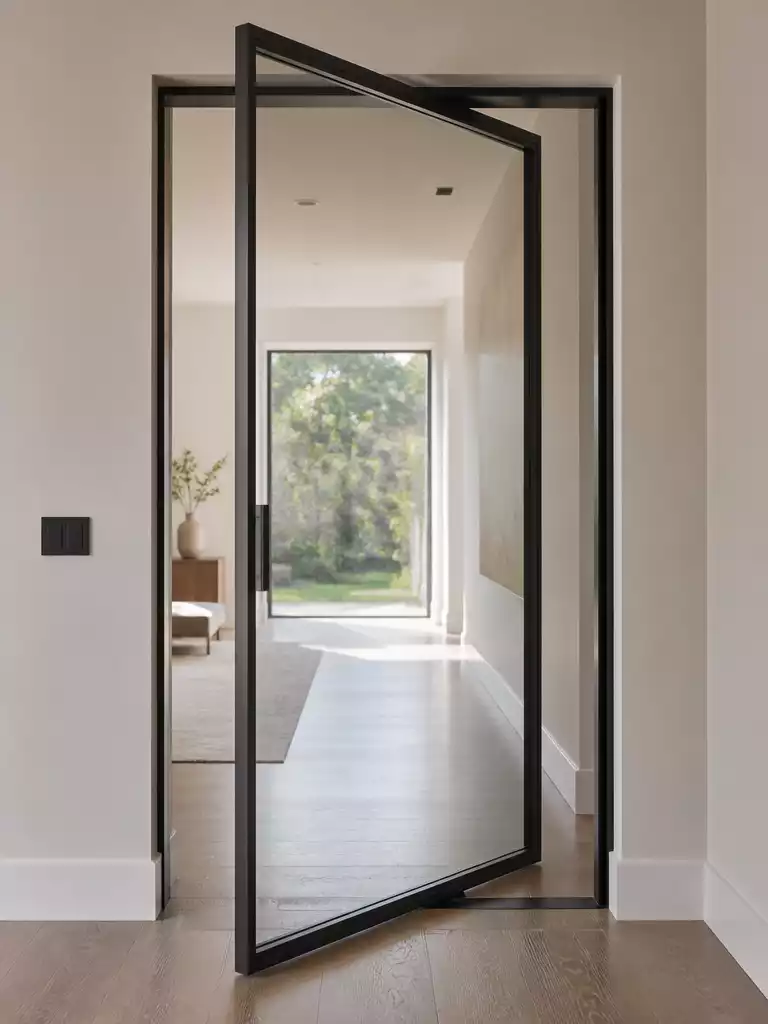
Transform your home’s flow with a wide-opening, sculptural door that maximizes natural light.
A pivot glass door turns a standard entryway into a sculptural focal point by rotating on an offset axis rather than traditional side hinges. This mechanical shift allows for massive, floor-to-ceiling glass panes that would simply be too heavy for standard door frames to support.
Because these doors lack visible hinges on the side, they offer an unencumbered, airy look that feels more like a moving wall than a traditional door. They are the ideal choice for modern, minimalist layouts where you want to erase the border between two living zones.
Warning: This is a professional-only installation. The pivot mechanism requires precise floor and ceiling structural reinforcement to handle the weight and ensure smooth rotation.
If you are considering this upgrade, keep these key factors in mind to ensure the project meets your expectations:
- Light transmission: You can expect up to 90% light flow, making these perfect for dark hallways.
- Privacy: These doors prioritize design and light over privacy, so they are best used for public zones like living rooms rather than bedrooms.
- Structural planning: Budget for a professional contractor to verify your ceiling header and floor substrate before ordering.
.
🧰 Questions for Your Installer:
- Foundation support: What specific structural reinforcement is required within my current flooring to anchor the pivot spindle?
- Header integrity: Can you confirm if my existing ceiling joists are sufficient to carry the weight without sagging?
- Long-term performance: How do you plan to handle future adjustments to the pivot mechanism if the door alignment drifts?
Clear Pocket Glass Door
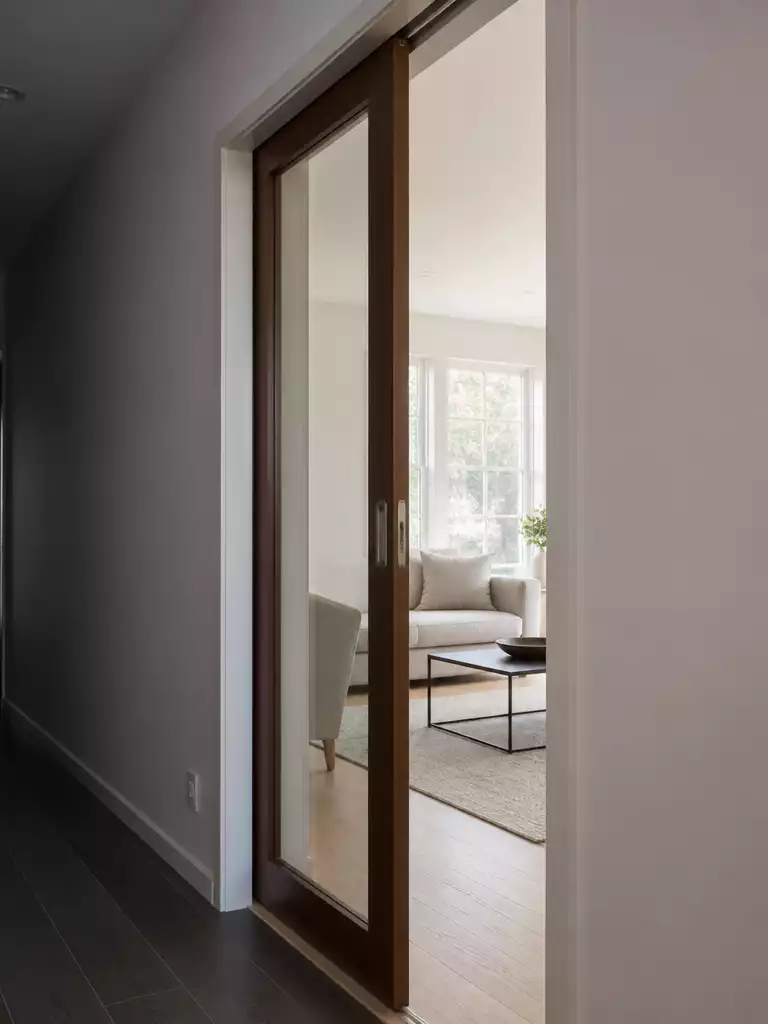
Maximize every square inch of your floor plan by letting your door disappear completely.
When your hallway is too narrow for a traditional swing radius, a clear pocket glass door is the only way to regain lost square footage. This setup allows the door to vanish entirely into the wall cavity, offering 100% passage and unobstructed light flow.
It is the most efficient choice for cramped pantries or windowless transition zones where every inch of floor space matters. Because the door hides away when open, it creates a seamless transition between rooms that feels significantly more spacious.
Pro-Tip: Always install a soft-close mechanism to prevent the glass from slamming into the wall cavity. This simple addition protects the frame and glass from long-term wear and tear.
Keep in mind that this is a professional-only installation due to the structural requirement of creating or modifying a wall cavity to house the door. DIY attempts often lead to misaligned tracks that result in a door that sticks or scrapes over time.
Warning: The track hidden inside your wall must be kept clear of debris. Even small items falling into the pocket can scratch the glass or derail the sliding mechanism.
.
💡 Why This Works
By tucking the door entirely into the wall cavity, you eliminate the “dead zone” typically required for a door swing. This visual disappearance makes the transition between rooms feel fluid and unencumbered, tricking the eye into perceiving the floor plan as one continuous, light-filled space rather than a series of chopped-up corridors.
Spatial efficiency: You gain 6 to 10 square feet of usable floor area that was previously blocked by the swing arc.
Arched Glass Top
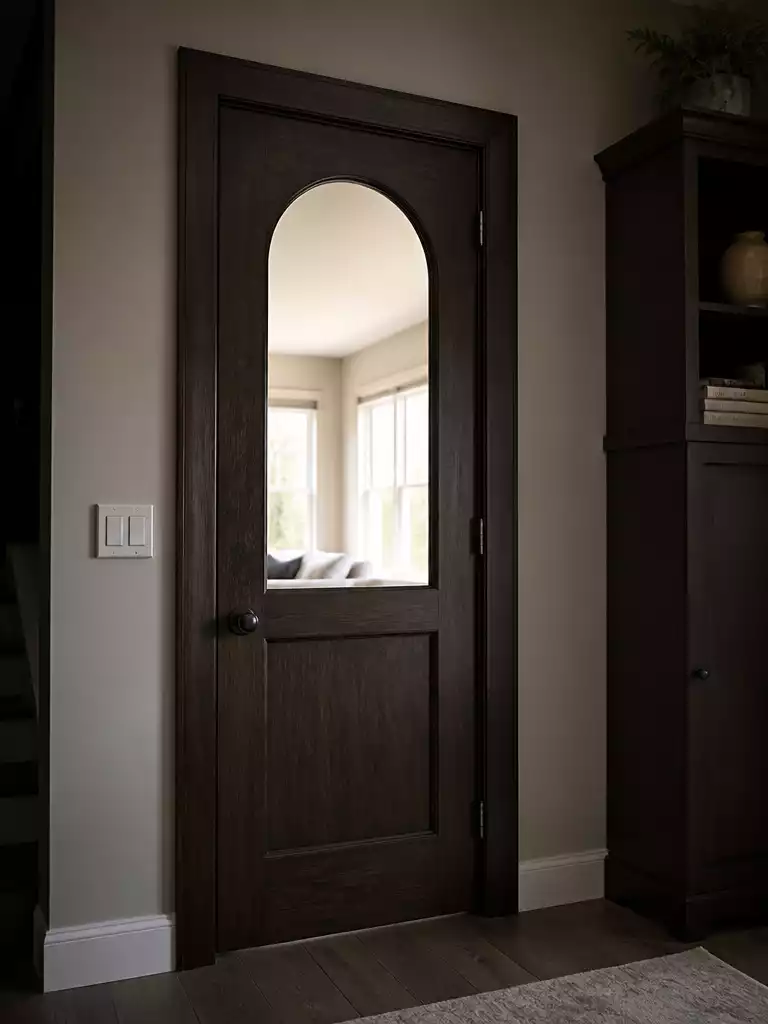
Soften your home’s hard angles with a curved glass top that invites soft, ambient light.
An arched glass top breaks up the rigid, boxy lines of standard interior framing by introducing a gentle curve at the header. This design choice functions as a built-in transom, pulling light into dark hallways while maintaining a solid base for privacy and sound dampening.
It is an ideal choice for homeowners looking to add a touch of heritage character to a modern floor plan. If your home already has square, minimalist doorways, this arch serves as a distinct focal point.
Pro Advice: Fitting an arched door into a standard square-framed opening is a complex custom trim challenge.
Do not attempt this as a weekend DIY project unless you are highly skilled in carpentry; hire a professional to ensure the curves are perfectly plumb and sealed against drafts.
Before you commit to this style, consider the transition between your rooms. The solid wood base acts as a visual and acoustic barrier, making it perfect for bedrooms or home offices where you need to hide clutter but still want the hallway to feel bright and connected.
Most of these doors use a solid lower panel for durability and privacy, with the glass limited to the top arch. This configuration gives you the best of both worlds: a sturdy door that blocks most noise and an upper window that captures daylight from adjoining rooms.
.
📈 The Long-Term Payoff
Arched glass doors are a classic architectural feature that rarely goes out of style. While the custom trim required for a perfect fit represents a higher upfront investment, this timeless aesthetic consistently enhances curb appeal and interior charm, making it a reliable choice for long-term home value rather than a fleeting trend.
Design durability: Choosing classic wood and glass arches ensures your home’s character remains elegant and attractive to future buyers.
Fluted Glass Barn Door
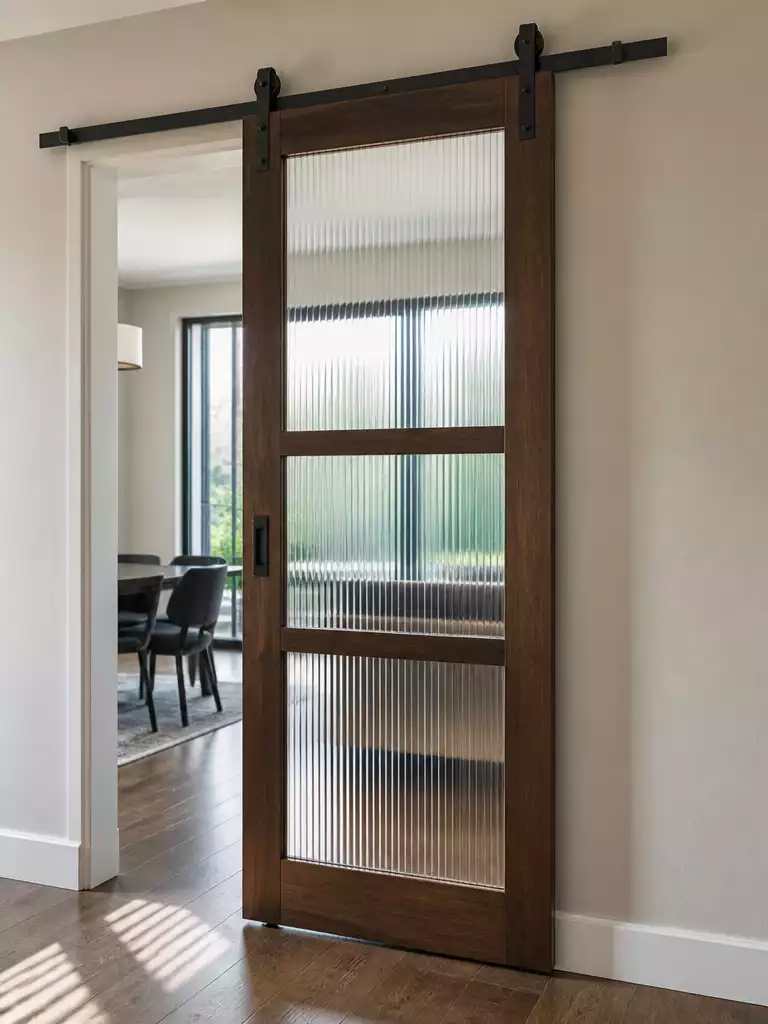
Slide in privacy and light with a textured, space-saving barrier for high-traffic rooms.
As an Amazon Associate I earn from qualifying purchases. Affiliate links may earn me a commission at no extra cost to you.
The fluted glass barn door is the ultimate problem-solver for rooms that need a light-filled connection but require total visual privacy, like a master bath or a walk-in closet. Unlike clear glass, the vertical grooves in the glass create a bold, wavy distortion that hides specific details while still letting 70–80% of the natural light wash through.
Because the door slides along an exposed track, it eliminates the swing radius that often blocks hallways or hits furniture in tight quarters. This hardware setup adds a distinct industrial edge that pairs perfectly with the modern, rhythmic texture of the glass.
Pro Tip: Do not cut costs on the sliding hardware kit. Invest in nylon-lined wheels for a silent, smooth glide that prevents the heavy door from jarring the wall during operation.
This is a project for a professional installer because the track must be perfectly level to prevent the heavy door from drifting open or closed on its own. If you have non-standard wall studs or tricky trim around your door frame, leave the structural mounting to someone with the right gear.
.
💡 Why This Works:
Fluted glass functions like a vertical prism, turning direct light into a soft, diffused glow that masks the clutter of a closet or bathroom while preserving a sense of depth. The rhythmic texture creates a sophisticated mid-century modern aesthetic that feels intentional, elevating a simple sliding door into a striking architectural element.
Design benefit: The vertical ribbing visually stretches your ceiling height, making smaller rooms feel taller and more expansive.
You have now seen eleven distinct ways to bring light into your rooms through glass framing. Selecting the one or two styles that best match your floor plan is far more effective than attempting to incorporate every design.
The goal is to choose a door that balances privacy with your lighting needs, making smart door choices that define your space. Focus on your darkest hallway and decide on the configuration that fits its specific dimensions; once that primary connection is made, the rest of your home renovation will follow with ease.