
Your front door is the handshake of your home, acting as the primary focal point for curb appeal. This guide covers 10 front door styles worth saving to help you define your home’s architectural soul. Find the silhouette that matches your porch structure below.
Classic Paneled Door
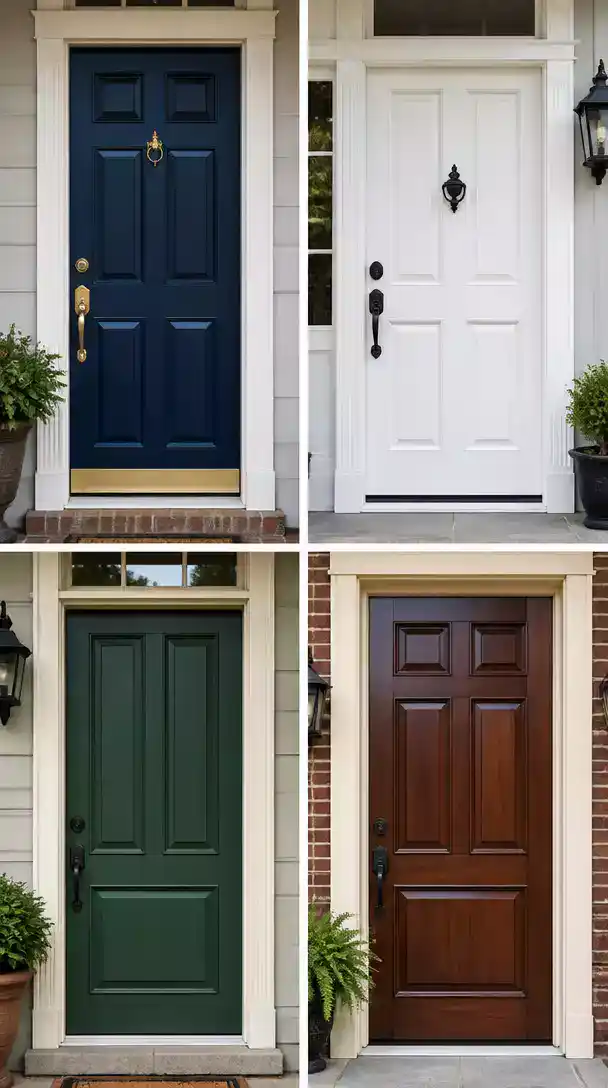
Deep recessed molding creates dramatic shadow lines that give your entryway an expensive, architectural feel.
As an Amazon Associate I earn from qualifying purchases. Affiliate links may earn me a commission at no extra cost to you.
The visual weight of a classic paneled door comes from the interplay of light and shadow tucked within its recessed molding. Unlike flat surfaces, these doors use depth to create interest, with 1/2-inch deep grooves that catch the sun even on overcast days.
If your home follows a symmetrical layout like a Colonial or Cape Cod, this is your standard. A 4-panel configuration offers a relaxed, traditional vibe, while a 6-panel layout leans into a more formal, high-end aesthetic.
To maximize the architectural “pop,” opt for a semi-gloss finish. The slight sheen highlights the crisp edges of the molding, making the door look custom-carved rather than mass-produced.
The Rule of Proportions
Ensure your panel heights align horizontally with nearby window shutters or porch railings. This prevents a visual mismatch that makes the entryway feel “off-center” to the rest of the facade.
The material choice here is about the “thud”—the satisfying sound of solid wood or high-density composite closing. This density suggests permanence and stability to anyone crossing your threshold.
While panels provide depth through shadows, the next style achieves impact through pure, unbroken surface area.
⭐ Top Products for Classic Paneled Doors
Brushed Bronze Aluminum Kick Plate
Handmade Brass Frog Door Knocker
Adjustable Aluminum and Hardwood Threshold
💰 Anticipating the Investment:
- The real range: High-quality paneled doors typically fall between $800 and $2,500, depending on solid wood vs. fiberglass density.
- Hidden cost: Budget for frame adjustments; heavy solid-core doors often require reinforced hinges or professional jamb squaring to prevent sagging.
- Worth it / not: Skip the hollow-core “interior style” clones for exteriors; they lack the depth needed to create those signature shadows.
Modern Flush Door
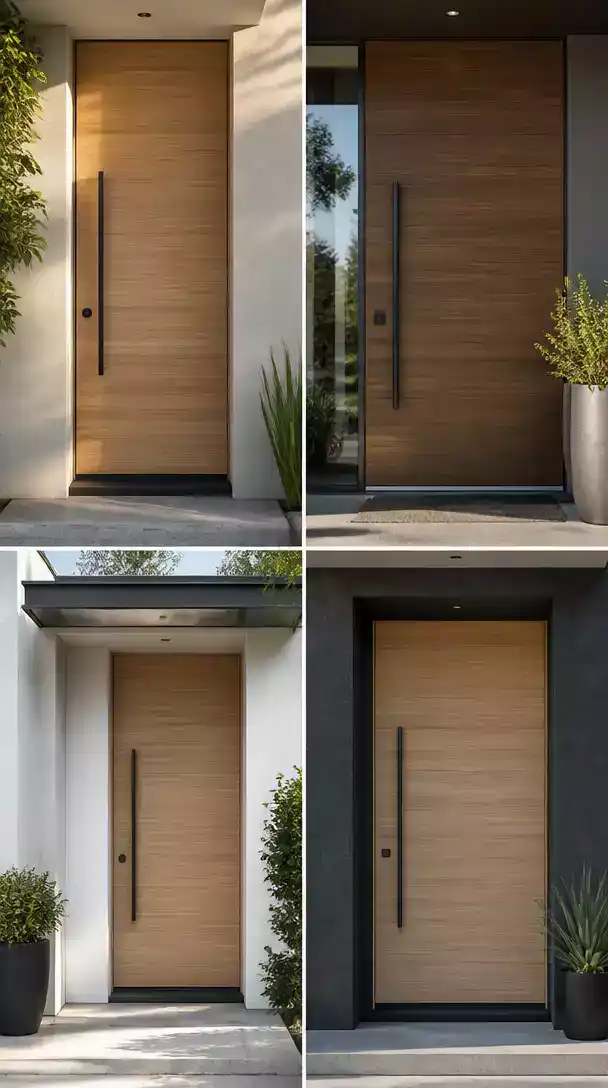
Achieve a high-end architectural reset with the seamless, unbroken surface of a contemporary flush design.
The modern flush door acts as a visual “reset” for your home by ditching every bit of traditional trim and molding. This style relies on one continuous, smooth plane to create an entrance that feels more like a piece of custom cabinetry than a standard exterior door.
Because there are no panels to distract the eye, the grain of the wood becomes the main event. Choosing a horizontal grain pattern, such as rift-sawn oak, is a strategic move for narrow entryways as the lateral lines trick the eye into seeing a much wider, more expansive space.
This “no-frills” edge is perfect for mid-century modern or contemporary industrial homes. The lack of dust-catching ledges and recessed corners keeps the aesthetic crisp and low-maintenance year-round.
⚠️ Finish Warning:
Avoid high-gloss paints on flush doors. On such a large, flat surface, any sheen higher than satin will ruthlessly highlight even the tiniest sanding marks or surface waves.
To finish the look, pair the door with oversized vertical hardware. A 40-inch pull bar provides the necessary scale to anchor the flat plane, ensuring the door feels intentional and substantial rather than just plain.
While flush designs thrive on smooth simplicity, our next style celebrates visible joinery and handcrafted texture.
⭐ Top Products for Classic Paneled Doors
Brushed Bronze Aluminum Kick Plate
Handmade Brass Frog Door Knocker
Adjustable Aluminum and Hardwood Threshold
📈 Worth It at Resale
Modern flush doors are a high-ROI choice for contemporary and mid-century homes because they signal an “updated” property to buyers instantly. While traditional panels can feel dated, this seamless silhouette acts as a clean slate that highlights the home’s architectural lines rather than distracting from them, making it a safe bet for long-term value.
The Value Win: Invest in high-quality rift-sawn wood; the natural grain beauty provides a timeless luxury feel that cheap steel alternatives lack.
Craftsman Style Door
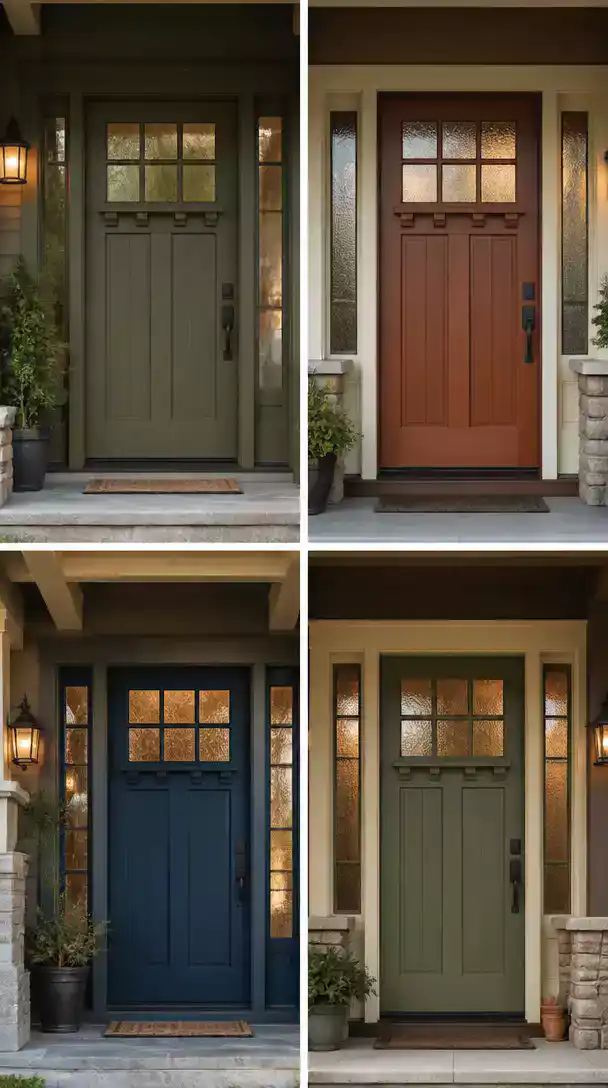
Ground your home in nature with handcrafted textures and warm glass accents that welcome guests.
The dentil shelf is the definitive hallmark of a true Craftsman entry. This small, decorative ledge sits just below the window panes, creating a sturdy architectural transition that flat doors simply can’t replicate.
Most Craftsman designs follow a specific 1/3 glass to 2/3 wood ratio. Rather than using large sheets of glass, look for “true divided lites”—individual small panes held together by thick wood muntins—to achieve that authentic, heavy-set bungalow feel.
The Visual Vibe Checklist:
- The Palette: Stick to organic earth tones like olive green, burnt terracotta, or deep navy to ground the house.
- The Glass: Opt for seeded or leaded glass textures; they obscure the view into your hallway while catching the porch light for a warm evening glow.
- The Architecture: This style is a non-negotiable win for homes with deep porches, exposed rafters, or natural stone accents.
Expert Insight
To fully commit to the silhouette, pair this door with tapered porch columns. The combination of the heavy door base and the wide columns creates a sense of permanence and structural balance.
While Craftsman doors use small windows to maintain privacy, the next style on our list splits the door itself to invite the outside in.
⭐ Top Products for Classic Paneled Doors
Brushed Bronze Aluminum Kick Plate
Handmade Brass Frog Door Knocker
Adjustable Aluminum and Hardwood Threshold
💰 What This Really Costs
- The real range: Expect to spend between $1,200 and $3,500 for a quality solid-wood Craftsman door with integrated glass.
- Hidden cost: Custom staining or painting the intricate recessed molding and dentil shelf often adds $300+ in professional labor.
- Worth it / not: Investing in quarter-sawn oak is worth the premium; its unique grain resists warping better than standard flat-sawn cuts.
Dutch Door
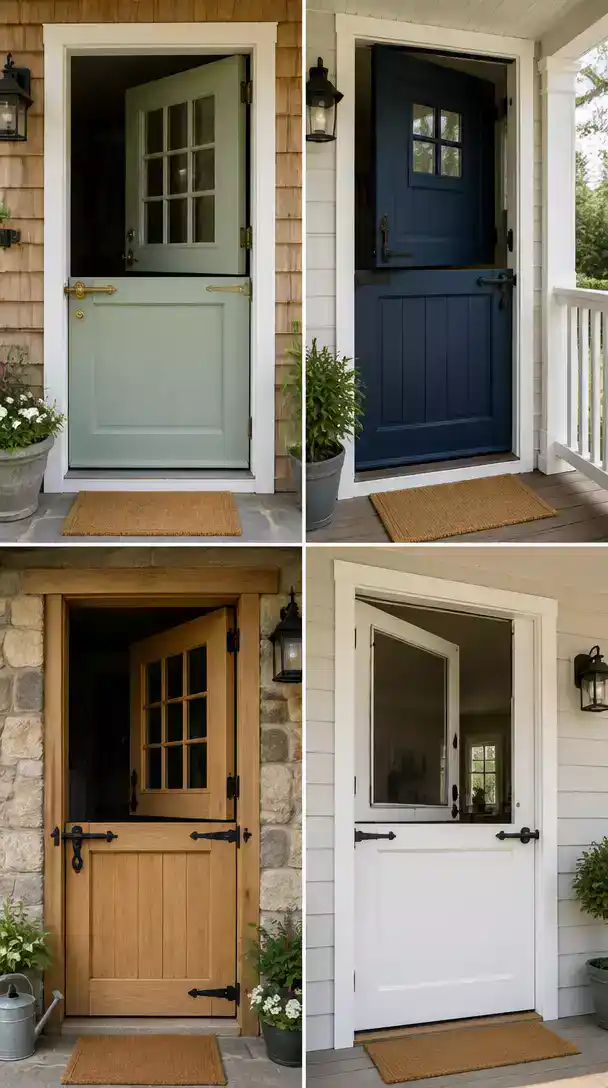
Invite gentle breezes and neighborly chats while keeping children and pets safely inside your home.
The horizontal split of a Dutch door offers a unique architectural “reset” that bridges the gap between your interior foyer and the outdoors. By allowing the top half to swing free while the bottom remains latched, you transform your entryway into a functional window.
This style is the ultimate choice for active households in coastal or suburban settings where cross-ventilation is a priority. It creates an immediate cottage-inspired focal point that feels approachable and lived-in rather than stiff and formal.
To make the most of this design, consider adding a retractable screen on the interior side. This allows you to keep the top half open all evening to enjoy the sunset without inviting local bugs into your living room.
Pro Tip: The Hardware Lock
Ensure your Dutch door includes a high-quality quadrant fastener or bolt. This hardware is what allows both halves to move as a single unit for daily exits and entries.
While the wood textures and split lines provide immense character, the next style focuses on maximizing transparency and flooding your home with raw natural light.
⭐ Top Products for Classic Paneled Doors
Brushed Bronze Aluminum Kick Plate
Handmade Brass Frog Door Knocker
Adjustable Aluminum and Hardwood Threshold
⚠️ Where Dutch Door Logic Can Fail:
- The Pinch Point: Forgetting to install a finger-guard or soft-close mechanism can lead to painful accidents where the two leaves meet.
- Hardware Misalignment: Using standard hinges instead of four heavy-duty ones often causes the bottom leaf to sag and stick over time.
- Screen Oversight: Skipping an interior screen means you’ll sacrifice your bug-free living room just to enjoy that coastal airflow.
Narrowing down a silhouette feels heavy, but your home’s architecture usually points toward the right frame naturally. Most curb appeal impact comes from one confident choice that aligns with your existing siding and trim.
🎯 The Calls Worth Getting Right:
- Learn how to choose a front door based on porch scale.
- Prioritize hardware contrast over picking a complex, multi-pane glass pattern.
- Trust the style that complements your most prominent exterior window shape.
Glass Panel Door
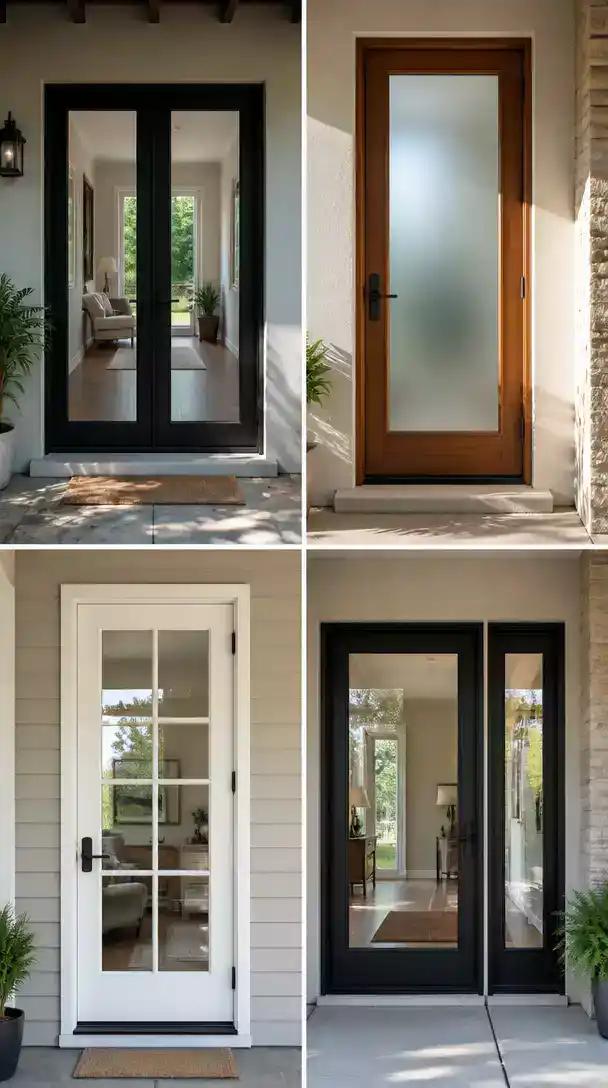
Invite natural light to flood your foyer while maintaining a sophisticated, high-end architectural boundary.
Full-lite glass doors act as a visual bridge, erasing the harsh boundary between your foyer and the garden. By swapping a solid slab for glass, you transform a dark, cramped entryway into an airy gallery that feels significantly larger than its actual square footage.
The frame material dictates the vibe: thin steel or aluminum muntins create a “Modern French” look that feels crisp and industrial. If you prefer warmth, thick wood frames with divided lites offer a transitional feel that suits both traditional and modern-leaning homes.
One of the most underappreciated benefits is the Backlit Effect. At night, the interior hallway lighting glows through the panels, making the home look occupied and inviting to anyone approaching from the street.
Pro Tip: Always request Low-E coatings on your glass panels. This invisible layer blocks UV rays that would otherwise fade your interior entryway rug or bleach your hardwood floors over time.
While full-lite doors offer maximum impact, 3/4-lite options are better if you want a solid kick plate at the bottom to hide scuffs from shoes or pets. This style is the ultimate solution for entryways that lack a nearby window to provide natural illumination.
If glass is about blending in through transparency, our next style is about the unapologetic power of a single pigment.
⭐ Best Products for Glass Panel Doors
One Way Mirror Privacy Film
Blackout Sidelight Velcro Door Curtain
Venetian Blind Pattern Window Film
💰 What This Really Costs
- The real range: Expect to spend between $1,200 and $4,500 depending on frame material and glass insulation ratings.
- Hidden cost: Impact-resistant or tempered safety glass is often a mandatory upcharge to meet local residential building codes.
- Worth it / not: Investing in high-quality weather stripping is essential here; otherwise, the “all-glass” look becomes an expensive energy drain.
Bold Color Statement Door
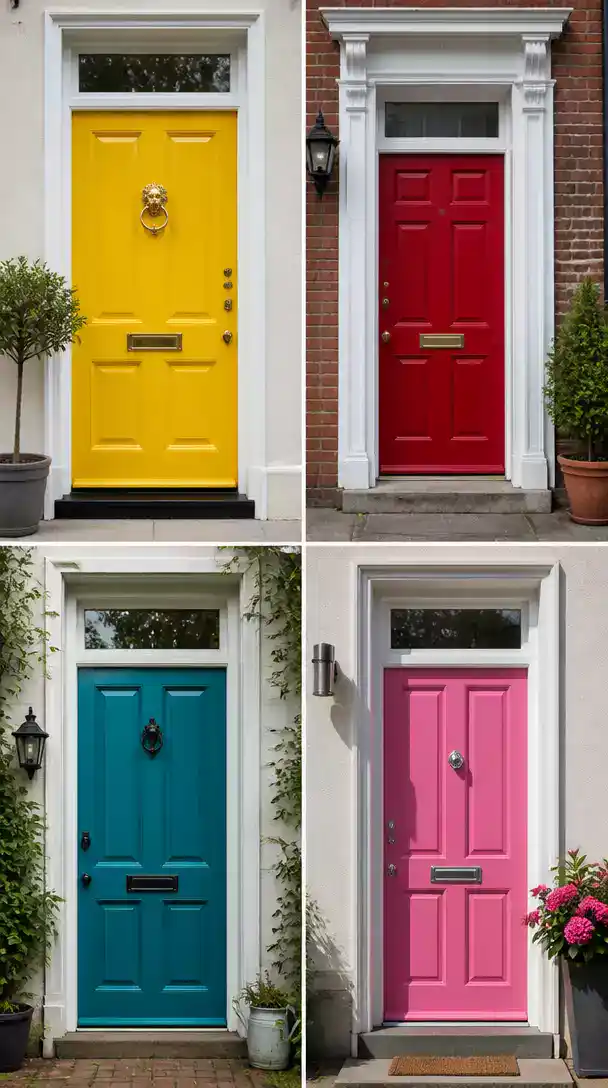
Transform your home’s personality instantly with a saturated hue that commands attention from the sidewalk.
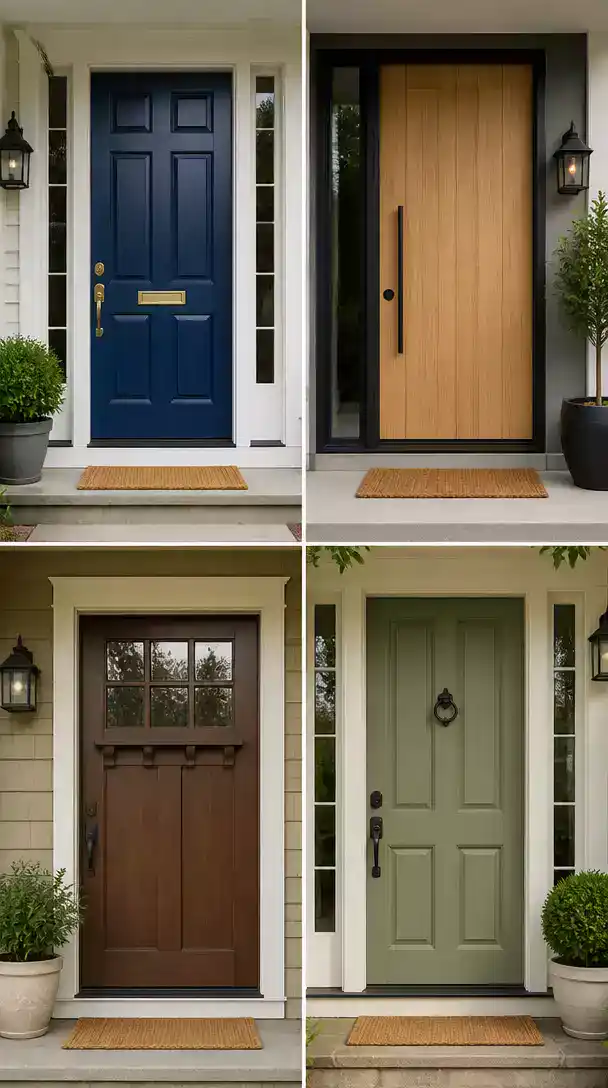
Your front door is the one architectural element where breaking the rules of your neighborhood’s neutral palette is actually encouraged. Instead of blending into the siding, a statement door acts as a visual exclamation point that tells a story about who lives inside.
The secret to making a vibrant color look intentional rather than accidental lies in the finish and the “frame.” Using a high-gloss or lacquer finish—often called the Grandmillennial style—allows the surface to reflect the sky and porch lights, adding a layer of depth that flat paint lacks.
To keep a saturated pigment from overwhelming your exterior, utilize the “Surround Strategy.” Use crisp white or cream trim to act as a visual boundary between the bold door and your primary siding color.
Heat Absorption Warning:
Darker statement colors like navy or forest green absorb significant solar heat. Avoid these on south-facing entries without an overhang to prevent the door from warping over time.
This style is the ultimate “quick win” for owners of neutral or cookie-cutter homes that lack a distinct architectural identity. A heavy brass knocker or oversized handle provides the final touch, acting like jewelry against a vibrant backdrop.
Shifting from the vibration of bright paint to the muted, tactile warmth of raw, rugged materials.
⭐ Top Products for Classic Paneled Doors
Brushed Bronze Aluminum Kick Plate
Handmade Brass Frog Door Knocker
Adjustable Aluminum and Hardwood Threshold
🔢 The Right Sequence for a Flawless Finish
Getting that professional, factory-smooth “pop” of color requires a specific order of operations to ensure the pigment bonds and the hardware stays clean.
- Remove all handles, knockers, and weather-stripping rather than taping them off for a cleaner edge.
- Apply a tintable primer to prevent the old color from bleeding through your new bold hue.
- Wait at least 24 hours after the final coat before re-installing hardware to avoid paint chipping.
Bold Color Statement Door
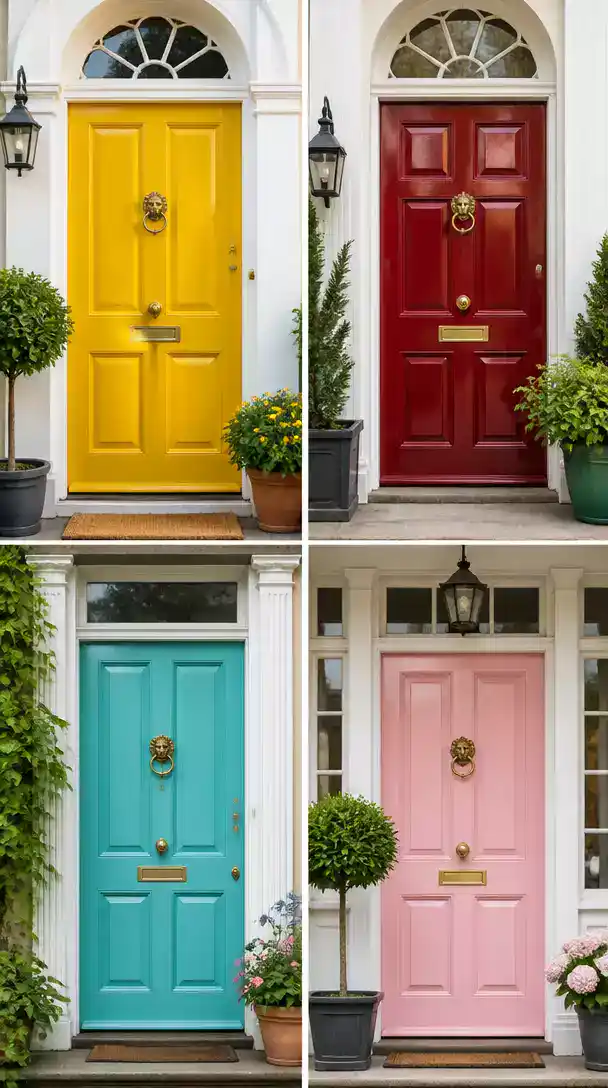
Transform a neutral exterior into a neighborhood standout with a single saturated pigment.
The front door is the one architectural element where you can ignore the neighborhood “rules” and lean into pure personality. While siding and roofing choices are usually restricted to safe neutrals, a boldly colored entry acts as a visual exclamation point for your home.
To achieve that high-end “Grandmillennial” look, opt for a High-Gloss lacquer finish. The mirror-like surface reflects the sky and streetlights, making colors like sunshine yellow or deep peony pink feel intentional rather than accidental.
To keep a saturated color from overwhelming your siding, use a Surround Strategy. Frame the door with crisp white or cream trim to create a “matting” effect, similar to how a frame highlights a piece of art.
⚠️ Heat Absorption Warning
Darker saturated colors like navy or forest green absorb significant solar heat. Avoid these on south-facing doors without a porch overhang to prevent the wood or composite from warping over time.
This style is perfect for “cookie-cutter” suburban homes that lack unique masonry or varied rooflines. Adding a heavy brass knocker provides a tactile center point that pops against the saturated paint, giving the entrance a sense of weight and history.
⭐ Best Accessories for Farmhouse Doors
Large Boxwood Artificial Green Wreath
Black and White Striped Porch Rug
Low Profile Half Moon Welcome Mat
🔢 The Right Sequence for a Saturated Finish
Getting a professional “factory” look with bold pigments requires a specific order to ensure the color stays vibrant and the surface remains glass-smooth.
- De-gloss the existing surface with fine-grit sandpaper so the new pigment grabs.
- Apply a tinted primer to prevent the bold topcoat from looking streaky.
- Wait 24 hours after the final coat before reattaching heavy brass hardware.
Arched Top Door
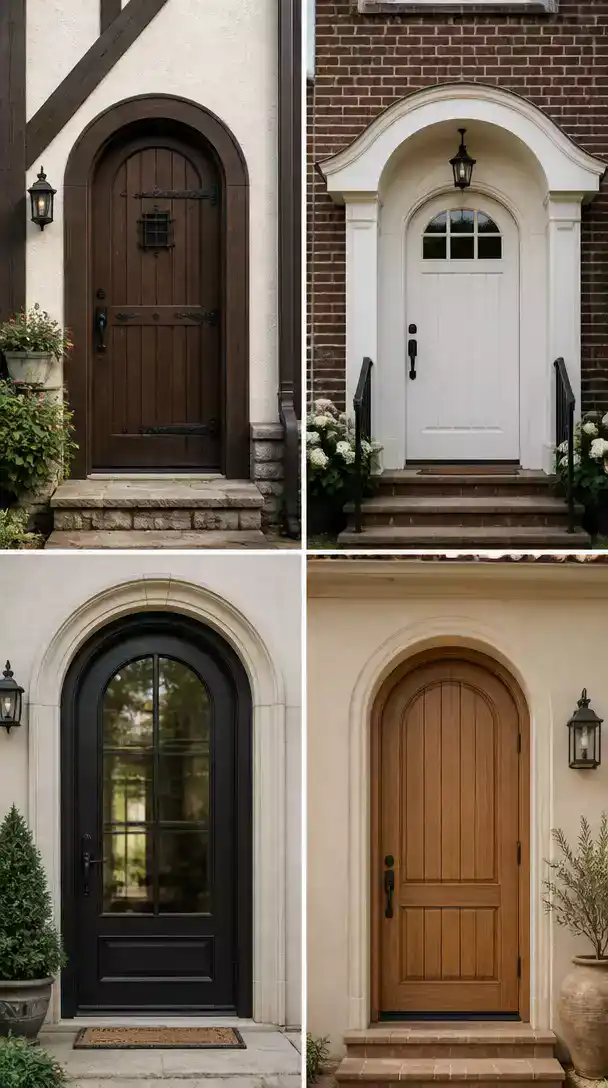
Soften your home’s exterior lines with a curved silhouette that feels like a European escape.
The arched top door acts as a visual “reset” for your home’s facade. By breaking up the rigid right angles of standard siding and rooflines, these curved headers introduce an organic, custom-built feel that suggests historic craftsmanship.
This style is a non-negotiable for specific architectural vibes like Tudor, Spanish Colonial, or Mediterranean. Without the arch, these homes often look “clipped” or unfinished, as the masonry opening expects a rounded silhouette to complete the visual story.
Because the shape is unique, the custom casing and trim must be perfectly templated to the door. If the trim doesn’t mirror the arc of the door precisely, the entire entryway will look like a DIY afterthought rather than a high-end architectural feature.
The “Measure Twice” Commitment
This is a custom silhouette choice that requires a matching arched masonry opening. Standard replacement doors will not fit here, so consider this a permanent commitment to your home’s structural geometry.
For the best result, pair your arched door with wrought iron hardware or leaded glass. These materials lean into the weighted, permanent feel that curved doors naturally project, especially when set into deep-set porches or high entry gables.
⭐ Top Products for Classic Paneled Doors
Brushed Bronze Aluminum Kick Plate
Handmade Brass Frog Door Knocker
Adjustable Aluminum and Hardwood Threshold
💰 Surprise Costs to Plan For:
- The custom premium: Expect to pay 30-50% more than rectangular doors due to specialized curved-glass fabrication and frame assembly.
- Structural masonry: If your home currently has a square opening, budget for significant labor to re-arch the brick or stone.
- Weatherproofing seals: Arched units require precision-bent weatherstripping; cheap substitutes will lead to persistent air leaks and higher energy bills.
Double Entry Door
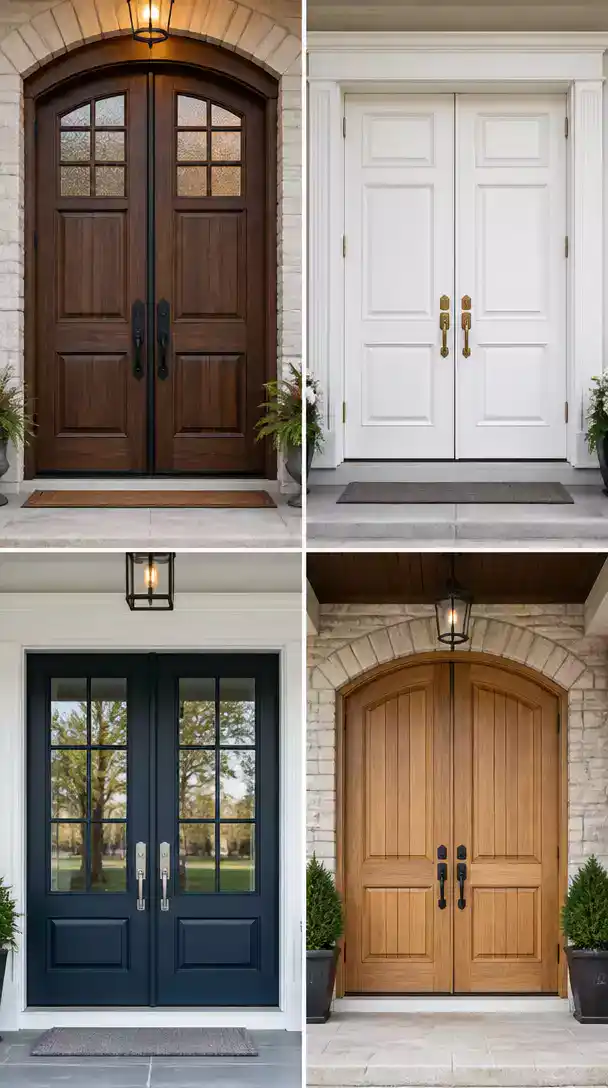
Command attention with an expansive six-foot aperture that transforms your home into a stately estate.
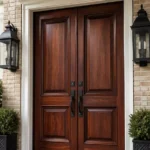
The Double Entry Door is the ultimate architectural power move for homes with a wide footprint or a two-story foyer. Opening both leaves creates a 72-inch wide “grand opening” that instantly makes even a modest entryway feel like a high-end estate.
While the visual impact is massive, daily operation relies on the astragal—the vertical molding strip attached to the “inactive” leaf. This component provides the weather-tight seal and the locking point for your main door, ensuring the pair feels as solid as a single unit when closed.
Expert Insight: Symmetry is non-negotiable here. Even if you only ever unlock the right side, you must install matching hardware on the left to avoid a lopsided, unfinished look that kills the premium vibe.
This style is best suited for Grand Entry floor plans where the porch and interior hallway can accommodate the double-swing radius. If your foyer is narrow, the double-door “arc” might feel cramped once you’re inside, so measure your clearance before committing to the width.
- Best For: Large Colonial, Mediterranean, or Georgian-style homes.
- Key Detail: Heavy-duty dummy handles for the inactive leaf to maintain visual balance.
- The Pro: Unbeatable for indoor-outdoor flow during summer parties or holiday gatherings.
⭐ Top Products for Classic Paneled Doors
Brushed Bronze Aluminum Kick Plate
Handmade Brass Frog Door Knocker
Adjustable Aluminum and Hardwood Threshold
💰 Surprise Costs to Plan For:
- The real range: Expect to spend $3,500–$7,000 for quality wood or fiberglass units, plus significant labor for the wider frame.
- Structural framing: If you are expanding a single opening, you must budget for a new, longer structural header above the door.
- Worth it / not: The investment pays off in high-traffic homes where the seamless indoor-outdoor flow during events eliminates entryway bottlenecks.
Pivot Door
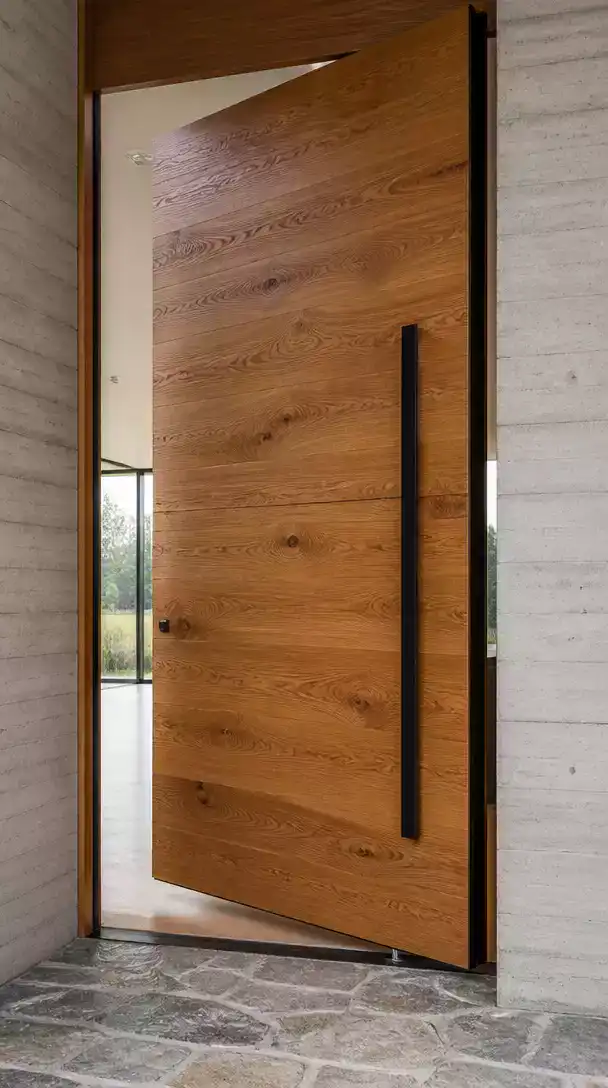
Experience the gravity-defying motion of a door that doubles as a rotating piece of art.
The pivot door moves on a floor-mounted spindle rather than traditional side hinges, creating a sophisticated “floating” rotation. Since the weight is supported by the floor rather than the wall frame, these entries can reach massive proportions without sagging.
You’ll typically see these in widths of 5 to 7 feet, utilizing heavy oak, walnut, or glass-and-steel combinations. The sheer mass of the material becomes the primary design feature, providing a gallery-like entrance for contemporary homes.
The Pivot Clearance Rule
Because the door rotates on an axis, the back edge swings inward and outward simultaneously. You must maintain 12–18 inches of clear space on both sides of the opening to accommodate the rotation path.
This style is a definitive choice for ultra-modern architecture or custom luxury builds where the entryway is meant to be a structural statement. If your home features clean lines and large-scale windows, the pivot door provides the necessary visual weight to ground the facade.
Skip this style if you have a cramped foyer or a narrow porch. The offset pivot point creates a gap on both sides when opening, which requires ample breathing room to maintain its high-end, airy aesthetic.
⭐ Top Products for Classic Paneled Doors
Brushed Bronze Aluminum Kick Plate
Handmade Brass Frog Door Knocker
Adjustable Aluminum and Hardwood Threshold
💰 Investment and Reality Check
- The real range: Expect to spend significantly more than standard entries; these are custom-engineered statements rather than off-the-shelf purchases.
- Hidden cost: Structural framing is often required to support the spindle’s tension, especially in retrofits or older homes.
- Worth it / not: The investment pays off in high-end curb appeal, but skip it if you prioritize airtight weatherproofing in extreme climates.
You now have ten distinct directions to transform your entryway into a high-impact focal point. The style that suits your architecture is likely already standing out, so there is no need to overthink the remaining options. A single, deliberate choice regarding your front door carries the visual weight of the entire exterior.
Once you identify the silhouette that aligns with your home’s character, the rest of the renovation falls into place. You can even consult a guide on how to choose a front door that fits your house to confirm your selection. Deciding on the right frame first ensures a confident, lasting result.