
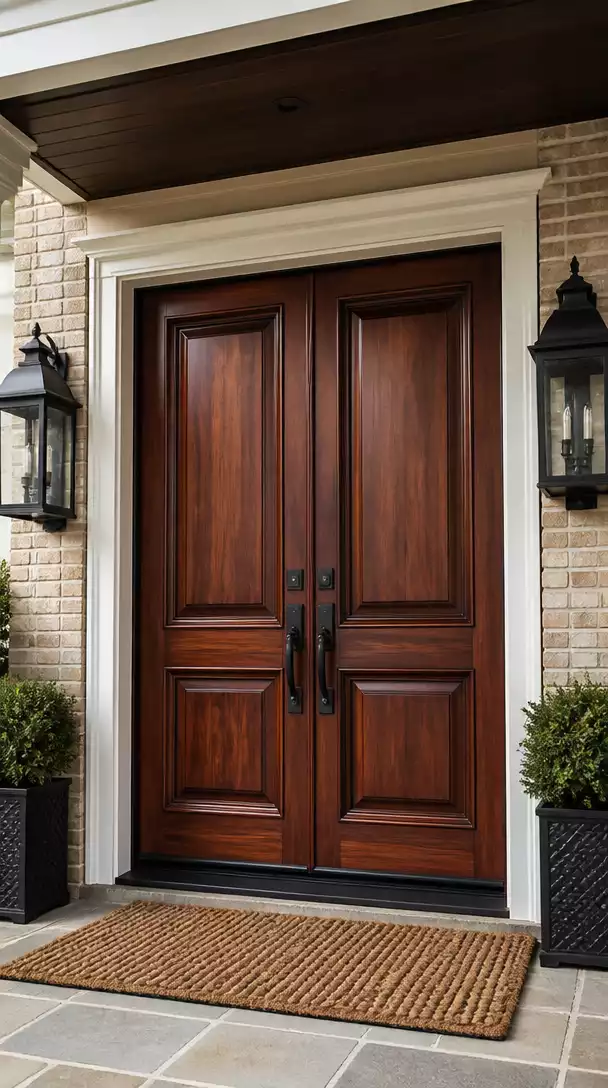
Investing in wooden double front doors requires prioritizing structural integrity over simple aesthetics to avoid costly warping. This guide narrows the decision to 12 durability benchmarks that ensure your investment lasts decades. Before looking at paint swatches, check these survival metrics.
Wood Species: The Rot-Resistance Hierarchy
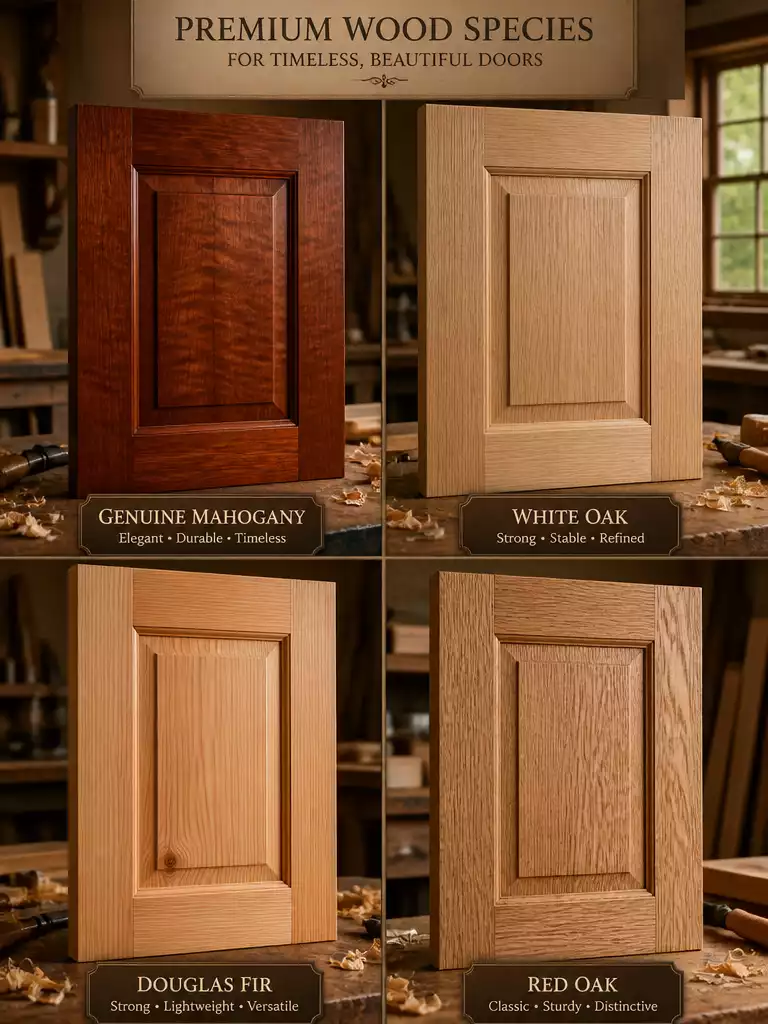
Choose a species with natural cellular defenses to ensure your grand entrance stays straight and rot-free.
As an Amazon Associate I earn from qualifying purchases. Affiliate links may earn me a commission at no extra cost to you.
Thinking all wood is naturally “durable” is a mistake that leads to sticking doors and peeling finishes within twenty-four months. Choosing Pine for a fully exposed double door is like wearing a linen shirt in a blizzard—it is simply the wrong tool for the job.
The cellular biology of your door determines its fate long before the first coat of stain is applied. While some species act like sponges, others have natural chemical barriers that fight off moisture and fungal decay.
| Wood Species | Cellular Structure | Stability Rating |
|---|---|---|
| White Oak | Closed (Tyloses) | High (Water-resistant) |
| Genuine Mahogany | Interlocking Grain | Best (Lowest Shrinkage) |
| Douglas Fir | Vertical Grain | Moderate (High Strength) |
| Red Oak | Open (Straw-like) | Poor (Sucks moisture) |
White Oak is a favorite for a reason; its pores are plugged with tyloses, creating a natural water barrier. Contrast this with Red Oak, which has open, straw-like pores that essentially wick water into the heart of the door, leading to black rot.
For double doors specifically, Genuine Mahogany is often the gold standard because it has a remarkably low shrinkage coefficient. This means your doors won’t “shrink” away from each other during a dry winter, which prevents that frustrating drafty gap in the middle.
The Janka Hardness Check
Always verify the Janka rating of your chosen species. You need a wood hard enough to resist hail and dog claws, yet stable enough not to twist under its own weight; Mahogany strikes the most reliable balance for heavy double-door systems.
If you prefer a lighter look, Douglas Fir is a high-strength option, provided you specify Vertical Grain (VG). The vertical orientation of the fibers resists the specific sagging forces that plague massive double-door slabs better than standard flat-sawn lumber.
But even the best species fails if it’s one solid, unstable slab of wood—which leads us to the core.
.
💰 Species Influence on the Total Budget:
- The premium gap: Expect to pay a 30% to 50% upcharge for Genuine Mahogany over standard Douglas Fir options.
- Regional shipping: Heavy hardwoods like White Oak often incur higher freight costs due to density and weight-per-slab metrics.
- Maintenance ROI: Investing in rot-resistant species now prevents the $1,500+ cost of professional structural repairs or premature replacement later.
Solid vs. Engineered Core: The Stability Secret
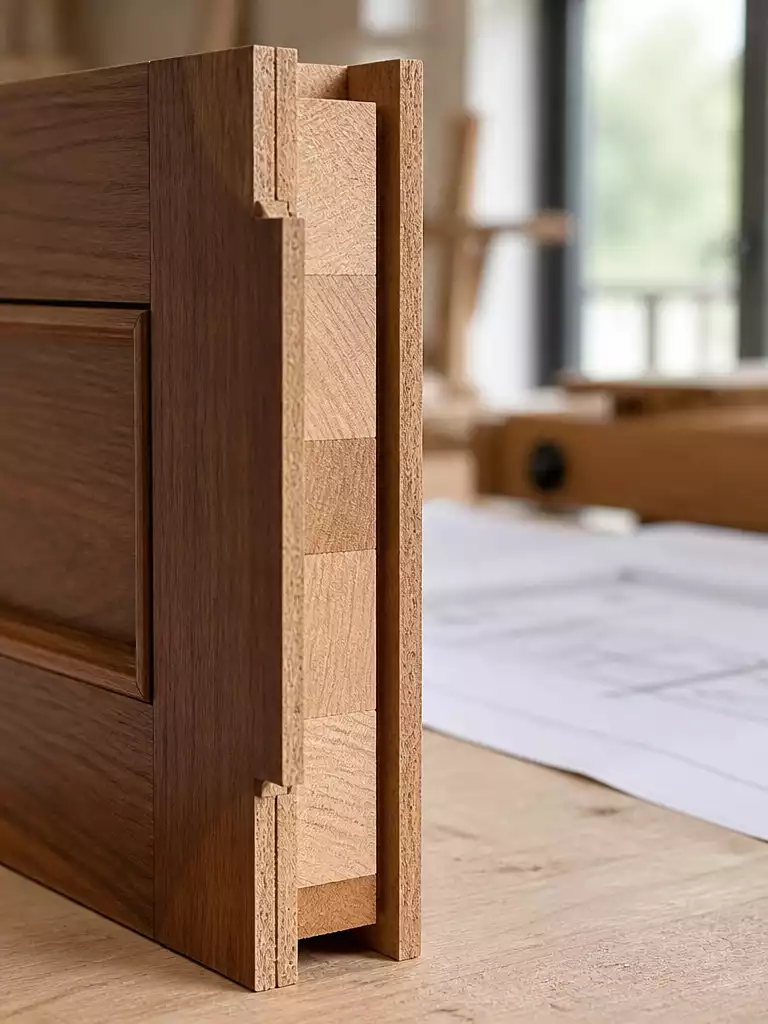
Structural engineering hidden inside your door ensures a perfectly flush, draft-free fit for decades.
When you hear the term “solid wood,” it sounds like the gold standard for quality and luxury. However, for double doors, a single massive slab of wood is often a structural liability rather than an asset.
Because wood is a living material, a 36-inch wide solid oak slab naturally wants to return to its original curved shape as humidity fluctuates. This leads to internal tension that causes warping, bowing, or twisting, making it nearly impossible for two doors to meet perfectly in the center.
Why Engineered Cores Win:
- LVL (Laminated Veneer Lumber): These cores consist of multiple layers of wood bonded with grains running in opposing directions. This cross-grain construction effectively cancels out internal tension, preventing the door from “pulling” itself out of alignment.
- Stave Core Construction: This method uses small blocks of wood glued together like a jigsaw puzzle. If a crack develops in one block, the surrounding glue lines stop it from traveling through the entire thickness of the door.
- Veneer Protection: A thick hardwood “skin” covers these cores, providing the premium look of solid wood while the engineered center does the heavy lifting of staying straight.
For double doors reaching 8 feet or taller, an engineered core is no longer just an option—it is mandatory. Without this internal stability, tall slabs often develop a “smile” or “frown” warp, which leaves a permanent gap at the top or bottom of the entry.
The “Solid Wood” Red Flag: Be wary of manufacturers who use the “Solid Wood” label to hide a lack of technology. A door built with 100% solid, non-engineered stiles is much more likely to sag over time, eventually causing the latches to misalign.
Choosing an engineered core means your doors will remain flush and airtight through every season. Once you have a stable core, the next factor in longevity is how those components are actually held together.
.
Joinery and Construction: Beyond Glue and Nails
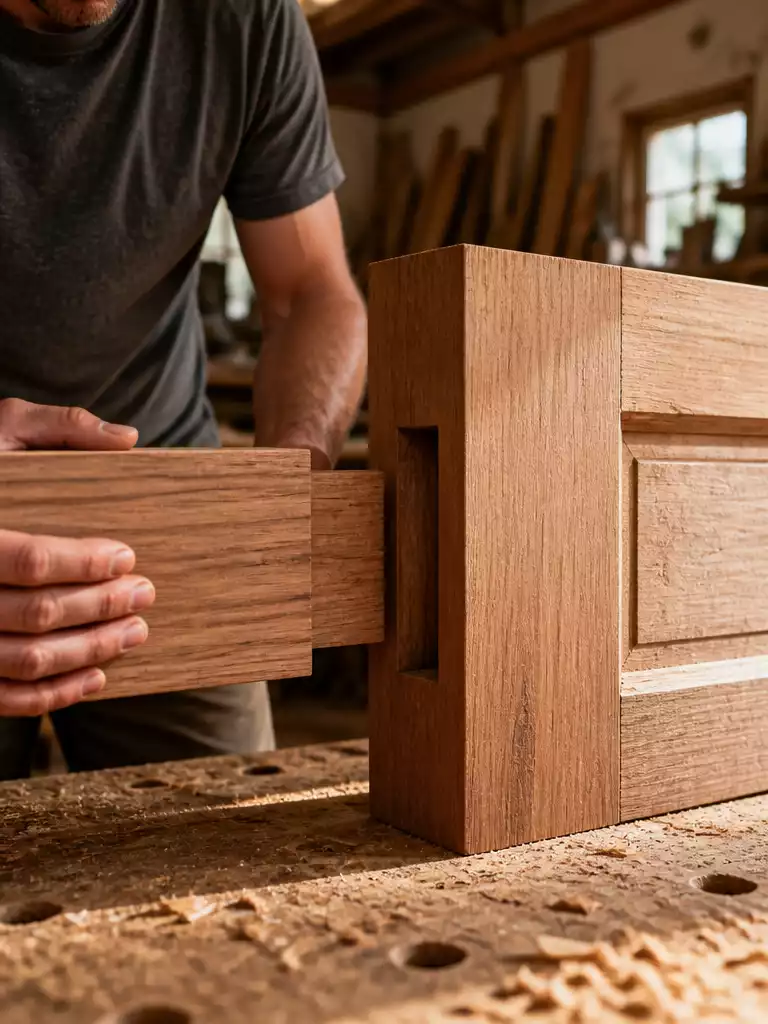
Precision-milled joints ensure your grand entrance remains structurally sound and perfectly aligned for decades.
Double doors are essentially two massive levers constantly pulling against their hinges. Because there is no central post to latch into, gravity is the enemy, perpetually trying to pull those top corners toward the center of the opening.
If the joints aren’t built to withstand this constant shear force, the doors will eventually “rack” or sag. This leads to the dreaded center gap where light and cold air pour into your foyer.
The Joinery Hierarchy
| Joint Type | Durability Level | Best For… |
|---|---|---|
| Deep Mortise & Tenon | Gold Standard | Heavy 2-1/4″ thick double doors. |
| Cope & Stick | High Structural | Interlocking frames that won’t rack. |
| Dowelled Joinery | Budget/Risky | Lightweight interior or single doors. |
The “Deep Mortise and Tenon” joint is a massive wooden tongue fitting into a deep pocket. This creates a huge surface area for wood-to-wood bonding, making it nearly impossible for the door to pull apart under its own weight.
In contrast, dowelled joinery relies on small wooden pegs that can snap under the intense pressure of a heavy 2-inch thick oak slab. For a double door system, dowels are often a recipe for a sagging door that sticks against the threshold within three seasons.
The “Blind Mortise” Advantage: Look for construction where the joint isn’t visible on the outer edge of the door. This design prevents water from seeping into the end grain of the tenon—the #1 cause of joint rot and structural failure.
You should also verify that the door uses Cope and Stick profiles. This is where the horizontal rails are precision-milled to interlock with the vertical stiles, creating a structural frame that stays square even as the house settles.
When these mechanical interlocks are combined with modern waterproof adhesives, the door becomes a single, rigid unit. This engineering is what allows a 150-pound door to swing thousands of times without ever losing its “factory-square” alignment.
.
🧰 Questions for Your Installer:
- Joint Inspection: Can you confirm if these are blind mortise joints to prevent water from reaching the internal tenon grain?
- Adhesive Specs: Are you using a Type III waterproof exterior adhesive to ensure the joints won’t delaminate in high humidity?
- Long-Term Leveling: How will you shim the hinges to ensure these heavy 2-inch slabs don’t sag and “rack” the joints?
4. Climate Suitability: Matching Species to Exposure
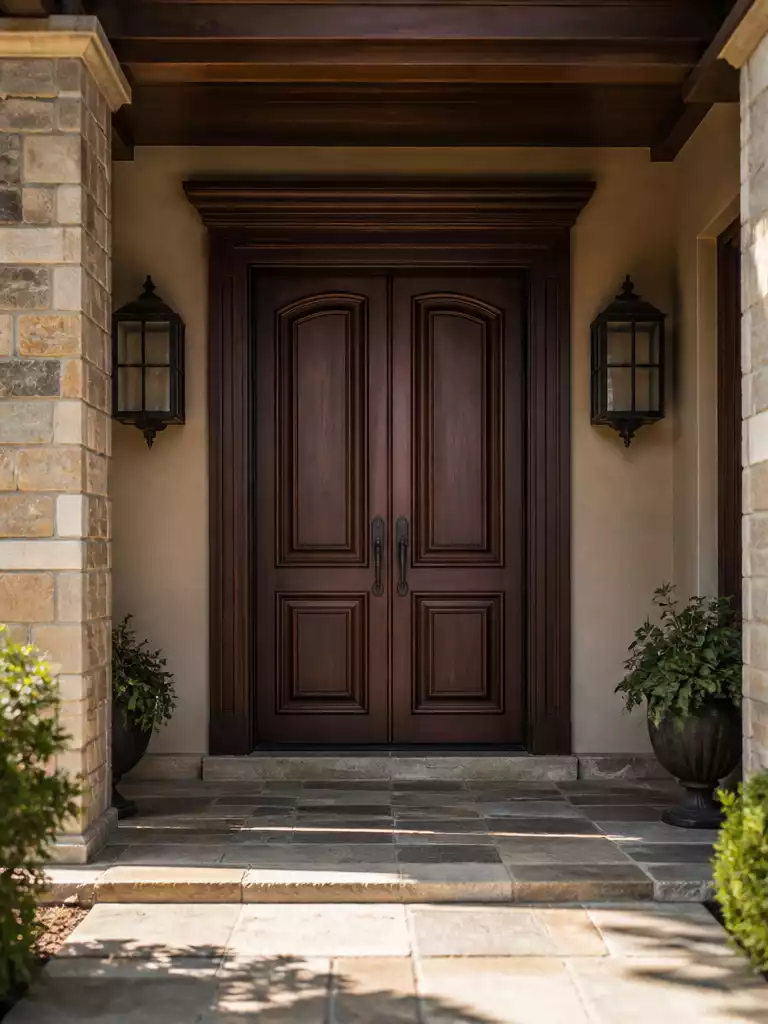
Aligning your wood choice with your local environment prevents premature warping and finish failure.
If your front door faces South or West, it is essentially an oversized piece of kindling sitting in an oven for eight hours a day. Without the right species, the intense UV radiation and heat will bake the moisture out of the fibers, causing the wood to pull itself apart.
The Overhang Rule
A wooden door’s lifespan is directly proportional to the depth of your porch. As a rule of thumb, the overhang depth should be at least half the height of the door unit to provide adequate protection from sun and rain.
For those living near the coast, salt air is the primary enemy that can cause standard wood to “check” or split within just a few seasons. Genuine Mahogany remains the king of the coast because its naturally oily resins act as a built-in preservative against salt spray and moisture cycling.
In regions plagued by high humidity or constant rainfall, species like White Oak or Teak are the most reliable defenders. Their high tannin content acts as a natural fungicide, preventing the black rot that often settles into the joints of less resilient woods like Pine.
| Environment | Recommended Wood | Key Benefit |
|---|---|---|
| Salt Air/Coastal | Mahogany | Natural oils resist salt corrosion. |
| High Humidity | White Oak | Closed-cell structure blocks water. |
| Arid/Desert | Engineered Core | Prevents rapid-dry “checking.” |
Arid or desert climates present a different challenge: the wood dries out so aggressively it can crack along the grain lines. In these zones, an engineered core is non-negotiable, as it provides the internal stability needed to resist the extreme contraction that happens in low-humidity environments.
If your home lacks a deep porch overhang, you are essentially in a “high-exposure” category regardless of your zip code. In this case, you must either opt for a marine-grade finish or choose a modified species like Accoya that has been chemically altered to never rot or swell.
Matching the wood to the weather is half the battle; the other half is the chemical shield you apply to those surfaces.
.
⚠️ High-Exposure Hazards to Avoid:
- The “Linen Shirt” Trap: Avoid using Pine or Red Oak in south-facing or unsheltered areas; they lack the cellular density to stop rot.
- Ignoring Porch Depth: Don’t install standard wood if your overhang is less than half the height of the door unit.
- Low-Humidity Brittle: Avoid solid slabs in desert zones; the rapid moisture loss causes “check cracking” that splits the grain apart.
The technical specifications of a double entrance can feel like a heavy burden when you are staring down a significant investment. You do not need to master every structural nuance to secure a high-performing result that protects your resale value. A few strategic choices regarding core stability and species will do the heavy lifting for your home’s long-term curb appeal.
🎯 The Calls Worth Getting Right:
- Prioritize engineered cores for your new front door selection.
- Consider how impact-resilient glass pairs with french doors for security.
- Focus on non-ferrous hardware to prevent permanent wood staining.
- Match the wood species to your specific porch overhang depth.
5. Finish and Sealant: Factory-Applied vs. Field-Finished
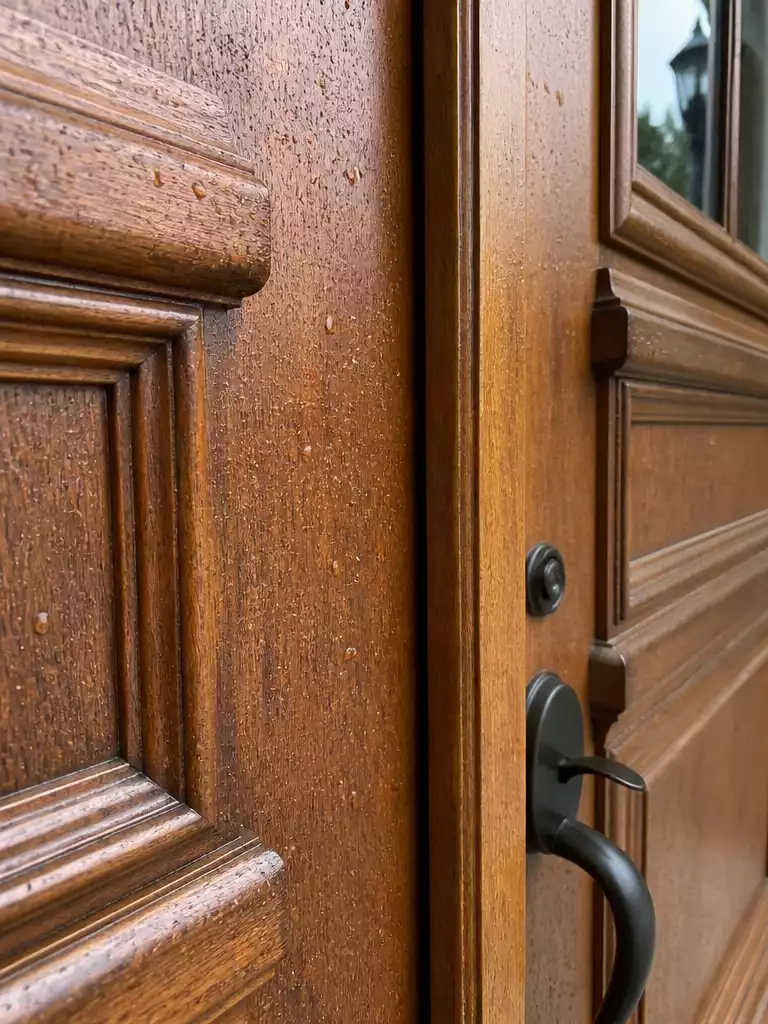
A professional finish serves as the invisible armor that preserves your wood’s structural integrity for decades.
Most homeowners mistakenly believe that the stain provides the protection for their new double doors. In reality, stain is merely the aesthetic pigment; the clear topcoat is the actual chemical shield standing between your investment and the elements.
The “Six-Side” Rule
For a warranty to remain valid, the door must be sealed on all six sides: the front, the back, both vertical edges, the top, and the bottom. Moisture often sneaks into the unsealed bottom edge, leading to core rot that is invisible until it’s too late.
When choosing between a factory-applied finish and finishing the door on-site, the factory environment almost always wins. Manufacturers use electrostatic sprayers in temperature-controlled “clean rooms” to ensure an even, dust-free application that a brush or handheld sprayer in a driveway simply cannot replicate.
| Finish Type | Best For | Performance Note |
|---|---|---|
| Marine Spar Varnish | Direct Sun/Rain | High oil content allows the finish to expand and contract with the wood. |
| Polyurethane | Full Cover/Porch | Dries hard; may crack if the door is exposed to extreme temperature swings. |
| Penetrating Oils | Low Maintenance | Doesn’t peel like a film; can be refreshed without sanding to bare wood. |
Warning: Avoiding the “Sunburn” Peel
Avoid film-forming finishes in high-exposure areas without a deep overhang. These coatings often trap internal moisture and eventually peel like a sunburn, requiring a full, expensive strip-and-refinish.
If your door faces South or West, prioritize finishes with high UV-inhibitor counts. These chemicals act as a sunscreen for the wood fibers, preventing the lignin from breaking down and the color from turning a “milky” gray over time.
.
⭐ Editor’s Picks for Finish and Sealant
Clear Waterproofing Wood and Surface Sealer
Penetrating Wood Sealer with Polyurethane Protection
Tough Scratch Resistant Interior Wood Varnish
🧰 Questions for Your Finisher:
- Application Method: Will this be applied via electrostatic spray in a booth or hand-brushed on-site to ensure edge-to-edge uniformity?
- Vertical Sealing: How do you plan to seal the top and bottom grains once the door is hung to prevent “wicking”?
- Product Elasticity: Is the clear coat a high-build spar varnish or a rigid interior poly that might crack under sun exposure?
6. Panel Style and Proportions: Structural Geometry
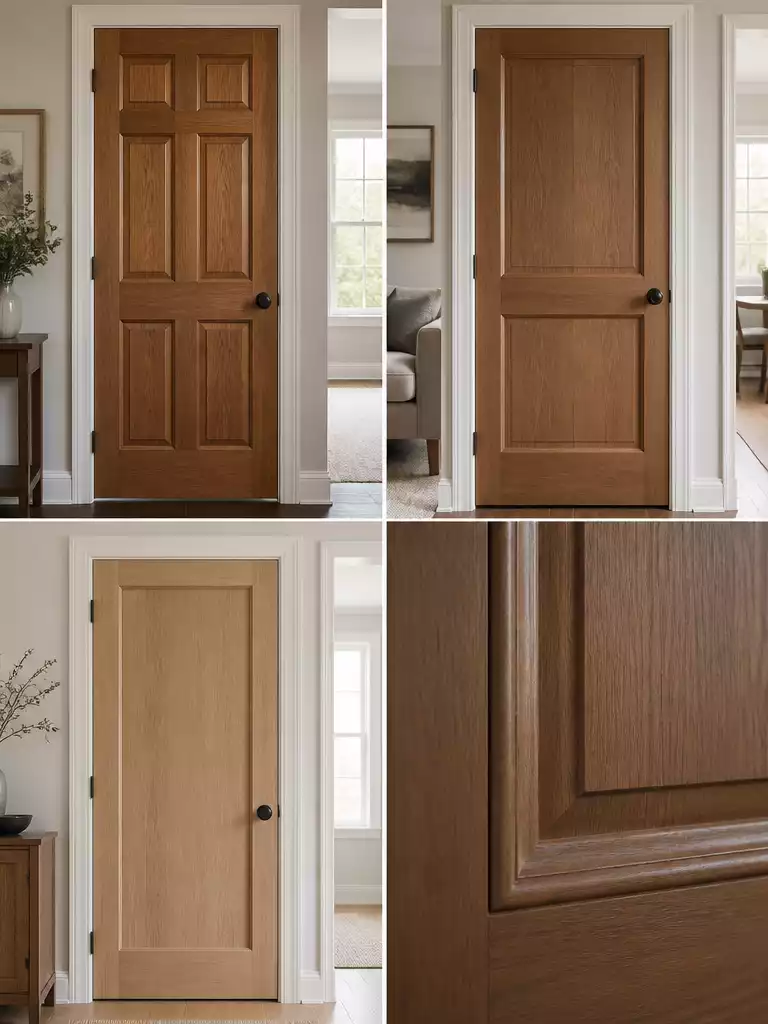
Smart structural geometry ensures your door panels expand and contract without ever cracking the frame.
When you look at a high-end double door, those beautiful recessed or raised sections aren’t just there for the “Traditional” or “Craftsman” look. In a quality build, these are Floating Panels, meaning they are tucked into grooves within the stiles and rails rather than being glued or nailed down.
This design is a functional necessity because wood is a living material that breathes; if those large panels were fixed in place, the internal pressure from humidity would eventually cause the wood to split or warp the entire door frame. By allowing the panels to “float,” the door can expand in the summer and shrink in the winter without compromising the door’s overall squareness.
Structural Stability Secret: The Panel Count
- More Divisions, More Strength: A 6-panel door is inherently more stable than a 2-panel door because the wood is broken into smaller, more manageable sections.
- Raised vs. Flat: Raised panels are milled thicker at the center, providing more structural mass and significantly better natural insulation than thin flat panels.
- The Space Ball Trick: Premium manufacturers often hide “Space Balls”—tiny rubber spacers—inside the panel grooves to keep the wood centered while providing a cushion for movement.
You should be wary of doors that use “Applied Moulding,” which is decorative trim nailed onto the surface of a flat slab to mimic a paneled look. These strips create tiny water traps where moisture can sit and eventually rot the wood from the outside in.
Instead, look for integrated profiles like “Ovolo” or “Shaker” sticking, where the decorative edge is actually milled into the structural frame of the door itself. This creates a seamless transition that sheds water effectively and keeps the structural geometry intact for decades.
The Red Flag: If the panel feels “solid” and doesn’t have a microscopic gap at the edges, it may be glued in place. This is a major failure point for double doors, as it forces the door to bow when the wood tries to move.
Ultimately, the way these panels are proportioned dictates how much stress is placed on the center of the double door system. Choosing a design with integrated profiles and floating components ensures that your doors stay flush and functional regardless of the humidity levels outside.
.
💰 Structural Spend Reality: Investing in Stability
- The premium floor: Expect a high-performance double door with engineered components to start in the $8,000 range for quality mahogany or oak.
- Hidden installation costs: Budget for a professional install, which often adds $2,000, ensuring the heavy panels are perfectly balanced to prevent drag.
- Where it pays: Spending more on integrated “Ovolo” milling saves you the $1,500+ cost of early rot repairs caused by trapped moisture.
7. Glass Options: Seal Integrity and Thermal Breaks
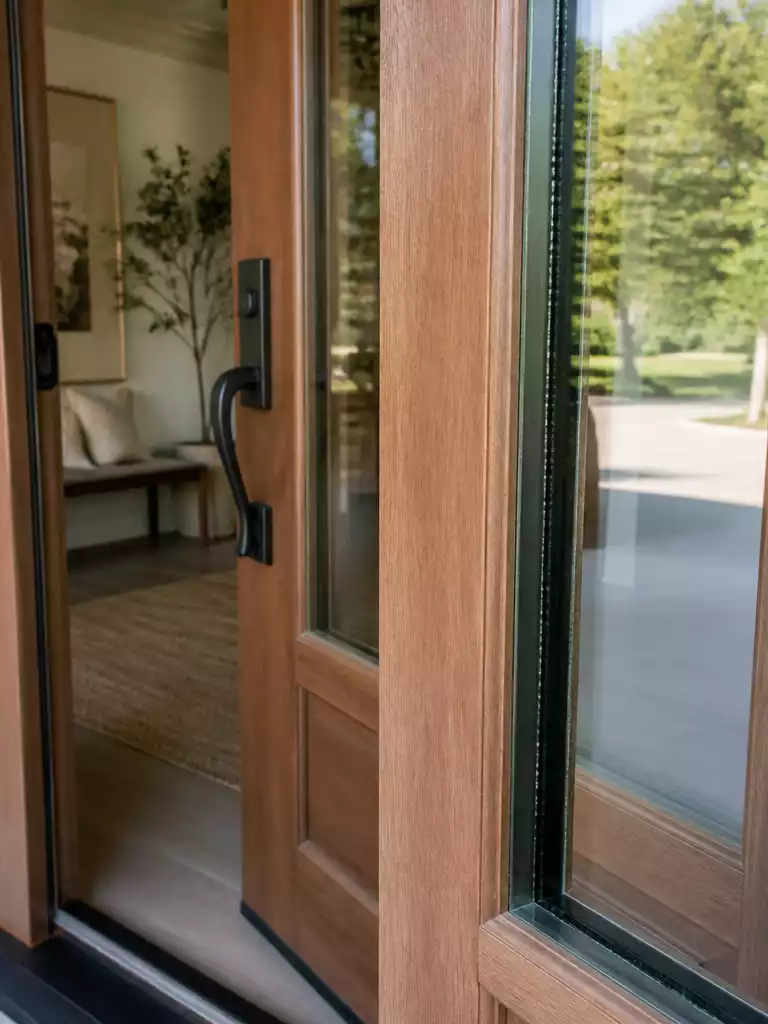
High-performance glazing protects your interior finishes while maintaining a whisper-quiet, energy-efficient entryway.
In a double door system, the glass isn’t just a decorative portal for natural light; it is a potential structural vulnerability. Because double doors lack a central support post, the glass units must be engineered to withstand the unique vibrations and forces of two heavy slabs meeting in the middle.
When selecting your glass, the “Dual Seal” technology in Insulated Glass (IG) units is your first line of defense. A high-quality unit uses a primary PIB seal to block moisture vapor and a secondary silicone seal to provide the structural strength needed to keep the panes bonded for decades.
The Thermal Barrier Checklist
- Warm-Edge Spacers: Opt for stainless steel or foam spacers rather than aluminum, which conducts cold and causes rot-inducing condensation on your wood beads.
- Low-E Coatings: These invisible layers reflect UV rays, preventing the sun from “cooking” your expensive interior wood finish and causing premature fading.
- Safety Glazing: Ensure all glass is Tempered or Laminated; if a heavy double door slams in a sudden wind gust, standard glass will shatter into dangerous shards.
Impact resilience is non-negotiable for large-scale double entries. Tempered glass is heat-treated to be four times stronger than standard glass, providing the necessary durability for the “slam factor” inherent in high-traffic double door systems.
⚠️ The Condensation Trap
Avoid cheap aluminum spacers between glass panes. They create a “cold bridge” that pulls moisture from the air, leading to puddles on the wood glazing bead that eventually rot the frame from the inside out.
By prioritizing thermal breaks and seal integrity, you ensure the glass remains as durable as the wood surrounding it. This engineering prevents the foggy, failed seals that often plague lower-end double door installations after just a few seasons.
.The requested list item has no products; therefore, only a period is returned.
8. Hardware Compatibility: The Role of the Multi-Point Lock
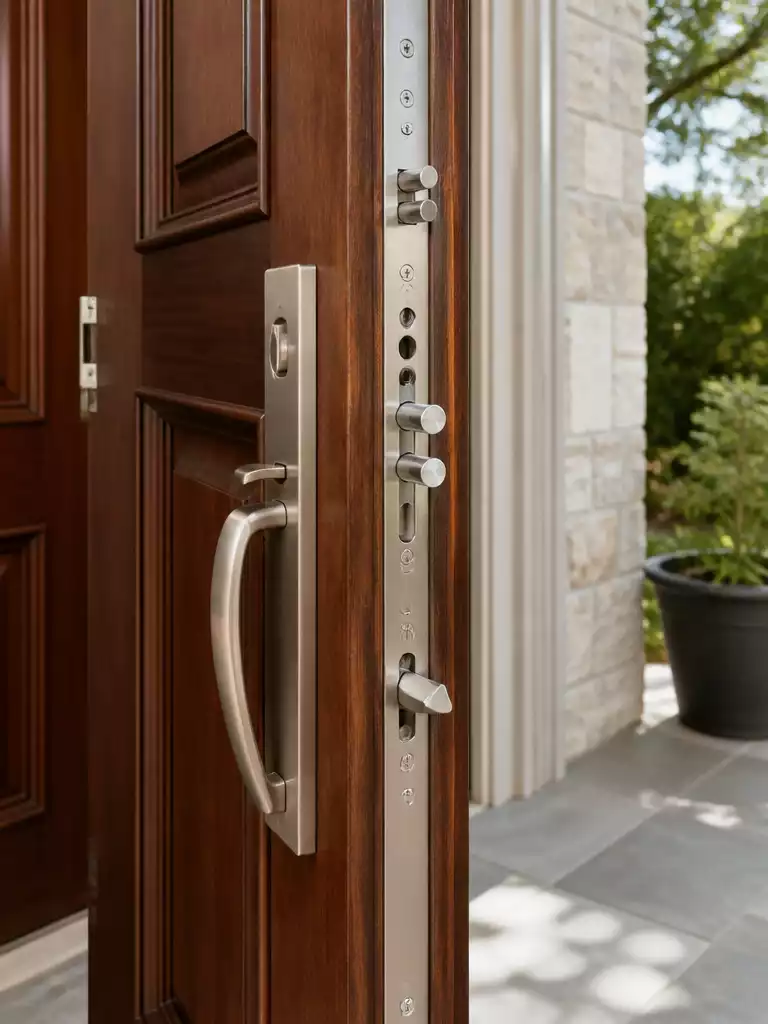
Secure your home with advanced multi-point hardware that preserves your door’s alignment and structural integrity.
A standard deadbolt is insufficient for double doors because it only secures the slabs at one single point in the middle. This leaves the top and bottom corners of these heavy units free to move, which is often how warping begins.
The Multi-Point Locking System
This is the gold standard for double door longevity. By engaging bolts at the top, middle, and bottom simultaneously, the system pulls the entire height of the door tight against the weatherstripping, physically preventing the wood from bowing over time.
Because double doors weigh significantly more than single units, standard hinges will eventually succumb to “hinge bind” or door drag. You should specify ball-bearing hinges with 4-inch or 5-inch spreads to distribute that massive weight smoothly every time you swing the door open.
The “active” door (the one you use daily) and the “inactive” door meet at a vertical strip called the astragal. For a truly airtight seal, ensure your astragal includes a floating boot at the bottom that compresses against the threshold to block drafts and moisture.
⚠️ Avoid “Iron Sickness”
Never use zinc-plated hardware on high-end wood doors. Within three years, moisture causes these metals to corrode, bleeding black “iron sickness” stains into the wood fibers that are nearly impossible to sand out; stick to Solid Brass or Stainless Steel.
The best hardware won’t help if the door is forced into a poorly sized opening. Proper alignment depends on the hardware and the frame working as a single, calibrated machine.
.
💰 Hardware & Security Investment Reality:
- The hardware gap: High-end multi-point systems and solid brass hinges typically add $800–$1,500 to your total door project cost.
- Hidden labor: Machining a door for multi-point locks is complex; expect installers to charge a premium for this specialized routing.
- Long-term saving: This hardware prevents warping, saving you from a $5,000+ full-door replacement when single-point locks eventually fail to seal.
9. Sizing and Standard Openings: Avoiding the “Sag”
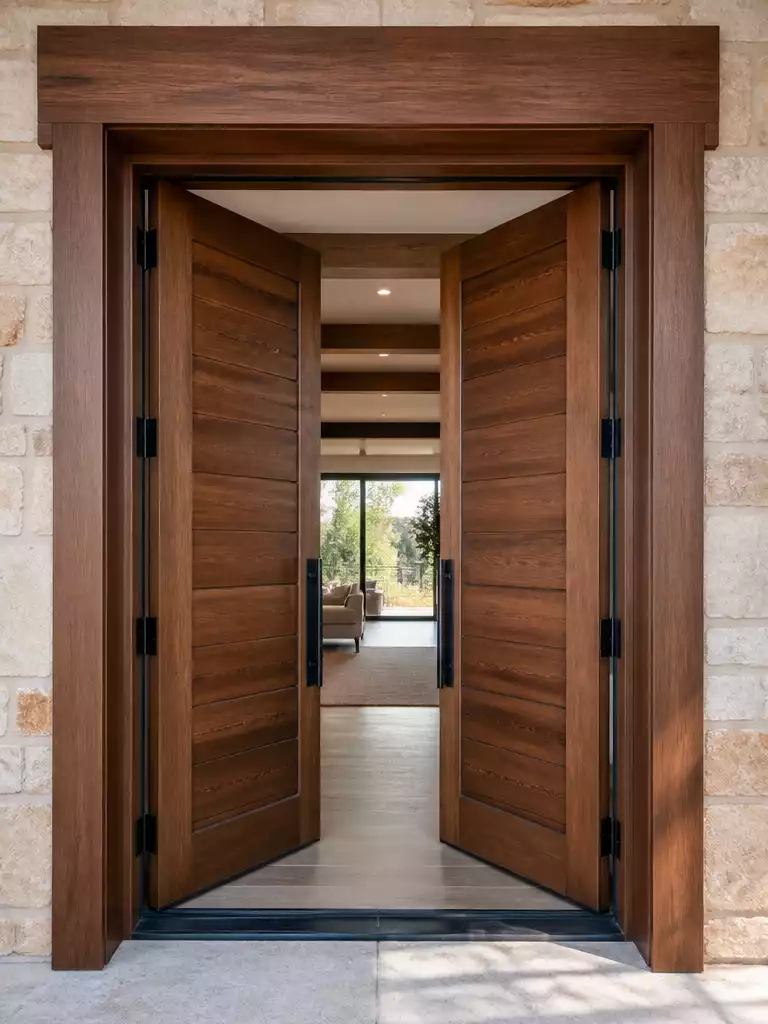
Perfect proportions and structural reinforcement ensure your grand entrance remains effortless and perfectly aligned for decades.
Think of your double doors as two massive levers constantly pulling against your wall studs. Because there is no center post to share the load, the entire weight of both slabs rests on the outside jambs and the overhead framing.
While a standard 6/0 x 6/8 (72 inches by 80 inches) opening is the structural “sweet spot,” going larger changes the engineering requirements. Once you move into custom widths or heights, the weight increases exponentially, often requiring LVL headers in your home’s framing to prevent the ceiling from sagging onto the door unit.
The Thickness Rule for Tall Doors
If you are dreaming of a “Grand” entrance that stands 8 feet or taller, standard door dimensions will not suffice. For these heights, you must increase the door thickness from the residential standard of 1-3/4″ to 2-1/4″ thickness.
This extra half-inch isn’t just for a premium feel; it provides the necessary beam strength to keep a tall vertical slab from bowing or twisting over time.
Precision during the framing stage is the only way to avoid a “lazy” door that won’t stay open or a center gap that looks like a crooked smile. The “Plumb and Square” mandate is absolute; if your rough opening is even 1/4 inch out of square, a double door system will struggle to seal at the meeting point.
You also need to verify your jamb depth before ordering. The door frame must match your specific wall thickness—whether it’s a standard 2×4 or a 2×6 exterior wall—to provide enough structural surface area to support the heavy hinges and prevent the frame from twisting under the weight of the slabs.
Warning: Never install heavy 2-1/4″ double doors into a standard 2×4 framed wall without verifying the header capacity. The sheer weight can cause the top of the frame to dip, pinching the doors shut.
By matching the scale of the door to the structural capacity of the house, you ensure the hardware can actually do its job. When these dimensions align, the doors will hang perfectly parallel, maintaining that crisp, airtight center seal.
.
💰 Structural Spend: Planning the Budget
- The custom premium: Moving from a standard 6/8 height to an 8-foot custom opening typically increases the manufacturing cost by 30-50%.
- Header reinforcement: Budget for a structural carpenter if your wall isn’t “8-foot ready,” as retrofitting an LVL header adds labor and drywall repair.
- Thickness value: Investing in the 2-1/4″ thickness upgrade is non-negotiable for tall doors to avoid the $1,500+ cost of future warp-related repairs.
10. Installation Quality: Flashing and Shimming
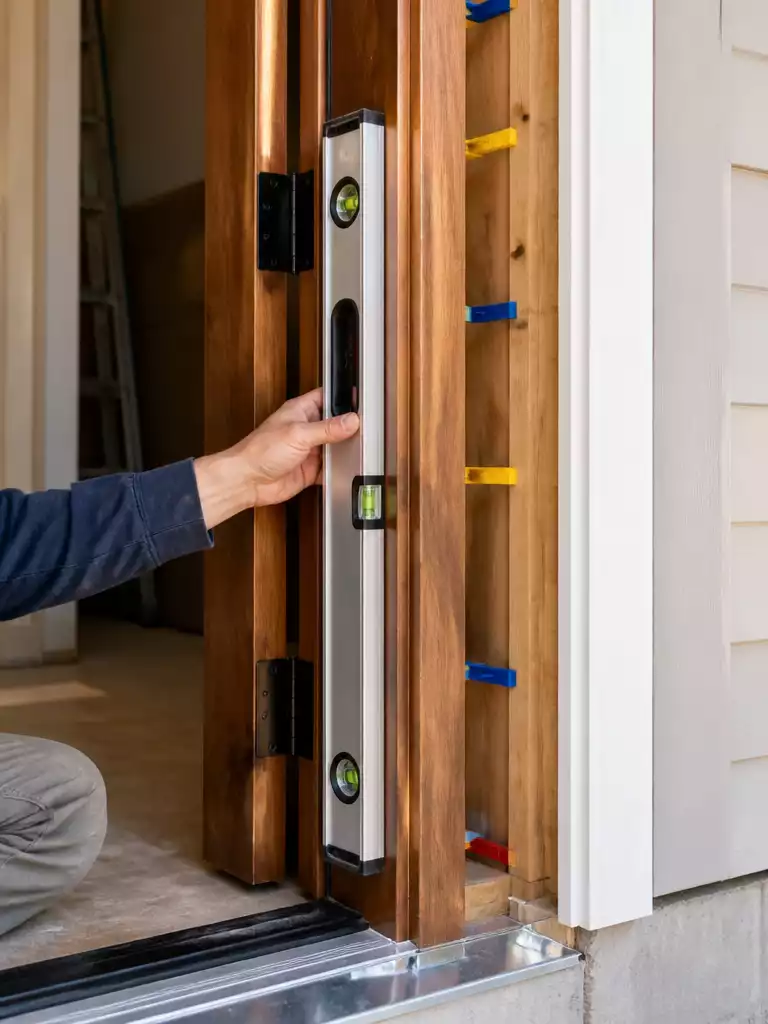
Precision anchoring and moisture protection ensure your heavy double doors remain perfectly aligned for years.
You can buy the most expensive mahogany slab in the world, but it will fail within seasons if the installation is sloppy. Statistics suggest that 90% of door failures are actually installation failures, usually starting with how the unit is anchored to the house frame.
Double doors act as two massive levers constantly pulling on your wall studs, meaning standard installation shortcuts won’t cut it. To prevent the “sag” that leads to sticking and center gaps, your installer must move beyond basic nails and wood glue.
The Professional Install Checklist
- Sill Pan Flashing: This metal or plastic tray sits under the door to catch water that sneaks past the threshold, directing it outside rather than letting it rot your subfloor.
- Solid Shimming: Avoid flimsy cedar shakes; use solid composite or plastic shims behind every hinge to ensure the heavy slabs don’t compress the shims and pull out of alignment.
- Backer Rods: Before applying caulk, a foam backer rod must be inserted into the gaps to provide a flexible foundation for the sealant to expand and contract.
- High-Performance Sealant: Use a professional-grade product like OSI Quad that allows for the house’s natural settling without cracking or pulling away from the wood.
One of the most effective ways to guarantee long-term stability is the Long Screw trick. Your installer should replace at least one short screw in every hinge with a 3-inch screw that penetrates deep into the wall stud.
This simple swap anchors the massive weight of the door directly to the structural skeleton of your home. Without this, the weight is supported only by the decorative door jamb, which will eventually warp under the constant gravitational pull.
Finally, ensure the rough opening is verified for Plumb and Square before the door even leaves the crate. If the opening is even 1/4 inch out of square, double doors will never meet perfectly at the center, leading to permanent drafts and latching issues.
⭐ Top Tools for Installation Quality
Double Sliding Barn Door Hardware Kit
Complete Window Screen Door Repair Kit
💰 Surprise Costs to Plan For
- The real range: Premium double door installation typically costs between $1,500 and $2,000, depending on structural modifications required.
- Hidden cost: Budget for a structural engineer if moving from a single to a double door to verify header load.
- Worth it: Investing in a professional install protects your ROI by preventing expensive drywall and siding repairs later.
Maintenance Schedule: The Decade Roadmap
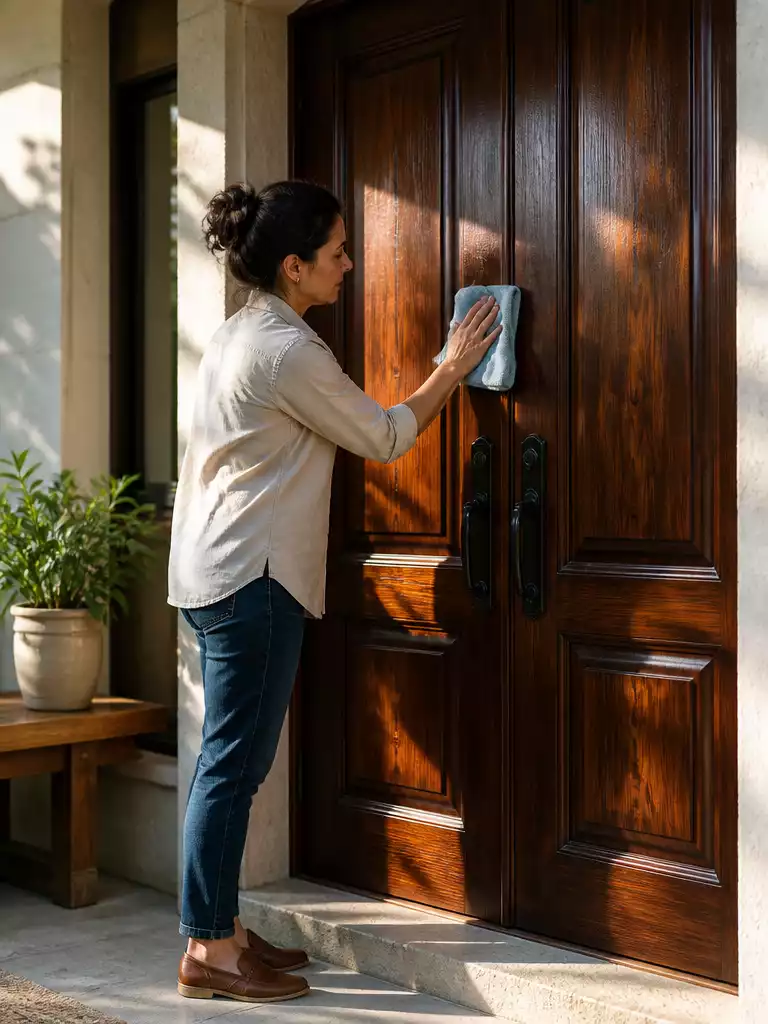
Preserve your investment with a proactive rhythm that keeps wood looking fresh for a lifetime.
A wooden door is a living thing that responds to every temperature swing and humidity spike. If you treat it with an “install and forget” mentality, the natural fibers will eventually punish you with cracks and fading.
The secret to avoiding a massive $3,000 restoration bill in year ten is a series of small, low-effort check-ins. By staying ahead of the UV degradation and moisture ingress, you keep the protective “armor” of the finish intact without ever having to sand back to bare wood.
The “Decade” Maintenance Calendar
- The 6-Month Edge Check: Open the doors and run your hand along the top edge. This is where rising heat and moisture tend to settle; if the finish feels dull or rough, apply a quick wipe-on topcoat to prevent the core from drinking in humidity.
- The 2-Year Threshold Reset: The bottom sweep and weatherstripping take the most physical abuse from foot traffic and grit. Replace these every 24 months to ensure your “air-tight” seal remains functional and prevents drafts.
- The 5-Year Scuff-and-Recoat: Before the finish begins to peel or flake, perform a light scuff-sand with high-grit paper. Applying one fresh coat of UV-inhibitor varnish now saves you from the labor-intensive strip-and-refinish cycle later.
⚠️ Common Mistake: Harsh Chemical Cleaning
Never use “all-purpose” household cleaners or detergent-based soaps on your door. These chemicals aggressively break down the UV blockers in your clear coat, leading to premature cloudiness; a damp microfiber cloth is almost always all you need.
Think of this roadmap as an insurance policy for your home’s first impression. While a plastic door might offer convenience, it can never match the structural soul of well-maintained timber.
Taking thirty minutes twice a year to inspect the joints and seals ensures your double doors remain the grand statement piece you intended. It’s the only way to truly protect your ROI while keeping the elements exactly where they belong—outside.
.
💰 Surprise Costs to Plan For:
- The real range: Expect to spend $150–$300 every few years on high-quality marine-grade sealants and professional-strength weatherstripping kits.
- Hidden cost: Neglecting the finish often leads to “iron sickness” or black tannin stains, requiring $500+ in chemical restoration.
- Worth it / not: Investing $50 in premium UV-inhibitor oils today prevents a $1,500 full strip-and-sand labor charge down the road.
List 12 Cost vs Longevity
<img src="assets/media/list-12-main.webp" alt="List 12 Cost vs Longevity" img-generation-
.
💰 Surprise Costs to Plan For:
- The real range: Expect to invest $8,000 for a premium, high-stability system versus $2,000 for a basic, seasonal-prone alternative.
- Structural hidden cost: Heavy 8-foot double doors often require LVL headers and reinforced framing to prevent sagging over time.
- Worth the spend: Prioritizing multi-point hardware prevents warp-related air leaks, saving $50–$100 annually in HVAC energy costs.
With these twelve structural benchmarks in hand, you now have the metrics to distinguish a temporary fixture from a permanent architectural asset. Focusing on the core and species alone will eliminate the vast majority of future maintenance headaches.
Secure the fundamental construction details first, and your wooden double front doors will maintain their alignment and value for a lifetime. A few deliberate, quality-driven choices now ensure your home makes the right statement for decades to come.