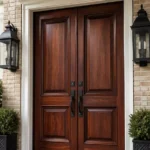

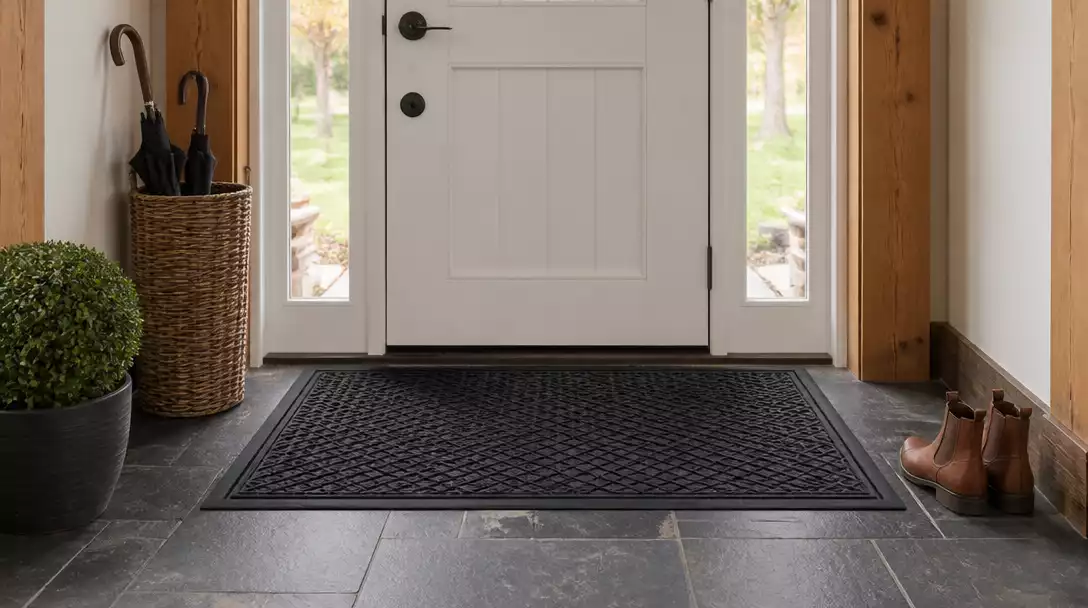
A worn-out mat ruins your home’s first impression and fails to stop dirt at the door. This guide gathers 14 door mat ideas worth saving to keep your entry clean and durable. Find the right high-performance solution to fit your climate and entry traffic needs.
Recycled Tire-Link Mats
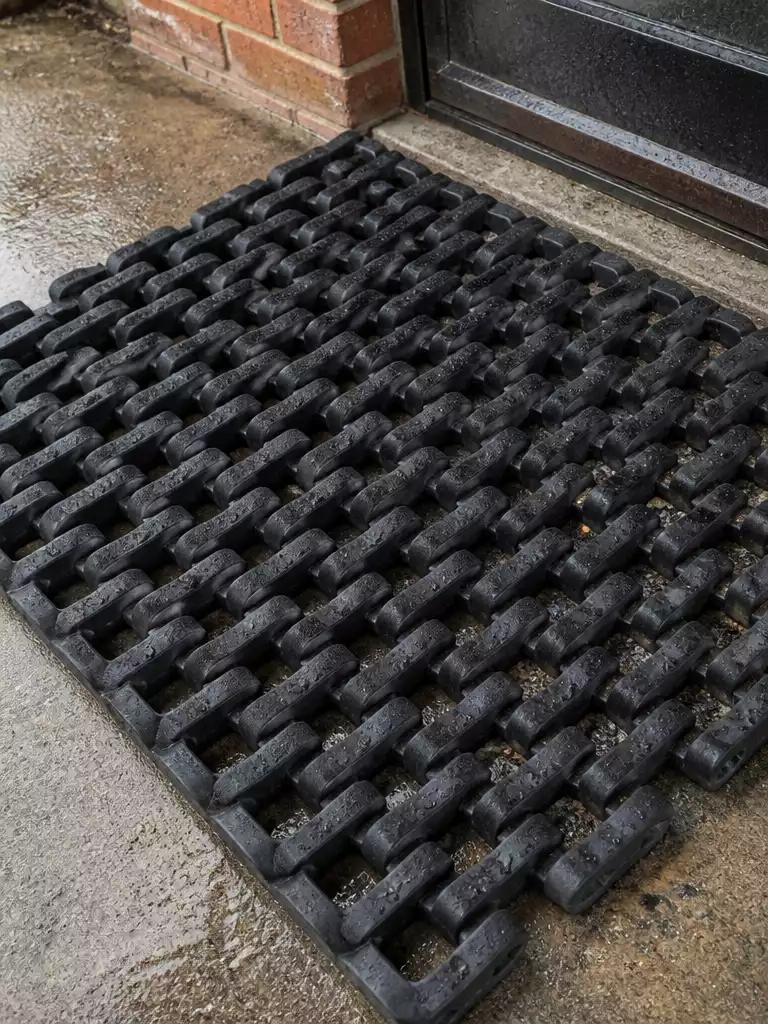
The ultimate industrial workhorse for keeping heavy mud and slush out of your home.
As an Amazon Associate I earn from qualifying purchases. Affiliate links may earn me a commission at no extra cost to you.
When your entryway faces constant abuse from heavy snow, thick mud, or industrial grit, standard aesthetic mats simply won’t survive. These recycled tire-link mats are the heavy-duty solution designed specifically for extreme, high-traffic zones where performance must come before appearance.
The magic is in the open-link design, which functions like a grate for your footwear. Instead of trapping water in a surface puddle, debris and moisture fall straight through the gaps, keeping the top of the mat clear and dry even after a storm.
Why They Last 10+ Years
- Industrial Construction: Made from vulcanized tire rubber, these mats are virtually indestructible against salt, ice, and heavy boot traffic.
- One-Time Purchase: Because they don’t rot or degrade like natural fibers, you can expect a 10 to 15-year lifespan with minimal upkeep.
- Self-Cleaning Geometry: The open-link structure prevents the common “soggy mat” effect that ruins lesser floor protectors.
Maintenance is refreshingly simple, though it isn’t for the faint of heart. You don’t wash these in a machine; you simply pick them up, give them a vigorous shake to dislodge the grit underneath, or hose them down when the mud accumulates.
Expert Warning
These mats are strictly for utility areas like side doors, garages, or mudrooms. Their industrial, utilitarian look rarely suits a primary front entryway where curb appeal is a priority.
.
📈 The Long-Term Payoff:
Investing in a commercial-grade tire-link mat is essentially a one-time purchase for your home’s exterior. Because these mats are built to withstand industrial-level abuse, they avoid the frequent replacement cycle of cheaper residential alternatives. While the upfront cost is higher, the 10 to 15-year durability makes them the ultimate “set it and forget it” solution for high-traffic zones.
Investment Verdict: Choosing industrial quality now saves you the hassle and cost of replacing worn-out mats every few seasons.
Waterhog Diamond-Grid Mats
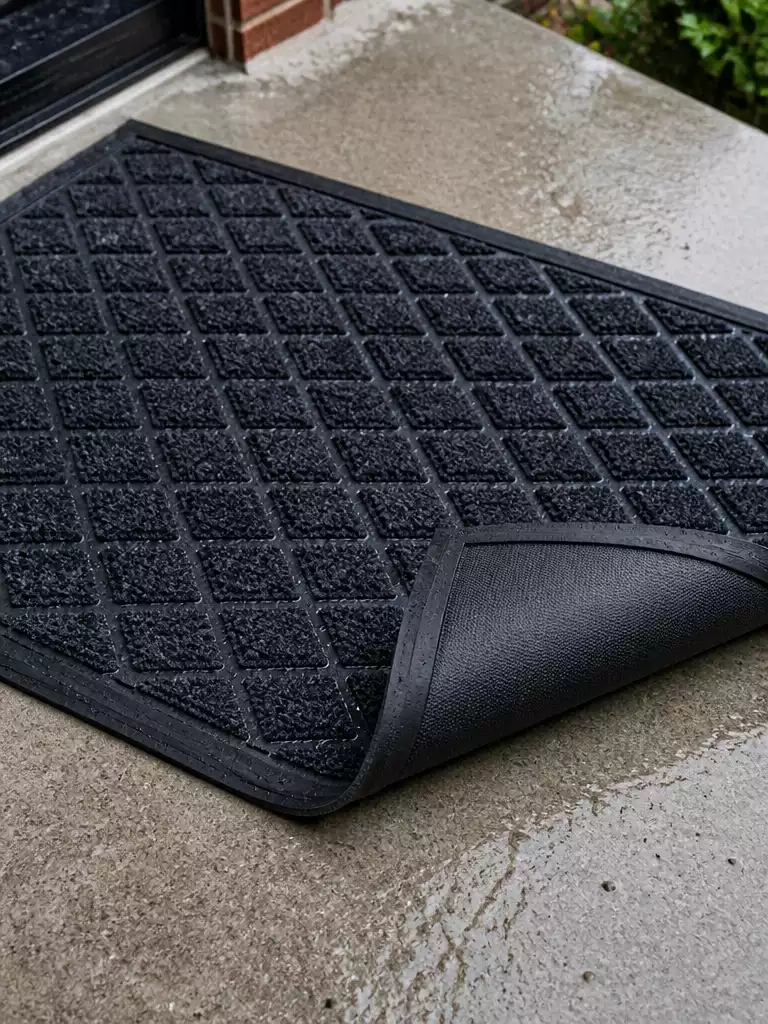
Stop tracking mud inside with a mat that locks moisture away until you can clean.
When you walk through your front door, the last thing you want is a messy, water-logged entryway floor. The Waterhog diamond-grid pattern is specifically engineered to act as a reservoir, pulling moisture and grit off your shoes and holding it safely below the surface.
Because the channels are recessed, your shoes stay on top of the dry peaks while the mess settles into the grid. This allows the mat to effectively evaporate moisture quickly, usually clearing out significant water within a 24-hour cycle.
Warning: Always check that the mat you purchase has a certified non-slip rubber backing. Some lower-tier versions use cheap materials that slide dangerously on slick tile or polished hardwood entryways.
These mats are a workhorse for residential front doors, especially if you live in a climate with frequent rain or snow. They are vastly more efficient than flat commercial mats because they don’t just stop dirt; they actually contain it.
For the best results, place these in a high-traffic entryway where you need a balance of aesthetic floor protection and serious utility. They are not intended for machine washing, so keep the hose handy for deep cleaning once a season.
.
📋 Quick Reality Check: Before You Buy
- Test the backing: Press the mat firmly against your flooring and slide it; if it moves, the rubber is too slick for your specific surface.
- Measure door clearance: Ensure you have at least 1/4 inch of gap under your door, as these mats are thicker than standard flat-weave styles.
- Verify drainage needs: Confirm your entryway porch has a slight slope or drain; if water pools directly against the door frame, even a high-capacity mat will eventually lose the battle.
Traditional Coconut Coir Brush Mats
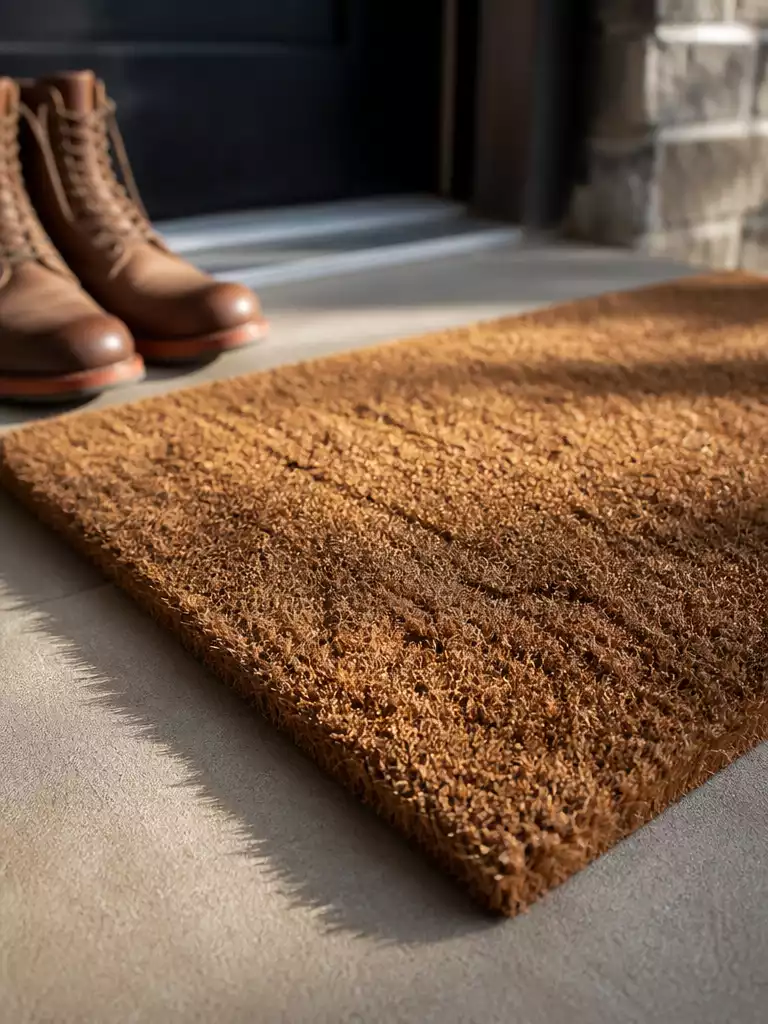
Harness the rustic power of natural fibers to keep coarse grit outside your home.
There is nothing quite like the stiff, organic scrape of a traditional coconut coir mat when you are dealing with dry, sandy entryways. These mats are engineered for one specific job: mechanically dislodging heavy dirt and debris from the treads of your shoes before you step inside.
Unlike synthetic alternatives that focus on water retention, coir is a low-absorbency material that holds only about 1–2 cups of moisture. If you live in a perpetually damp or rainy climate, these fibers will quickly retain water and begin to rot, making them a poor investment for those environments.
Expert Placement Rule: Only use these mats in areas protected by a covered porch or deep overhang. Direct exposure to rain will drastically shorten their 3–7 year lifespan by trapping moisture within the core of the fibers.
Because these mats are designed to scrape rather than soak, they are the ideal choice for dry, dusty regions where the primary concern is preventing sand from tracking onto your hardwood floors. Maintenance is refreshingly simple; just pick the mat up and give it a firm shake or brush to clear out the trapped grit.
.
🏡 Practical Placement Tips for Natural Fibers:
- Porch clearance: Even under covered areas, keep the mat slightly away from the drip line to prevent wind-blown moisture.
- Airflow access: Place the mat on a permeable surface like a slatted wood deck rather than flat concrete to allow underside circulation.
- Rotation strategy: Flip the mat monthly to ensure even wear on high-traffic corners and prevent permanent fiber matting in one spot.
High-Absorbency Microfiber Welcome Mats
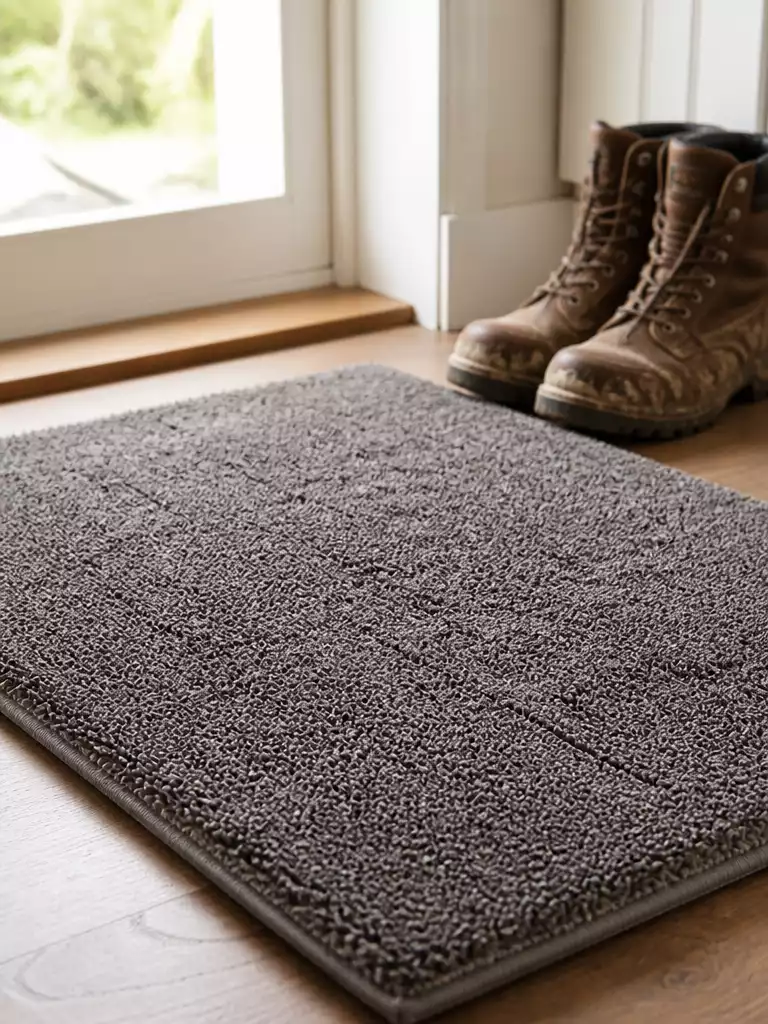
Stop tracking mud and water across your floors with this ultimate pet-owner essential.
Think of this as the pet owner’s secret weapon for keeping muddy paw prints out of your living room. These mats are engineered to absorb up to 5x their weight in water, acting like a giant sponge for your entryway.
Because these are made from soft, textile-based fibers, they are strictly for indoor use. Leaving them outside will trap moisture within the weave, turning your mat into a magnet for mold and mildew.
The Laundry Day Perk: Unlike heavy rubber mats that require a hose, these are fully machine-washable. Tossing yours into the laundry on a gentle cycle is the only way to truly sanitize the fibers after a rainy season.
This is the perfect choice for high-traffic indoor mudrooms or apartments where you need to dry off boots quickly. If you are looking for an outdoor solution to handle grit and slush, you will want to look at a more rigid, industrial-style mat instead.
.
💡 Essential Maintenance Routines:
- Sanitize Frequently: Wash every two weeks if you have pets to prevent trapped dander and odors from accumulating.
- Ensure Dryness: Always tumble dry on low or air dry completely; damp fibers inside a closet invite unwanted mildew.
- Refresh Texture: If the fibers start looking matted, a quick vacuuming before machine washing helps restore their absorbent fluff.
Navigating entryway updates often feels like managing a dozen high-stakes variables, yet the reality is that most homes only suffer from one or two overlooked technical mismatches. Avoiding these hidden pitfalls—like choosing the wrong material for your local rainfall—is far more effective than trying to master every single aspect of your entryway layout.
Prioritizing a high-performance material that suits your specific climate eliminates nearly all the common risks of long-term wear and hidden damage.
Ultra-Thin Low-Profile Entry Mats
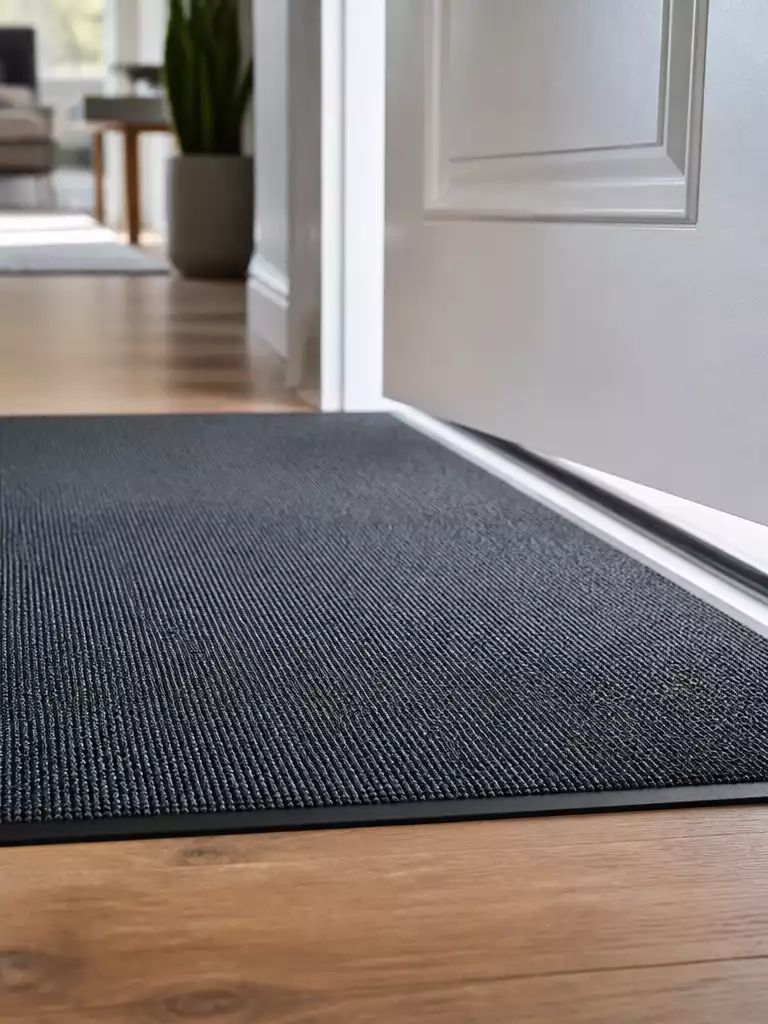
Eliminate door jams for good with a sleek, high-clearance floor solution.
There is nothing more frustrating than a door that catches, bunches, or outright refuses to open because your mat is too thick. If your entryway has a tight clearance gap, you need a profile under 1/4 inch thick to ensure your door clears the surface without a hitch.
These mats prioritize slim engineering over deep-trench debris trapping. Because they are designed for minimal height, they won’t hold onto heavy mud or large stones the way a coarse brush mat would.
Best For: Apartment dwellers or interior doors where space is limited and door-swing clearance is the top priority.
Skip If: You live in a high-traffic mudroom or a climate that demands heavy-duty slush and grit filtration.
Since these options are primarily built for indoor use, they excel at catching lighter dust and moisture right at the threshold. You can easily keep them clean with simple maintenance routines.
- Shake out: Take them outside once a week to knock off tracked-in dirt.
- Vacuum: Use a standard floor attachment to pull out finer dust particles.
- Hose down: If they get noticeably grimy, a light spray and air dry will refresh the surface.
Remember that these are not designed to be machine washed. Stick to manual cleaning to preserve the integrity of the thin rubber backing.
.
📋 Quick Reality Check: Measuring Your Clearance
- Door Swing Gap: Use a coin to measure the height of the gap between your floor and the door bottom.
- Threshold Obstructions: Check if your door has a metal transition strip that might snag a mat edge when opening.
- Compressed Profile: Ensure the mat is under 1/4 inch thick to prevent the fabric from bunching during high-traffic use.
Heavy-Duty Ribbed Polypropylene Mats
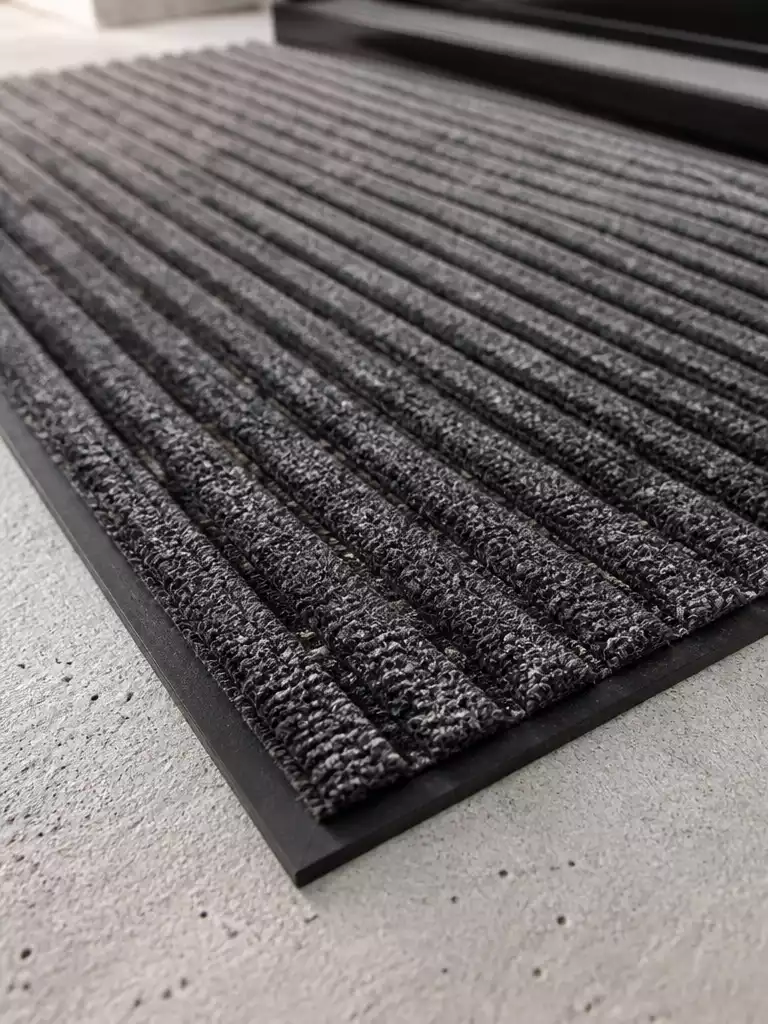
Control high-traffic entryway mess with industrial-grade channels that stop dirt and water instantly.
If your entryway sees constant foot traffic throughout the day, a standard decorative mat won’t last a single season. Heavy-duty ribbed polypropylene mats provide the necessary stiffness to scrape thick mud off shoes before it ever reaches your hardwood or tile.
The secret is in the channel system. The raised ribs act like a filtration grid, directing water into the lower nooks of the mat while keeping the surface dry for the next person stepping inside.
These mats are the perfect middle ground between extreme-duty tire links and residential Waterhog styles. They offer commercial-grade traction thanks to a high-density rubber backing that refuses to slide, even when placed on slick exterior tile.
Pro Tip: Stick to a simple “shake out” maintenance routine for this mat. Because the ribs are tightly packed, you can also use a leaf blower or a quick pass with a vacuum to clear out dried dirt in seconds.
.
⚖️ Quick Decision Guide: Commercial vs. Residential
- Choose heavy-duty if: You manage constant salt exposure or foot traffic exceeding fifty people daily in your home.
- Skip this if: You prioritize a plush, decorative aesthetic or have a low-clearance door that catches on thicker mats.
- Pair it with: A secondary indoor-only microfiber mat to capture the fine dust particles that slip through the ribbed channels.
Woven Sisal-Look Synthetic Mats
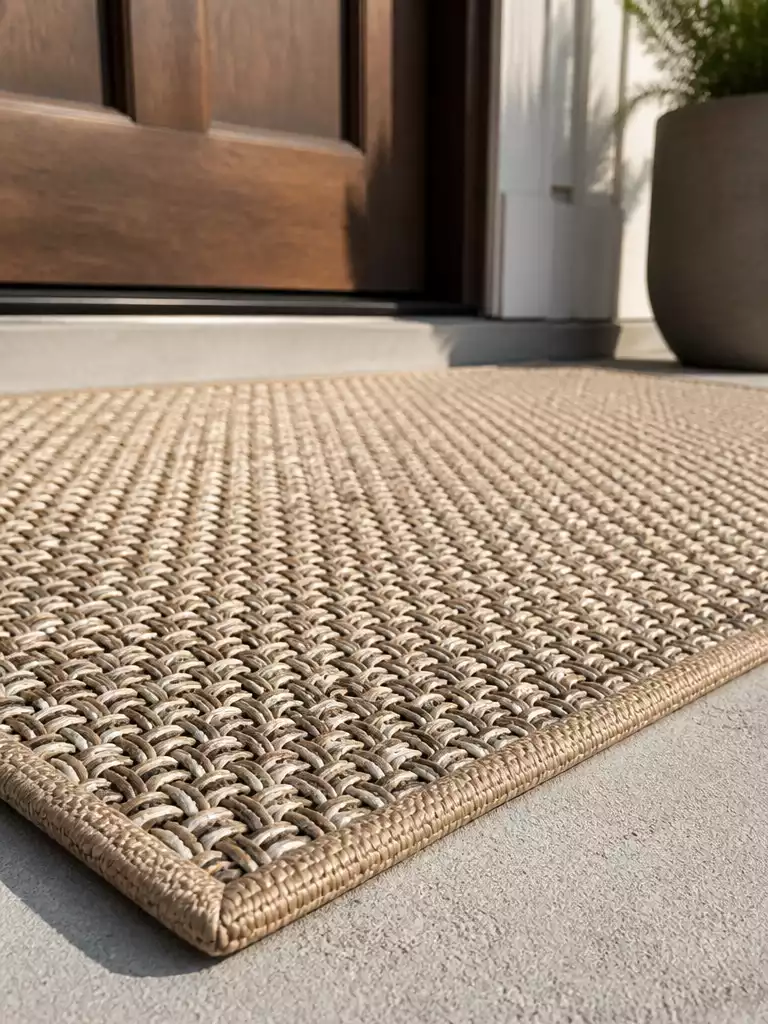
Achieve a high-end natural aesthetic without the constant worry of mold and fiber rot.
If you love the raw, organic texture of natural sisal but live in a climate that actually sees rain, these mats are your solution. They replicate that iconic, chunky woven appearance perfectly while using moisture-resistant synthetic fibers instead of delicate plant stalks.
Best For: Entryways where you want a high-end designer look but need to maintain a clean, dry surface.
Natural sisal is notorious for soaking up water like a sponge and harboring mold in humid entryways. Synthetic versions stay dry to the touch and won’t break down when exposed to the elements.
This is the smartest pick for aesthetic-focused homes that still require mild, everyday performance. You get the visual warmth of a natural fiber rug without the seasonal maintenance headaches.
.
🏡 Real-Home Application:
- Entryway layering: Use these synthetic mats as a base layer under a smaller, decorative accent rug to anchor your foyer decor.
- Paw-friendly comfort: The woven texture is soft enough for indoor use, making it a great spot for pets to settle after coming inside.
- Natural styling: Pair these with rattan or wood furniture nearby to lean into the organic look while keeping maintenance tasks low-effort.
Molded Rubber Scrollwork Mats
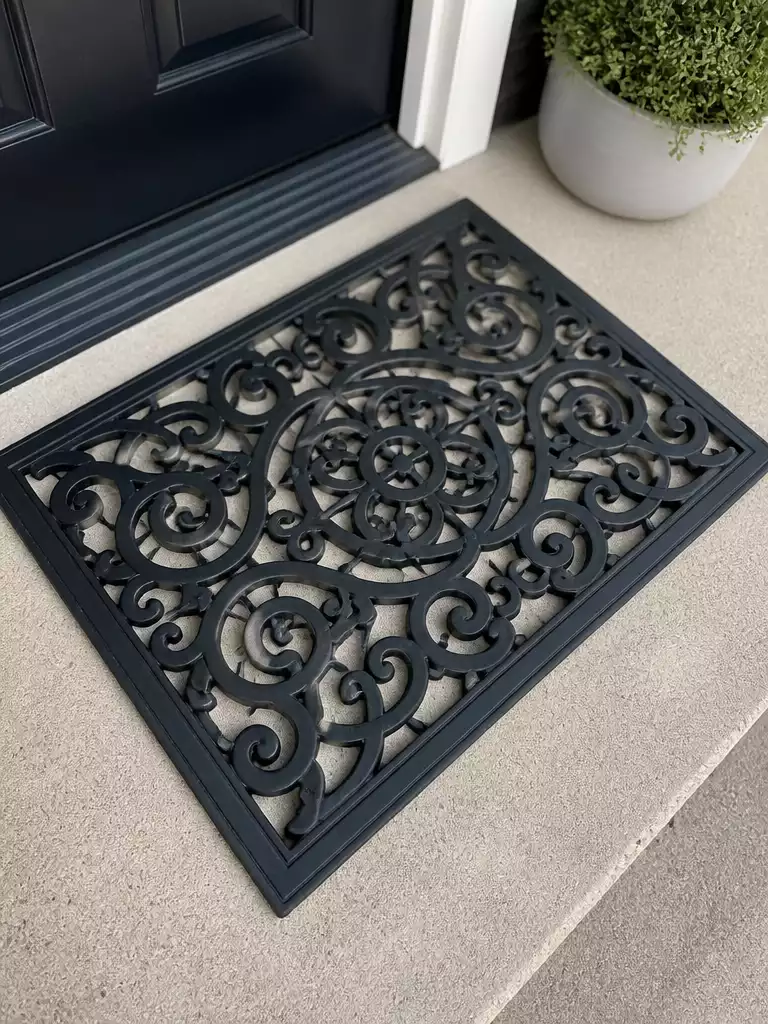
Combine decorative curb appeal with aggressive grit-trapping power for year-round entryway protection.
You might mistake these for purely decorative accents, but the intricate Victorian-style scrollwork is actually a high-performance scraping system. The elaborate gaps between the rubber swirls act as deep-trench channels, catching sand and mud before it ever crosses your threshold.
Because they are crafted from heavy-molded rubber, these mats are built to survive the elements. They won’t rot, warp, or fade, making them a set-it-and-forget-it solution for outdoor entryways that deal with rain or snow year-round.
Pro Tip: Maintenance is remarkably simple because you can just hose them down. Stand the mat against a wall, blast it with a garden hose, and it looks brand new in seconds.
These are the best choice for homeowners who want to level up their curb appeal without sacrificing cleaning power. If you prefer a clean, minimalist look, however, you might find the ornate patterns a bit too busy for your specific entryway style.
.
✨ Small Details That Matter
While these mats are naturally durable, a few finishing touches ensure they stay looking sharp and performing their best for years.
- Color Matching: Choose a matte black or dark charcoal finish to hide mud stains and keep the ornate scrollwork looking crisp.
- Strategic Anchoring: If your porch is exceptionally windy, look for models with extra-thick rubber weighting to prevent the mat from shifting out of place.
Machine-Washable Patterned Rug Mats
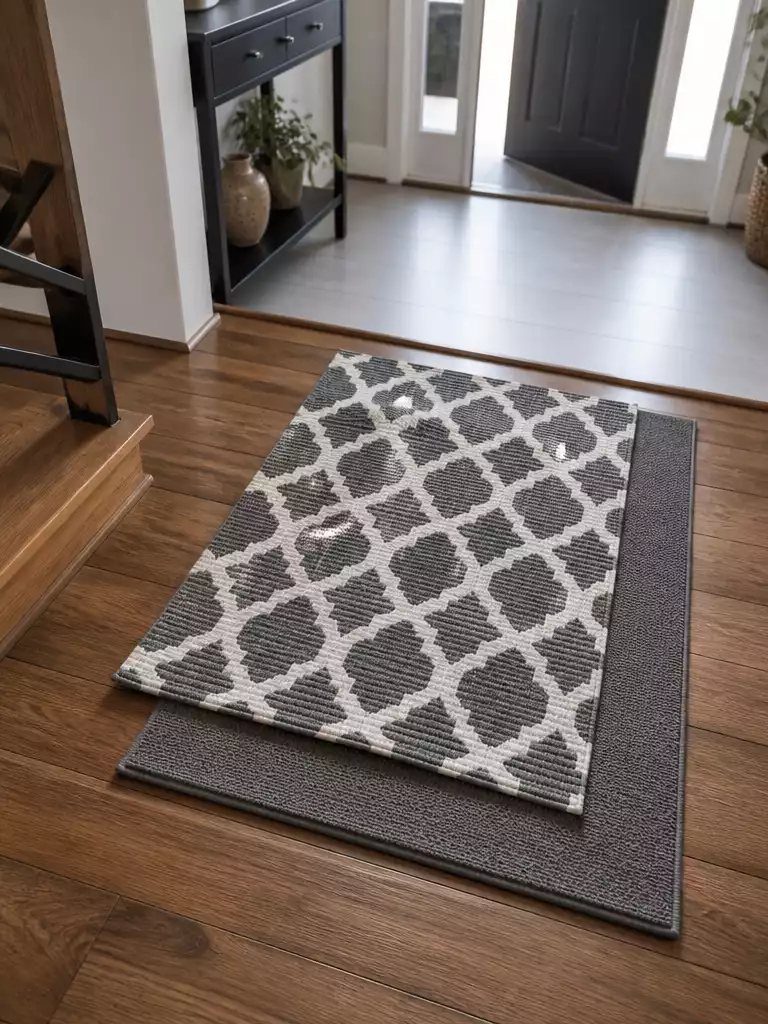
Refresh your entryway instantly with a stylish layer that handles high traffic and machine washes.
If you want your foyer to look like a curated designer space rather than a utility zone, these multi-part systems are your best solution. They function as a two-part assembly, consisting of a heavy-duty, non-slip base pad and a decorative, removable top cover.
The top layer is designed specifically to be tossed in your home washing machine whenever it gets dingy or tracked with mud. This is a game-changer for high-traffic entryways where traditional mats usually look worn out within months.
Pro-Tip: Buy one base pad and keep two different top covers on hand. You can swap them out for a fresh look or keep a clean one in rotation while the other is in the wash.
These are best suited for interior foyers where you want to anchor a space with pattern and color. Because they lack the deep-trench debris trapping of industrial mats, they should be used inside after a primary exterior doormat has already removed the bulk of the grit.
Keep these points in mind before you buy:
- Clearance Check: Because they consist of two layers, ensure your door has enough swing clearance so it doesn’t catch on the edge.
- Sanitation: The machine-washable feature is the primary reason to choose this style, so follow the care tag instructions to prevent the backing from losing its grip.
- Aesthetic Versatility: Unlike rubber utility mats, these come in prints and textures that can match your mudroom or hallway decor perfectly.
Skip this option if you are placing it outside; the textile nature of these covers makes them prone to mold if they stay damp. Stick to these for indoor settings where style and cleanliness are your top priorities.
.
🏡 How This Works in a Real Home:
- Entryway layering: Use this as a secondary “comfort” layer over hard floors to soften the sound of footsteps.
- Pet-friendly zones: Place these near pet doors to catch damp paws, keeping your indoor traffic areas mud-free.
- Natural placement: Position these where you actually stand to take off shoes, ensuring the rug feels grounded and intentional.
Extra-Long Runner Mats
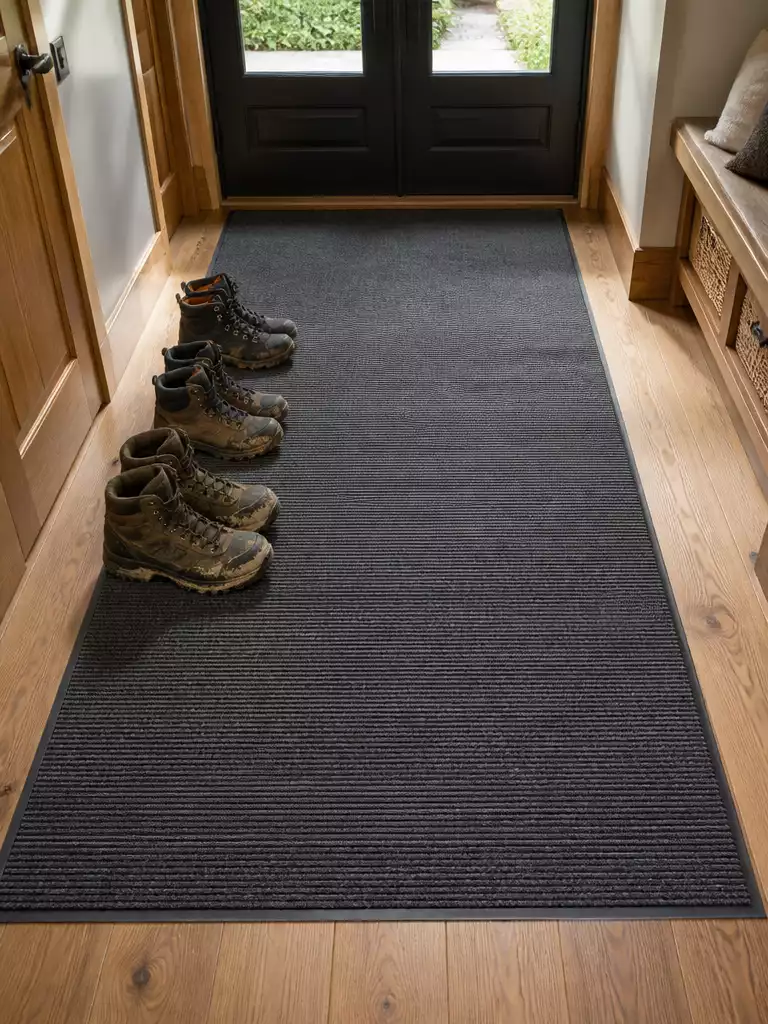
Maximize your floor coverage and keep mud contained across wide entryways or double doors.
Extra-long runner mats solve the common problem of mismatched coverage in grand entryways or busy mudrooms. While a standard 30-inch mat leaves gaps on either side of a wide door, a runner provides a **continuous barrier** that catches debris across the entire width of your frame.
The Coverage Rule: Measure your door frame completely before purchasing. You want at least 4 to 6 inches of mat extending beyond the door’s active swing to ensure you aren’t tracking grit onto your flooring.
These mats are especially effective for households that treat their mudroom as a transition zone for gear. Because of their length, you can designate specific spots for wet boots, umbrellas, and bags without the items touching your actual entryway floor.
Look for versions with a high-density rubber backing that spans the full length of the runner. A heavy backing prevents the mat from bunching or shifting, which is a common failure point in longer, lighter textile runners.
.
⚖️ Quick Decision Guide: Choosing Your Runner
- Choose this if: You have high-traffic double doors or a mudroom needing space for multiple pairs of boots.
- Skip this if: Your entry floor lacks the necessary length, as an oversized runner can look cramped and cluttered.
- Pair it with: A high-density rubber backing, which prevents the mat from bunching or shifting across your flooring.
Natural Hemp Scraper Mats
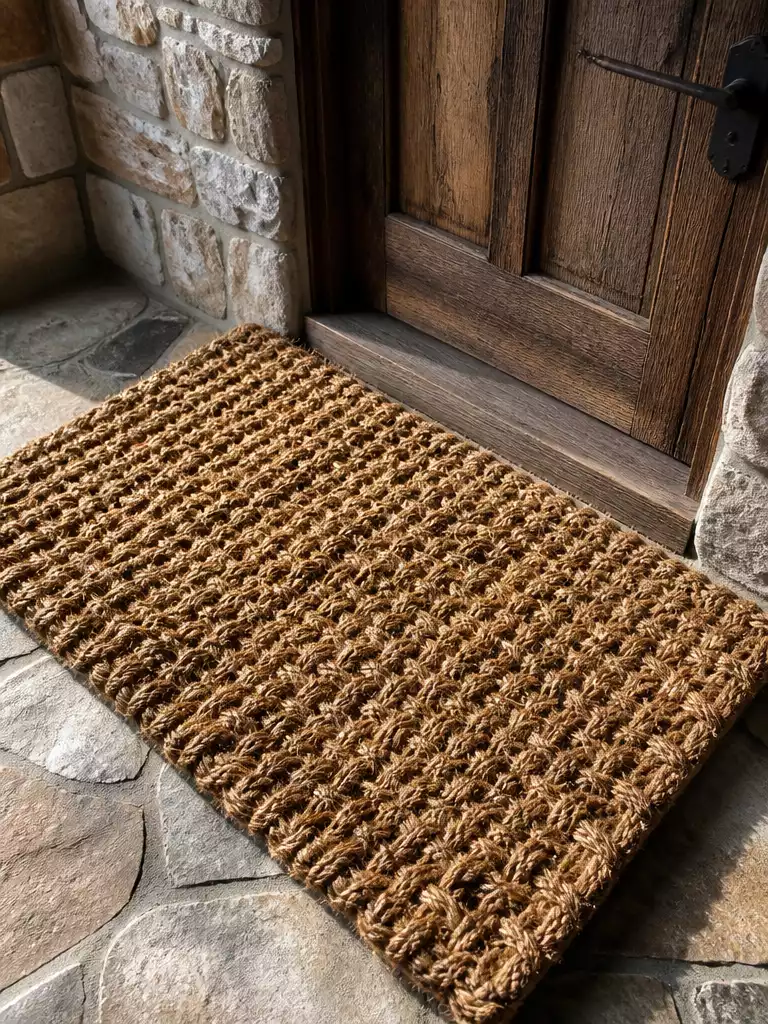
Get aggressive cleaning power for deep mud using the uncompromising coarseness of natural hemp fibers.
If your entryway faces a constant battle with heavy, caked-on mud, the ultra-stiff texture of a hemp mat is your best defense. These mats function like a harsh brush, digging deep into the treads of your boots to dislodge debris that softer synthetic mats would simply slide over.
The Climate Warning: Hemp fibers are highly absorbent and slow to dry. You must only use these in dry, arid climates where the mat has a chance to breathe between storms.
While hemp looks similar to traditional coir, it is significantly more aggressive. It is the better choice for high-mud environments where you need a more durable, coarse scraper than standard coconut fiber can provide.
Skip this option if you live in a rainy region. The moisture retention will lead to fiber rot much faster than a standard brush mat would, making it a maintenance liability in wet weather.
.
💰 What This Really Costs
- Price expectations: Expect to spend between $10 and $30 for a standard-sized natural fiber scraper mat.
- Replacement cycle: Budget for a total replacement every 3 to 7 years as the natural fibers eventually degrade.
- Hidden maintenance: Plan for the cost of a stiff-bristle outdoor broom, essential for clearing debris from deep hemp grooves.
Non-Slip Gel-Backed Utility Mats
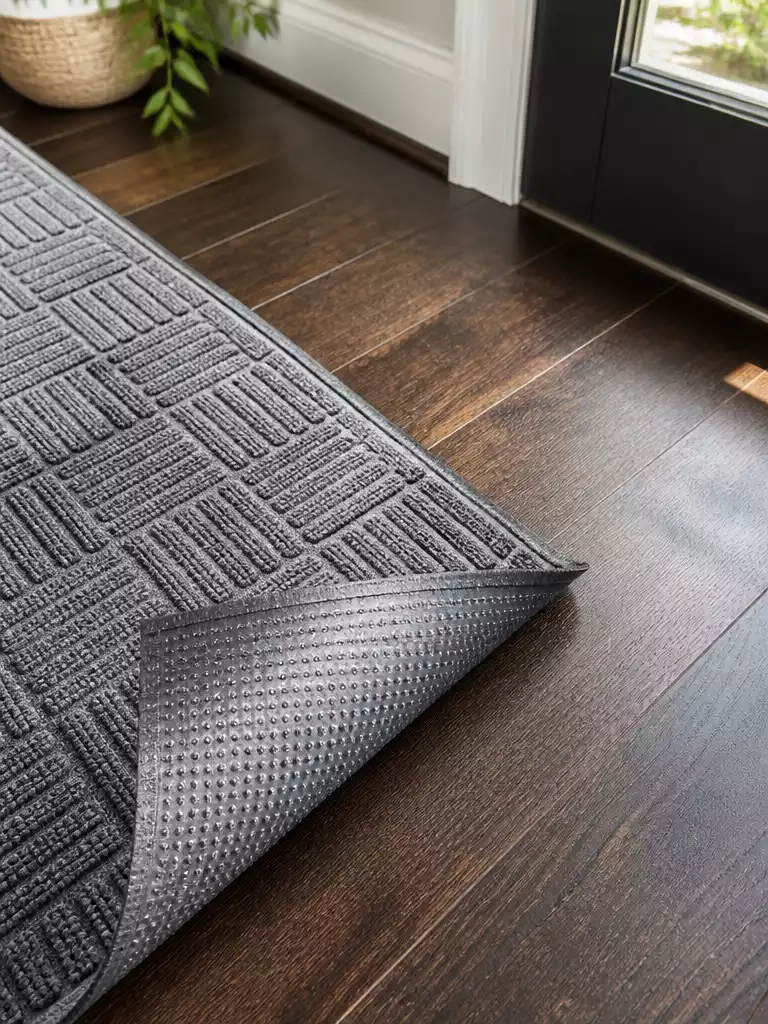
Create a rock-solid foundation for your entryway that stays exactly where you put it.
If you are tired of your door mat sliding across the floor every time someone walks in, a gel-backed utility mat is the solution. Unlike standard rubber models that can shift on slick tile or polished hardwood, the gel backing creates a light vacuum seal against the surface.
This “stay-put” technology is the safest choice for elderly homeowners or households with active pets. You won’t have to worry about the mat bunching up or causing a tripping hazard in your high-traffic entry zone.
Compatibility Guide:
- Best for: Ceramic tile, sealed hardwood, laminate, and luxury vinyl plank.
- Warning: Avoid using these on porous, unsealed stone or freshly waxed floors, as the gel can sometimes leave a faint residue over time.
While these mats focus primarily on stability, they also offer a sleek, low-profile look that fits under almost any door swing. They are engineered to lie perfectly flat, eliminating those annoying curled corners that catch the edge of the door.
Maintenance is straightforward, requiring only a quick vacuum or a wipe-down with a damp cloth. Because the gel backing is non-porous, it won’t soak up moisture or harbor odors, making it a clean, reliable addition to your home’s first line of defense.
.
🔢 The Right Sequence for Setup:
Proper surface preparation ensures that the gel backing achieves a true vacuum seal, preventing the mat from sliding over time.
- Deep clean: Remove all dust and grit from your entryway floor using a vacuum or damp mop.
- Dry thoroughly: Allow the floor to air dry completely, as trapped moisture prevents the gel from sealing.
- Apply pressure: Press the mat firmly across its entire surface to activate the seal and remove air pockets.
Salt-Resistant Snow Mats
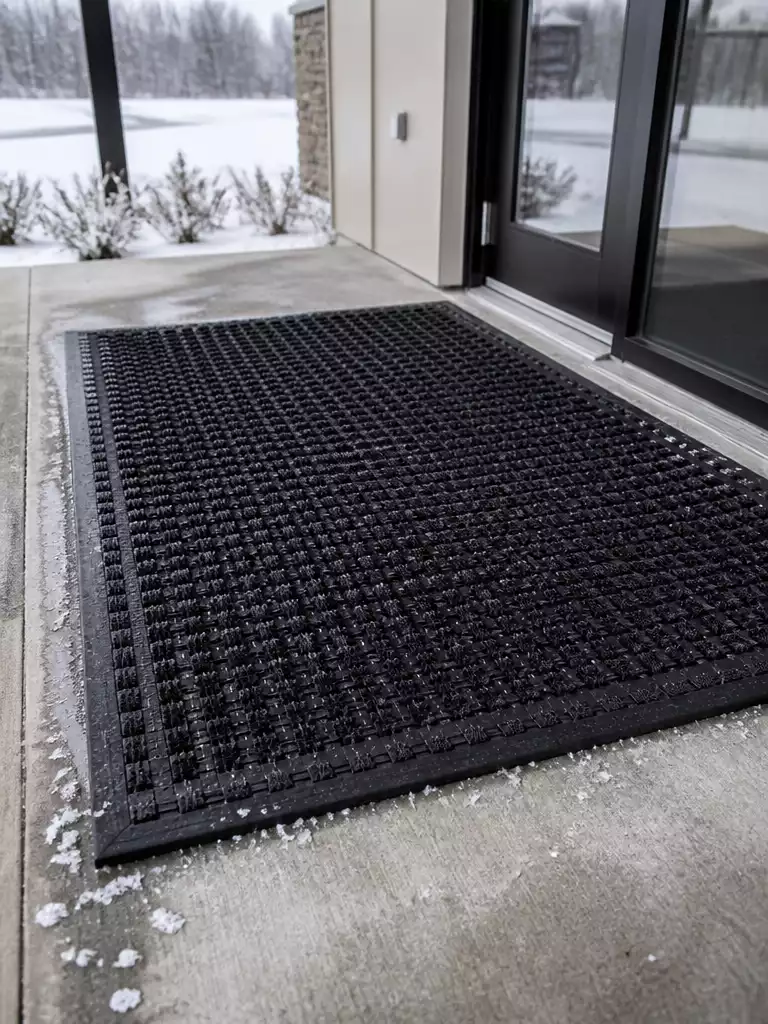
Protect your entryway from winter grime and harsh chemical salt damage with specialized seasonal defense.
Winter brings more than just freezing temperatures; it brings corrosive de-icing salts that can permanently etch tile and hardwood floors. These salt-resistant snow mats are engineered specifically to neutralize this threat before it crosses your threshold.
Unlike standard entry mats, these feature a specialized material composition that resists salt-corrosion and prevents minerals from tracking onto your interior rugs. They serve as a dedicated chemical barrier for the snowiest months of the year.
Always prioritize mats with a raised border design. This feature acts as a reservoir to contain melted slush and salt-heavy runoff, ensuring the liquid stays trapped on the mat instead of leaking onto your porch or interior flooring.
If you live in a climate where road salt is a daily reality, these mats are an essential investment for floor longevity. Those in mild climates, however, will find the heavy-duty construction overkill for their specific needs.
.
⚡ Essential Winter Care Routines:
- Routine rinsing: Hose down the mat weekly to prevent salt accumulation from corroding the rubber backing or fiber structure.
- Thorough drying: Flip the mat over after a heavy slush event to ensure the underside stays moisture-free, preventing floor stains.
- Storage strategy: Once winter ends, clean, dry, and roll your mat for storage to maintain the integrity of the border seals.
Recycled Rubber “Pin” Mats
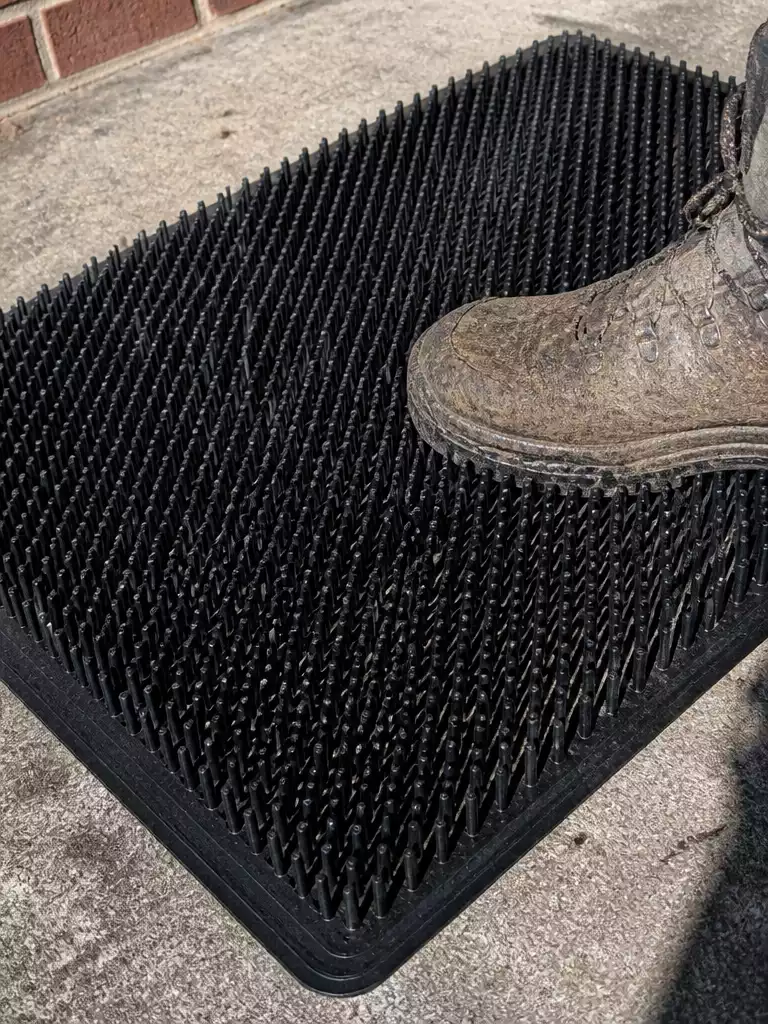
Aggressive rubber fingers scrub away stubborn grit for a cleaner home interior.
If your home faces heavy foot traffic from muddy boots or sandy shoes, these mats are the ultimate first-contact cleaning system. The surface is covered in thousands of tiny, flexible rubber fingers that reach deep into the grooves of your shoe treads to dislodge compacted dirt.
Unlike flat mats that just sit under your feet, these pins actively work to clean your soles as you walk across them. This makes them the perfect choice for the very start of a porch or at the transition point between a garage and a living area.
Why they win: The extreme durability of recycled rubber means these mats are virtually weather-proof and can stay outside year-round without degrading.
Maintenance: Simply pick the mat up and shake it over your lawn, or give it a quick blast with a garden hose to rinse away the captured debris.
Because the debris falls to the base of the pins, the surface stays relatively clean even after months of use. These are strictly for utility, so skip these if you are looking for a decorative aesthetic for your front porch.
They are heavy, which keeps them from sliding around on slick surfaces like wet concrete or tile. For homeowners who prioritize floor protection over style, this is a one-time purchase that will easily outlast almost any other mat on your list.
.
You have now navigated fourteen distinct ways to manage your entryway traffic and moisture. Choosing the one or two that align with your local climate is the most effective approach, as you do not need to integrate every style to see a result.
Focus on the best door mat for your specific daily use, and the rest of your home’s entry will naturally fall into place. Select the option that handles your environment, and you will have a functional, polished look that lasts for years.